

What is Tricep Extension Workout: Benefits, Techniques & Tips
What Is Tricep Extension Workout
Building strong arms is a goal for many people. Whether you want to lift heavier weights, improve your sports performance, or simply look fit, your arms play a big part. When most people think about strong arms, they imagine big biceps. But there’s another muscle that is just as important: the triceps. The triceps are the muscle group on the back of your upper arm. They make up about two-thirds of your arm’s muscle. If you want well-shaped, strong arms, you need to work your triceps. The tricep extension workout is one of the best ways to target and build these muscles.
Tricep extension exercises are simple, but they have a big impact. You can do them in many ways and with different equipment: dumbbells, cables, resistance bands, or even your own body weight. These exercises help to isolate the triceps, meaning you focus only on them without using other muscles. This article will explain what tricep extension workouts are, how to do them, their benefits, and how you can include them in your fitness routine. You will also learn about common mistakes, variations, and get answers to popular questions.
Understanding The Triceps Muscle
Before you start any workout, it’s useful to know the muscle you are training. The triceps brachii is a three-headed muscle on the back of your upper arm. It has three parts:
- Long head: Runs down the back of your arm, helps with shoulder movement.
- Lateral head: On the outer side, gives the arm its “horseshoe” shape.
- Medial head: Under the long and lateral heads, helps with all tricep movements.
The main job of the triceps is to extend your elbow. When you straighten your arm, your triceps are working. Many pushing movements, like bench press or push-ups, use your triceps. But tricep extension exercises focus only on this muscle, making them excellent for building strength and size.
What Is A Tricep Extension Workout?
A tricep extension workout is a series of exercises that target the triceps by using the movement of extending the elbow. You can do tricep extensions with one or both arms, and with many types of equipment. The key point is that your elbow bends, then straightens, with your triceps doing the work.
These exercises are called “isolation exercises” because they mostly use one muscle. This is different from “compound exercises” like push-ups, which use many muscles at the same time. Tricep extensions help you focus on the triceps, so you can make them stronger and more defined.
:max_bytes(150000):strip_icc()/Square_Crop-About-110-3498313-Skull-Crusher02-934-4cbccee106d94352a360722ae02178e0.jpg)
Credit: www.verywellfit.com
Types Of Tricep Extension Exercises
There are many ways to do tricep extensions. Some need equipment, others use just your body. Let’s look at the most common types:
Dumbbell Tricep Extension
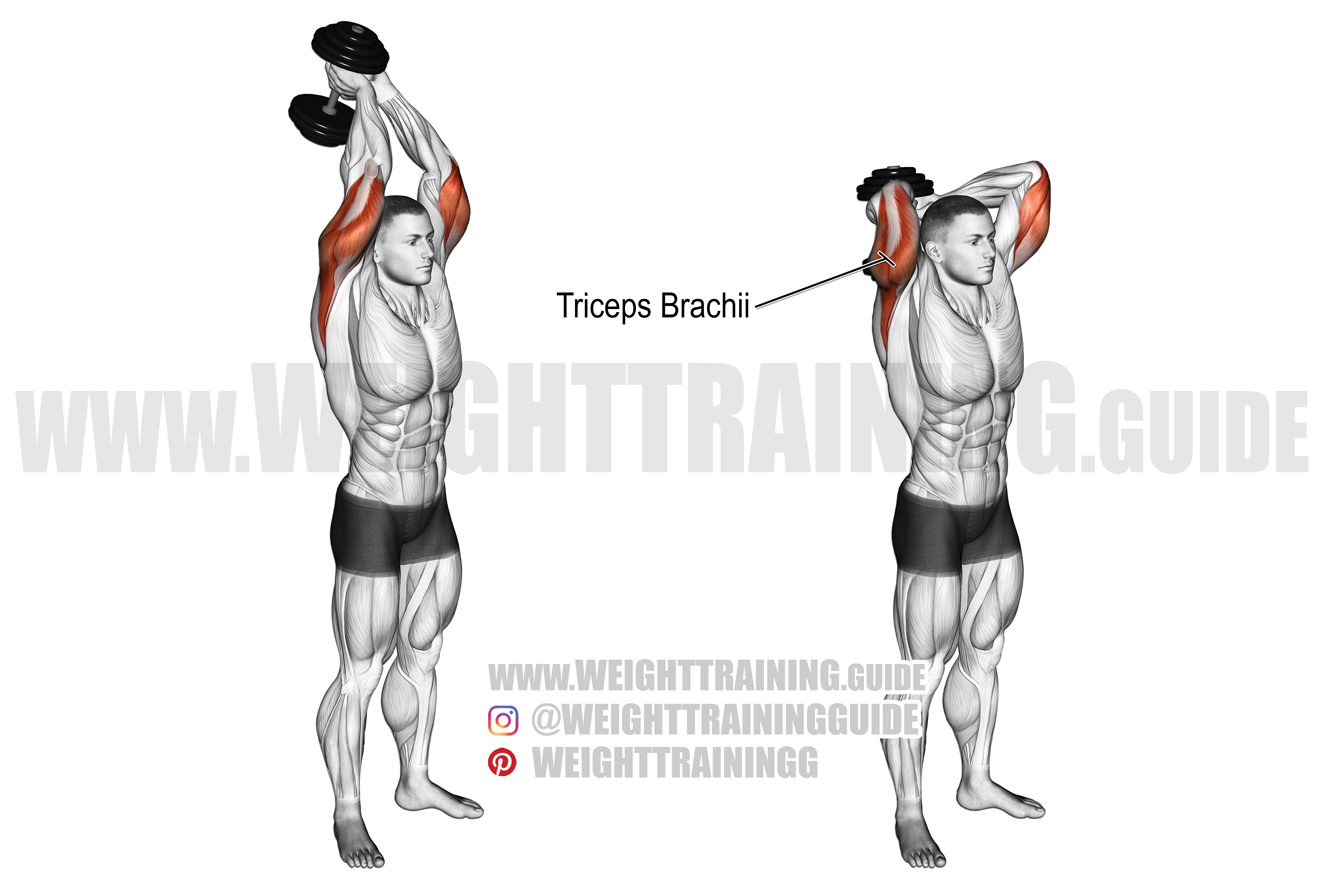
This is one of the easiest and most popular ways to work your triceps. You can do it sitting or standing, with one or two arms.
- How to do it: Hold a dumbbell above your head with both hands. Keep your elbows close to your ears. Slowly bend your elbows, lowering the dumbbell behind your head. Then extend your elbows to lift the dumbbell back up.
- Tip: Keep your elbows still. Only your forearms should move.
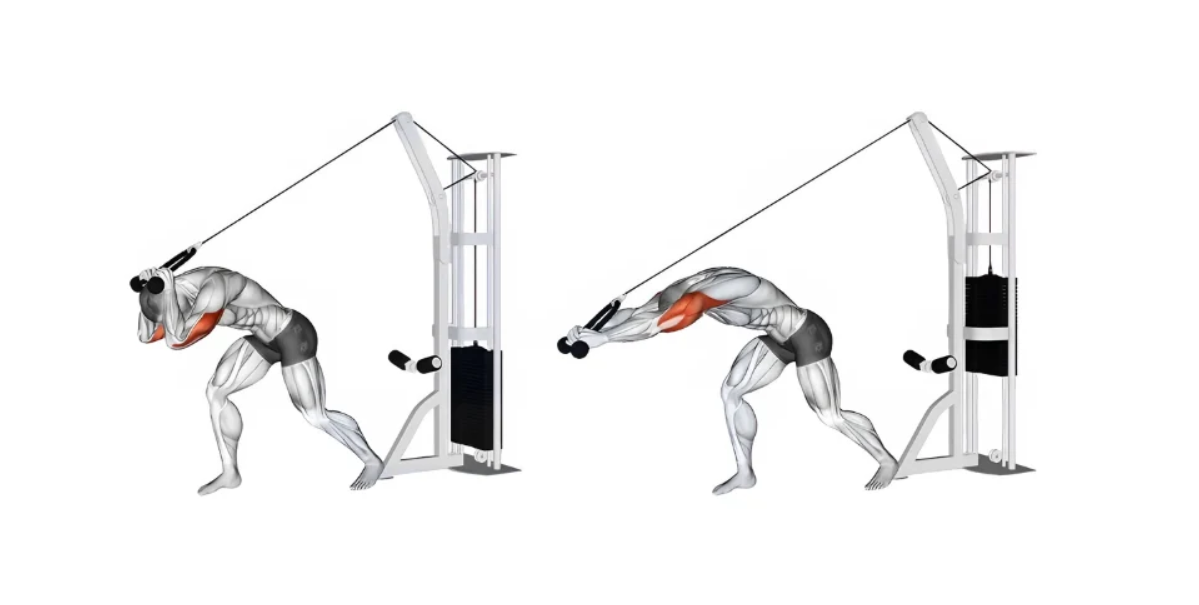
Cable Tricep Extension
Gyms often have cable machines. These allow you to adjust the weight and angle.
- How to do it: Stand facing the cable machine. Hold the handle with both hands. Pull the handle down by straightening your elbows. Keep your upper arms still.
- Tip: Use a rope attachment for a better range of motion.
Overhead Tricep Extension
This is similar to the dumbbell extension, but you can use a barbell, resistance band, or cable.
- How to do it: Start with the weight above your head. Slowly lower it behind your head by bending your elbows. Then extend your arms to bring the weight back up.
Lying Tricep Extension (skullcrusher)
This is done lying on a bench.
- How to do it: Hold a barbell or dumbbells above your chest. Bend your elbows, lowering the weight towards your forehead. Then extend your elbows to lift the weight.
Resistance Band Tricep Extension
Good for home workouts.
- How to do it: Anchor the band above you. Hold the band and pull it down by straightening your elbow.
Single-arm Tricep Extension
Many tricep extension exercises can be done with one arm. This helps correct muscle imbalances.
- How to do it: Use a dumbbell, cable, or band. Perform the movement with one arm at a time.
Bodyweight Tricep Extension
If you don’t have equipment, you can use your body weight.
- How to do it: Get into a plank position. Lower your elbows to the floor, then push back up by straightening your arms.
Why Tricep Extensions Matter
Tricep extension workouts are important for many reasons:
- Muscle growth: They help build size and strength in the triceps.
- Arm definition: Strong triceps make your arms look toned and athletic.
- Joint support: Triceps stabilize the elbow and shoulder joints.
- Better performance: Strong triceps help with other exercises, like bench press and push-ups.
- Injury prevention: Balanced arm muscles reduce the risk of injuries.
Many beginners focus only on biceps. But without strong triceps, your arms will be weak and less balanced. Tricep extensions help solve this problem.
How To Do Tricep Extensions Correctly
Doing tricep extensions with the right form is key. Poor form can cause injuries or make the workout less effective. Here’s how to do a basic tricep extension with dumbbells:
- Start position: Sit or stand with a dumbbell held above your head, arms straight.
- Grip: Hold the dumbbell with both hands, palms facing up.
- Elbows: Keep your elbows close to your head, pointing forward.
- Movement: Slowly bend your elbows, lowering the dumbbell behind your head.
- Control: Pause, then extend your elbows to lift the dumbbell back up.
- Breathing: Inhale as you lower the weight, exhale as you lift it.
- Repetitions: Aim for 8–12 reps per set, 3–4 sets.
Common Mistakes To Avoid
Many people make errors that reduce the effectiveness of tricep extensions. Watch out for these:
- Flaring elbows: Keep elbows close to your head.
- Using too much weight: Start light to avoid injury.
- Moving shoulders: Only your forearms should move.
- Fast movements: Go slow for best results.
- Incomplete range: Fully extend your elbows.
Equipment Comparison: Dumbbells, Cables, Bands
Choosing the right equipment can change your workout. Here is a comparison of common tools:
| Equipment | Benefits | Drawbacks |
|---|---|---|
| Dumbbells | Easy to use, found in most gyms, allow single-arm work | Limited resistance for advanced users |
| Cables | Adjustable weight, smooth motion, many angles | Needs gym access, more setup time |
| Resistance Bands | Portable, cheap, good for home use | Harder to track progress, limited max resistance |
| Barbells | Good for heavy lifting, works both arms | Less flexible for single-arm work, needs bench |
Non-obvious insight: Cables often give more constant tension, which can help build muscle faster. Bands are good for travel and rehab.
Tricep Extension Workout Routine Examples
You can include tricep extensions in your workout in many ways. Here are two routines for different goals:
Beginner Routine
- Dumbbell Overhead Tricep Extension: 3 sets x 10 reps
- Resistance Band Extension: 3 sets x 12 reps
- Rest: 60 seconds between sets
Advanced Routine
- Lying Tricep Extension (Skullcrusher): 4 sets x 8 reps
- Cable Rope Overhead Extension: 4 sets x 10 reps
- Single-Arm Dumbbell Extension: 3 sets x 12 reps (each arm)
- Rest: 45 seconds between sets
Tip: Try to include both overhead and lying tricep extensions for complete muscle activation.
Differences Between Tricep Extensions And Other Arm Exercises
Many people confuse tricep extensions with other exercises. Here’s a simple comparison:
| Exercise | Main Muscle Worked | Movement Type | Isolation/Compound |
|---|---|---|---|
| Tricep Extension | Triceps | Elbow extension | Isolation |
| Bicep Curl | Biceps | Elbow flexion | Isolation |
| Bench Press | Chest, triceps, shoulders | Push | Compound |
| Push-Up | Chest, triceps, shoulders | Push | Compound |
Non-obvious insight: Tricep extensions involve only the elbow joint, while bench press or push-ups also use the shoulder.
Benefits Of Tricep Extension Workout
There are many advantages to adding tricep extensions to your routine:
- Build bigger arms: Triceps are two-thirds of your upper arm. Training them leads to noticeable growth.
- Improve strength: Strong triceps help with pressing movements, like bench press.
- Enhance muscle definition: Well-developed triceps give your arms a “cut” look.
- Support elbow health: Tricep strength stabilizes the elbow, reducing injury risk.
- Increase performance: Athletes need strong triceps for throwing, pushing, and swimming.
- Easy to modify: You can change the exercise to fit your needs and equipment.
- Suitable for all levels: Beginners and advanced lifters both benefit.
- Boost daily function: Strong arms make daily tasks easier, like lifting bags or opening doors.
Science Behind Tricep Extensions
Research shows that isolation exercises like tricep extensions help build muscle and strength. One study found that doing tricep extensions increases muscle size and improves pressing power. Another study showed that training the triceps leads to better elbow stability and less joint pain.
Muscle growth happens when you challenge your muscles with enough resistance. Tricep extensions provide direct tension, which is important for growth. The muscle fibers in the triceps respond best to slow, controlled movements with full extension. This is why proper form matters.
Credit: weighttraining.guide
How Often Should You Do Tricep Extensions?
For best results, train your triceps 2–3 times per week. You don’t need to do tricep extensions every day. Muscles need time to recover and grow. Here’s a suggested schedule:
- Beginner: 1–2 times per week
- Intermediate: 2–3 times per week
- Advanced: 3 times per week
Always allow at least one day of rest between workouts. Pair tricep extensions with other arm, chest, or shoulder exercises for a balanced routine.
Choosing The Right Weight And Reps
Picking the correct weight is important. If the weight is too heavy, you lose form. If it’s too light, you won’t see progress. Here’s a guide:
| Goal | Recommended Reps | Weight |
|---|---|---|
| Muscle Growth (Hypertrophy) | 8–12 | Moderate |
| Strength | 4–6 | Heavy |
| Endurance | 15–20 | Light |
Tip: Start with a weight you can control for all reps. Increase slowly as you get stronger.
Tricep Extension Variations
Changing up your tricep extensions can help you avoid plateaus and keep workouts interesting. Here are some variations:
- Seated vs. standing: Sitting gives more stability; standing works your core.
- Single-arm vs. double-arm: Single-arm fixes muscle imbalances.
- Different grips: Using a rope, bar, or band changes how the muscle is activated.
- Incline bench: Doing extensions on an incline bench can hit the triceps differently.
- Tempo training: Slow down the lowering phase for more muscle growth.
Common Mistakes Beginners Make
Many beginners struggle with tricep extensions. Here are some issues to watch for:
- Too much weight: Leads to poor form and injury.
- Poor elbow position: Elbows should stay close to your head.
- Not fully extending: If you don’t straighten your arms, you miss the full benefit.
- Using momentum: Swinging the weight takes tension off the triceps.
- Ignoring pain: If you feel sharp pain in your elbow or shoulder, stop immediately.
Non-obvious insight: Some people feel wrist pain during extensions. Try changing your grip or using a rope attachment to reduce strain.
Safety Tips And Injury Prevention
Safety is important with any workout. Tricep extensions are safe if done correctly, but mistakes can lead to injuries:
- Warm up: Always warm up your elbows and shoulders.
- Start light: Begin with a light weight to learn the movement.
- Focus on form: Keep elbows steady and move slowly.
- Rest between sets: Allow muscles to recover.
- Listen to your body: Stop if you feel pain.
If you have elbow or shoulder issues, ask a fitness professional for advice. Using proper technique protects your joints.
Tricep Extension For Different Fitness Levels
Tricep extensions can be adapted for all levels:
- Beginners: Use light weights or resistance bands. Focus on slow, controlled movements.
- Intermediate: Add more weight, try new variations.
- Advanced: Use heavy weights, increase sets and reps, try tempo or drop sets.
You can also change your routine based on your goals:
- Muscle growth: Use moderate weight and focus on the pump.
- Strength: Lift heavier, fewer reps.
- Endurance: Use lighter weights, more reps.
Tricep Extension For Women
Many women worry that arm workouts will make them bulky. But tricep extensions help tone the arms, not just build size. Women often want defined arms, and strong triceps help achieve this. These exercises are safe and effective for women of all ages.
Tip: Women can start with lighter weights and focus on higher reps for definition.
Tricep Extension For Athletes
Athletes need strong triceps for many sports. Throwing, swimming, boxing, and basketball all use the triceps. Including tricep extensions helps athletes:
- Throw faster and harder
- Push opponents away in contact sports
- Swim with more power
- Shoot basketballs with better control
Athletes should include tricep extensions as part of their strength routine for better performance.
Tricep Extension For Older Adults
As we age, muscle loss is common. Tricep extensions help older adults keep arm strength and function. Strong arms are important for daily tasks like lifting groceries or getting up from a chair.
Older adults should:
- Use light weights or bands
- Focus on slow, controlled movements
- Avoid heavy lifting
- Rest more between sets
Tricep extensions are safe when done with proper form.
How To Progress With Tricep Extensions
Progress is important for results. Here’s how to move forward:
- Increase weight: Add more weight as you get stronger.
- Add reps or sets: Increase the number of repetitions or sets.
- Try new variations: Change the angle or equipment.
- Slow down: Use slower movements for more tension.
- Pair with other exercises: Combine with compound lifts like bench press.
Non-obvious insight: You don’t need to change everything at once. Small changes can lead to big results over time.
Tricep Extension And Nutrition
Muscle growth needs good nutrition. If you want bigger, stronger triceps, eat enough protein. Aim for 1.2–2.0 grams per kilogram of body weight per day. Include foods like:
- Chicken, beef, fish
- Eggs, dairy
- Beans, lentils
- Protein shakes
Stay hydrated and eat enough calories to support muscle growth.
Tracking Progress With Tricep Extensions
Keeping track helps you see improvements. Use a notebook or app to record:
- Weight used
- Reps and sets
- Variations
- How you felt
After a few weeks, review your progress and make changes if needed.
Combining Tricep Extensions With Other Workouts
Tricep extensions are best paired with other arm, chest, or shoulder exercises. Here are some combinations:
- Push day: Bench press, shoulder press, tricep extension
- Arm day: Bicep curl, tricep extension, forearm exercise
- Full-body day: Squats, deadlifts, tricep extension
Pairing helps avoid muscle imbalances and supports overall strength.
Tricep Extension Workout At Home
You can do tricep extensions at home with simple equipment:
- Dumbbells: Overhead or single-arm extensions
- Resistance bands: Anchor to a door or wall
- Bodyweight: Plank tricep extension
Tip: Use household items like water bottles if you don’t have weights.
Credit: trainingstation.co.uk
Real-life Example: How Tricep Extensions Changed My Workout
Many people find that adding tricep extensions leads to better results. For example, one person reported that after including tricep extensions twice a week, their bench press improved by 15%. They also noticed more arm definition and less elbow pain.
Non-obvious insight: Improvements can happen quickly if you focus on form and consistency.
Expert Advice For Best Results
Here are some expert tips:
- Form first: Always focus on technique before adding weight.
- Consistency: Train triceps regularly for best results.
- Rest and recovery: Allow muscles to recover. Overtraining leads to injury.
- Variety: Change up your routine to avoid plateaus.
- Balance: Don’t forget other arm muscles. Train biceps and forearms too.
For more science-backed fitness advice, visit Healthline.
Frequently Asked Questions
What Is The Main Purpose Of Tricep Extension Workout?
The main purpose is to isolate and strengthen the triceps. This helps build bigger, more defined arms and improves performance in other exercises.
Can I Do Tricep Extensions Every Day?
It’s best not to do them daily. Muscles need time to recover. Aim for 2–3 times per week for best results.
What Equipment Do I Need For Tricep Extension Workouts?
You can use dumbbells, cables, resistance bands, barbells, or just your body weight. The exercise adapts to almost any equipment.
Are Tricep Extensions Safe For Beginners?
Yes, tricep extensions are safe when done with proper form and light weights. Beginners should start slow and focus on technique.
How Long Does It Take To See Results From Tricep Extensions?
Most people see results in 4–8 weeks if they train consistently and eat well. Progress depends on your routine, nutrition, and recovery.
Strong triceps are important for everyone, not just athletes or bodybuilders. Tricep extension workouts are simple, flexible, and effective. Whether you want bigger arms, more strength, or better health, adding tricep extensions to your routine will help you reach your goals.
Focus on good form, choose the right weight, and train regularly. Your arms will thank you.
