

Tricep Workout Benefits: Boost Strength and Arm Definition Fast
Everyone wants stronger, more defined arms. But if you only focus on your biceps, you’re missing a big part of the picture. The triceps make up about two-thirds of your upper arm muscle. That means a well-designed tricep workout can change not just how your arms look, but also how they perform. Whether you want to lift heavier, improve your push-ups, or simply fill out your T-shirt sleeves, training your triceps is essential.
Many people underestimate the benefits of working out their triceps. Some think it’s only for bodybuilders. Others stick to basic exercises without knowing the real impact. The truth is, strong triceps help with everyday tasks, boost your athletic ability, and even protect your joints.
In this article, you’ll discover the many benefits of tricep workouts—some obvious, some often overlooked. You’ll also learn practical tips, common mistakes, and how to get the most from your training.
Why Are Triceps Important?
Your triceps brachii is a three-headed muscle at the back of your upper arm. Its main job is to extend your elbow—straightening your arm after you bend it. But the triceps do much more than just help you push open a door or do a push-up.
First, because the triceps are the largest muscle in your upper arm, they give your arms their shape and size. If you want arms that look strong and defined, building your triceps is key.
Second, your triceps support many daily movements. From pushing a shopping cart to getting up from a chair, you use your triceps constantly. Weak triceps make these tasks harder and can even lead to injuries.
Third, triceps play a big role in sports and fitness. In activities like basketball, swimming, tennis, and boxing, strong triceps help you generate more power and speed. For athletes, tricep strength can mean better performance and fewer injuries.
Finally, the triceps help protect your elbow and shoulder joints. They stabilize your arm when you push, pull, or lift. This support is especially important if you do any kind of weight training or manual labor.
Key Benefits Of A Tricep Workout
A targeted tricep workout offers more than just bigger arms. Here are the main reasons to focus on your triceps:
1. Improved Arm Strength
Your triceps are the main muscles involved in pushing movements. When you push yourself up from the floor, bench press, or do a shoulder press, your triceps work hard. Training them directly makes these movements easier and safer.
A study published in the Journal of Strength and Conditioning Research found that tricep strength contributes up to 60% of the force in a standard bench press. If you want to lift more, don’t just train your chest—make your triceps stronger.
2. Enhanced Muscle Definition
Strong triceps give your arms a more toned and defined look. When you flex, it’s not just your biceps that stand out. Well-developed triceps create the horseshoe shape many people admire.
This definition also makes your arms look bigger, even when your biceps are relaxed. Many people notice their shirts fit better after a few weeks of focused tricep training.
3. Better Sports Performance
Whether you’re throwing a ball, swimming, or boxing, you need explosive arm extension. The triceps provide this power. In fact, research shows athletes with stronger triceps perform better in movements like the shot put, javelin throw, and even tennis serves.
Swimmers rely on their triceps to finish each stroke with speed. Basketball players use triceps for shooting and passing accuracy. If you play any sport that involves pushing or throwing, a tricep workout can give you an edge.
4. Injury Prevention And Joint Health
Strong triceps protect your elbow and shoulder joints. When you push, your triceps stabilize the elbow, reducing stress on the joint. This is especially important for athletes and people who do manual labor.
Weak triceps can lead to overuse injuries in the elbow, like “tennis elbow. ” Building balanced strength between your biceps and triceps also helps prevent muscle imbalances that can cause shoulder pain.
5. Functional Strength For Daily Life
You may not realize how often you use your triceps each day. Getting up from the floor, pushing a door, or lifting a box overhead all require tricep strength.
People with weak triceps often struggle with basic movements as they age. Training these muscles helps maintain independence and quality of life. It’s not just about looking good—it’s about staying strong for life’s demands.
6. Improved Performance In Other Exercises
Many popular upper body exercises—bench press, push-ups, dips, overhead press—rely on tricep strength. If your triceps are weak, they’ll limit your progress in these moves, even if your chest or shoulders are strong.
By focusing on your triceps, you’ll see improvements in other lifts. You’ll be able to do more reps, lift heavier weights, and progress faster.
7. Faster Metabolism And Fat Loss
Muscles burn more calories than fat, even at rest. Building your triceps increases your lean muscle mass, which helps boost your metabolism. This means you’ll burn more calories throughout the day, making it easier to manage your weight.
While you can’t “spot-reduce” fat, building muscle in your triceps can help your arms look leaner and more toned as you lose overall body fat.
Triceps Vs. Biceps: Which Matters More?
Most people focus on their biceps when training arms, but the triceps actually make up a larger part of the upper arm. Let’s compare:
| Muscle Group | Main Function | Percentage of Upper Arm | Common Exercises |
|---|---|---|---|
| Triceps | Elbow Extension | ~60-70% | Dips, Pushdowns, Overhead Extensions |
| Biceps | Elbow Flexion | ~30-40% | Curls, Chin-Ups |
As you can see, triceps are responsible for a larger part of your arm’s size and function. To build well-balanced arms, you need to give triceps equal—or more—attention compared to biceps.
How Tricep Workouts Build Strength
When you train your triceps, you’re targeting three heads: the long head, lateral head, and medial head. Each head has a unique role:
- The long head runs along the back of your arm and is most visible when you extend your arm overhead.
- The lateral head is on the outside and gives your arm its “horseshoe” shape.
- The medial head sits deeper and helps with stability.
A good tricep workout hits all three heads for complete development. Here’s how training each part makes a difference:
Long Head
This part of the triceps is involved in movements where your arms go overhead, like overhead extensions or skullcrushers. Training the long head gives your arm size and fullness.
Lateral Head
The lateral head creates the horseshoe look. Moves like tricep pushdowns and close-grip bench presses target this area. If you want visible definition, focus on the lateral head.
Medial Head
You use the medial head every time you straighten your arm. It helps with endurance and stability. Exercises like diamond push-ups or reverse grip pushdowns work this part.
By including a variety of exercises, you make your triceps not just bigger, but also stronger and more functional.
Types Of Tricep Workouts
There are many ways to train your triceps. Here are the main types of workouts:
1. Bodyweight Exercises
You don’t need fancy equipment to train triceps. Classic bodyweight moves include:
- Diamond push-ups: Hands form a diamond under your chest
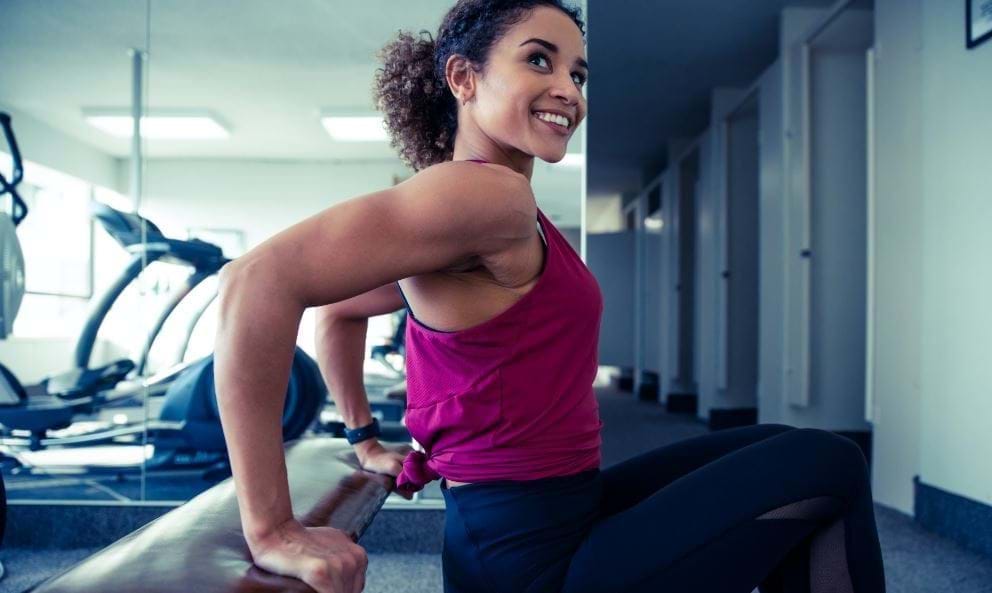
- Bench dips: Using a sturdy bench or chair
- Close-grip push-ups: Hands closer than shoulder-width
These are great for beginners and can be done almost anywhere.
2. Free Weight Exercises
Using dumbbells or barbells, you can target the triceps more directly:
- Overhead tricep extension: Lifts a weight above your head and lowers it behind
- Skullcrushers: Lying on a bench, lowering the weight to your forehead
- Kickbacks: Bending forward, straightening your arm behind you
These exercises help build size and strength.
3. Machine And Cable Exercises
Gym machines and cables allow for a controlled, consistent resistance:
- Tricep pushdowns: Using a cable machine with a rope or bar
- Cable overhead extension: Similar to the free weight version, but with cables
- Reverse grip pushdowns: Hands face up, working the medial head
These are good for isolating the muscle and avoiding cheating with other body parts.
4. Compound Movements
Some bigger exercises also work the triceps:
- Bench press (especially close-grip): Works chest and triceps
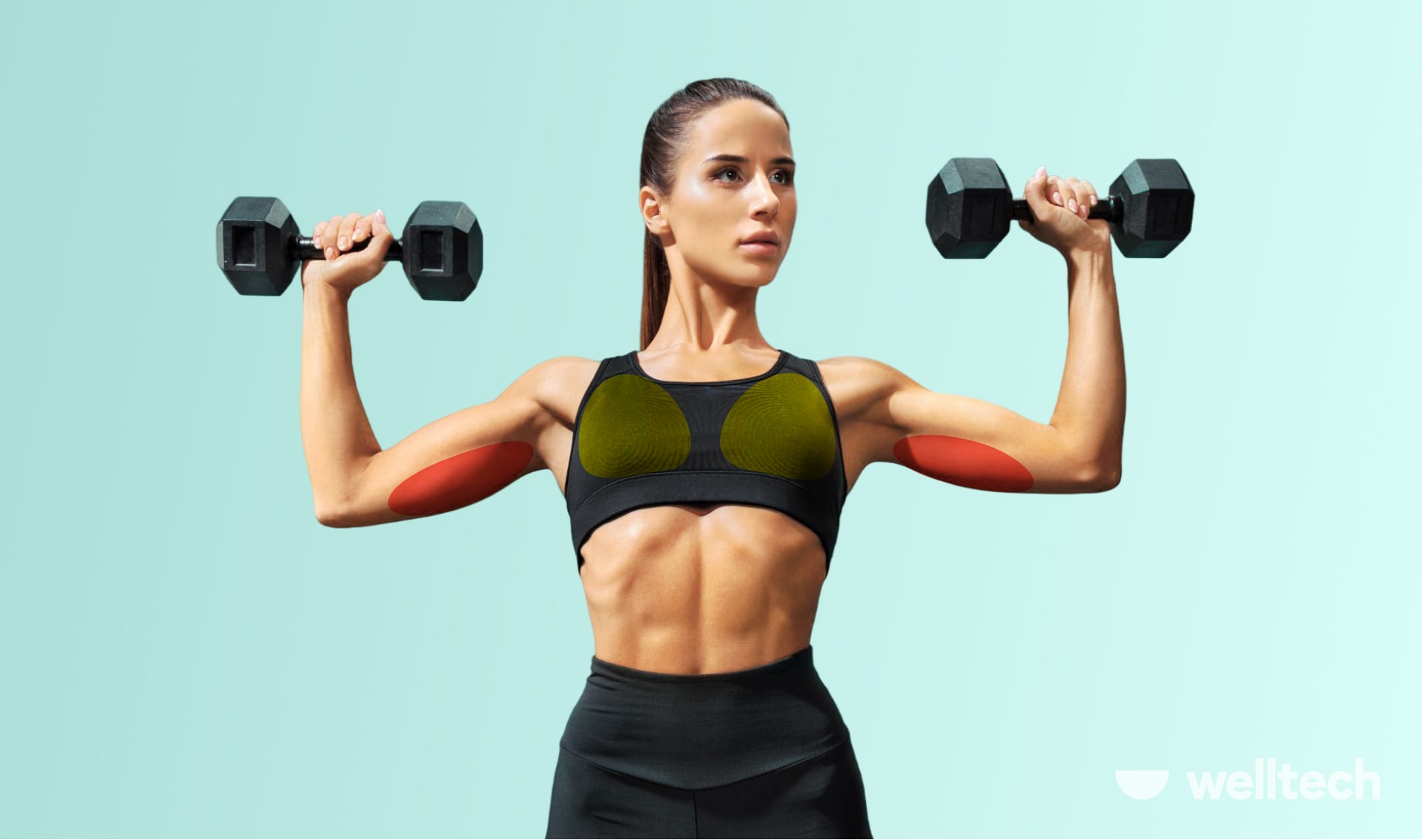
- Shoulder press: Triceps help extend the arm overhead
- Dips: Works chest, shoulders, and triceps
Compound moves are excellent for building overall strength.
Sample Tricep Workout Routine
A balanced tricep workout should hit all three heads of the muscle. Here’s an example routine for most people, whether you’re at home or in the gym:
- Close-Grip Bench Press – 3 sets of 8-10 reps
- Tricep Pushdown (Cable or Band) – 3 sets of 10-12 reps
- Overhead Tricep Extension (Dumbbell or Cable) – 3 sets of 10-12 reps
- Diamond Push-Ups – 2 sets to failure (as many reps as possible)
Rest 60–90 seconds between sets. Use a weight that’s challenging but lets you finish each set with good form.
Tip: If you’re new, start with bodyweight moves and lighter weights. Focus on quality over quantity.
Common Mistakes In Tricep Training
Even experienced lifters make errors that slow progress or cause injuries. Watch out for these common mistakes:
1. Using Too Much Weight
It’s tempting to lift heavy, but poor form puts stress on your elbows and shoulders. Start with a weight you can control. Increase the load only when you can do all reps with perfect form.
2. Ignoring Full Range Of Motion
Partial reps don’t fully work the muscle. Lower the weight until your elbow is fully bent, then extend completely. This ensures all three heads are engaged.
3. Neglecting Overhead Movements
Many stick to pushdowns and dips, ignoring overhead extensions. Overhead moves target the long head, which builds arm size and strength.
4. Training Triceps After Chest Or Shoulder Work
If you do chest or shoulders first, your triceps may be too tired to train well. Try working triceps on a separate day or before these muscle groups sometimes.
5. Not Warming Up
Cold muscles are more likely to get hurt. Spend 5–10 minutes warming up your arms and shoulders before you start.
Tricep Training For Different Goals
Your tricep workout should match your goal—strength, size, endurance, or toning. Here’s how to adjust your routine:
| Goal | Reps per Set | Sets | Rest Between Sets | Best Exercises |
|---|---|---|---|---|
| Strength | 4-8 | 3-5 | 2-3 min | Close-Grip Bench, Dips |
| Size (Hypertrophy) | 8-12 | 3-4 | 1-2 min | Pushdowns, Overhead Extensions |
| Endurance/Toning | 12-20 | 2-3 | 30-60 sec | Bodyweight Exercises |
Adjust weights, reps, and exercises based on what you want to achieve. For most people, a mix of these styles gives the best results.
Tricep Workout Myths
There’s a lot of confusion about how to train triceps effectively. Let’s clear up some common myths:
Myth 1: “you Don’t Need Direct Tricep Work”
Some say compound moves like bench press are enough. While these do work the triceps, isolation exercises are needed for full development and strength.
Myth 2: “heavy Weights Only Build Size”
Light weights with high reps can also build muscle and improve endurance. Both methods have a place in a balanced program.
Myth 3: “women Should Avoid Tricep Workouts”
Many women skip tricep training, fearing “bulky” arms. In reality, strong triceps create lean, toned arms and help with daily activities.
Myth 4: “tricep Kickbacks Are Useless”
Kickbacks can be effective if done with proper form and control. The key is not to swing the weight, but to squeeze at the top of the movement.
How To Progress Safely
Progression is the key to results. Here’s how to keep improving your tricep strength and size without injury:
- Increase Weight Gradually: Add small amounts of weight as you get stronger, but never sacrifice form.
- Add Reps or Sets: If you can do more reps with good form, add a set or increase the rep count.
- Try New Exercises: Every 4–6 weeks, change some exercises to challenge your muscles in new ways.
- Track Your Workouts: Write down your sets, reps, and weights. This helps you see progress and avoid plateaus.
- Listen to Your Body: If you feel pain (not just muscle fatigue), stop and rest. Overtraining can lead to injuries.
Credit: welltech.com
The Role Of Nutrition In Tricep Development
You can train hard, but without the right nutrition, you won’t see the best results. Here are key tips:
- Protein: Essential for muscle repair and growth. Aim for 0.7–1 gram per pound of body weight daily.
- Carbohydrates: Give you energy for workouts. Include whole grains, fruits, and vegetables.
- Healthy Fats: Support hormone production and joint health. Include nuts, olive oil, and fatty fish.
- Hydration: Muscles need water to function. Drink throughout the day, not just during workouts.
- Recovery: Muscles grow when you rest. Get enough sleep and allow 48 hours between hard tricep sessions.
Don’t forget, even the best workout won’t work if you’re not eating enough to support growth.
Advanced Tips For Better Results
If you’ve been training for a while, these advanced methods can help you break through plateaus:
1. Use Supersets
Pair two tricep exercises back-to-back with no rest. For example, do pushdowns followed immediately by overhead extensions. This saves time and increases intensity.
2. Try Drop Sets
After your last set, reduce the weight and do more reps until you can’t continue. This keeps the muscle under tension longer, which can boost growth.
3. Change Your Grip
Switching from a regular grip to a reverse grip on pushdowns or presses can target different parts of the triceps.
4. Add Isometric Holds
Pause and hold at the top of each rep (fully extended arm) for 2–3 seconds. This builds endurance and adds a challenge.
5. Focus On The Negative
Slowly lower the weight for 3–4 seconds each rep. This “eccentric” phase creates more muscle damage, leading to better gains.
How Often Should You Train Triceps?
Most people see best results with 2 tricep workouts per week, with at least 48 hours between sessions. This allows enough time for recovery and growth.
If you train chest or shoulders on separate days, your triceps may get worked more often. Be careful not to overtrain—elbow pain and fatigue are signs you need more rest.
Real-life Examples: Tricep Training Success
Here’s how tricep workouts can make a difference for different people:
- Busy Parent: After adding 2 tricep sessions a week, a mother of two found she could lift her children with less effort and had fewer aches in her arms.
- Office Worker: A man in his 40s struggled with shoulder pain from poor posture. Focusing on tricep strength improved his push-ups and reduced elbow discomfort.
- Athlete: A swimmer noticed faster lap times after including overhead tricep extensions twice a week, increasing finishing power in each stroke.
These examples show that tricep workouts aren’t just for bodybuilders—they help people at all fitness levels.

Credit: toneopfit.com
Non-obvious Insights For Better Tricep Workouts
Most beginners focus only on visible results. Here are some extra tips that are often missed:
- Mind-Muscle Connection: Focus on squeezing your triceps at the top of each rep. This simple trick can double your results by activating more muscle fibers.
- Elbow Position Matters: Keep your elbows still during each exercise. Swinging or moving your elbows takes work away from the triceps and can cause joint pain.
- Stretch Between Sets: Gently stretching your triceps between sets can help with muscle growth and recovery.
- Include Single-Arm Moves: Training one arm at a time (like single-arm pushdowns) helps correct imbalances and builds better symmetry.
When To See A Professional
If you have elbow or shoulder pain, or if you’re not sure about your form, it’s smart to see a fitness professional. They can check your technique and suggest adjustments. This small investment can prevent injuries and help you reach your goals faster.
Credit: www.puregym.com
Frequently Asked Questions
What’s The Best Tricep Exercise For Overall Growth?
There’s no single “best” exercise, but close-grip bench presses and tricep pushdowns are very effective for most people. These moves target all three heads of the triceps and allow you to use enough weight for growth.
How Long Does It Take To See Results From Tricep Workouts?
Most people notice stronger, more defined triceps in 4 to 8 weeks if they train consistently and eat well. Results can vary based on genetics, diet, and overall workout routine.
Can You Train Triceps And Biceps On The Same Day?
Yes, many programs pair triceps and biceps in the same workout. This is called an “arm day.” Just be sure not to overdo it, and give your arms enough rest between sessions.
Is It Normal For Elbows To Hurt During Tricep Workouts?
Mild discomfort can be normal, but sharp pain is not. Pain often means poor form, too much weight, or not enough warm-up. If pain continues, stop training and consult a professional.
Do Tricep Workouts Help With Fat Loss In The Arms?
Tricep workouts build muscle, which helps your arms look toned as you lose body fat. But you cannot “spot reduce” fat from one area. Combine tricep training with overall fat loss through diet and cardio for best results.
Strong, defined triceps are more than just a sign of fitness—they help you move better, protect your joints, and boost your confidence. A smart tricep workout routine not only shapes your arms but also improves your strength for sports and daily life. Remember to train with good form, eat right, and give your muscles time to recover. For more about muscle anatomy and training, you can visit the Wikipedia Triceps Brachii Muscle page. By making tricep training part of your regular routine, you’ll enjoy the benefits for years to come—stronger, healthier, and more capable arms.
