

Should You Do Chest Or Triceps First for Maximum Muscle Gains?
Every gym goer faces a simple but important question: Should you train chest or triceps first? This choice seems small, but it can change your workout results. If you want bigger muscles, better strength, and faster progress, the order matters. Some people say chest first is best, others prefer triceps. But which is right for you? The answer depends on your goals, fitness level, and how you train. This article will guide you through all the key factors, so you can make a smart decision for your next workout.
Understanding Chest And Triceps Training
Both chest and triceps are major upper body muscles. The chest, or pectoralis major, is used in pushing movements like bench press and push-ups. The triceps, or triceps brachii, helps extend the elbow and is crucial for exercises like dips and triceps extensions.
When you do chest exercises, your triceps help. For example, during a bench press, your chest does most of the work, but your triceps support the movement. This is called a compound exercise. Pure triceps exercises, like skull crushers, focus only on the triceps.
Knowing how these muscles work together is the first step. If you train them in the same session, the order you choose can affect strength, muscle growth, and even injury risk.
It’s also important to understand that both muscles are involved in daily activities and many gym movements. When you push a door or get up from the ground, your chest and triceps are both active. In the gym, this overlap means that training one muscle can impact the other’s performance.
For example, if you do heavy bench presses, your triceps get worked even if you haven’t targeted them directly yet.
Many beginners think of these muscles as separate, but in reality, they often work as a team. This is why deciding which muscle to train first is more complex than just picking your favorite exercise. Understanding this relationship will help you make better choices for your workout.
Why Exercise Order Matters
The order of exercises in your workout can change your results. Here’s why:
- Muscle Fatigue: The first muscle you train is fresh. You can lift heavier, do more reps, and push harder. The second muscle is already tired from supporting the first.
- For example, if you do chest first, your triceps help, but they’re not the main focus. When you move to triceps-only exercises, they’re not at full power. The same is true if you switch the order.
- Progression: Training your main goal first lets you make the fastest progress. If chest growth is your goal, start with chest.
- Progression is not just about lifting more weight. It’s also about improving form, muscle control, and range of motion. Doing your priority muscle first gives you the best chance for progress.
- Injury Prevention: Fatigued muscles are more likely to get injured. If you train triceps first, your triceps may be too tired to support heavy chest exercises safely.
- For example, a tired triceps may not stabilize your elbow during a bench press, leading to joint pain or even a strain.
- Performance: Studies show you can do about 10–20% more weight or reps for the first muscle group you train compared to the second.
- This extra effort adds up over weeks and months, leading to bigger gains.
Many beginners don’t realize that exercise order affects not just the targeted muscles, but the entire workout quality. If you always train triceps first, you may never reach your full potential in chest exercises.
Another key detail most people miss is that exercise order can affect your motivation and energy. When you start with your favorite or priority muscle, you feel stronger and more excited about your workout. This boost can help you stay consistent and enjoy your training more.

Credit: www.youtube.com
Chest First: Benefits And Drawbacks
Benefits Of Training Chest First
- Maximum Chest Activation: The chest is fresh, so you can lift heavier and do more reps.
- Better Compound Exercise Performance: Chest exercises like bench press need strong triceps for support. If your triceps are tired, your chest won’t get enough work.
- Higher Strength Gains: You can push harder in chest movements, leading to greater strength over time.
- Safer Heavy Lifting: When triceps are fresh, they stabilize the elbow during chest presses, reducing injury risk.
- Efficient Use of Energy: Most people have more energy at the start of the workout, so beginning with chest allows you to use that energy for big, demanding lifts.
- Easier to Track Progress: Since chest exercises are often compound and use more weight, it’s easier to notice and measure improvement when you do them first.
Drawbacks Of Training Chest First
- Triceps Fatigue: After chest exercises, your triceps are partly tired. You may lift less weight in triceps-only exercises.
- Less Triceps Isolation: If your main goal is triceps size, training them after chest may limit their growth.
- Possible Muscle Imbalance: Over time, if you always train chest first, your triceps may not catch up, leading to a strength gap between chest and arms.
- Longer Recovery for Triceps: If your triceps are worked hard during both chest and triceps exercises, they might need more recovery time between sessions.
Practical Example
Imagine you do bench press first. You can push your maximum weight. After several sets, you move to triceps pushdowns. Your triceps are already tired from bench press, so you may only manage lighter weights or fewer reps.
Let’s say you bench press 80 kg for 8 reps when fresh. After that, you move to triceps pushdowns and can only use 25 kg for 12 reps, even though you might manage 30 kg if your triceps were fresh.
This means your chest gets the most benefit, but your triceps might not get enough stimulus for maximum growth.
A less obvious point: If your goal is to improve your bench press form or break a plateau, chest first is almost always better. You’ll have the focus and energy to work on technique.
Triceps First: Benefits And Drawbacks
Benefits Of Training Triceps First
- Maximum Triceps Activation: Triceps are fresh, so you can focus on isolating and growing them.
- Greater Mind-Muscle Connection: Training triceps first helps you feel and control the muscle better during exercises.
- Prioritizing Weak Points: If your triceps lag behind your chest, working them first can help balance your physique.
- Improved Muscle Symmetry: Giving triceps priority can help avoid the common “big chest, small arms” look.
- Better Performance on Isolation Movements: You can use heavier weights and better form in triceps exercises if you haven’t already fatigued them.
Drawbacks Of Training Triceps First
- Reduced Chest Strength: Tired triceps may weaken your performance in chest exercises, especially presses.
- Higher Injury Risk: Weak triceps can’t support heavy chest lifts, which may lead to poor form or injury.
- Less Chest Activation: You may not fully stimulate your chest muscles if triceps fail early during compound lifts.
- Challenging for Progression: If your triceps fatigue before your chest during compound lifts, it’s harder to overload the chest and see progress.
Practical Example
You start with triceps extensions. After a few sets, your triceps are fatigued. When you move to bench press, your triceps can’t support heavy weights, so your chest doesn’t get enough work.
Suppose you usually bench press 70 kg for 10 reps, but after triceps isolation, you can only manage 60 kg for 7 reps. Your triceps give out first, and your chest doesn’t get fully worked. Over time, this could slow your chest growth, even if your triceps improve.
A hidden insight: Training triceps first can help break through a triceps strength plateau. If your lockout is weak in the bench press, focusing on triceps first for a few weeks might help.
How Your Goals Affect Exercise Order
Your training goal decides which muscle group to train first.
For Chest Growth
If you want a bigger, stronger chest, train chest first. This lets you:
- Use maximum weight
- Get full chest activation
- Make faster progress in chest size and strength
- Practice good form on compound chest lifts, which is critical for safety and progress
You’ll also be able to focus on chest mind-muscle connection before fatigue sets in. This can make a big difference, especially for people who struggle to “feel” their chest working during presses.
For Triceps Growth
If your main goal is triceps size or strength, train triceps first. This helps you:
- Focus on triceps isolation
- Lift heavier in triceps movements
- Improve weak triceps for better balance
- Strengthen your lockout in pressing movements
You may also notice improved arm definition and size over time. This approach is often used by people who feel their triceps are a weak point, or for those who compete in sports where strong arms are important.
For Balanced Upper Body
If you want both chest and triceps to grow together, alternate the order. For example, do chest first one week, triceps first the next. This prevents one muscle from lagging behind and helps overall balance.
This method is also good for people who find they plateau easily. Changing the order can “shock” your muscles and encourage new growth. Tracking your results each week will show you if one order works better for you.
For Strength Sports (e.g., Powerlifting)
In strength sports, chest (bench press) is often the main lift. Triceps support but are secondary. Training chest first is almost always recommended.
Serious lifters also use chest-first routines to practice competition-style lifts when they are at their strongest. This can help with technique and mental focus, both important in strength sports.
Workout Structure: Examples For Chest And Triceps Days
Your workout structure changes based on which muscle you train first. Here are two sample routines.
Chest-first Routine
- Bench Press – 4 sets x 8 reps
- Incline Dumbbell Press – 3 sets x 10 reps
- Chest Fly – 3 sets x 12 reps
- Triceps Pushdown – 3 sets x 12 reps
- Overhead Triceps Extension – 2 sets x 15 reps
With this structure, you focus all your energy on chest movements first. Your triceps act as helpers during presses, then you finish them off with isolation work. If you want to save time, you can combine the last two triceps exercises into a superset.
Triceps-first Routine
- Triceps Rope Pushdown – 4 sets x 10 reps
- Overhead Triceps Extension – 3 sets x 12 reps
- Bench Press – 4 sets x 8 reps
- Incline Dumbbell Press – 3 sets x 10 reps
- Chest Fly – 2 sets x 15 reps
Here, you give your triceps maximum attention. When you move to chest exercises, start with lighter weights and focus on form, since your triceps will be tired. This routine is good for people with strong chests but weaker arms.
Extra tip: No matter which routine you choose, warm up both chest and triceps properly. This helps prevent injury and gets your muscles ready for hard work.
Common Mistakes In Chest And Triceps Workouts
Many people don’t realize these mistakes until they see slow progress or get injured.
- Ignoring Exercise Order: Doing chest and triceps randomly without a plan.
- Overtraining: Doing too many sets for both muscles, leading to fatigue and poor recovery.
- Poor Warm-Up: Not warming up both chest and triceps can lead to injury.
- Bad Form: Lifting heavy when triceps are tired can cause poor technique, especially in bench press.
- Skipping Compound Movements: Focusing only on isolation exercises limits growth.
- Not Tracking Progress: Without a log, you won’t know if your chosen order is helping.
- Using Too Many Advanced Techniques: Drop sets, forced reps, or supersets can be useful, but overusing them leads to burnout, especially if you’re working two connected muscles in one session.
A less obvious mistake: Rushing Rest Periods. When training both chest and triceps, short rest can make fatigue worse. Take 60-90 seconds between heavy sets for best results.
Data And Research: What Science Says
Studies show exercise order affects strength and muscle growth. For example, a research review found that the first muscle group trained in a session gets more activation and growth. One study showed training chest first increased bench press strength by 15% compared to triceps-first training.
Another study compared muscle fatigue in different orders. Participants who trained triceps first had weaker bench press results and more elbow discomfort. Those who trained chest first had better overall performance and fewer injuries.
Researchers also looked at muscle activation with EMG (electromyography). They found that when you train chest first, the triceps are still able to support pressing movements, but when you train triceps first, their fatigue limits chest activation during compound lifts.
Here’s a summary of research findings:
| Training Order | Bench Press Strength | Triceps Isolation Strength | Injury Risk |
|---|---|---|---|
| Chest First | High | Medium | Low |
| Triceps First | Medium | High | Medium |
The data shows that your main goal should decide your training order.
One subtle insight: Research also suggests that changing the order every 4–6 weeks can help avoid plateaus and keep motivation high. This is especially useful for people who train both muscles together frequently.
Comparing Chest First Vs Triceps First
To help you choose, here’s a clear side-by-side comparison.
| Factor | Chest First | Triceps First |
|---|---|---|
| Best For | Chest growth, strength | Triceps isolation, weak triceps |
| Compound Exercise Performance | Better | Weaker |
| Isolation Exercise Performance | Weaker | Better |
| Injury Risk | Lower | Higher in chest movements |
| Progression Speed | Faster for chest | Faster for triceps |
| Fatigue | Triceps tired after chest | Chest tired after triceps |
If your main lifts are chest-focused, chest first makes sense. But if you want bigger arms or need to bring up your triceps, try triceps first for a cycle. Adjust based on your results and how your body feels.
Advanced Tips And Non-obvious Insights
Most beginners focus only on exercise order. But there are deeper factors that affect your results:
1. Muscle Recovery Time
If you train both chest and triceps in one session, your triceps may need more recovery. The triceps are involved in both chest and their own exercises. Not allowing enough rest can lead to overtraining and slow progress.
- Extra tip: If you notice elbow pain or poor progress, add an extra rest day before training triceps again.
2. Exercise Selection Matters
Choosing the right exercises is as important as order. For example, a close-grip bench press works both chest and triceps. If you want pure isolation, choose exercises that target one muscle.
- For people wanting more chest, pick wide-grip presses and flyes. For more triceps, use cable pushdowns or skull crushers.
3. Training Frequency
If you train chest and triceps multiple times a week, alternate the order. This helps prevent overuse and keeps both muscles growing.
- For example: Chest first on Monday, triceps first on Thursday. This gives both muscles a chance to lead.
4. Mind-muscle Connection
Focus on feeling the target muscle during each exercise. When you train chest first, concentrate on chest contraction. When you train triceps first, focus on full triceps extension. This improves growth and reduces injury risk.
- Use slow, controlled reps during isolation exercises for best results.
5. Listen To Your Body
Some people recover faster or slower. If you feel constant soreness in triceps, reduce sets or switch the order. The best routine is one that fits your recovery and progress.
- Keep a training log to track how you feel after each session. Adjust as needed.
6. Warm-up And Mobility
A good warm-up is often overlooked but is critical for performance and safety. Spend 5–10 minutes on light cardio, then do dynamic stretches for your shoulders, chest, and triceps.
- Include shoulder circles, arm swings, and light push-ups in your warm-up.
How To Decide: Simple Guidelines
Here’s a practical way to choose the right order for you:
- Identify Your Main Goal: Do you want bigger chest or triceps?
- Check Your Weak Points: Is your chest or triceps lagging behind?
- Consider Your Workout Plan: Do you train chest and triceps together often?
- Try Both Orders: Experiment for 2–3 weeks with each order and track your progress.
- Adjust Based on Results: If you see better progress with chest first, stick with it. If triceps grow faster with triceps first, keep that routine.
- Get Feedback: Ask a coach or experienced lifter to check your form and give advice based on your goals.
Remember, no single method works for everyone. Your body, experience, and even your mood can affect which order is best.
Real-world Examples
Example 1: Beginner With Weak Triceps
Maria just started training. Her chest grows fast, but her triceps are weak. She decides to train triceps first to focus on them. After 4 weeks, her triceps are stronger, and her bench press improves.
She also notices her arm definition improves, which gives her more confidence. By tracking her weights, she sees steady progress in both triceps and chest over two months.
Example 2: Intermediate With Chest Plateau
John trains chest and triceps together. He’s stuck at the same bench press weight. He switches to chest first. After 3 weeks, he breaks his plateau and adds 10 lbs to his bench press.
John also realizes his triceps feel less sore and recover faster between sessions. This allows him to add an extra arm day later in the week, boosting his gains.
Example 3: Advanced Bodybuilder
Lena alternates chest and triceps order each week. She tracks her progress and finds both muscles grow evenly. She avoids overtraining and keeps her physique balanced.
She also uses different chest and triceps exercises each week for variety. This approach keeps her motivated and helps her avoid injuries from repetitive movements.
Example 4: Busy Professional
Sam only has time to train three days a week. He pairs chest and triceps together, starting with chest first for two months, then switches to triceps first for one month. He finds this keeps his progress steady and reduces boredom.
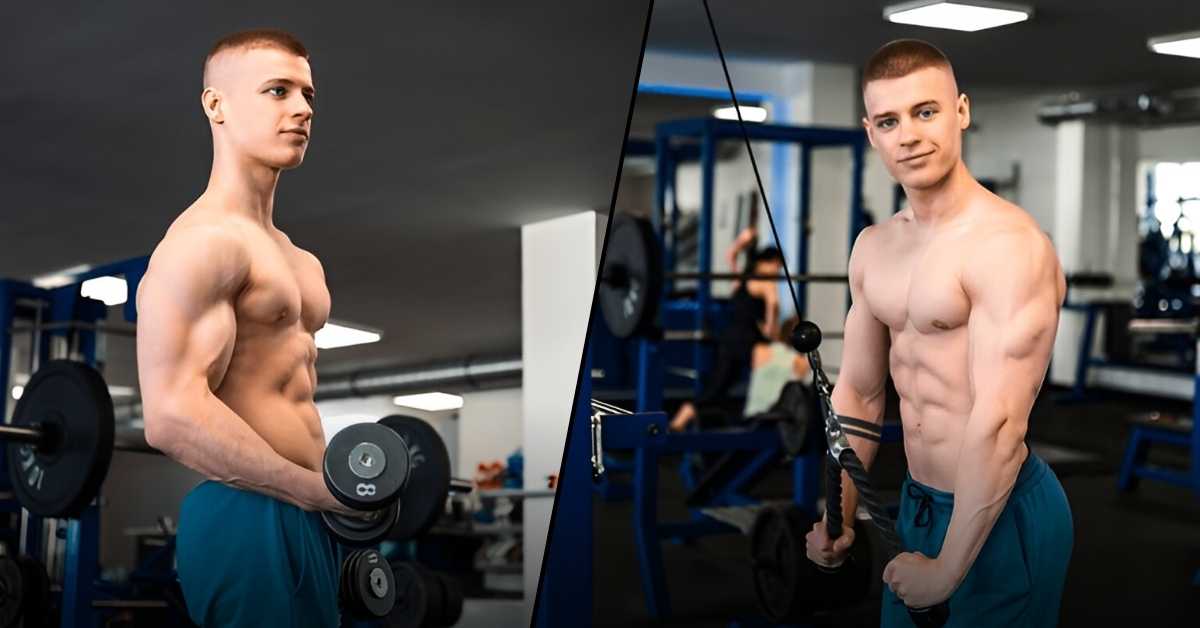
Credit: communitystrengthaustin-personaltraining.com
Frequently Asked Questions
Is It Okay To Train Chest And Triceps Together?
Yes, it’s common and effective. Chest exercises work triceps as secondary muscles, so pairing them saves time and improves synergy. This is especially true if you want to focus your training on pushing strength.
Will Training Triceps First Ruin My Bench Press?
Not always, but it can reduce your bench press strength if your triceps are fatigued. If bench press is your priority, train chest first. If you only care about triceps growth, it’s fine to do triceps first.
How Many Sets Should I Do For Chest And Triceps?
Most people do 12–16 sets for chest and 8–12 sets for triceps per week. Adjust based on your recovery and progress.
- For beginners, start with fewer sets and add more as you get stronger.
- Advanced lifters may need more volume but should watch for signs of overtraining.
Can I Train Chest And Triceps On Separate Days?
Yes. This gives each muscle more recovery. It’s a good option if you have time and want maximum growth. For example, train chest on Monday and triceps on Thursday.
What If I Feel Pain During Chest Or Triceps Exercises?
Stop and check your form. Pain can mean poor technique or overtraining. Rest, use lighter weights, and consult a coach if needed.
- Never push through sharp or unusual pain, especially in the elbows or shoulders.
What If I Only Have 30 Minutes?
Pick one main chest and one main triceps exercise. Do 3–4 sets each, focusing on good form. This is enough for maintenance or beginner progress.
Final Thoughts
Choosing whether to train chest or triceps first is a key decision in your workout routine. The right order depends on your goals, muscle balance, and how you recover. For most people, training chest first gives better results in strength and growth. If your triceps are weak, training them first can help balance your physique. Remember to experiment, track your progress, and listen to your body. Smart planning and exercise order will help you reach your fitness goals faster and safer. For deeper scientific insights, you can visit PubMed Central. Your journey to a stronger upper body starts with one smart choice—make it count.

Credit: www.vbafitness.com
