

Resistance Band for Glute Workout: Build Stronger, Toned Glutes
Resistance Band For Glute Workout
Building strong, toned glutes is a common goal for many fitness fans. Whether you want to improve athletic performance, boost your metabolism, or simply shape your lower body, a glute workout can make a big difference. But you don’t need expensive gym machines or heavy weights to get results. A simple tool like the resistance band can be incredibly effective for targeting your glute muscles. This article will guide you through everything you need to know about using resistance bands for glute workouts—why they work, how to use them, the best exercises, tips to avoid mistakes, sample routines, and much more. If you’re ready to take your glute training to the next level, keep reading.
Why Resistance Bands Are Great For Glute Workouts
Resistance bands have become very popular because they are simple, affordable, and easy to use anywhere. But what makes them especially good for glute workouts? The answer lies in their unique ability to add constant tension throughout each exercise. Unlike free weights, which rely on gravity, bands create resistance in both the upward and downward phase of movement. This means your glutes have to work harder for longer.
Another key advantage is their versatility. Resistance bands allow you to perform many different exercises and target all three glute muscles: gluteus maximus, gluteus medius, and gluteus minimus. This balanced approach helps you build shape and strength, not just size. Plus, bands are gentle on your joints, making them a safe option for beginners or people recovering from injury.
Many people don’t realize that bands can create enough resistance to challenge even advanced athletes. Choosing the right band thickness and using proper form can make a simple exercise surprisingly tough. In fact, studies show that resistance bands can activate the glutes as much as, or more than, traditional gym equipment.
How Resistance Bands Work Your Glutes
The glutes are the largest muscle group in your body. They play a big role in hip extension, abduction, and external rotation. Strong glutes help with walking, running, jumping, and lifting. Weak glutes can lead to poor posture and even back or knee pain.
Resistance bands work your glutes by:
- Forcing them to stabilize your hips during movement
- Adding extra resistance during both the stretch and squeeze of each rep
- Allowing you to train muscles from different angles
- Creating a “burn” feeling that signals muscle activation
For example, when you do a banded squat, your glutes must push your knees outward against the band’s tension. This not only works the large gluteus maximus but also wakes up the smaller stabilizer muscles. Over time, this leads to better muscle growth and strength.

Credit: www.amazon.com
Types Of Resistance Bands For Glute Training
Not all bands are the same. The type of resistance band you use can change the feel and results of your workout. Here are the most common types:
Loop Bands (mini Bands)
These are small, thick loops often made of fabric or latex. They are placed around the thighs or ankles and are perfect for glute activation exercises like clamshells and lateral walks.
Long Resistance Bands
These are flat or tube-shaped bands that can be several feet long. They’re used for bigger movements like squats, deadlifts, or hip thrusts, where you need more range.
Figure-8 Bands
These bands form a figure-8 shape and have handles. They are less common for glute training but can be useful for certain leg exercises.
Fabric Vs. Latex Bands
Fabric bands are less likely to roll or pinch the skin. They often provide higher resistance, making them a favorite for heavy glute exercises. Latex bands are stretchier and better for beginners or for high-rep, low-resistance work.
Here’s a quick comparison to help you choose:
| Band Type | Best For | Pros | Cons |
|---|---|---|---|
| Loop Bands | Activation, Isolation | Portable, Easy to Use | Limited Range |
| Long Bands | Compound Movements | Versatile, Full-Body Use | Can Be Tricky to Anchor |
| Fabric Bands | Heavy Resistance | No Rolling, Durable | Less Stretch |
| Latex Bands | Light Resistance | Stretchy, Good for Beginners | Can Roll or Tear |
For glute training, most people use loop bands made of fabric for the main exercises and latex bands for warm-up or high-rep sets.
Key Benefits Of Using Resistance Bands For Glute Workouts
There are many reasons to choose resistance bands for your glute training. Here are some of the top benefits:
- Convenience: Bands are light, portable, and easy to store. You can use them at home, in the gym, or while traveling.
- Joint-Friendly: Bands put less stress on your joints than heavy weights. This makes them safer for your knees, hips, and back.
- Affordable: A set of bands costs much less than gym memberships or equipment.
- Versatility: You can train every part of your glutes with different exercises and resistance levels.
- Great for All Levels: Bands work for both beginners and advanced users. You can choose light or heavy resistance and make exercises harder by changing your stance or increasing reps.
- Constant Tension: Unlike dumbbells, bands keep your muscles engaged for the whole movement, leading to better muscle activation.
- Improve Mind-Muscle Connection: Bands help you focus on squeezing and controlling the glutes, which is key for growth.
One insight that many beginners miss: Using a band can increase glute activation by up to 40% in some exercises compared to bodyweight versions. This means you get more results with the same movement.
Credit: www.youtube.com
The Most Effective Resistance Band Glute Exercises
Let’s look at the best exercises for targeting your glutes with resistance bands. Each move hits the muscles in a different way, so mixing them gives the best results.
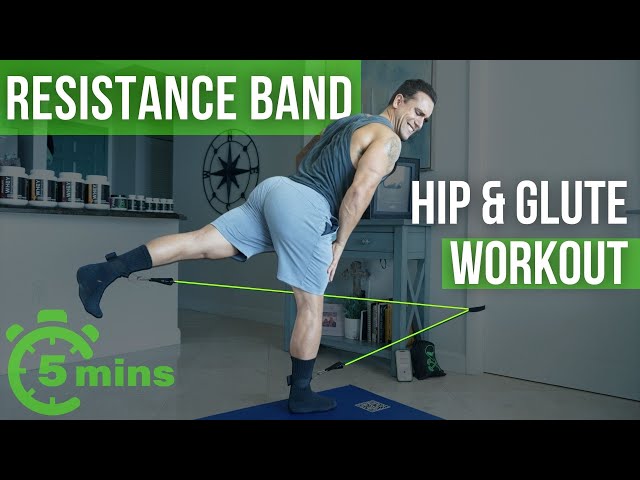
1. Banded Glute Bridge
How to do it:
- Lie on your back, knees bent, feet flat on the floor
- Place the band just above your knees
- Drive through your heels to lift your hips up, squeezing your glutes at the top
- Keep your knees pushing out against the band
- Lower back down with control
Why it works: The band forces your glutes to work harder by resisting knee collapse. This exercise is great for both strength and muscle growth.
2. Monster Walks
How to do it:
- Stand with feet hip-width apart, band around thighs or ankles
- Bend knees slightly and lower into a half squat
- Step sideways, keeping tension on the band, then repeat the other way
Why it works: This move targets the gluteus medius, which helps shape the side of your hips.
3. Standing Kickbacks
How to do it:
- Loop the band around your ankles
- Stand tall, hold onto a wall for balance
- Kick one leg straight back, squeezing your glute
- Return and repeat
Why it works: This isolates the gluteus maximus, which gives your butt its shape.
4. Clamshells
How to do it:
- Lie on your side, knees bent, band above knees
- Keep feet together, lift top knee up, then lower
- Focus on squeezing your glute
Why it works: This activates the small stabilizing muscles in your hips, which are often neglected.
5. Banded Squats
How to do it:
- Place the band above your knees
- Stand with feet slightly wider than hips
- Squat down, keeping knees pushed out, then stand back up
Why it works: The band adds tension, making your glutes work harder to control your knees and hips.
6. Fire Hydrants
How to do it:
- Get on hands and knees, band above knees
- Lift one knee out to the side, keeping hips level
- Lower and repeat
Why it works: This move hits the gluteus medius and minimus, helping round out the shape of your glutes.
7. Hip Thrusts With Band
How to do it:
- Sit on the floor with upper back against a bench, knees bent
- Band above knees
- Drive hips up, squeezing glutes, then lower
Why it works: Hip thrusts are one of the best glute builders. The band makes them even more effective by forcing outward knee pressure.
8. Lateral Band Walks
How to do it:
- Band around your thighs or ankles
- Slight squat, step sideways for several steps, then return
Why it works: Builds hip strength and improves balance.
9. Single-leg Glute Bridge
How to do it:
- Lie on your back, band above knees
- Lift one leg, drive through the other heel to lift hips
- Lower and repeat
Why it works: Adds balance and stability work while hitting the glutes hard.
10. Donkey Kicks
How to do it:
- On hands and knees, band above knees
- Lift one heel toward the ceiling, squeezing glutes
Why it works: Focuses on the upper part of the gluteus maximus.
Mixing these exercises in your weekly routine can lead to faster, more balanced results.
How To Choose The Right Resistance Band For Glutes
Picking the right band can make your workout more effective and enjoyable. Here’s how to decide:
Band Thickness And Resistance Level
Bands come in different thicknesses and tensions, usually marked as light, medium, heavy, or extra-heavy. Beginners should start with a light or medium band to learn the movements and avoid injury. As you get stronger, move up to heavier bands.
Material
- Fabric bands: Good for heavy resistance and comfort. They don’t roll up.
- Latex bands: More stretch, better for fast movements or warm-ups.
Length
Shorter bands (mini bands) are best for glute isolation moves. Longer bands are useful for compound exercises like squats or hip thrusts.
Durability
Look for bands that don’t snap easily. Fabric bands usually last longer, but high-quality latex bands can also be durable if cared for.
Here’s a quick comparison:
| Feature | Fabric Band | Latex Band |
|---|---|---|
| Comfort | High | Medium |
| Resistance | Medium-Heavy | Light-Heavy |
| Durability | Very Durable | Moderate |
| Portability | Good | Excellent |
Price
You don’t need to spend a lot. A good set of bands can cost between $10 and $30.
Brand Reputation
Choose brands with strong reviews and safety records. Some unknown brands may have weak bands that break easily.
Sample Resistance Band Glute Workout Routines
A solid glute workout should combine several exercises, train all parts of your glutes, and include enough sets and reps to see progress. Here are three routines for different fitness levels:
Beginner Routine
- Banded Glute Bridge: 3 sets of 12-15 reps
- Clamshells: 3 sets of 12 reps per side
- Lateral Band Walks: 2 sets of 10 steps each direction
- Standing Kickbacks: 2 sets of 12 reps per leg
Rest 45 seconds between sets. Focus on slow, controlled movement.
Intermediate Routine
- Hip Thrusts with Band: 4 sets of 10-12 reps
- Monster Walks: 3 sets of 12 steps each direction
- Fire Hydrants: 3 sets of 15 reps per side
- Single-Leg Glute Bridge: 3 sets of 10 reps per leg
Rest 30-60 seconds between sets. Increase band resistance if needed.
Advanced Routine
- Banded Squats: 4 sets of 15 reps
- Banded Glute Bridge (hold for 3 seconds at the top): 4 sets of 12 reps
- Standing Kickbacks: 3 sets of 15 reps per leg
- Clamshells (slow tempo): 3 sets of 20 reps per side
- Lateral Band Walks (double band): 4 sets of 12 steps each direction
Rest 20-45 seconds between sets. Push for strong glute contraction on every rep.
For best results, train your glutes 2-3 times a week. Allow at least one day of rest between workouts.
Common Mistakes When Using Resistance Bands For Glutes
Avoid these mistakes to get the most out of your workouts:
- Letting the knees collapse inward: Always push your knees out against the band’s tension, especially in squats and bridges.
- Using bands that are too light or too heavy: Too light, and you won’t challenge your muscles. Too heavy, and you may use poor form or recruit other muscles.
- Not controlling the movement: Jerky or fast reps use momentum, not muscle. Slow down and squeeze your glutes.
- Skipping warm-up: Warming up with a light band can improve muscle activation and prevent injury.
- Neglecting all three glute muscles: Use a mix of exercises to hit the gluteus maximus, medius, and minimus.
- Ignoring progression: As you get stronger, increase resistance or reps to keep seeing results.
Many beginners also forget to keep their core engaged during glute exercises. A strong core helps you get more out of every rep and keeps your back safe.
How To Progress And Get Results With Resistance Bands
Getting stronger and building glutes with bands is about more than just doing the same workout every week. Here’s how you can progress:
- Increase Band Resistance: Move up to a heavier band as exercises get easier.
- Add More Reps or Sets: Try adding 2-3 reps or an extra set over time.
- Change Exercise Variations: Switch up your exercises to challenge your glutes in new ways.
- Slow Down the Tempo: Doing reps more slowly increases time under tension, leading to more muscle growth.
- Pause and Squeeze: Hold the top of each rep for 2-3 seconds to improve muscle activation.
Tracking your progress is important. Keep a simple workout log with the exercises, bands used, reps, and sets. This will help you see where you’re improving and where to push harder.
Combining Resistance Bands With Other Glute Training Methods
While bands alone can give great results, combining them with other methods can be even more powerful:
- Bodyweight Exercises: Add bands to moves like squats, lunges, or bridges for extra challenge.
- Free Weights: Use bands with dumbbells or barbells for advanced overload and new muscle growth.
- Plyometrics: Try banded jump squats or banded lateral hops for explosive power.
Many athletes use bands for glute activation before heavy lifts. This wakes up the glutes and makes sure they are firing properly, reducing injury risk and improving performance.

Credit: nilds.gov.ng
How To Warm Up Glutes With Resistance Bands
Warming up your glutes is a step many people skip—but it can make a big difference. A proper warm-up increases blood flow, improves muscle activation, and helps prevent injury.
Here’s a quick warm-up routine with a light band:
- Banded Glute Bridge: 10 reps
- Clamshells: 10 reps per side
- Lateral Band Walks: 10 steps each direction
- Fire Hydrants: 8 reps per side
Perform each exercise in a circuit, repeating the whole circuit twice. This only takes about 5 minutes but can dramatically improve the quality of your main workout.
Resistance Band Glute Training: Myths And Real Facts
Many myths surround resistance band training. Here are a few, along with the real facts:
- Myth: Bands can’t build real muscle.
- Fact: Bands can create enough resistance for muscle growth, especially if you use proper form and progress over time.
- Myth: Bands are only for beginners.
- Fact: Even elite athletes use bands for glute activation and to add new challenges to their training.
- Myth: You need heavy weights for glutes.
- Fact: Bands can activate your glutes just as well, and sometimes better, than weights.
A study published in the *Journal of Strength and Conditioning Research* found that banded squats led to similar or greater glute activation compared to barbell squats.
How Often Should You Train Glutes With Resistance Bands?
For most people, training glutes 2-3 times per week is ideal. This gives your muscles enough stimulus to grow, while allowing time for recovery. If you’re new, start with two sessions per week. More advanced users can train three times, as long as you manage overall workout volume and avoid overtraining.
Recovery is just as important as training. Soreness after band workouts is normal, especially when starting. Make sure to get enough sleep, eat enough protein, and stretch your glutes after each session.
How To Care For Your Resistance Bands
To make your bands last longer and stay safe:
- Store bands out of direct sunlight and away from heat
- Wipe off sweat or dirt after each use
- Avoid sharp objects or rough surfaces that can damage the band
- Check bands regularly for tears or cracks and replace if needed
- Don’t overstretch bands beyond their limit
Well-cared-for bands can last for years. If you train often, you may need to replace latex bands more frequently as they lose elasticity.
Tracking Progress And Staying Motivated
One reason people give up on glute workouts is not seeing results fast enough. Progress with bands can be slower than with heavy weights, but it is still very real. Here’s how to stay motivated:
- Take progress photos every month
- Measure your hips and glutes with a tape measure
- Track your workouts in a journal or app
- Celebrate small wins, like moving up to a heavier band or doing more reps
Remember, consistency is more important than intensity. Even short, regular band workouts can lead to impressive changes over time.
Safety Tips For Resistance Band Glute Training
Safety should always come first. Here are key tips:
- Always inspect your band before use
- Anchor bands securely if needed
- Use proper form—don’t rush the movement
- Stop if you feel sharp pain
- Start with easier exercises and lighter bands if you’re new
Don’t forget to breathe. Many people hold their breath during tough band exercises, but steady breathing helps you perform better and stay safe.
Scientific Evidence Supporting Resistance Band Glute Training
Many people wonder if resistance bands are truly effective or just a fitness trend. Research shows that bands can create the necessary muscle tension for strength and growth. For example, one study found that resistance band exercises activated the gluteus maximus as much as barbell squats at certain loads (NCBI Research). Another study reported that banded hip abduction exercises were highly effective for targeting the gluteus medius.
These findings show that you can build strong, shapely glutes using only bands—if you train consistently and with the right technique.
Frequently Asked Questions
How Long Does It Take To See Results From Resistance Band Glute Workouts?
Results vary for each person, but many people notice changes in glute strength and shape after 4–6 weeks of regular training. Visible muscle growth can take longer, especially if you are new to exercise. Stay consistent and track your progress for best results.
Can I Use Resistance Bands Every Day For Glute Training?
While bands are gentle on joints, your muscles still need time to recover. Training glutes every day can lead to overuse and slow progress. For most people, 2–3 sessions per week is enough. Use rest days for stretching or light activity.
Are Resistance Band Glute Workouts Good For Beginners?
Yes, bands are perfect for beginners because they are safe, easy to use, and allow you to learn proper form. Start with lighter bands and basic exercises, then progress as you get stronger.
What Size Resistance Band Should I Use For Glute Exercises?
Most people do well with a medium to heavy band for glute moves. If you are new, start lighter to learn the form. For advanced exercises or if you are strong, use heavier bands. The band should challenge you, but not make you lose form.
Can Resistance Bands Replace Weightlifting For Glute Growth?
Bands can be very effective, especially for beginners and people training at home. For maximum muscle size and strength, some people combine bands with weights. However, you can build strong, well-shaped glutes with bands alone if you use enough resistance and the right exercises.
Strong, toned glutes are within reach for anyone willing to put in the work. Resistance bands offer a simple, affordable, and flexible way to train your glutes anywhere, anytime. With the right exercises, good technique, and a bit of patience, you can get great results—no fancy gym required.
Remember to stay consistent, push yourself to improve, and enjoy the journey toward a stronger you.
