

Leg Press Glute Workout: Sculpt Stronger, Rounder Glutes Fast
Leg Press Glute Workout: The Complete Guide for Building Stronger Glutes
The leg press machine is often seen as a tool for quad development. But with the right approach, it can become a powerful weapon for sculpting your glutes—those key muscles in your backside that drive strength, shape, and athletic performance. If you want to build a round, firm, and strong posterior, you might be surprised how effective a well-designed leg press glute workout can be.
Many gym-goers overlook the leg press for glute training, thinking only squats and hip thrusts matter. The truth is, the leg press offers unique benefits: controlled movement, adjustable angles, and the ability to push heavy loads safely. This means you can target your glutes intensely while protecting your lower back and minimizing injury risk.
In this guide, you'll discover how to set up the leg press for maximum glute activation, the best techniques, common mistakes to avoid, and how to structure your workout for real results. Whether you’re a beginner or experienced lifter, you’ll learn practical tips, sample routines, and science-backed insights that will help you get more from every rep.
Why Train Glutes On The Leg Press?
Strong glutes are about much more than looks. They stabilize your hips, improve posture, support your lower back, and generate power for running, jumping, and lifting. The leg press allows you to isolate these muscles in a controlled way, which is especially useful if you struggle to feel your glutes during squats or lunges.
Some key benefits of using the leg press for glute training:
- Isolation and focus: You can change your foot placement to shift emphasis to the glutes.
- Heavy loading: The machine supports your back, letting you lift heavier than with most free-weight glute exercises.
- Reduced injury risk: Less pressure on the spine and knees compared to squats or deadlifts.
- Suitable for all levels: Beginners can learn proper pushing mechanics, while advanced lifters can push intensity.
What many people miss is that small changes in technique—like foot position and range of motion—can dramatically increase glute engagement on the leg press. This gives you more options in your glute-building toolkit.
Glute Anatomy And Leg Press Mechanics
Before jumping into workouts, it helps to understand what you’re training. The gluteal muscles include:
- Gluteus maximus: The largest muscle, responsible for hip extension and shaping your backside.
- Gluteus medius: Sits on the side of your hip, stabilizes the pelvis, and helps with hip abduction.
- Gluteus minimus: A smaller stabilizer under the medius.
When you press through your heels and extend your hips, the glutes do most of the work. The leg press, with the right setup, mimics this motion while letting you control the load and angle.
How Foot Placement Changes Glute Activation
Your foot position on the leg press platform is the biggest factor for glute engagement. Here’s how:
- Higher foot placement: Shifts the emphasis up the posterior chain, targeting the glutes and hamstrings more.
- Wider stance: Engages the gluteus medius and minimus, especially if toes point slightly outward.
- Pushing through heels: Increases glute and hamstring activation compared to pressing through the toes.
A common mistake is keeping feet low and narrow, which mostly works the quads. Instead, experiment with a high, wide stance—your glutes will feel the difference.
Setting Up The Leg Press For Glute Emphasis
Proper setup is crucial if you want your glutes to take center stage. Here’s how to dial in your machine:
- Adjust the seat so your knees form a 90-degree angle at the bottom of the movement. Your lower back and hips should stay pressed against the pad.
- Place your feet high on the platform, about shoulder-width apart. Toes can turn out slightly if it feels more natural.
- Push through your heels as you press the weight upward. This activates the glutes and hamstrings more than the quads.
- Control the range of motion—lower the platform until your thighs are close to your chest, but don’t let your lower back round or your hips lift off the seat.
- Keep your core tight and avoid locking out your knees at the top.
Example Foot Placements
Here’s a quick comparison of foot placements and which muscles they target:
| Foot Placement | Main Muscles Worked | Glute Activation Level |
|---|---|---|
| High and Wide | Glutes, Hamstrings | High |
| Low and Narrow | Quads | Low |
| Mid and Shoulder-Width | Balanced (Quads, Glutes, Hamstrings) | Moderate |
| Wide with Toes Out | Glutes (medius/minimus), Inner Thighs | Moderate-High |
When training for glutes, most people see best results with the high and wide or wide with toes out positions.
Leg Press Glute Workout: Key Exercises And Variations
There isn’t just one way to use the leg press for glutes. Here are some of the most effective exercises and variations you can include:
1. High And Wide Leg Press
This is the most popular leg press glute exercise. Place feet high and wide, press through the heels, and lower the weight slowly. Focus on feeling the stretch in your glutes at the bottom.
- Sets: 3–5
- Reps: 8–15
- Rest: 1–2 minutes
2. Single-leg Leg Press
This variation improves muscle balance and helps fix strength differences between sides. It also forces each glute to work harder.
- Place one foot high on the platform, other foot off or on the floor.
- Perform full reps with one leg, then switch.
- Sets: 3–4 per leg
- Reps: 8–12
3. Pause Reps
Pause for 2–3 seconds at the bottom (deep stretch) before pressing up. This increases time under tension and makes the glutes work harder.
- Use with regular leg press or single-leg variation.
- Sets: 2–3
- Reps: 8–10
4. Banded Leg Press
Adding a resistance band around your thighs (above the knees) forces your glutes to stabilize and resist inward collapse (valgus).
- Use a light to medium resistance loop band.
- Focus on pushing knees outward as you press.
- Sets: 2–3
- Reps: 10–15
5. Leg Press Drop Sets
This technique involves doing a heavy set, dropping the weight, and immediately doing more reps. It quickly exhausts the glutes and stimulates growth.
- Perform 8–10 heavy reps, reduce weight by 30%, do another 8–10 reps, then drop again for max reps.
- Use sparingly, 1–2 times per workout.
Sample Comparison: Leg Press Variations For Glutes
Here’s a quick side-by-side look at how different leg press variations target your glutes:
| Variation | Main Benefit | Best For |
|---|---|---|
| High/Wide | Max glute activation | General glute growth |
| Single-Leg | Unilateral strength, muscle balance | Fixing imbalances |
| Pause Reps | Increased time under tension | Advanced muscle building |
| Banded | Extra lateral glute work | Stability, glute medius/minimus |
| Drop Sets | Muscle fatigue and metabolic stress | Breaking plateaus |
Structuring Your Leg Press Glute Workout
A balanced glute-focused workout should combine the leg press with other glute exercises for best results. Here’s how to structure your session:
Warm-up (10 Minutes)
- Dynamic stretches: Leg swings, hip circles, bodyweight squats
- Glute activation drills: Glute bridges, clamshells, or banded lateral walks
This prepares your muscles and reduces injury risk.
Main Leg Press Sets
Start with your main leg press movement (e. g. , high/wide stance). For most people, 3–5 sets of 8–15 reps is ideal. Use a weight that is challenging but lets you keep good form.
Accessory Glute Exercises
After the leg press, include 2–3 more glute exercises for full development:
- Hip thrusts or glute bridges: 3–4 sets of 10–15 reps
- Cable kickbacks or abductions: 2–3 sets of 12–20 reps
- Step-ups or lunges: 2–3 sets of 10–12 reps per leg
Finisher Or Burnout Set
End with a high-rep, low-weight set on the leg press (20+ reps) or a bodyweight glute exercise to fully exhaust the muscles.
Cooldown (5–10 Minutes)
- Static stretching: Focus on glutes, hamstrings, hips
- Foam rolling: Optional but helps recovery
Advanced Leg Press Glute Techniques
Once you master the basics, try these advanced strategies to boost glute growth and break through plateaus.
1. Slow Negatives (eccentric Reps)
Lower the weight slowly (3–5 seconds) and press up explosively. This increases muscle damage, which can lead to greater growth.
2. Partial Range Reps
At the end of a set, do partial reps in the bottom half of the motion. This keeps constant tension on the glutes.
3. Pre-exhaust Sets
Do a glute isolation exercise (like cable kickbacks) before the leg press. This tires out your glutes, forcing them to activate even more during the main lift.
4. Isometric Holds
Pause and hold at the bottom for up to 5 seconds each rep. This challenges your glutes in their most stretched position.
5. Supersets
Pair the leg press with another glute exercise (like hip thrusts) back-to-back with minimal rest. This increases intensity and time under tension.
Common Leg Press Glute Workout Mistakes
Even with the best plan, small mistakes can reduce your results or even cause injury. Here’s what to watch out for:
1. Wrong Foot Placement
Placing feet too low or too close together shifts the work to the quads. Always use a high and wide position for glute focus.
2. Letting Your Lower Back Round
If your hips lift off the pad or your back rounds, you’re losing glute tension and risking injury. Only lower the platform as far as you can keep your back flat.
3. Using Too Much Weight
Heavy weights are important, but not at the expense of form. If you can’t feel your glutes or your knees cave in, reduce the load.
4. Short Range Of Motion
Partial reps (unless deliberate) limit glute activation. Lower the platform until your thighs nearly touch your chest, without sacrificing form.
5. Not Actively Engaging Glutes
Focus mentally on squeezing your glutes with each rep. Many people “go through the motions” and miss the mind-muscle connection.
Tracking Progress And Measuring Results
How do you know if your leg press glute workout is working? Tracking is key.
Record Your Workouts
Write down:
- Weight used
- Number of reps and sets
- Foot position
- Rest periods
Over weeks, aim to increase weight, reps, or both—while keeping perfect form.
Take Progress Photos
Glute growth can be subtle at first. Take photos from the side and back every 4–6 weeks to see changes.
Measure Hip And Glute Size
Use a flexible tape measure around the widest part of your hips/glutes. Track every month to spot gains.
Assess Strength
If your leg press numbers are going up, and you feel your glutes working harder, you’re on the right path.
Pay Attention To How Clothes Fit
Many people notice their pants fitting tighter in the glutes as they build muscle—this is a positive sign.
Sample 4-week Leg Press Glute Workout Plan
Here’s a sample plan you can follow to build glutes with the leg press, suitable for most levels. Adjust weights as needed for your fitness.
Weeks 1–2
- High and wide leg press: 4 sets x 12 reps
- Hip thrusts: 3 sets x 15 reps
- Cable glute kickbacks: 2 sets x 15 reps
- Walking lunges: 2 sets x 12 reps per leg
Weeks 3–4
- High and wide leg press: 3 sets x 10 reps (heavier weight)
- Single-leg leg press: 2 sets x 8 reps per leg
- Banded leg press: 2 sets x 15 reps
- Step-ups: 2 sets x 12 reps per leg
Optional finisher: Bodyweight glute bridges, 1 set to failure
Rest 1–2 days between lower body sessions for recovery.
Nutrition Tips For Glute Growth
Building muscle—especially in the glutes—requires the right nutrition. Here’s what matters:
- Eat enough protein: Aim for 0.7–1 gram per pound of bodyweight daily. Good sources: chicken, eggs, fish, tofu, Greek yogurt.
- Caloric surplus: To gain muscle, eat slightly more calories than you burn. If your weight isn’t increasing, add 100–200 calories per day.
- Healthy fats: Support hormone production and recovery with avocado, nuts, olive oil, and fatty fish.
- Complex carbs: Fuel your workouts with oats, rice, potatoes, and whole grains.
Staying hydrated and avoiding excessive junk food will also help you see better muscle definition.

Credit: mypowerlife.com
Recovery And Glute Growth
Muscles grow outside the gym, not during your workout. Recovery is essential for bigger, stronger glutes.
- Sleep: Aim for 7–9 hours per night.
- Active recovery: Gentle walking, yoga, or stretching helps boost blood flow.
- Rest days: Do not train glutes hard more than 2–3 times per week.
- Foam rolling: Helps reduce soreness and improve flexibility.
Listen to your body. If your glutes are sore or you feel fatigue, take an extra day off.
Leg Press Vs. Other Glute Exercises
How does the leg press compare to other popular glute exercises? Here’s a brief side-by-side:
| Exercise | Main Benefit | Drawback |
|---|---|---|
| Leg Press | Heavy, safe, easy to isolate glutes with high/ wide stance | Less core activation |
| Barbell Hip Thrust | Max glute activation, explosive power | Requires setup, some lower back stress |
| Squats | Full-body strength, core engagement | Technique-dependent, some people feel quads more |
| Lunges | Unilateral strength, functional movement | Balance required, knee stress for some |
The best glute workouts mix several movements. The leg press stands out for safe, heavy training and focused glute work.

Credit: workouthealthy.com
Non-obvious Tips For Faster Glute Gains
Most lifters miss these advanced strategies:
- Vary your tempo. Slow down the lowering phase for 3–4 seconds, then explode up. This builds more muscle than moving at one speed.
- Deload every 6–8 weeks. Take a lighter week to let your body recover and come back stronger.
- Use pauses and isometrics. Holding at the bottom (deep stretch) for 2–3 seconds creates new muscle tension.
- Try banded resistance. Bands force your glutes to stabilize, recruiting more muscle fibers.
- Don’t skip mind-muscle connection. Mentally focus on squeezing your glutes hard each rep—this improves activation, even at lighter weights.
Who Should Use Leg Press Glute Workouts?
- Beginners who struggle with squat form or glute activation.
- Those with lower back pain who can’t do heavy barbell lifts.
- Bodybuilders who want to isolate glutes for symmetry.
- Athletes looking to boost explosive power or hip drive.
- Older adults who need safe, supported lower body training.
The leg press is a versatile tool—almost anyone can benefit from adding it to their routine.
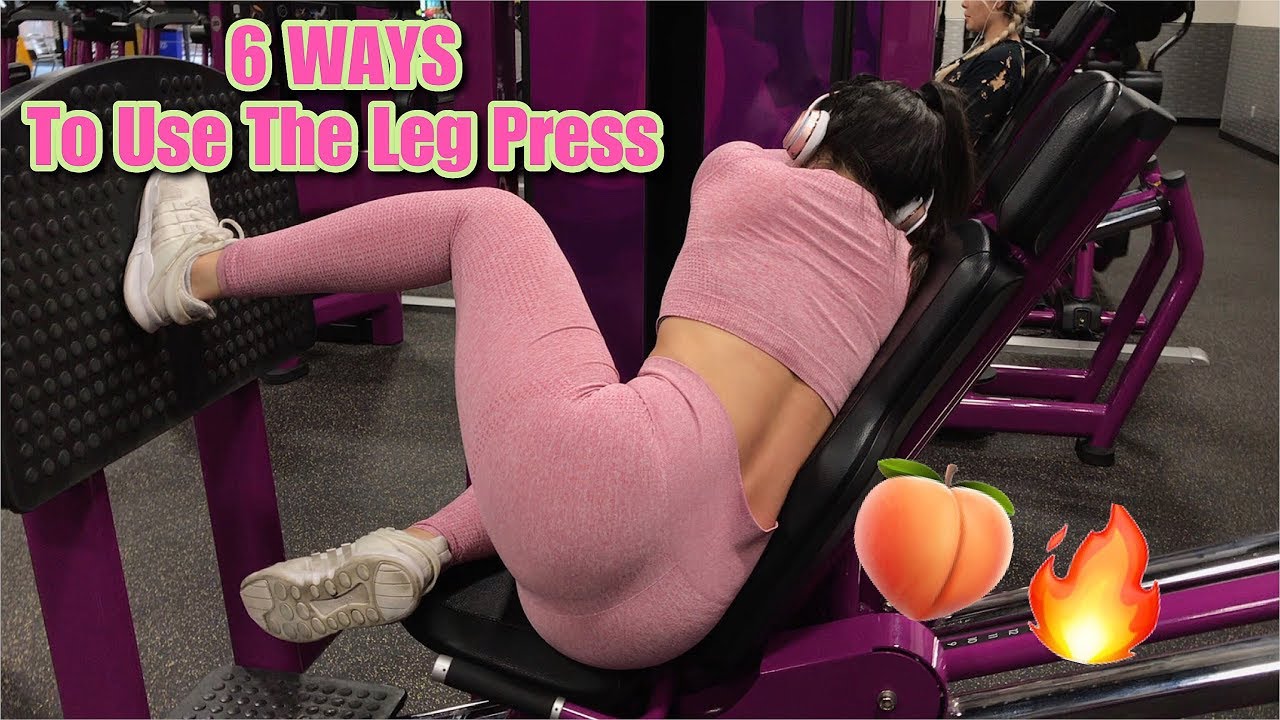
Credit: www.youtube.com
Safety Tips And Injury Prevention
While the leg press is safer than many free weight exercises, poor form can still cause problems.
- Never lock your knees at the top of the movement.
- Don’t let hips rise off the seat—this strains your lower back.
- Start with lighter weight to master form before going heavy.
- Keep your core braced to support your spine.
- Stop if you feel sharp pain in knees, hips, or back.
Warming up thoroughly and progressing slowly will keep you safe and injury-free.
Frequently Asked Questions
How Often Should I Do Leg Press For Glutes?
Most people see best results training glutes with the leg press 2–3 times per week. Allow at least one full day of rest between sessions. Too much frequency can lead to overtraining and slow progress.
What Weight Should I Use For Leg Press Glute Workouts?
Start with a weight you can press for 10–15 reps with good form. Increase the load gradually as you get stronger. Focus on muscle tension, not just numbers. If you can’t feel your glutes working or your form breaks down, reduce the weight.
Is Leg Press Better Than Squats For Glutes?
Both exercises have value. The leg press is easier to learn and safer for heavy loads, making it great for isolating glutes. Squats activate more core and supporting muscles. For best results, include both in your routine if possible.
Can I Build Glutes Without Heavy Weights?
While heavy weights help, you can still grow glutes with higher reps, slower tempo, and focusing on muscle contraction. Use bands, bodyweight exercises, and light weights with good form if you don’t have access to heavy machines.
Where Can I Learn More About Glute Training?
Check out this resource from the American Council on Exercise for more on glute anatomy, function, and exercise options.
If you want strong, round glutes, the leg press is a tool you shouldn’t overlook. With the right technique, smart programming, and consistent effort, you’ll see results you can feel—and see—in just a few months. Stay patient, train hard, and enjoy the process as you build your strongest self.
