

Leg Glute Workout: Sculpt Stronger Legs and Glutes Fast
Leg Glute Workout: The Ultimate Guide to Stronger, Shapelier Lower Body
A strong lower body is the foundation of athletic movement, daily function, and balanced physique. The legs and glutes are not only among the largest muscles in your body, but also some of the most important for health, posture, and performance. Whether you want to lift heavier, run faster, or simply improve your body shape, training your legs and glutes is essential.
Yet, many people feel lost when it comes to designing the right leg glute workout. Which exercises work best? How do you combine them? What mistakes should you avoid, and how do you make real progress? In this guide, you’ll learn everything you need to know to build a powerful, toned lower body—no matter your experience level.
Why Train Legs And Glutes?
Most people know that training the lower body is important, but the full benefits often get overlooked. Here’s why focusing on leg glute workouts should be a priority:
- Muscle Growth and Shape: The glutes (gluteus maximus, medius, minimus), quadriceps, hamstrings, and calves shape the lower half of your body. Strong, developed muscles here give you a firm, athletic look.
- Functional Strength: Everyday movements like climbing stairs, standing up, or carrying groceries all depend on strong legs and glutes.
- Injury Prevention: A weak lower body increases the risk of knee, hip, and lower back injuries. Strong muscles stabilize your joints and support your spine.
- Boosted Metabolism: Big muscles burn more calories, even at rest. Training your legs and glutes can help with fat loss and improve body composition.
- Improved Posture and Balance: Glutes play a huge role in keeping your pelvis aligned and preventing lower back pain.
- Sports Performance: Jumping, sprinting, and changing direction all start with powerful legs and glutes.
Many beginners focus on upper body exercises, but skipping leg day is a big mistake. Your lower body is your foundation—train it with care and consistency for the best results.
Anatomy Of The Leg And Glute Muscles
Understanding which muscles you’re training helps you choose the right exercises. Here’s a quick overview of the main muscle groups:
| Muscle Group | Main Function | Example Exercise |
|---|---|---|
| Gluteus Maximus | Hip extension, outward rotation | Hip thrust |
| Gluteus Medius/Minimus | Hip abduction, stabilization | Lateral band walk |
| Quadriceps | Knee extension | Squat |
| Hamstrings | Knee flexion, hip extension | Romanian deadlift |
| Calves (Gastrocnemius, Soleus) | Ankle extension | Calf raise |
| Adductors | Inner thigh stabilization | Copenhagen plank |
Notice that many exercises, like squats and lunges, work several muscle groups at once. But some moves target specific areas more than others. For balanced development, your leg glute workout should include both compound (multi-joint) and isolation (single-joint) exercises.
Essential Leg And Glute Exercises
Let’s break down the best exercises for building strong, shapely legs and glutes. You don’t need dozens of moves—just a few good ones, done well and consistently.
Compound Exercises
Compound exercises use several muscles and joints at once. They’re the backbone of any good leg glute workout.
- Squat
- Works: Glutes, quads, hamstrings, core
- How: Stand with feet shoulder-width apart. Lower your body by bending your knees and hips, keeping your chest up. Push through your heels to stand back up.
- Variations: Back squat, front squat, goblet squat
- Tip: Go as low as your mobility allows without rounding your back.
- Deadlift
- Works: Glutes, hamstrings, lower back
- How: Stand with feet hip-width apart. Hinge at the hips, keeping your back flat, and lift a barbell or dumbbells from the floor.
- Variations: Conventional deadlift, sumo deadlift, Romanian deadlift
- Tip: Focus on hinging from the hips, not bending your knees too much.
- Lunge
- Works: Glutes, quads, hamstrings, calves
- How: Step forward (or backward) with one leg, lowering your back knee toward the ground. Push through your front heel to return.
- Variations: Walking lunge, reverse lunge, Bulgarian split squat
- Tip: Keep your front knee in line with your toes.
- Hip Thrust
- Works: Glutes (especially maximus), hamstrings
- How: Sit on the ground with your upper back against a bench, feet flat. Roll a barbell over your hips. Drive through your heels and lift your hips until your thighs are parallel to the floor.
- Tip: Pause at the top and squeeze your glutes hard.
- Step-Up
- Works: Glutes, quads, hamstrings
- How: Step onto a sturdy bench or box with one foot. Press through your heel to rise, then lower back down.
- Tip: Use a height that challenges you but keeps your knee safe.
Isolation And Accessory Exercises
These moves target specific muscles or help fix weaknesses.
- Leg Curl: Focuses on the hamstrings.
- Leg Extension: Targets the quadriceps.
- Calf Raise: Strengthens the calves.
- Glute Bridge: Hits glutes with less lower back strain.
- Lateral Band Walk: Activates glute medius for hip stability.
- Cable Kickback: Isolates the glutes.
Adding 1-3 of these to your leg glute workout can help you address weak points and get a more complete lower body routine.
Sample Leg Glute Workout Routines
Not sure how to put it all together? Here are example routines for different experience levels. Adjust the weights to match your fitness level.
Beginner Routine
Start with 2-3 sessions per week. Focus on form, not heavy weights.
- Bodyweight Squat – 3 sets of 12 reps
- Glute Bridge – 3 sets of 15 reps
- Reverse Lunge – 3 sets of 10 reps per leg
- Standing Calf Raise – 3 sets of 15 reps
Rest 60–90 seconds between sets. Use slow, controlled movements.
Intermediate Routine
Increase intensity and add more challenging moves.
- Barbell Back Squat – 4 sets of 8 reps
- Romanian Deadlift – 3 sets of 10 reps
- Walking Lunge – 3 sets of 12 reps per leg
- Hip Thrust – 3 sets of 10 reps
- Seated Leg Curl – 3 sets of 12 reps
- Standing Calf Raise – 3 sets of 15 reps
Rest 90 seconds between sets. Push yourself, but keep good technique.
Advanced Routine
For experienced lifters who want to maximize strength and muscle.
- Barbell Back Squat – 5 sets of 5 reps
- Bulgarian Split Squat – 4 sets of 8 reps per leg
- Deadlift – 4 sets of 6 reps
- Hip Thrust (heavy) – 4 sets of 8 reps
- Leg Extension – 3 sets of 12 reps
- Lateral Band Walk – 3 sets of 20 steps
- Standing Calf Raise – 4 sets of 12 reps
Rest 2 minutes between heavy sets. Focus on progressive overload—gradually increasing weights or reps over time.

Credit: www.afvt.org
How To Structure Your Leg Glute Workout
A great workout is more than just picking exercises. Here’s how to build a session that works:
Warm-up
Start with 5–10 minutes of light cardio (like cycling or brisk walking) to raise your heart rate. Then, do dynamic stretches—leg swings, hip circles, and bodyweight lunges. This prepares your muscles and joints, reducing injury risk.
Exercise Order
- Begin with big, compound lifts (squats, deadlifts, lunges).
- Follow with accessory moves (hip thrusts, glute bridges).
- Finish with isolation exercises (leg curls, calf raises).
This approach uses your energy when you need it most and helps you get the most from each exercise.
Sets And Reps
- Strength: 4–6 sets of 4–6 reps (heavy weight)
- Muscle growth (hypertrophy): 3–5 sets of 8–12 reps (moderate weight)
- Endurance: 2–4 sets of 15–20 reps (lighter weight)
Most people should focus on 8–12 reps for muscle growth, but adding some lower-rep strength work can help you get stronger faster.
Rest Periods
- 2–3 minutes between heavy compound sets
- 60–90 seconds between accessory/isolation sets
Longer rests allow more recovery for heavy lifts, while shorter rests keep your heart rate up and add intensity.
Key Training Techniques For Glute And Leg Growth
Beyond basic sets and reps, there are methods you can use to boost your results.
Progressive Overload
To make your muscles grow, you must challenge them. This means gradually increasing weight, reps, or sets over time. Even small improvements—adding 2. 5–5 lbs to the bar or one extra rep—add up.
Mind-muscle Connection
Focus on feeling your target muscle working. For example, in hip thrusts, think about squeezing your glutes at the top. Studies show that this mental focus improves muscle activation.
Range Of Motion
Use a full, safe range of motion for each exercise. Deep squats activate more glute and quad muscle than partial reps. But only go as deep as your mobility allows without pain.
Tempo Control
Slow down the lowering (eccentric) phase of each rep. For example, take 2–3 seconds to lower in a squat. This increases time under tension and can help with muscle growth.
Unilateral Training
Single-leg exercises (like lunges, Bulgarian split squats) help fix muscle imbalances and improve balance.

Credit: www.youtube.com
Common Mistakes In Leg Glute Workouts
Even with the best exercises, simple errors can limit your progress or cause injury.
Using Too Much Weight Too Soon
Trying to lift heavy before you master form is a recipe for injury. Start light, focus on perfect technique, then add weight gradually.
Neglecting Glute Activation
Many people’s glutes are “sleepy” from long hours of sitting. This means other muscles (like the lower back) take over. Do glute activation drills (like band walks) before your workout to wake them up.
Poor Squat Depth
Not going low enough in squats limits glute and quad activation. Aim for thighs at least parallel to the floor, if your hips and knees allow.
Skipping Warm-up Or Cooldown
Skipping a proper warm-up can lead to pulled muscles or joint pain. Always take a few minutes to prepare your body.
Overtraining
More isn’t always better. Your muscles need time to recover and grow. Training legs and glutes 2–3 times per week is enough for most people.
How To Progress And Track Results
It’s easy to get stuck doing the same workout for months. To keep improving, you need a plan.
Increase Resistance
Add weight to your main lifts when you can complete all reps with good form. Even small jumps (2. 5–5 lbs) make a difference over time.
Add More Reps Or Sets
If you can’t increase weight, try doing one extra rep or set. This still challenges your muscles.
Use Advanced Techniques
When you reach a plateau, try techniques like drop sets (reduce weight after fatigue and keep going) or supersets (combine exercises with no rest).
Track Your Workouts
Write down your exercises, weights, reps, and sets. This helps you see progress and spot plateaus early.
Take Progress Photos
Changes in muscle shape often show up in photos before the scale moves. Take photos every few weeks from the same angles.
Leg Glute Workout At Home Vs Gym
You don’t need a fancy gym to build strong legs and glutes, but having access to more equipment can help.
| Home Workout | Gym Workout |
|---|---|
| Bodyweight squats, lunges, glute bridges, step-ups | Barbell squats, deadlifts, leg press, cable kickbacks |
| Resistance bands for added challenge | Wide range of weights and machines |
| Limited progression without added weight | Easy to increase resistance for strength |
| Convenient, no travel needed | Motivating environment, more exercise options |
| Requires creativity for overload | Safer for heavy lifts with spotters or machines |
If you train at home, invest in a set of adjustable dumbbells or resistance bands. Slow, controlled reps and higher volume can help make up for lighter weights.
Nutrition For Leg And Glute Growth
What you eat matters as much as how you train. Muscles need fuel to grow and recover.
- Protein: Aim for 0.7–1 gram per pound of body weight per day. Good sources include chicken, fish, eggs, tofu, and beans.
- Carbs: Needed for energy, especially around workouts. Include rice, oats, potatoes, and fruit.
- Fats: Healthy fats (olive oil, nuts, avocado) support hormone balance.
- Hydration: Drink enough water to stay hydrated. Dehydration can reduce performance.
After training, have a meal with protein and carbs within 1–2 hours. This speeds up recovery and muscle repair.
Rest, Recovery, And Mobility
Rest is where your muscles actually get stronger. Without enough recovery, you risk injury and slow progress.
- Sleep: Get at least 7–9 hours per night. Sleep is when your body repairs muscles.
- Active Recovery: Light activity (walking, stretching, yoga) helps blood flow and reduces soreness.
- Foam Rolling: Rolling your muscles after workouts can help with tightness.
- Rest Days: Take at least one full rest day per week.
Don’t ignore aches and pains. If something hurts, back off and check your form.
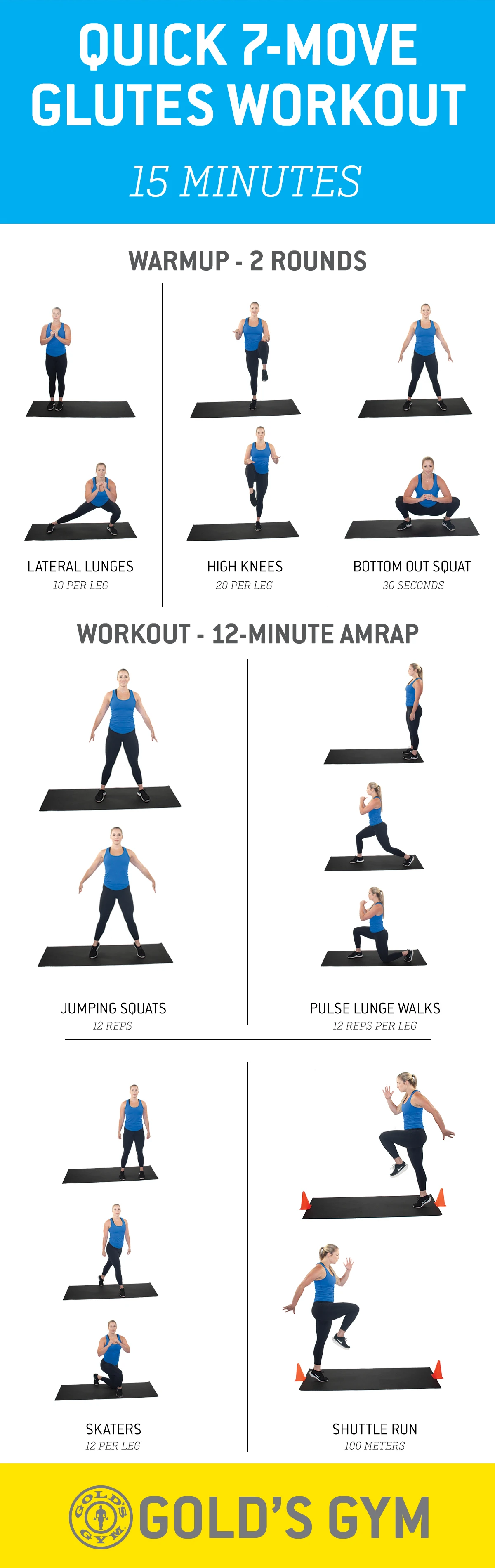
Glute Activation: The Secret Weapon
Many people have trouble feeling their glutes work, especially if they sit a lot. Weak glute activation can lead to lower back or knee pain.
Try these drills before your main workout:
- Banded Glute Bridge: Place a band above your knees. Push out against the band as you lift your hips.
- Clamshell: Lie on your side with knees bent, band above knees. Open and close your top knee.
- Fire Hydrant: On hands and knees, lift one knee out to the side.
Do 2 sets of 15–20 reps for each. This “wakes up” your glutes and helps you get more from your main lifts.
Credit: www.goldsgym.com
Sample Weekly Leg Glute Training Plan
Here’s an example schedule for balanced progress and recovery.
Monday: Strength Focus
- Barbell Squat
- Hip Thrust
- Romanian Deadlift
- Calf Raise
Wednesday: Volume/Accessory
- Bulgarian Split Squat
- Walking Lunge
- Leg Extension
- Seated Leg Curl
- Lateral Band Walk
Friday: Power/Explosive
- Jump Squat
- Deadlift (lighter, faster reps)
- Step-Up
- Glute Bridge
Adjust the exercises, sets, and reps to fit your goals and equipment. Always listen to your body and rest when needed.
Real Results: What To Expect
With consistent training and good nutrition, you can expect:
- Stronger, firmer glutes and thighs
- Better posture and reduced lower back pain
- Increased athletic performance
- More confidence in daily life
Most people see noticeable changes in 8–12 weeks of consistent effort. Remember, muscle growth is a slow process. Celebrate small wins and keep going.
Two Insights Beginners Often Miss
- Glute training is not just about squats. Many people think squats are enough for glute growth. In reality, exercises like hip thrusts and glute bridges target the glutes much more directly. If you’re not feeling your glutes work, add these moves and focus on squeezing at the top.
- Leg muscle growth depends on recovery as much as effort. It’s tempting to work legs every day for faster results. But muscles need time to repair. Overtraining can actually slow your gains and increase injury risk. Stick to 2–3 focused sessions per week, and prioritize quality over quantity.
Sample Progression Table For Squat Strength
Tracking your improvements can keep you motivated. Here’s how a 12-week squat progression might look for a beginner:
| Week | Weight (lbs) | Reps per Set | Sets |
|---|---|---|---|
| 1 | 45 (bar only) | 10 | 3 |
| 4 | 65 | 10 | 3 |
| 8 | 85 | 8 | 4 |
| 12 | 105 | 8 | 4 |
This example shows steady, safe progression. Your numbers may be different, but the principle is the same: increase weight or reps slowly, with good form.
Frequently Asked Questions
How Often Should I Do A Leg Glute Workout?
Most people get the best results with 2–3 lower body workouts per week. This gives enough time for your muscles to recover and grow. If you train hard and feel very sore, take extra rest days as needed.
What’s The Best Exercise For Glute Growth?
The barbell hip thrust is one of the most effective glute exercises. Research shows it activates the gluteus maximus more than squats or lunges. Pair it with squats and lunges for the best results.
Can I Build My Legs And Glutes At Home?
Yes. You can use bodyweight exercises like squats, lunges, and glute bridges. Adding resistance bands or dumbbells helps increase the challenge. Focus on high reps, slow tempo, and good form for best results.
Why Don’t I Feel My Glutes Working?
This is common if you sit a lot. Try glute activation drills (like banded glute bridges or clamshells) before your workout. Focus on squeezing your glutes at the top of each rep, and slow down your movements.
Should I Do Cardio With My Leg Glute Workout?
Light cardio can help warm up your muscles and improve recovery. But if your main goal is muscle growth, don’t let cardio take energy away from your strength training. A mix of both is healthy, but strength work should be your priority.
Building strong, powerful legs and glutes is a journey worth taking. With the right exercises, smart progression, and enough recovery, you’ll see real changes in your strength, shape, and confidence. If you want more in-depth research on glute training, check out this peer-reviewed scientific review. Now, get ready to squat, lunge, and thrust your way to a better lower body—one rep at a time.
