

Leg And Glute Workout With Dumbbells: Sculpt Stronger Lower Body
Leg And Glute Workout With Dumbbells
Getting strong legs and glutes is not just about looking good. These muscles help you walk, run, jump, and stand tall. They are the foundation for your whole body. When you have powerful legs and glutes, daily activities become easier. You also lower your risk of injury. Many people think you need fancy gym equipment to build lower body strength. Actually, dumbbells are enough. With the right exercises, you can transform your legs and glutes at home or anywhere.
This article will guide you through everything you need for a complete leg and glute workout using dumbbells. You will learn the best exercises, how to combine them, and how to avoid common mistakes. Whether you are a beginner or experienced, you will find practical advice to help you get results.
I will also share tips that most beginners miss, so you can train smarter and safer.
Why Train Legs And Glutes With Dumbbells?
Many people focus on upper body workouts and forget about their legs. But strong legs and glutes are essential for balance, movement, and health. Using dumbbells for these muscles is effective for several reasons.
First, dumbbells allow you to move freely. You can adjust your grip and range of motion, which is good for your joints. Second, dumbbells can be used anywhere. You don’t need a gym membership. Even with just two dumbbells, you can do many exercises.
Compared to machines, dumbbells make your muscles work harder. You need to stabilize your body, which trains smaller muscles too. This helps with coordination and prevents injuries. Also, you can increase or decrease weight easily. This makes dumbbells ideal for all fitness levels.
Health Benefits Of Leg And Glute Training
Strong legs and glutes are linked to better posture, more mobility, and less risk of back pain. These muscles support your spine and help you stay upright. When trained properly, they improve athletic performance, speed, and endurance.
Research shows that lower body strength training can boost metabolism. This means you burn more calories even when resting. It also helps regulate blood sugar and supports heart health. Leg and glute exercises have benefits for both men and women, including bone strength and hormone balance.
Key Principles For Effective Dumbbell Workouts
Before you start, it’s important to understand some basic principles. These will help you get the most from your workouts and avoid frustration.
Progressive Overload
To build muscle, you must challenge your body. This is called progressive overload. You can do this by increasing weight, doing more reps, or changing the exercise. If you keep using the same dumbbells for months, your progress will slow down. Try to push yourself just a bit more each session.
Proper Form
Good form is more important than heavy weight. If you move incorrectly, you risk injury and your muscles don’t work as hard. Always focus on technique. If you feel pain in your knees, lower back, or hips, stop and check your form.
Rest And Recovery
Muscles grow when you rest, not only during workouts. Allow at least 48 hours before training the same muscle group again. Sleep and nutrition are also critical. Without enough rest, you may feel tired and your progress will stall.
Warm-up And Cool-down
A warm-up prepares your body for exercise. It increases blood flow and loosens your joints. For leg and glute workouts, spend 5–10 minutes doing light cardio (like walking or cycling) and dynamic stretches (like leg swings or lunges). After your session, cool down with gentle stretching to reduce stiffness.
Dumbbell Exercises For Legs And Glutes
Let’s explore the most effective dumbbell exercises for legs and glutes. These movements target all major muscles, including the quadriceps, hamstrings, gluteus maximus, and calves. You can mix and match these exercises for a complete workout.
1. Dumbbell Squats
Squats are the king of lower body exercises. They work nearly every muscle in your legs and glutes.
How to do it:
- Stand with feet shoulder-width apart.
- Hold a dumbbell in each hand at your sides.
- Lower your body as if sitting in a chair.
- Keep your back straight and knees over your toes.
- Push through your heels to return to standing.
Tips:
- Don’t let your knees collapse inward.
- Start with light weight to master form.
2. Goblet Squats
This variation uses one dumbbell, making it easier to keep your chest upright.
How to do it:
- Hold a dumbbell close to your chest, with both hands.
- Stand with feet a bit wider than shoulder-width.
- Lower into a squat, keeping the dumbbell tight against your chest.
- Rise back up by pressing through your heels.
Tips:
- Keep elbows inside your knees at the bottom.
3. Bulgarian Split Squats
This single-leg exercise is great for balance and strength.
How to do it:
- Stand in front of a bench or chair.
- Place one foot behind you on the bench.
- Hold dumbbells at your sides.
- Lower your body until your front thigh is parallel to the ground.
- Push up through your front heel.
Tips:
- Keep your front knee in line with your toes.
- Don’t rush; focus on stability.
4. Dumbbell Lunges
Lunges train your legs and glutes while improving balance.
How to do it:
- Stand upright, holding dumbbells at your sides.
- Step forward with one leg and lower your body.
- Your back knee should almost touch the ground.
- Push back to the starting position.
Tips:
- Alternate legs or do all reps on one side before switching.
- Keep your torso upright.
5. Dumbbell Deadlifts
Deadlifts target the hamstrings, glutes, and lower back.
How to do it:
- Stand with feet hip-width apart.
- Hold dumbbells in front of your thighs.
- Bend at the hips, keeping your back flat.
- Lower dumbbells to just below knees.
- Stand up by driving hips forward.
Tips:
- Don’t round your back.
- Engage your core.
6. Dumbbell Step-ups
Step-ups are simple but powerful for building explosive strength.
How to do it:
- Stand in front of a sturdy bench or box.
- Hold dumbbells at your sides.
- Step up with one leg, bringing the other up to stand.
- Step down and repeat.
Tips:
- Use a height that is safe for you.
- Press through your heel, not your toes.
7. Dumbbell Hip Thrusts
Hip thrusts are one of the best exercises for glutes.
How to do it:
- Sit on the ground with your upper back against a bench.
- Roll a dumbbell onto your hips.
- Bend knees, feet flat.
- Lift hips by squeezing your glutes.
- Lower slowly.
Tips:
- Keep chin tucked.
- Don’t overextend your lower back.
8. Dumbbell Sumo Squats
Sumo squats hit the inner thighs and glutes.
How to do it:
- Stand with feet wide, toes pointed out.
- Hold a dumbbell with both hands in front.
- Lower into a squat, keeping knees out.
- Rise by pressing through heels.
Tips:
- Keep chest up.
- Don’t let knees cave in.
9. Dumbbell Calf Raises
Calf raises build lower leg strength.
How to do it:
- Stand upright, holding dumbbells at your sides.
- Raise heels off the floor, balancing on toes.
- Lower slowly.
Tips:
- Pause at the top.
- Try single-leg calf raises for extra challenge.
10. Dumbbell Glute Bridge
A glute bridge is good for beginners and targets glutes.
How to do it:
- Lie on your back, knees bent, feet flat.
- Hold a dumbbell on your hips.
- Raise hips by squeezing glutes.
- Lower back to floor.
Tips:
- Don’t arch your back.
- Pause at the top for more muscle tension.
Example Dumbbell Leg And Glute Workout Routines
To make the most of your training, combine these exercises into routines. You can do full-body sessions or focus only on legs and glutes. Below are three sample workouts for different fitness levels.
Beginner Routine
- Goblet Squat – 3 sets of 12 reps
- Dumbbell Lunges – 3 sets of 10 reps each leg
- Dumbbell Glute Bridge – 3 sets of 15 reps
- Dumbbell Calf Raises – 3 sets of 15 reps
Rest 60–90 seconds between sets.
Intermediate Routine
- Dumbbell Squat – 4 sets of 10 reps
- Bulgarian Split Squat – 3 sets of 8 reps each leg
- Dumbbell Deadlift – 3 sets of 10 reps
- Dumbbell Hip Thrust – 3 sets of 12 reps
- Dumbbell Step-Up – 3 sets of 10 reps each leg
Rest 60–90 seconds between sets.
Advanced Routine
- Dumbbell Sumo Squat – 4 sets of 12 reps
- Dumbbell Walking Lunges – 3 sets of 12 reps each leg
- Dumbbell Single-Leg Deadlift – 3 sets of 10 reps each leg
- Dumbbell Hip Thrust – 4 sets of 15 reps
- Dumbbell Calf Raise (single leg) – 3 sets of 15 reps each leg
Rest 90–120 seconds between sets.
Non-obvious tip: Many beginners skip single-leg exercises because they feel unstable. But these are excellent for building real-world strength and preventing injuries. Try adding at least one single-leg movement to every session.
Comparing Dumbbells To Other Training Tools
You may wonder how dumbbells compare to machines and barbells. Here is a direct comparison:
| Training Tool | Pros | Cons |
|---|---|---|
| Dumbbells | Flexible, portable, improve balance | Max weight limited, harder for very heavy lifts |
| Machines | Safe, good for beginners, easy to isolate muscles | Limited movement, not portable, less stabilizer activation |
| Barbells | Best for maximum strength, easy to progress | Bulky, needs gym, higher injury risk if form is poor |
Insight: For most people training at home or with limited space, dumbbells offer the best mix of safety and effectiveness.
Common Mistakes In Dumbbell Leg And Glute Training
No workout is perfect, especially when you are just starting. Here are the most common mistakes and how to avoid them:
- Using too much weight: This leads to poor form and injury. Start light, master technique, then increase weight.
- Skipping warm-up: Cold muscles are prone to injury. Always warm up first.
- Not engaging glutes: Many people use their lower back or quads more than their glutes. Focus on squeezing glutes during hip thrusts and bridges.
- Rushing reps: Fast reps reduce tension on muscles. Slow, controlled movement is better.
- Ignoring single-leg exercises: These help with balance and prevent muscle imbalances.
- Not tracking progress: If you don’t record your weights and reps, you won’t know when to increase difficulty.
How To Fix Mistakes
- Record your workouts in a notebook or app.
- Watch videos or ask a trainer for feedback on form.
- Don’t be afraid to drop weight if you feel pain.
- Add variety to your workouts to keep muscles challenged.
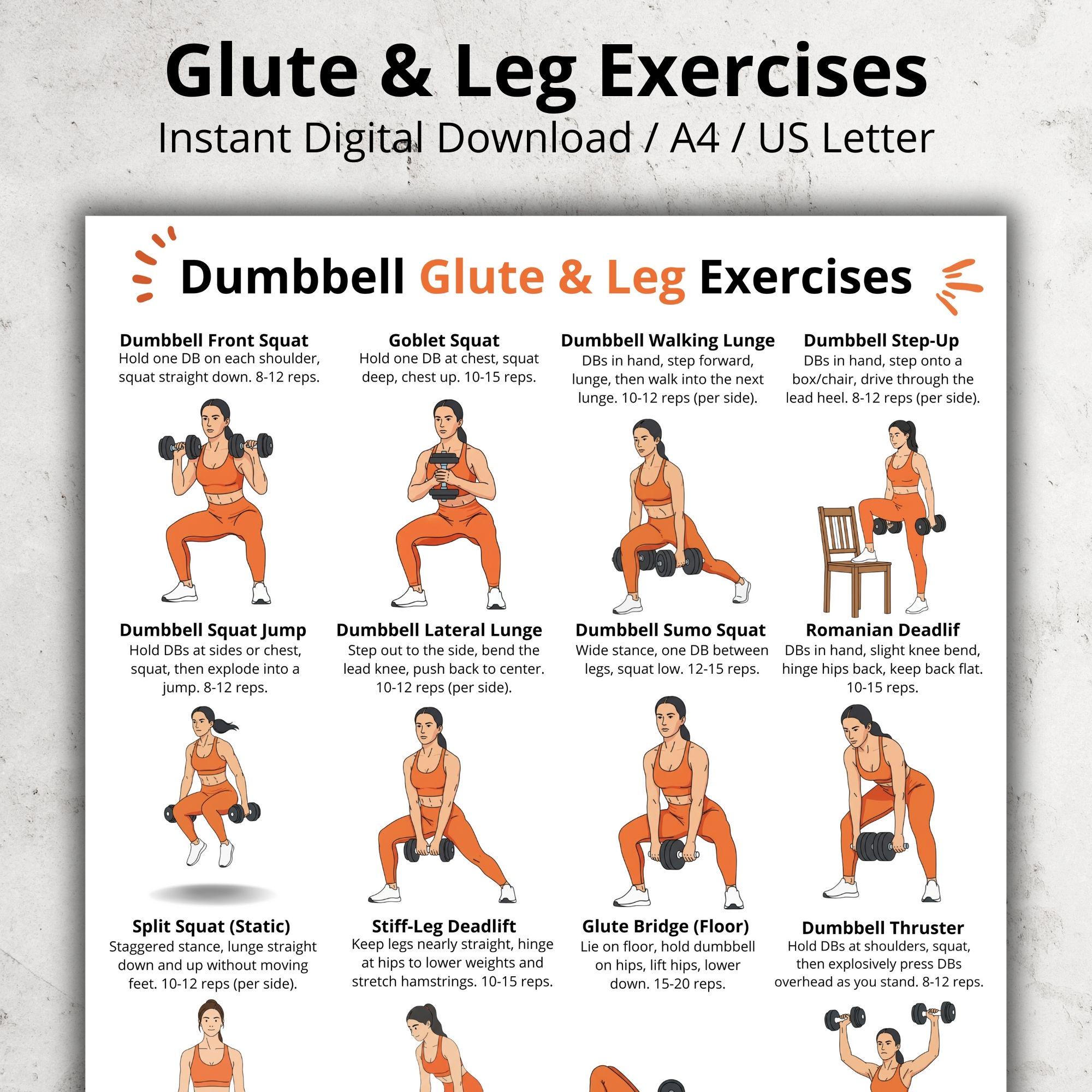
Credit: www.etsy.com
How To Choose The Right Dumbbells
Choosing the right dumbbells is important. If they are too light, you won’t get stronger. Too heavy, and you risk injury.
Factors To Consider
- Weight range: Most beginners start with 5–20 pound dumbbells. Intermediate users might need 20–40 pounds.
- Adjustable vs. fixed: Adjustable dumbbells are great for home use. Fixed dumbbells are more durable.
- Grip: Choose dumbbells with comfortable, non-slip handles.
- Material: Rubber-coated dumbbells are quieter and less likely to damage floors.
Comparison Table: Dumbbell Types
| Dumbbell Type | Benefits | Drawbacks |
|---|---|---|
| Adjustable | Space-saving, multiple weights | More expensive, slower to change weight |
| Fixed | Durable, easy to use | Need multiple pairs, takes more space |
| Rubber-coated | Protects floors, better grip | Heavier, more costly |
| Metal | Long-lasting, less bulky | Can damage floors, slippery when sweaty |
Beginner insight: You do not need a full set. Start with one pair, then add more as you get stronger.
How Often Should You Do Dumbbell Leg And Glute Workouts?
Frequency depends on your goals and recovery. Most people get good results training legs and glutes 2–3 times per week. If you are new, start with twice weekly. If you recover well, add a third session.
Never train legs and glutes on back-to-back days. Muscles need time to recover and grow. For advanced users, you can split your routine into “heavy” and “light” days, but always listen to your body.
Sample Weekly Schedule
- Monday: Dumbbell Leg and Glute Workout
- Wednesday: Upper Body Workout
- Friday: Dumbbell Leg and Glute Workout
Practical tip: If your muscles are sore, take an extra day off. Progress is better when you train smart, not just hard.

Credit: www.plattar.com
Tracking Progress And Staying Motivated
It’s easy to lose motivation if you don’t see results. But progress is not always fast. Here’s how to track and stay motivated:
- Log your workouts: Write down weights, reps, and sets.
- Take photos: Monthly photos help you see changes, even if the scale doesn’t move.
- Set short-term goals: Aim to add 5 pounds to your squat or 2 reps to your lunges.
- Celebrate milestones: When you reach a goal, reward yourself. This keeps you excited.
Non-obvious insight: Sometimes strength gains come before visible muscle changes. Stay patient and trust the process.
Nutrition Tips For Leg And Glute Growth
Exercise is only part of building strong legs and glutes. Nutrition matters too. Here are basic guidelines:
- Protein: Aim for 1.2–1.6 grams per kilogram of bodyweight daily. Protein helps muscles repair and grow.
- Carbohydrates: They fuel your workouts. Eat whole grains, fruits, and vegetables.
- Healthy fats: Include nuts, avocados, and olive oil.
- Hydration: Drink enough water, especially before and after training.
If you want more detailed nutrition advice, consider visiting a registered dietitian. Good nutrition supports recovery and energy.
How To Make Dumbbell Leg And Glute Workouts Harder
As you get stronger, you need to make workouts more challenging. Here are ways to do it:
- Increase weight: Use heavier dumbbells as you progress.
- Add reps or sets: More volume means more muscle growth.
- Change tempo: Slow down your reps to increase muscle tension.
- Add pauses: Pause at the bottom or top of each rep.
- Try new variations: Switch to single-leg exercises or add jumps.
Advanced tip: Try “supersets,” where you do two exercises back-to-back with no rest. For example, do squats followed by lunges. This saves time and boosts intensity.
Safety Tips For Dumbbell Training
Safety is always important. Here are the best ways to stay injury-free:
- Warm up properly: Don’t skip the warm-up.
- Check equipment: Make sure dumbbells are not damaged.
- Use controlled movements: Don’t swing weights wildly.
- Listen to your body: If you feel pain, stop.
- Clear your space: Remove clutter so you don’t trip.
Practical tip: If you train alone, tell someone. If you get injured, they can help.

Credit: www.youtube.com
Modifying Dumbbell Workouts For Different Goals
Not everyone wants the same results. Here’s how to adjust your workout based on your goal:
For Strength
- Use heavier dumbbells
- Do 4–6 reps per set
- Rest 2–3 minutes between sets
For Muscle Growth
- Use moderate weight
- Do 8–12 reps per set
- Rest 1–2 minutes between sets
For Endurance
- Use lighter weight
- Do 15–20 reps per set
- Rest 30–60 seconds between sets
Comparison Table: Sets, Reps, And Rest For Different Goals
| Goal | Sets | Reps | Rest |
|---|---|---|---|
| Strength | 3–5 | 4–6 | 2–3 min |
| Muscle Growth | 3–4 | 8–12 | 1–2 min |
| Endurance | 2–3 | 15–20 | 30–60 sec |
Beginner mistake: Changing goals every week. Stick to one goal for at least eight weeks before switching.
The Role Of Cardio In Leg And Glute Training
Cardio exercise is important for heart health and calorie burn. But it can also complement your dumbbell workouts.
- Running or cycling: Builds endurance in your legs.
- Jump rope: Improves calf strength.
- Stair climbing: Targets glutes and thighs.
Do cardio on separate days or after your dumbbell session if you want to focus on strength.
Insight: Too much cardio can slow muscle growth. Balance is key.
How Age, Gender, And Fitness Level Affect Training
Everyone’s body is different. Age, gender, and fitness level affect how you respond to dumbbell workouts.
- Older adults: May need longer recovery and lighter weights.
- Women: Can train legs and glutes just as hard as men. Hormones may affect muscle gain, but results come with effort.
- Beginners: Start slow and increase gradually.
For more information, you can check scientific resources like the National Institutes of Health.
Building A Balanced Lower Body
Strong legs and glutes are great, but balance matters. Don’t forget other lower body muscles:
- Adductors (inner thighs): Sumo squats and lunges help.
- Abductors (outer thighs): Side lunges or standing leg lifts.
- Calves: Calf raises and jump rope.
A balanced routine prevents injury and improves performance.
Frequently Asked Questions
Can I Build Strong Legs And Glutes With Only Dumbbells?
Yes, dumbbells are very effective for leg and glute training. They allow you to do a wide range of movements, target different muscles, and progress over time. With consistent effort, you can build strength, muscle, and endurance.
How Long Does It Take To See Results From Dumbbell Leg And Glute Workouts?
You may notice increased strength in a few weeks. Visible muscle changes often take longer, usually 8–12 weeks with regular training and good nutrition. Progress depends on your effort, consistency, and genetics.
What Is The Best Dumbbell Weight For Leg And Glute Exercises?
The best weight depends on your fitness level. Beginners often start with 5–15 pounds per dumbbell. Choose a weight that is challenging but allows you to complete all reps with good form. Increase weight as you get stronger.
Can I Do These Workouts Every Day?
It’s not recommended to train legs and glutes every day. Muscles need time to recover and grow. Aim for 2–3 sessions per week, with at least one rest day between workouts.
Should I Combine Dumbbell Workouts With Other Types Of Exercise?
Yes, combining dumbbell workouts with cardio, flexibility, and core exercises gives you better overall fitness. You can mix routines based on your goals, but always make sure you recover properly.
Building strong legs and glutes with dumbbells is possible for anyone. With the right exercises, smart planning, and patience, you can transform your lower body and improve your health. Remember, progress takes time but every workout brings you closer to your goal.
Stay consistent, listen to your body, and enjoy the journey.
