

Leg And Glute Workout Gym: Sculpt Stronger Legs Fast
Unlocking Your Best Lower Body: The Complete Leg and Glute Workout Gym Guide
A strong, well-shaped lower body is more than just looks. It’s the foundation for everyday movement, better posture, and real-world strength. Many people focus on upper body training but forget that the legs and glutes are some of the largest, most powerful muscles in the body. Training them properly will boost your athletic performance, burn more calories, and help prevent injuries.
Whether you’re new to the gym or want to take your training higher, knowing how to target your legs and glutes is key. This guide will give you the science, practical steps, and real-life tips for building a strong, balanced lower body. You’ll learn which exercises matter most, how to put them together, and the secrets many beginners miss. Let’s get started on creating your best lower body.
Why Train Legs And Glutes?
It’s common to see crowded bench presses and empty squat racks at the gym. But those who understand fitness know the power of leg and glute training. Here’s why you shouldn’t skip leg day:
- Muscle Growth and Strength: Your legs and glutes house the largest muscles in your body. Training them boosts overall muscle mass, which helps your whole body grow stronger and more defined.
- Fat Burning: Bigger muscles use more energy. Leg workouts burn a high number of calories, even after you leave the gym.
- Sports Performance: Runners, soccer players, sprinters, and even swimmers depend on strong legs and glutes for speed, power, and endurance.
- Injury Prevention: Weak lower bodies can lead to back pain, knee problems, and poor balance. Building strong glutes and legs supports your joints and posture.
- Body Shape: Well-developed glutes and thighs create a balanced, athletic look. They support a strong core and bring symmetry to your body.
Key Muscles In Leg And Glute Workouts
Understanding which muscles you’re working helps you train smarter. The main muscles targeted during leg and glute workouts are:
- Quadriceps: Front of the thigh. Important for straightening the knee and powerful movement.
- Hamstrings: Back of the thigh. They bend the knee and help with hip extension.
- Gluteus Maximus, Medius, and Minimus: The three main muscles in your buttocks. These shape your glutes and are key for hip movement and power.
- Adductors: Inner thigh muscles. Help bring the legs together and stabilize movement.
- Calves (Gastrocnemius and Soleus): Lower leg. Important for ankle movement and jumping.
Many exercises train several of these muscles at the same time. The best workouts use both compound movements (like squats) and isolation exercises (like leg extensions).
The Science Behind Muscle Growth
Muscle growth (hypertrophy) happens when you challenge your muscles with progressive overload. This means slowly increasing the weight, reps, or difficulty over time. When you train hard, your muscle fibers break down and rebuild stronger.
But here’s the insight many miss: Muscles only grow if they get enough recovery and the right nutrition. Training legs and glutes too often, or not eating enough protein, can limit your progress. Most people see the best results training legs and glutes 1-2 times per week with proper rest in between.
Essential Leg And Glute Exercises
Some exercises give much better results than others. Here are the most effective gym movements for building powerful legs and glutes:
1. Barbell Squat
The barbell squat is often called the “king” of leg exercises. It works your glutes, quads, hamstrings, and core. Squats also boost hormones like testosterone and growth hormone, which help with muscle growth.
How to do it:
- Stand with feet shoulder-width apart.
- Rest the barbell on your upper back (not your neck).
- Lower yourself by bending your hips and knees, keeping your back straight.
- Go as low as your flexibility allows (ideally, thighs parallel to the floor).
- Push through your heels to return to standing.
Tips: Start with light weight to master your form. Don’t let your knees collapse inward. Keep your chest up.
2. Romanian Deadlift (rdl)
The Romanian deadlift is great for the hamstrings and glutes. It teaches you to hinge at the hips—a skill that protects your back.
How to do it:
- Hold a barbell at hip height with straight arms.
- Keep a slight bend in your knees.
- Push your hips back as you lower the bar in front of your legs.
- Feel a stretch in your hamstrings. Stop when your back is flat and before rounding.
- Stand back up by driving your hips forward.
Tips: Don’t let the bar drift away from your legs. Move slowly and feel the stretch.
3. Hip Thrust
Few exercises activate the glutes like the hip thrust. It’s a must for anyone wanting a rounder, stronger butt.
How to do it:
- Sit with your upper back against a bench.
- Roll a loaded barbell over your hips.
- Plant your feet flat and shoulder-width apart.
- Push through your heels to lift your hips until your body forms a straight line from shoulders to knees.
- Lower with control.
Tips: Squeeze your glutes hard at the top. Use a bar pad or mat for comfort.
4. Leg Press
The leg press machine is safer for heavy weights and allows you to focus on your quads and glutes.
How to do it:
- Sit in the machine with feet on the platform.
- Lower the platform by bending your knees.
- Press the platform back up without locking your knees.
Tips: Adjust foot position to target different muscles. High feet = more glutes; low feet = more quads.
5. Lunges
Lunges build balance and strength one leg at a time. They work the glutes, quads, and hamstrings.
How to do it:
- Stand tall, step one foot forward.
- Lower your hips until both knees bend to about 90 degrees.
- Push back to the start and repeat on the other leg.
Tips: Keep your front knee over your ankle. Try walking lunges for extra challenge.
6. Leg Curl
The leg curl machine isolates the hamstrings.
How to do it:
- Lie face down or sit in the machine.
- Place your lower legs under the padded lever.
- Curl your legs to bring your heels close to your butt.
- Lower back slowly.
Tips: Don’t swing your body. Squeeze your hamstrings at the top.
7. Leg Extension
The leg extension machine is ideal for targeting the quadriceps.
How to do it:
- Sit with your shins behind the padded bar.
- Extend your legs until they are straight.
- Lower with control.
Tips: Don’t lock your knees. Pause at the top for extra tension.
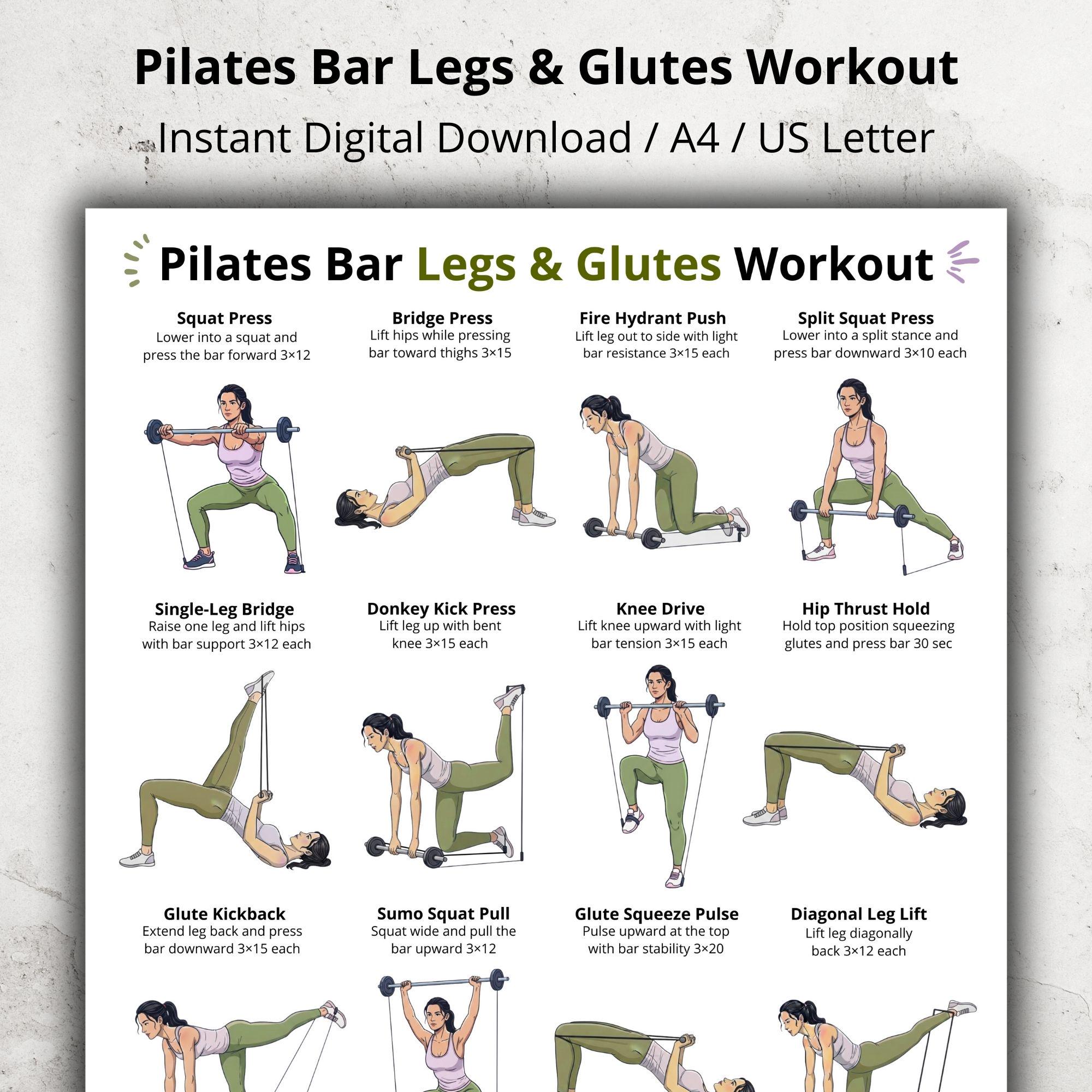
8. Glute Kickback
This move targets the glutes directly. You can do it on a cable machine or with bodyweight.
How to do it:
- Kneel on all fours or use the machine.
- Kick one leg back and up, squeezing your glute.
- Return and repeat.
Tips: Don’t arch your back. Focus on muscle squeeze.
9. Calf Raise
Strong calves improve balance and lower leg shape.
How to do it:
- Stand with feet hip-width apart (on a raised surface for more range).
- Push through the balls of your feet to lift your heels.
- Lower slowly.
Tips: Pause at the top. Try single-leg for more intensity.
10. Step-ups
Step-ups build coordination, strength, and power.
How to do it:
- Hold weights at your sides.
- Step onto a bench or box, driving through your lead heel.
- Step down and switch legs.
Tips: Keep your chest up. Use a high enough box to feel challenged but safe.
Sample Leg And Glute Gym Workout Plans
It’s easy to feel lost in the gym. Here are two sample workouts—one for beginners and one for advanced lifters—to give you structure and confidence.
Beginner Leg And Glute Workout
Focus on learning good form and building a base.
- Squat (bodyweight or light barbell): 3 sets x 10-12 reps
- Leg Press: 3 x 12 reps
- Romanian Deadlift (dumbbell): 3 x 12 reps
- Glute Bridge (bodyweight): 3 x 15 reps
- Calf Raise: 3 x 15 reps
Rest: 60–90 seconds between sets
Advanced Leg And Glute Workout
For those with experience and good technique.
- Barbell Squat: 4 x 8 reps
- Romanian Deadlift: 4 x 10 reps
- Hip Thrust: 4 x 12 reps
- Walking Lunge: 3 x 12 reps per leg
- Leg Curl: 3 x 12 reps
- Leg Extension: 3 x 15 reps
- Standing Calf Raise: 4 x 15 reps
Rest: 60–120 seconds between sets
How To Structure Your Leg And Glute Training
To get great results, you need the right mix of volume, intensity, and frequency.
Training Frequency
Most people see strong results training legs and glutes once or twice per week. More frequency is not always better, especially if you’re not recovering well.
Reps And Sets
- For muscle growth: 8–15 reps per set is ideal.
- For strength: 4–8 reps per set with heavier weight.
- For endurance: 15–20+ reps with lighter weight.
Choosing Exercises
Include at least:
- 1–2 compound lifts (squat, deadlift, leg press)
- 1–2 glute-focused moves (hip thrust, glute kickback)
- 1–2 hamstring or quad isolation moves
- 1 calf exercise
Progressive Overload
Every few weeks, increase your weight, reps, or the number of sets. Small, steady increases are better than big jumps.
Example Weekly Split
| Day | Workout Focus |
|---|---|
| Monday | Legs & Glutes (heavy) |
| Wednesday | Upper Body |
| Friday | Legs & Glutes (lighter, higher reps) |
| Saturday | Core/Cardio/Rest |
Credit: www.etsy.com
Common Mistakes In Leg And Glute Training
Many gym-goers waste time or even hurt themselves by making avoidable errors. Here’s what to watch out for:
Ignoring Form
Trying to lift too heavy too soon leads to bad technique. This not only reduces muscle activation but can also cause injury. Always focus on good form over lifting more weight.
Skipping Full Range Of Motion
Half-reps don’t give full results. Lower the weight enough to move through a complete range of motion—especially in squats and lunges.
Not Varying Exercises
Doing only squats or only machines leads to plateaus. Mix up your routine every 6–8 weeks to keep progress going.
Overtraining Legs
Legs and glutes need time to recover. Training them hard every day can hurt your results. Listen to your body and take rest seriously.
Neglecting The Glutes
Most lower body workouts are quad-heavy. Make sure you’re including hip thrusts, glute bridges, and kickbacks for full development.
Advanced Training Techniques
If you’ve been training for a while, you can use advanced methods to break through plateaus:
Supersets
Pair two exercises back-to-back with no rest. For example, do squats then lunges. This saves time and increases muscle fatigue.
Drop Sets
After your last set, reduce the weight and do as many reps as possible. Great for machines like leg press or leg extension.
Pause Reps
Pause at the hardest part of the movement for 2–3 seconds. For example, pause at the bottom of a squat before coming up.
Tempo Training
Slow down the lowering (eccentric) phase of each rep. For example, take 3–4 seconds to lower yourself in a squat.
Sample Advanced Leg Day
Here’s how you can combine these methods:
| Exercise | Sets | Reps | Technique |
|---|---|---|---|
| Barbell Squat | 4 | 8 | Pause reps (2 seconds at bottom) |
| Romanian Deadlift | 3 | 10 | Slow lowering |
| Leg Extension | 3 | 12 | Drop set on final set |
| Walking Lunge | 3 | 12 per leg | Superset with calf raise |
| Standing Calf Raise | 3 | 15 | Superset with lunge |

Credit: nilds.gov.ng
How To Warm Up And Stay Injury-free
A good warm-up protects your muscles and joints, and helps you lift more safely.
Dynamic Warm-up Sequence
- 5–10 minutes of light cardio (treadmill, bike, or brisk walking)
- Bodyweight squats: 2 x 10
- Walking lunges: 2 x 10 per leg
- Leg swings: 10 per leg
- Glute bridges: 2 x 15
Tip: Don’t skip your warm-up, even if you’re in a hurry. It prepares your nervous system and muscles for harder work.
Stretching And Mobility
After your workout, stretch your quads, hamstrings, glutes, and calves. Hold each stretch for at least 20–30 seconds. Consider adding foam rolling to help muscle recovery.
Listen To Your Body
If you feel sharp pain (not normal muscle burn), stop the exercise. Pushing through real pain can turn a small problem into a bigger injury.
Nutrition For Leg And Glute Growth
What you eat makes a huge difference in your results. Muscles need fuel to repair and grow. Here’s what to focus on:
Protein
Aim for at least 0.7–1 gram of protein per pound of body weight per day. Good sources include chicken, fish, eggs, dairy, and legumes.
Carbohydrates
Carbs give you energy for tough workouts. Choose whole grains, rice, potatoes, fruit, and vegetables.
Fats
Healthy fats (olive oil, avocados, nuts) support hormone health and recovery.
Hydration
Drink water before, during, and after your workout. Dehydration reduces performance and slows recovery.
Timing
Eat a protein- and carb-rich meal 1–2 hours before training. Have another meal or shake within 2 hours after finishing.
Example Meal For Leg Day
- Grilled chicken breast (6 oz)
- Brown rice (1 cup)
- Steamed broccoli (1 cup)
- Olive oil (1 tbsp)
This meal gives protein, complex carbs, and healthy fats to support recovery.
Tracking Progress And Staying Motivated
Results don’t happen overnight. Here’s how to stay on track:
Keep A Workout Log
Write down your exercises, weights, sets, and reps. Seeing progress on paper keeps you motivated and helps spot plateaus.
Take Photos
Weekly or monthly photos show real changes, even when the scale does not.
Set Realistic Goals
Aim for small improvements—a few more reps, five more pounds—each session.
Find A Training Buddy
Training with a friend can keep you accountable and make workouts more fun.
Celebrate Milestones
Reward yourself when you hit a goal (like a new squat record or fitting into favorite jeans).
Women And Leg & Glute Workouts
Many women worry that lifting weights will make their legs “bulky. ” In reality, most women develop a toned, athletic look—not massive muscles—because of natural hormone levels.
Benefits for women:
- Lifting builds curves, not bulk
- Improves bone health, reducing risk of osteoporosis
- Boosts metabolism for easier fat loss
- Helps with better posture and confidence
Focus on form and consistent effort. Don’t be afraid to lift heavier weights as you get stronger.
Cardio And Leg Training: How To Combine Them
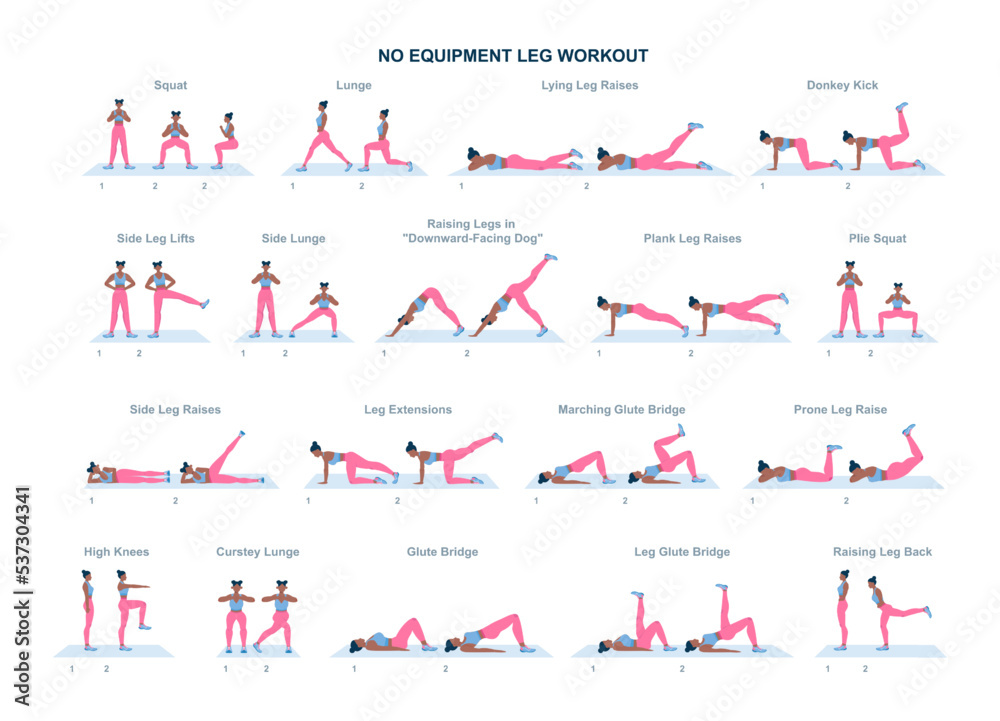
If you love running, cycling, or group classes, you can still build your legs and glutes.
Tips:
- Do your heavy leg workout on a different day from long, intense cardio.
- Low-impact cardio (like cycling or brisk walking) is easier to combine with leg days.
- If you must do both on one day, do strength training first, then cardio.
Too much cardio can make recovery harder, so adjust your sessions as needed.
Using Machines Vs. Free Weights
Both machines and free weights have a place in your routine. Here’s how they compare:
| Type | Pros | Cons |
|---|---|---|
| Free Weights | Build balance & stability, train more muscles at once, more natural movement | Harder to learn, need good form, risk of poor technique |
| Machines | Easier for beginners, good for isolation, safer to train to failure | Less core activation, less functional |
Tip: Combine both for best results. Start with free weights, finish with machines.
How To Break Through Plateaus
If you stop seeing results, don’t panic. Plateaus are normal. Try these strategies:
- Change your rep range (e.g., switch from 12 reps to 8 reps with more weight)
- Add a new exercise or swap an old one
- Increase the number of sets
- Improve your sleep and nutrition
- Take a deload week (reduce weight/volume)
Sometimes, a small change is all you need to restart progress.
Two Insights Beginners Often Miss
- Mind-Muscle Connection: Just moving weight isn’t enough. Focus on feeling the muscle work—especially the glutes. Slow down and squeeze at the top of each rep. This can double your results from the same workout.
- Rest Is Training, Too: Most muscle growth happens outside the gym. Sleeping 7–9 hours a night and taking full rest days is essential for best results. Many beginners think more is better, but smart rest is what builds muscle.
Credit: oxfordtutors.com
Frequently Asked Questions
How Often Should I Train My Legs And Glutes?
Most people see the best results training legs and glutes 1-2 times per week. This allows enough recovery for muscle growth. Advanced athletes might train more often, but only with smart programming.
Can I Build Big Glutes Without Heavy Weights?
Yes, you can see improvement using bodyweight and resistance bands, but heavy weights lead to faster and bigger changes. If you want serious growth, gradually increase the resistance over time.
What Should I Eat After A Leg Workout?
Eat a meal or snack with protein and carbohydrates within 2 hours. For example: a protein shake with fruit, or chicken and rice. This helps your muscles recover and grow.
How Long Does It Take To See Results From Leg And Glute Workouts?
You may feel stronger in 2–4 weeks, but visible changes often take 8–12 weeks with consistent training and good nutrition. Progress depends on your starting point, intensity, and genetics.
Are Squats Enough For Glutes?
Squats work the glutes, but not as much as exercises like hip thrusts or glute bridges. For the best glute development, include both squats and glute-focused moves in your routine.
Building strong, defined legs and glutes is about more than just exercise—it’s about smart training, the right nutrition, and patient consistency. Use the guidance in this article to get the most from your gym time, avoid common mistakes, and enjoy the journey to a more powerful lower body. For more details on exercise science, visit the Wikipedia page on resistance training. Stay committed, trust the process, and your efforts will pay off in strength, health, and confidence.
