

How to Workout Tricep With Barbell: Build Bigger Arms Fast
How To Workout Tricep With Barbell
Building strong, defined triceps is a goal for many people who want bigger arms or better performance in sports and daily life. The triceps make up about two-thirds of your upper arm, so focusing on them can help you get noticeable results. One of the most effective ways to train this muscle is with a barbell. This tool offers heavy resistance, easy grip, and a variety of exercises that can target all parts of the triceps. Many beginners try to grow their arms with only bicep curls, but if you want real size and strength, you need to pay attention to the triceps.
Some people think working out triceps is complicated. In reality, the barbell makes things simple and powerful. You can use it at home or in the gym, and you do not need fancy machines. This guide will show you how to workout triceps with a barbell, including essential exercises, proper form, common mistakes, and practical advice.
Whether you are new to fitness or have some experience, you will learn how to train your triceps safely and effectively. We will also cover how to structure your routine, compare barbell exercises to other methods, and answer your most important questions.
Understanding The Triceps Muscle
Before you start lifting, it helps to know what you are working. The triceps brachii is located on the back of your upper arm. It has three parts, known as “heads”:
- Long head
- Lateral head
- Medial head
Each head has a slightly different function, but all work together to extend your elbow. The long head also helps move your shoulder. When you press, push, or straighten your arm, your triceps do most of the work. Many people overlook the long head, but it is the largest and most visible part of the triceps.
If you want to build strong, well-rounded arms, you need exercises that reach all three heads.
Why Use A Barbell For Triceps
Barbells are popular for a reason. They allow you to lift heavier weights and train both arms at once. With a barbell, you can do basic movements or more advanced variations, depending on your goal. Here are some key benefits:
- Heavy Load: You can add more weight for stronger muscles.
- Stability: Both arms work together, reducing imbalance.
- Variety: Many triceps exercises can be done with a barbell.
- Progression: Easy to increase weight as you get stronger.
Some beginners miss the fact that barbell exercises often use stabilizer muscles. When you press a barbell, your shoulders and chest help support the movement. This extra muscle activation can boost your results, but you must use proper form to prevent injury.
Essential Barbell Triceps Exercises
If you want results, focus on a few proven movements. These exercises target different heads of the triceps and can be adjusted for your skill level.
1. Barbell Skullcrusher
The skullcrusher is one of the best triceps workouts. It hits all three heads, especially the long head.
How to do it:
- Lie on a flat bench.
- Hold the barbell above your chest, hands shoulder-width apart.
- Lower the bar to your forehead by bending your elbows.
- Extend your arms to return to starting position.
Tips:
- Keep elbows steady and close to your body.
- Move only your forearms, not your shoulders.
- Start light to avoid strain.
2. Close-grip Barbell Bench Press
This exercise is similar to the normal bench press, but your hands are closer together. It targets the triceps more than the chest.
How to do it:
- Lie on a bench.
- Hold the barbell with hands about 8–12 inches apart.
- Lower the bar to your chest.
- Push the bar up, focusing on straightening your arms.
Tips:
- Keep elbows close to your sides.
- Use a spotter if lifting heavy.
- Avoid using too narrow a grip, which can stress your wrists.
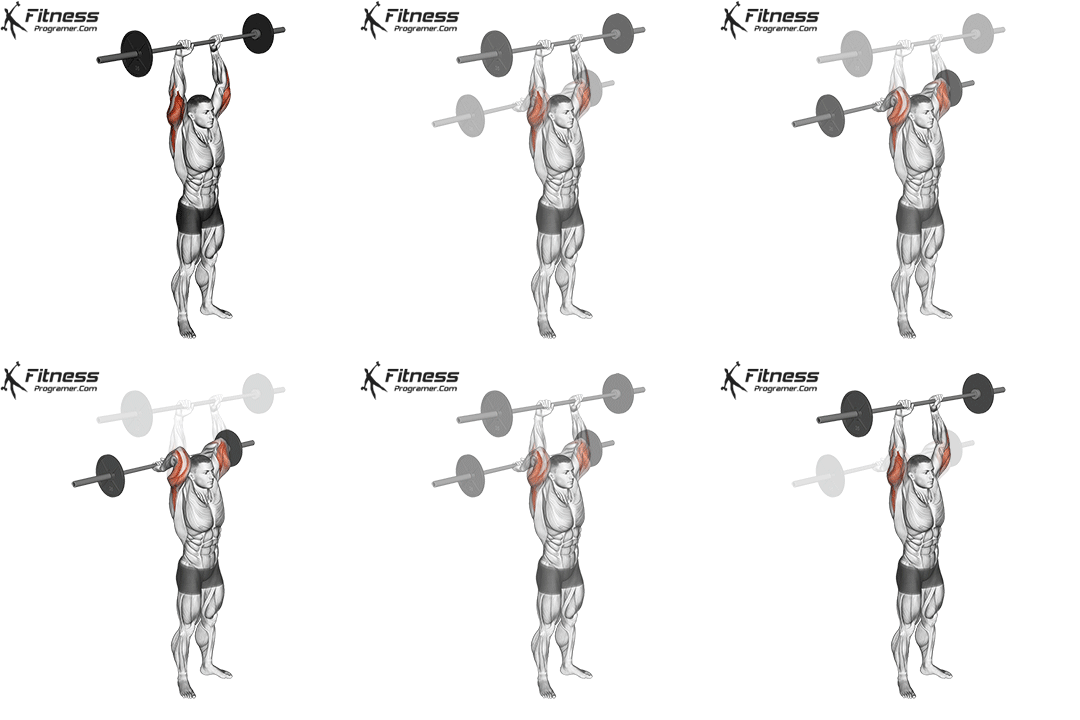
3. Barbell Overhead Extension
The overhead extension works the long head of the triceps. It is great for size and flexibility.
How to do it:
- Stand or sit upright.
- Hold the barbell overhead with both hands.
- Lower the bar behind your head by bending elbows.
- Extend your arms upward.
Tips:
- Keep your core tight.
- Avoid arching your back.
- Start with a light weight until you master the movement.
4. Barbell Floor Press
The floor press is a variation that removes the bench. It limits the range of motion, making it safer for joints.
How to do it:
- Lie on the floor, knees bent.
- Hold the barbell above your chest.
- Lower the bar until elbows touch the floor.
- Press back up.
Tips:
- Do not bounce elbows off the ground.
- Keep wrists straight.
- Use controlled movements.
5. Barbell Jm Press
This is a mix between a close-grip bench and skullcrusher. It is advanced but very effective.
How to do it:
- Lie on a bench, hold barbell above chest.
- Lower bar halfway between chin and chest, elbows go forward.
- Press up, keeping elbows high.
Tips:
- Use light weight at first.
- Keep elbows pointed forward, not flared out.
- Move slowly to avoid injury.
Proper Technique And Form
Good form is critical for safety and results. Many beginners make mistakes that slow progress or cause injury. Here’s how to avoid them:
- Keep elbows close: This prevents shoulder strain and targets the triceps.
- Controlled movements: Avoid swinging or dropping the barbell.
- Grip width: Do not use an extremely narrow or wide grip; both can hurt your wrists or elbows.
- Breathing: Inhale as you lower the bar, exhale as you press up.
- Spotter: When lifting heavy, always ask for help.
People often ignore wrist position. If your wrists bend back, you risk injury. Keep them straight and strong. Another common mistake is moving your shoulders too much. The triceps should do most of the work. Focus on elbow movement for best results.

Credit: www.youtube.com
Structuring A Triceps Workout With Barbell
A well-planned routine helps you make progress and prevents overtraining. The triceps recover quickly, but they also work during chest and shoulder exercises. Here is a sample structure:
Beginner Routine:
- Skullcrusher: 3 sets of 10–12 reps
- Close-Grip Bench Press: 3 sets of 8–10 reps
- Overhead Extension: 2 sets of 12–15 reps
Intermediate Routine:
- JM Press: 3 sets of 8–10 reps
- Skullcrusher: 3 sets of 10 reps
- Floor Press: 4 sets of 8 reps
Advanced Routine:
- Close-Grip Bench Press: 4 sets of 6–8 reps
- Overhead Extension: 4 sets of 10 reps
- JM Press: 3 sets of 8 reps
- Skullcrusher: 3 sets of 12 reps
Rest between sets: 60–90 seconds for muscle growth, 2–3 minutes for strength.
It is important to track your progress. Write down weights, reps, and sets. Many beginners skip this step and wonder why they do not improve. Even small increases in weight or reps can lead to big changes over time.
Comparing Barbell Triceps Exercises With Other Methods
Some people ask if barbell triceps workouts are better than dumbbells, cables, or bodyweight. Each has strengths, but barbells offer unique benefits.
| Method | Strength | Muscle Activation | Progression | Equipment Needed |
|---|---|---|---|---|
| Barbell | High | Full triceps | Easy | Barbell, bench |
| Dumbbell | Medium | Isolated | Easy | Dumbbells |
| Cable | Medium | Constant tension | Adjustable | Cable machine |
| Bodyweight | Low–Medium | Partial | Harder | None |
Barbells allow you to lift heavier and train both arms equally. Dumbbells are good for fixing imbalances but hard to use for heavy lifts. Cable machines offer smooth resistance but require special equipment. Bodyweight exercises, like push-ups, are good for endurance but not best for muscle size.
Common Mistakes And How To Avoid Them
Mistakes in barbell triceps training can slow your progress or cause injury. Here are some pitfalls and how to fix them:
- Using too much weight: Start with a light barbell to learn form. Heavy weights lead to bad technique.
- Poor grip: Hands too close or too wide can hurt wrists and elbows.
- Flared elbows: Keep elbows close to your body to target triceps.
- Rushed reps: Slow, controlled movements build muscle and prevent injury.
- Neglecting warm-up: Always warm up with lighter weights or arm stretches.
- Skipping recovery: Muscles need rest to grow. Do not train triceps every day.
One non-obvious mistake is ignoring shoulder stability. When you press or extend a barbell, weak shoulders can cause pain or limit progress. Add some shoulder exercises to your routine for balance.
Advanced Tips For Barbell Triceps Training
If you want faster progress or better results, try these advanced strategies:
- Drop sets: After your last set, reduce weight and do more reps to fatigue the muscle.
- Pause reps: Hold the barbell at the hardest point for 2–3 seconds before finishing the rep.
- Supersets: Pair two exercises (like skullcrusher and close-grip bench) with little rest for more intensity.
- Change grip: Try different hand widths to target various triceps heads.
- Train at different angles: Use incline or decline benches for new challenges.
Many people overlook training frequency. For most, 2–3 triceps workouts per week is ideal. Too much will lead to fatigue and slow progress.
How To Warm Up And Cool Down
Warming up is not just about preventing injury. It helps you lift more and get better results. Here is a simple plan:
Warm-Up:
- Arm circles: 1 minute
- Light barbell presses: 2 sets of 10 reps
- Triceps stretches: 30 seconds each side
Cool Down:
- Gentle arm stretching
- Massage with foam roller
- Slow walking or cycling for 5–10 minutes
Beginners often skip cool downs, but they help your muscles recover. This means less soreness and better progress.
Equipment You Need For Barbell Triceps Workouts
You do not need a fancy gym to train triceps with a barbell. Here’s what you need:
- Barbell: Standard or Olympic, depending on your strength.
- Weight plates: Add as you get stronger.
- Bench: Flat, incline, or adjustable.
- Safety clips: Prevent plates from sliding.
- Spotter: For heavy lifts.
Some gyms offer EZ bars (curved barbell) which are easier on the wrists. If you have wrist pain, try using an EZ bar for skullcrusher or overhead extension.
Sample Triceps Workout Plans
Here are two example workouts. Adjust weights based on your ability.
Beginner Workout:
- Skullcrusher: 3 sets x 12 reps
- Close-Grip Bench Press: 3 sets x 10 reps
- Overhead Extension: 2 sets x 15 reps
Rest: 90 seconds between sets
Intermediate Workout:
- JM Press: 4 sets x 8 reps
- Skullcrusher: 4 sets x 10 reps
- Floor Press: 4 sets x 8 reps
Rest: 2 minutes between sets
Tracking your progress is key. Write down how much you lift and how many reps you do. Small improvements each week add up over time.
How Barbell Triceps Training Fits Into Full Arm Workouts
The arms are made up of triceps and biceps. Most people train both for balanced strength and appearance. Triceps do more work in pressing movements, while biceps are active in pulling. If you train both, space workouts to avoid overuse.
| Exercise | Primary Muscle | Secondary Muscle |
|---|---|---|
| Skullcrusher | Triceps | Forearm |
| Close-Grip Bench Press | Triceps | Chest |
| Bicep Curl | Biceps | Forearm |
| Overhead Extension | Triceps | Shoulder |
Plan your week so you train triceps after chest or shoulder days, not before. This reduces fatigue and improves performance.
Triceps Progress: What To Expect
How fast can you grow your triceps? It depends on your routine, nutrition, and genetics. Most people see changes in muscle strength within 4–6 weeks. Visible size takes longer. Studies show that consistent resistance training leads to muscle growth, especially when you increase the weight or reps regularly.
One insight many beginners miss is that nutrition is as important as training. Your body needs protein and calories to build muscle. Aim for 1.2–2.0 grams of protein per kilogram of body weight daily. Drink plenty of water and get enough sleep.
Preventing Injuries During Barbell Triceps Workouts
Injury is a risk if you ignore form, weight, or warm-up. Here are steps to stay safe:
- Check equipment: Make sure the barbell and bench are stable.
- Use proper form: Follow the steps for each exercise.
- Start light: Increase weight slowly.
- Warm up: Always begin with stretches and light lifts.
- Listen to your body: If you feel sharp pain, stop right away.
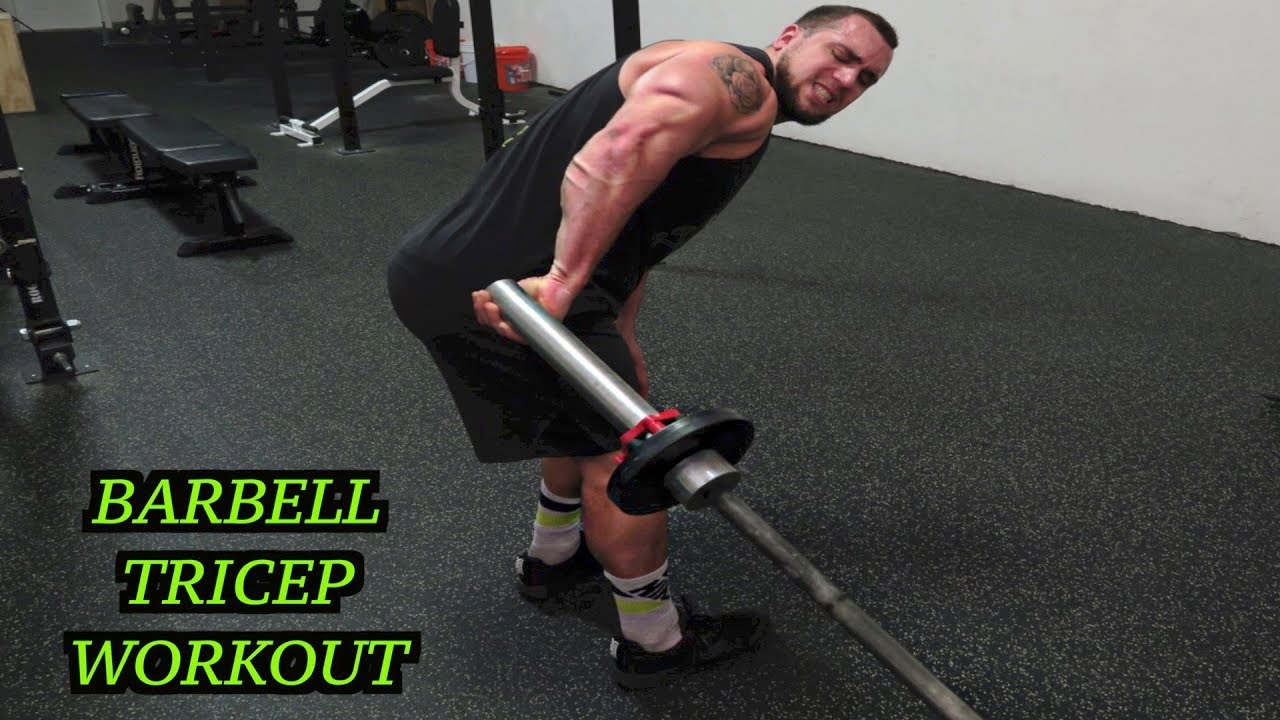
A common injury is elbow tendonitis, caused by overuse or poor form. If you feel pain in your elbow, rest and use ice. Consult a doctor if pain continues.
Credit: www.youtube.com
Tracking Your Progress And Making Adjustments
Measuring your results helps you stay motivated and improve. Here are ways to track progress:
- Log workouts: Write down sets, reps, and weights.
- Take photos: Compare arm size every few weeks.
- Measure arms: Use a tape measure at the widest part.
If your progress stalls, make small changes:
- Increase weight by 5–10 pounds.
- Add extra set or reps.
- Change exercise order.
- Try new barbell variations.
Most beginners only focus on weight. But improving form, adding reps, and changing angles can help break plateaus.
Comparing Barbell Exercises For Triceps
Not all barbell exercises are equal. Some target different heads or require more skill.
| Exercise | Main Target | Difficulty | Best For |
|---|---|---|---|
| Skullcrusher | Long head | Medium | Size |
| Close-Grip Bench Press | All heads | Medium | Strength |
| Overhead Extension | Long head | High | Flexibility |
| Floor Press | Lateral head | Low | Safety |
| JM Press | Medial head | High | Advanced |
Choose exercises based on your goal: size, strength, flexibility, or safety.
Credit: fitnessprogramer.com
Nutrition For Triceps Growth
Training is only half the battle. Without proper nutrition, your muscles will not grow. Key points:
- Protein: Essential for muscle repair. Aim for chicken, eggs, fish, beans, or protein shakes.
- Carbohydrates: Fuel your workout. Choose whole grains, rice, potatoes.
- Healthy fats: Support hormones and recovery. Use olive oil, nuts, seeds.
- Water: Keeps muscles hydrated.
Some people forget about micronutrients. Magnesium, calcium, and vitamin D help muscles contract and recover. Eat a variety of foods for best results.
Recovery And Rest
Muscles grow when you rest, not just when you train. Good recovery is essential:
- Sleep 7–9 hours per night.
- Take at least one day off between triceps workouts.
- Stretch and massage arms after exercise.
- Use ice packs if you feel soreness.
Ignoring recovery leads to fatigue, injury, and slow progress. Listen to your body and adjust your routine if you feel tired.
Barbell Triceps Workouts For Different Goals
Your routine should match your goal. Here are common goals:
Muscle Size: Use higher reps (10–15) and moderate weight. Focus on skullcrusher and overhead extension.
Strength: Use lower reps (6–8) and heavier weight. Focus on close-grip bench press and floor press.
Endurance: Use light weight and high reps (15–20). Try supersets or circuits.
Adjust your rest time and exercise choice based on your goal. Beginners often miss that switching routines every few months prevents plateaus.
Combining Barbell Triceps With Other Training
Triceps workouts can be combined with other routines:
- Chest day: Many chest exercises work triceps.
- Shoulder day: Overhead presses use triceps.
- Full body day: Add a triceps exercise at the end.
Do not train triceps right before heavy chest or shoulder workouts. This can cause fatigue and reduce performance.
How Often Should You Train Triceps With Barbell
Most people should train triceps 2–3 times per week. Overtraining leads to injury and slow growth. Give muscles 48 hours to recover between sessions. Advanced athletes may train more, but beginners should stick to basic routines.
Real-life Examples: Who Can Benefit
Barbell triceps workouts are not just for bodybuilders. Athletes, runners, and people who want better daily strength all benefit. Strong triceps help with pushing, lifting, and stabilizing your arms. Even office workers can see improvements in posture and arm health.
One insight many miss is that triceps training can reduce injury risk in sports. Strong arms help stabilize the shoulder and elbow, which prevents strains.
Motivation And Staying Consistent
The best workout plan is the one you follow. Here are ways to stay motivated:
- Set clear goals: Bigger arms, more strength, or better health.
- Track progress: Use a logbook or app.
- Find a workout partner: Helps with safety and accountability.
- Reward yourself: Celebrate small wins.
- Change up your routine: Try new exercises every month.
Consistency is the key. Even small improvements add up over time.
Frequently Asked Questions
How Much Weight Should I Use For Barbell Triceps Exercises?
Start with a weight you can lift for 10–12 reps with good form. If you struggle to complete the set or lose form, reduce the weight. As you get stronger, add 5–10 pounds every few weeks.
Can I Train Triceps Every Day With Barbell?
No. Triceps need time to recover. Most people should train them 2–3 times per week. Overtraining can cause injury and slow progress.
What Is The Best Barbell Triceps Exercise For Beginners?
The skullcrusher is a good choice for most beginners. It is easy to learn, targets all heads, and can be done with light weight. Always start with proper form.
How Long Does It Take To See Results From Barbell Triceps Workouts?
You may feel stronger in 4–6 weeks. Visible muscle growth takes longer. Track your progress and adjust your routine for steady improvement.
Are Barbell Triceps Workouts Safer Than Dumbbells Or Cables?
Barbells allow heavy lifting but require good form and a spotter for safety. Dumbbells and cables are easier for beginners but do not build as much strength. Each has benefits; combine them for best results.
You now have everything you need to workout your triceps with a barbell and see real progress. Remember, focus on form, consistency, and nutrition. Adjust your routine as you get stronger, and do not forget to track your results. If you want more detailed exercise science, you can visit NCBI. With these tips and strategies, you are ready to build stronger, healthier arms for life.
