

How to Do Tricep Workout With Resistance Bands for Maximum Gains
How To Do Tricep Workout With Resistance Bands
Building strong, defined triceps does more than just shape your arms. Well-developed triceps help with everyday pushing movements, improve athletic performance, and balance out the upper arm for a toned look. Many people think you need heavy weights or a gym for an effective tricep workout. In reality, resistance bands can deliver powerful results from almost anywhere—your home, a park, or while traveling.
Resistance bands are simple, affordable, and easy to carry. Yet, most people use them wrong or underestimate their potential. This guide will show you exactly how to train your triceps with resistance bands, from the basics to advanced techniques. You’ll learn exercises, setup tips, mistakes to avoid, and ways to track your progress, all in clear, practical steps.
Why Train Triceps With Resistance Bands?
Triceps make up about two-thirds of your upper arm size. They are key for pushing strength, arm stability, and balanced muscle growth. Training them with resistance bands offers some unique benefits:
- Constant tension: Bands keep your muscles working throughout the movement, unlike dumbbells, which can lose tension at certain angles.
- Joint-friendly: Bands are gentle on elbows and shoulders because they adapt to your movement and don’t “slam” at the end of a rep.
- Versatile: Bands let you hit your triceps from many angles, even in small spaces.
- Progressive resistance: The further you stretch the band, the harder it gets—this mimics the natural strength curve of your muscles.
- Travel-ready: Bands pack small and light, making them perfect if you’re often on the go.
These advantages make resistance bands not just a backup, but a smart main tool for tricep training.
Understanding Tricep Anatomy
To get the most out of your resistance band workout, you need to know how your triceps work. The triceps brachii has three parts, or “heads”:
- Long head: Runs along the back of your arm and helps with shoulder extension.
- Lateral head: Sits on the outside and gives the “horseshoe” shape.
- Medial head: Deeper and closer to the body, active in all tricep movements.
Different exercises target these heads in unique ways. For full development, your routine should hit all three. For example, overhead movements hit the long head more, while pressdowns and kickbacks target the lateral and medial heads.

Credit: www.gymreapers.com
Choosing The Right Resistance Band
Not all resistance bands are the same. Picking the right one will make your tricep workout safer and more effective. Here’s how to select your band:
Types Of Resistance Bands
| Type | Shape | Best For |
|---|---|---|
| Loop Bands | Closed loop, thick | Heavy exercises, easy anchoring |
| Tubing Bands | Tube with handles | Comfort, adjustable grip |
| Flat Bands | Flat, wide strips | Physical therapy, light resistance |
For most tricep exercises, loop bands or tube bands with handles work best. They allow for strong resistance and can be anchored safely.
Resistance Level
Bands come in different thicknesses and strengths, often color-coded. Start with a medium resistance if you’re a beginner. Too light, and your muscles won’t be challenged. Too heavy, and your form will suffer.
Tip: If possible, have at least two bands—a lighter one for high-rep sets and a heavier one for challenging exercises.
Quality Matters
Cheap bands can snap and cause injury. Choose bands from a trusted brand, and check them for cracks before each workout.
Setting Up For Success: Safety And Technique
Most people focus on exercises but forget the small details that prevent injury and improve results. Don’t skip these steps:
- Warm up your elbows and shoulders for 5-10 minutes with arm circles, push-ups, or light band pull-aparts.
- Anchor the band securely. Use a heavy door, strong furniture, or buy a door anchor. Never use something sharp or fragile.
- Check your space. Make sure you have enough room to stretch the band fully without tripping or hitting anything.
- Grip the band right. A loose grip wastes energy and can let the band slip.
Insider tip: For overhead exercises, always check above you for ceiling fans or lights. Bands snap back quickly if they slip.
Core Tricep Exercises With Resistance Bands
Let’s break down the top resistance band exercises for triceps. Each one hits the muscles in a slightly different way. Mix and match for a full workout.
1. Resistance Band Tricep Pushdown
This classic move targets all three tricep heads, especially the lateral head.
How to do it:
- Anchor the band high (over a door or pull-up bar).
- Stand facing the anchor, hold the band with both hands.
- Keep elbows close to your body, upper arms still.
- Push the band down until your arms are straight.
- Squeeze your triceps, then return slowly.
Tip: Don’t let your elbows flare out—keep them pinned for max tension.
2. Overhead Tricep Extension
Great for stretching and working the long head.
- Anchor the band low behind you or stand on it.
- Hold the band overhead with both hands, elbows pointed forward.
- Lower your hands behind your head, keeping elbows still.
- Extend arms up until fully straight.
- Lower slowly and repeat.
Common mistake: Arching your back. Brace your core to stay upright.
3. Tricep Kickback
Focuses on the lateral and medial heads.
- Stand on the band, hold one end in each hand.
- Bend forward at the hips, elbows bent at 90 degrees.
- Keeping elbows high and still, straighten your arms behind you.
- Squeeze the triceps hard, then lower back with control.
Insider insight: Most people swing their arms. For better results, keep your upper arm locked and only move your forearm.
4. Single-arm Tricep Extension
Unilateral work helps correct muscle imbalances.
- Anchor the band overhead.
- Grab the band with one hand, elbow bent and pointed forward.
- Extend your arm until straight.
- Lower slowly and repeat. Switch sides.
Tip: Go lighter here to keep perfect form.
5. Close-grip Band Push-up
Adds a push-up for compound strength.
- Wrap the band across your upper back, hold the ends under your hands.
- Get into push-up position with hands close together.
- Lower your chest to the floor, elbows close to sides.
- Push up, fighting the band’s resistance.
Non-obvious insight: This move also works your chest, but the close grip and band tension force your triceps to work harder than a regular push-up.
6. Band Skullcrusher
A unique band version of a gym favorite.
- Anchor the band low behind you or stand on it.
- Lie on your back (on a mat), hold the band with both hands above chest.
- Keeping upper arms still, bend elbows to lower hands toward your forehead.
- Extend arms back up.
Safety tip: Always start with a light band and control the motion to avoid the band snapping back.
7. Band Dips
If you have parallel bars or sturdy chairs, use a band to add resistance.
- Loop the band around your neck and hold each end under your hands on the bars.
- Lower your body in a dip.
- Push up, letting the band add resistance.
Variation: You can also use the band as assistance by looping it under your feet if you’re not yet strong enough for dips.
Sample Tricep Resistance Band Workouts
How you put exercises together matters as much as the exercises themselves. Here are three sample routines for different goals:
Beginner Tricep Workout
- Resistance Band Pushdown: 3 sets x 12 reps
- Overhead Tricep Extension: 3 x 10 reps
- Tricep Kickback: 2 x 12 reps
Rest 60 seconds between sets. Focus on slow, controlled reps.
Intermediate Routine
- Pushdown: 4 x 10-12 reps
- Band Skullcrusher: 3 x 8-10 reps
- Single-Arm Extension: 3 x 12 reps per side
- Close-Grip Band Push-Up: 3 x max reps
Rest 45-60 seconds between sets. Increase band resistance when you can do more than 12 reps with good form.
Advanced Circuit
- Pushdown: 12 reps
- Overhead Extension: 10 reps
- Kickback: 12 reps per arm
- Band Dips: 8-10 reps
- Close-Grip Push-Up: Max reps
Do all exercises back-to-back with 30 seconds rest between moves. Repeat the circuit 3 times.
Extra tip: For growth, try “burnout sets”—use a lighter band for high reps (20-30) at the end of your workout.
How To Progress With Resistance Bands
Progressive overload—making your muscles work harder over time—is key for growth. With bands, you have more options than just “adding weight.” Here’s how to keep your triceps improving:
- Use a thicker band or double up bands for more resistance.
- Slow down the lowering phase (eccentric) to increase time under tension.
- Add reps or sets as you get stronger.
- Shorten rest periods to increase intensity.
- Change angles or grips to challenge your muscles in new ways.
| Progression Method | Effect | Example |
|---|---|---|
| Thicker Band | Increases resistance | Switch from medium to heavy band |
| Slower Tempo | More muscle tension | 3 seconds down, 1 second up |
| Extra Reps | Greater muscle fatigue | Go from 12 to 15 reps |
Beginner mistake to avoid: Jumping to the heaviest band too soon. This hurts technique and can cause injury.
Common Mistakes And How To Fix Them
Even simple band exercises can go wrong if you’re not careful. Here are errors to watch out for:
- Poor anchoring: If your anchor is weak, the band could slip and snap back. Always test the setup before you start.
- Elbow flaring: Letting elbows move away from your sides reduces triceps tension and stresses your shoulders.
- Partial reps: Not fully straightening your arm at the end of a movement cheats your triceps out of full activation.
- Using momentum: Swinging the band or rushing the rep means your muscles aren’t doing the work—slow down and control each move.
- Not adjusting resistance: As you get stronger, you must use heavier bands or more reps. Don’t stick to the same band for months.
Pro tip: Record yourself or use a mirror to check your form. Small corrections can make a big difference in results.
Integrating Tricep Band Workouts Into Your Routine
You can train triceps with bands alone, or combine them with bodyweight or weights. Here are some smart ways to fit them into your schedule:
- As a main workout: Do 3-5 tricep-focused band exercises, 2-3 times per week.
- As a finisher: After chest or shoulder workouts, add 2-3 tricep band moves for higher reps to fully fatigue the muscle.
- On travel or busy days: A 15-minute high-intensity band circuit can replace a long gym session without sacrificing results.
Non-obvious insight: Because bands are gentle on joints, you can do them more often than heavy weights, as long as you recover well.
How To Measure Progress With Bands
It’s easy to lose track of improvement with bands, since there are no weight plates to count. Here’s how to stay motivated and see your results:
- Track reps and sets: Write down how many you do each workout.
- Note band thickness: Keep a log of which bands you use for each exercise.
- Take progress photos: Arm shape changes faster than you think.
- Test strength: Every few weeks, see if you can do more push-ups or dips.
- Feel your muscle: Good tricep work leads to a strong muscle “pump” and mild soreness the next day.

Credit: ca.ironbullstrength.com
Sample Resistance Band Tricep Workout (full Plan)
Here’s a simple, effective tricep workout you can do with one or two bands:
- Warm-Up (5 minutes)
- Arm circles, band pull-aparts, gentle push-ups
- Tricep Pushdown
3 Sets X 12 Reps, 45 Seconds Rest
3. Overhead Extension
3 Sets X 10 Reps, 45 Seconds Rest
4. Tricep Kickback
3 Sets X 12 Reps, 45 Seconds Rest
5. Close-grip Band Push-up
2 Sets X Max Reps
- Cool Down
- Light stretching for triceps, chest, shoulders
This plan takes 25-30 minutes. Increase band resistance or reps as you get stronger.
Combining Resistance Bands With Other Equipment
Bands work great alone but can also boost other exercises:
- Pair with dumbbells: Do a dumbbell tricep extension and add a band for double resistance.
- Assisted dips or push-ups: Use a band to make bodyweight moves easier if you’re building strength.
- Supersets: Do a heavy chest exercise, then a high-rep tricep band move for max burnout.
Example combo:
Do a set of bench presses, then go straight to band pushdowns with no rest. This “pre-exhausts” your triceps for more growth.
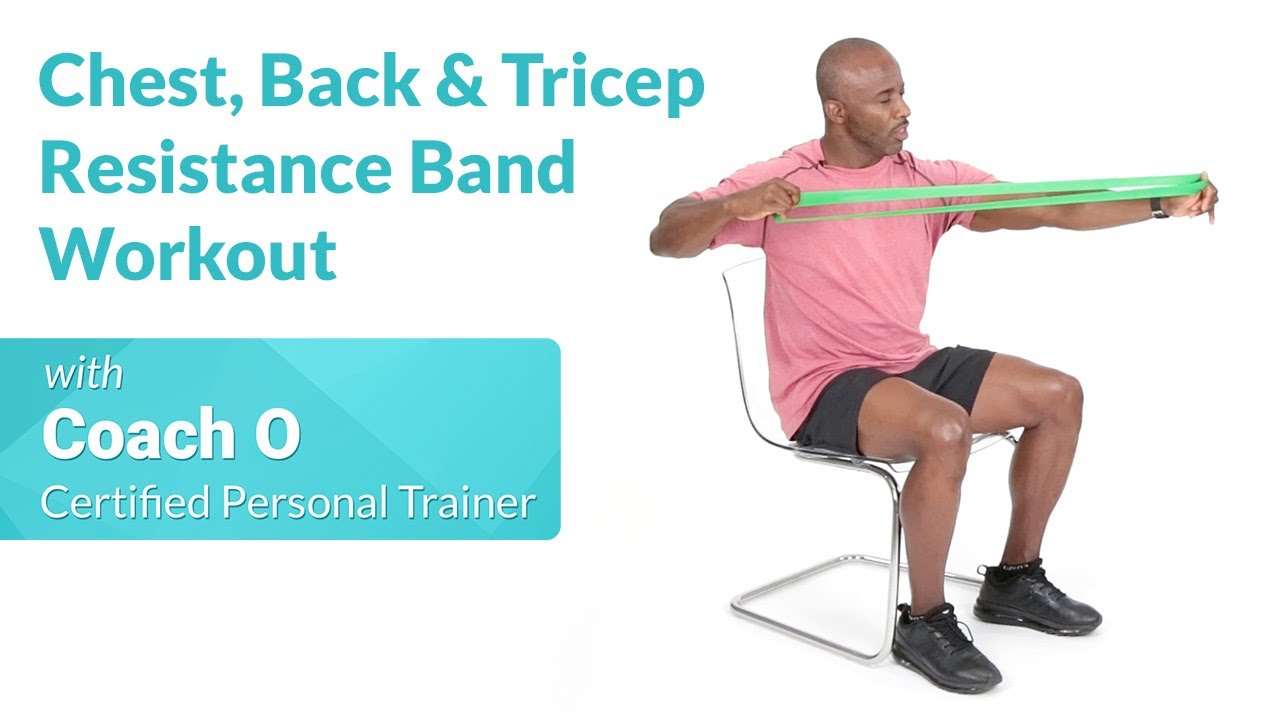
Credit: www.youtube.com
How To Care For Your Bands
Resistance bands can last years if you look after them:
- Store in a cool, dry place. Heat and sunlight degrade rubber.
- Inspect for cracks or tears before each use.
- Clean gently with water and mild soap—don’t use harsh cleaners.
- Avoid sharp objects or rough surfaces that could nick the band.
Replacing a worn band is cheaper—and safer—than risking a snap injury.
The Science Behind Band Training
You may wonder if bands really work as well as weights. Research shows they can be just as effective for muscle growth and strength if used properly. The key is muscle tension—and bands supply plenty.
A study published in the *Journal of Strength and Conditioning Research* found no significant difference in muscle activation between bands and free weights for common upper-body exercises, as long as effort was matched.
If you’re curious, you can read more about the science of resistance bands at the Wikipedia Resistance Band page.
Advanced Tips For Tricep Band Training
Once you master the basics, try these advanced methods:
- Isometric holds: Pause at the hardest point (e.g., full extension) for 3-5 seconds each rep.
- 1.5 reps: Go all the way up, halfway down, then back up again—one rep becomes two challenges.
- Drop sets: Start heavy, then switch to a lighter band mid-set and keep going.
These techniques boost intensity and help break through plateaus.
Comparing Resistance Bands And Free Weights For Triceps
Which is better—bands or dumbbells? The answer depends on your goals and resources.
| Aspect | Resistance Bands | Free Weights |
|---|---|---|
| Portability | Very portable | Bulky, not travel-friendly |
| Joint Impact | Low, gentle | Can be stressful |
| Progression | Switch bands, adjust distance | Add or remove weight |
| Maximum Load | Limited by band strength | Can go very heavy |
| Muscle Activation | High, constant tension | High, but tension changes |
Key takeaway: For most people, bands are enough for full tricep development. Only advanced lifters looking for maximum size may need to add heavy free weights.
Frequently Asked Questions
How Often Should I Train Triceps With Resistance Bands?
Aim for 2-3 times per week, allowing at least one day of rest between workouts. If you recover well and use proper form, you can train a bit more often since bands are gentle on joints.
Can Resistance Bands Build Big Triceps?
Yes, resistance bands can build muscle and size if you train with enough intensity and progressively overload your muscles. Focus on slow reps, using a challenging band, and increasing difficulty over time.
What’s The Best Resistance Band Exercise For Triceps?
There is no single “best” exercise, but tricep pushdowns and overhead extensions with a band are both highly effective. Combining several exercises in your routine gives the best results.
How Do I Know If My Resistance Band Is Too Light Or Too Heavy?
If you can do more than 20 reps easily, your band is too light. If you can’t do at least 8 reps with good form, it’s too heavy. Choose a band that lets you work in the 8-15 rep range for most sets.
Are Resistance Bands Safe For Beginners?
Yes, resistance bands are safe for all levels, including beginners. Start with a light band, focus on good form, and always anchor the band securely to avoid accidents.
Building strong triceps with resistance bands is simple, effective, and accessible to everyone. With the right exercises, smart setup, and consistent effort, you’ll see real results—whether at home, the gym, or on the road. Remember, the key is not just working hard, but working smart.
Challenge yourself, stay consistent, and enjoy your stronger, more defined arms.
