

How to Do Tricep Exercise With Cable for Maximum Gains
If you want strong, defined arms, focusing on your triceps is essential. The triceps make up about two-thirds of your upper arm, so they have a big impact on the way your arms look and perform. Many people know about basic dumbbell and barbell exercises, but using a cable machine brings extra benefits: you get constant tension, better control, and more options for targeting different parts of the triceps.
Whether you are new to the gym or have some experience, learning how to do tricep exercises with cable can change your results. In this guide, you will learn the right techniques, common mistakes, variations, and practical tips. We’ll cover everything from how to set up, which grips to use, how to adjust the cable for different exercises, and how to make your workouts effective. You’ll also find comparison tables, answers to common questions, and advice you can use right away.
Why Use Cables For Tricep Exercises?
Cables are often overlooked, but they offer unique advantages for triceps workouts. Unlike free weights, cables provide constant resistance throughout the movement. This means your muscles work harder, especially at the top and bottom of each rep. You also get a safer environment, as the cable machine keeps the resistance smooth and controlled.
Benefits of cable tricep exercises:
- More balanced muscle activation
- Less risk of injury from jerky movements
- Easy to adjust weight and resistance
- Variety of grips and angles
Here’s a quick look at how cable exercises compare with other tricep training tools:
| Training Tool | Muscle Activation | Range of Motion | Safety | Grip Options |
|---|---|---|---|---|
| Cable Machine | High | Full | Controlled | Multiple |
| Dumbbells | Medium | Good | Moderate | Limited |
| Barbells | Medium | Good | Moderate | Fixed |
| Resistance Bands | Low | Variable | Safe | Flexible |
Using cables is especially helpful if you want to isolate the triceps and avoid using your shoulders or chest too much. You can change the attachment, angle, or weight quickly and adjust your workout without wasting time.
Understanding The Triceps Muscle
Before you start, it helps to know what you’re working on. The triceps has three parts, called “heads.” These are:
- Long head: Runs along the back of your upper arm. Helps with arm extension and shoulder stability.
- Lateral head: Gives the arm its outer shape and definition.
- Medial head: Located underneath, close to the elbow. Responsible for endurance and stability.
Each cable exercise can target different heads, depending on the grip, angle, and attachment. Knowing this allows you to pick exercises that suit your goals.
Credit: fitbod.me
Setting Up For Cable Tricep Exercises
A good setup is the foundation for safe and effective workouts. Many beginners skip this part, but it can make a big difference.
Choosing The Right Cable Attachment
Cable machines have several attachments. The most common are:
- Straight bar: Good for basic pushdowns.
- Rope: Allows for twisting and separation at the end of the movement.
- EZ bar: Has a curved shape for comfort and less wrist strain.
- Single handle: Useful for one-arm exercises and fixing muscle imbalances.
Each attachment has its pros and cons. For example, the rope allows for a greater range of motion and better contraction, while the straight bar is easier for beginners.
Adjusting The Cable Height
For most tricep exercises, start with the cable at the top position. For overhead movements, set the cable low. If you’re unsure, ask a trainer or gym staff for help.
Setting The Weight
Start with a light weight. You should be able to do 12–15 reps with good form. Increase the weight slowly as you get stronger.
Proper Body Position
Stand close to the machine. Keep your feet shoulder-width apart. Hold your abs tight and keep your back straight. Don’t lean too far forward or backward.
Essential Cable Tricep Exercises
Cable machines offer a range of exercises. Here are the most effective ones, along with step-by-step instructions and tips.
Cable Tricep Pushdown
This is the most popular cable tricep exercise. It targets all heads, especially the lateral head.
How to do it:
- Attach a straight bar or rope to the high pulley.
- Stand facing the machine, feet shoulder-width apart.
- Grip the attachment with both hands, palms facing down.
- Keep elbows close to your body.
- Push the bar or rope down until your arms are fully extended.
- Pause and squeeze your triceps at the bottom.
- Slowly return to the starting position.
Tips:
- Don’t let your elbows flare out.
- Keep your wrists straight.
- Avoid swinging your body.
Common mistakes:
- Using too much weight and losing control.
- Moving the shoulders instead of the arms.
- Not fully extending the elbows.
Rope Tricep Extension
This exercise is similar to the pushdown but uses the rope attachment. It hits the triceps harder by allowing you to separate the ends at the bottom.
How to do it:
- Attach the rope to the high pulley.
- Stand close to the machine.
- Hold the rope with both hands, palms facing each other.
- Keep elbows tight to your sides.
- Push the rope down and pull the ends apart at the bottom.
- Hold for one second.
- Return slowly.
Tips:
- Focus on pulling the rope apart for a strong contraction.
- Don’t let your shoulders rise.
Overhead Cable Tricep Extension
This targets the long head. It’s great for adding size and fullness to the upper arm.
How to do it:
- Set the cable to a low position.
- Attach a rope or single handle.
- Stand facing away from the machine.
- Hold the rope overhead, elbows pointing forward.
- Extend your arms upward, keeping elbows steady.
- Lower back slowly.
Tips:
- Keep your body upright.
- Don’t arch your back.
Reverse Grip Cable Pushdown
This variation targets the medial head. It’s good for improving arm endurance and stability.
How to do it:
- Use a straight bar.
- Grip the bar with palms facing up.
- Keep elbows close to your sides.
- Push down, fully extending your arms.
- Return with control.
Tips:
- Use light weight to avoid wrist strain.
- Focus on squeezing at the bottom.
Single Arm Cable Tricep Extension
This exercise helps fix imbalances and build symmetry.
How to do it:
- Attach a single handle to the high pulley.
- Stand sideways to the machine.
- Grip the handle with one hand.
- Keep your elbow close to your body.
- Push down and fully extend your arm.
- Repeat on the other side.
Tips:
- Don’t rush the movement.
- Use a mirror to check your form.
Comparing Different Cable Tricep Exercises
To help you choose, here’s a table showing which tricep heads are targeted by each exercise, and the difficulty level:
| Exercise | Targeted Heads | Difficulty | Best For |
|---|---|---|---|
| Cable Pushdown | Lateral, Long, Medial | Easy | All levels |
| Rope Extension | Lateral, Long | Medium | Intermediate |
| Overhead Extension | Long | Medium | Size, fullness |
| Reverse Grip Pushdown | Medial | Medium | Endurance, stability |
| Single Arm Extension | All heads | Hard | Imbalance correction |
Key Techniques For Maximum Tricep Growth
Getting results from cable tricep exercises is not only about lifting weights. It’s about technique and muscle activation.
1. Full Range of Motion
Always extend your arms fully and control the return. Partial reps reduce muscle activation and limit growth.
2. Squeeze at the Bottom
Hold the contraction for one second. This increases muscle tension and boosts results.
3. Slow Eccentric Phase
Lower the weight slowly, not letting it drop. Studies show that the “eccentric” (lowering) phase builds muscle.
4. Use the Right Grip
Changing grip (overhand, underhand, neutral) shifts the focus to different heads. Try different grips to find what feels best.
5. Don’t Overload the Weight
Heavy weights can cause bad form. Choose weight you can control for 10–15 reps.
6. Focus on the Triceps
Don’t let shoulders, chest, or back take over. Keep elbows locked and movement smooth.
7. Train Both Sides
Use single-arm exercises if you notice one arm is weaker or smaller.

Credit: uppper.com
Advanced Variations And Progressions
Once you master the basics, you can try advanced cable tricep exercises. These add challenge and variety.
Cable Overhead Single-arm Extension
This is a tough variation for the long head. Use a single handle and perform the extension one arm at a time.
Cable Kickback
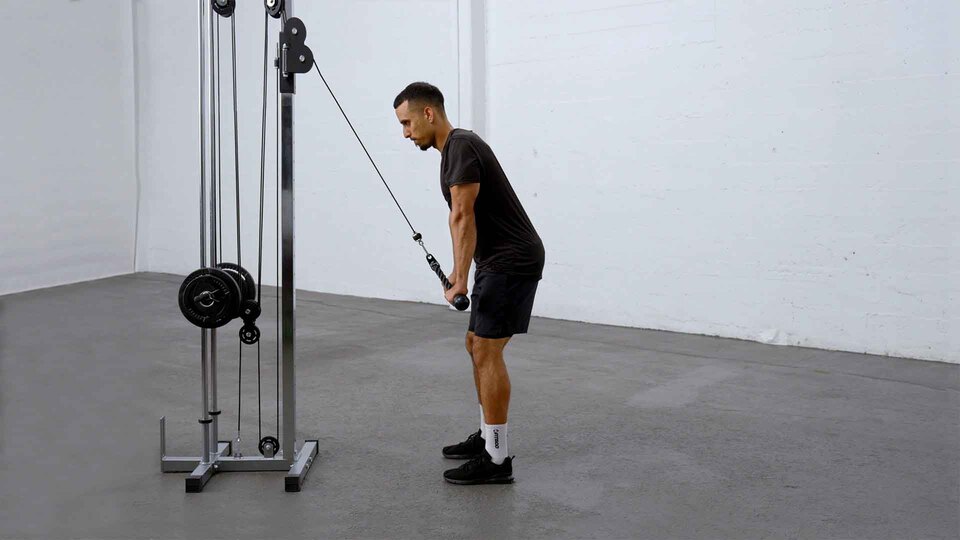
Attach a single handle to the low pulley. Bend forward, keeping your back straight. Extend your arm behind you. This targets the lateral head and improves definition.
Crossbody Cable Extension
Stand sideways to the machine, grip the handle with the opposite hand. Pull the cable across your body. This hits the triceps from a unique angle.
Superset Cable Tricep Exercises
Perform two or more cable exercises back-to-back without rest. For example, do pushdowns and overhead extensions together. This increases muscle fatigue and growth.
Sample superset:
- Rope pushdown x 10 reps
- Overhead extension x 10 reps
- Rest 60 seconds
- Repeat 3–4 times
Creating An Effective Cable Tricep Workout
To see results, combine exercises and plan your sets and reps. Here’s a simple structure for a cable-only tricep workout.
Beginner:
- Cable Pushdown: 3 sets x 12 reps
- Rope Extension: 2 sets x 10 reps
- Overhead Extension: 2 sets x 10 reps
Intermediate:
- Rope Pushdown: 3 sets x 12 reps
- Single Arm Extension: 3 sets x 8 reps each arm
- Reverse Grip Pushdown: 2 sets x 12 reps
Advanced:
- Overhead Single Arm Extension: 3 sets x 8 reps each arm
- Crossbody Extension: 3 sets x 10 reps
- Cable Kickback: 2 sets x 15 reps
Rest: 60–90 seconds between sets.
Frequency: Train triceps 2–3 times per week for best results. Leave at least 48 hours between sessions for recovery.
Common Mistakes And How To Fix Them
Many people make errors that limit their progress or cause injury.
1. Using Excessive Weight
Trying to lift too heavy leads to poor form. Reduce the weight and focus on technique.
2. Flared Elbows
Elbows should stay close to your body. Flaring reduces tricep activation and puts stress on joints.
3. Swinging or Leaning
Don’t use your body to push the weight. Stand tall and keep movement controlled.
4. Skipping Warm-Up
Always warm up your arms and shoulders before starting. This prevents injury.
5. Not Adjusting Attachments
Different exercises need different attachments. Use the rope, bar, or handle as needed.
How Cable Tricep Training Compares To Other Methods
Cable exercises have unique advantages, but how do they compare to other popular tricep training methods? Let’s look at the facts.
| Training Method | Muscle Activation | Joint Stress | Ease of Use | Versatility |
|---|---|---|---|---|
| Cable Machine | High | Low | Easy | High |
| Dumbbells | Medium | Medium | Easy | Medium |
| Bodyweight | Low | Low | Hard | Low |
| Barbells | High | High | Medium | Low |
Cables stand out for their high muscle activation and low joint stress. They are easy to use, especially for beginners, and offer many options for variation.
Practical Tips For Better Cable Tricep Workouts
If you want to get the most from your cable tricep training, pay attention to these practical tips:
1. Warm Up Thoroughly
Spend 5–10 minutes warming up your arms and shoulders. Simple moves like arm circles, push-ups, or light cable pushdowns work well.
2. Focus on Mind-Muscle Connection
Think about your triceps working during each rep. This increases muscle activation.
3. Use Mirrors
Check your form in the mirror. Look for straight wrists, elbows close to your body, and no swinging.
4. Track Your Progress
Keep a workout log. Write down your sets, reps, and weights. This helps you see improvements and adjust your routine.
5. Mix Up Attachments
Try different cable attachments to challenge your triceps and avoid boredom.
6. Include Stretching
Stretch your triceps after your workout. Hold each stretch for 20–30 seconds to improve flexibility and recovery.
Two Non-obvious Insights For Beginners
Most guides miss these points, but they can help you get better results:
1. Attachment Choice Changes Muscle Feel
Using a rope versus a straight bar activates the triceps differently. For some people, the rope gives a better contraction at the end of each rep. Try both and see which works for you.
2. Cable Height Influences Target
Changing the cable height (high, low, or mid) changes which tricep head is worked. For example, overhead extensions from a low cable hit the long head, while pushdowns from a high cable target all heads. Don’t just use the default setting—experiment with cable height.
How To Avoid Plateaus In Cable Tricep Training
If your progress stalls, it’s often because your routine has become too predictable.
Change up your workouts every 4–6 weeks:
- Switch attachments (rope, bar, handle)
- Try new exercises or angles
- Adjust your sets and reps (for example, switch from 3x12 to 4x8)
- Use supersets or drop sets for more intensity
Safety And Injury Prevention
Cable machines are safer than free weights, but injuries can still happen if you’re careless.
1. Check Equipment
Make sure cables, pulleys, and attachments are secure.
2. Use Controlled Movements
Don’t jerk the weight. Move slowly and smoothly.
3. Listen to Your Body
If you feel pain (not muscle burn), stop and rest.
4. Don’t Overtrain
Triceps are small muscles. Too much volume can cause strain. Train them 2–3 times per week.
How To Combine Cable Tricep Exercises With Other Workouts
You can add cable tricep exercises to full-body, push, or arm-focused routines. Here’s a sample weekly plan:
Day 1: Full Body
- Cable Pushdown (triceps)
- Cable Row (back)
- Cable Squat (legs)
Day 2: Push Day
- Rope Extension (triceps)
- Cable Chest Press (chest)
- Shoulder Press (shoulders)
Day 3: Arm Day
- Single Arm Extension (triceps)
- Cable Curl (biceps)
- Reverse Grip Pushdown (triceps)
This keeps your workouts balanced and prevents overtraining.
Real-life Example: How Cables Helped A Beginner
Sam, a beginner, struggled with dumbbell tricep exercises. He felt shoulder pain and could not get a good “burn” in his triceps. After switching to cable pushdowns and rope extensions, Sam noticed less joint stress and better muscle activation. In two months, he increased his pushdown weight by 25% and saw visible changes in his arm shape.
Research And Science Behind Cable Training
Studies show that cable machines provide constant resistance and activate more muscle fibers than free weights in some cases. For example, research from PubMed Central found that cable exercises lead to more muscle growth due to continuous tension.
Frequently Asked Questions
What Is The Best Cable Tricep Exercise For Beginners?
The cable pushdown is ideal for beginners. It’s easy to learn, safe, and activates all three tricep heads. Start with light weight and focus on proper form.
How Many Cable Tricep Exercises Should I Do Per Workout?
Aim for 2–3 different exercises per session. This targets all parts of the triceps and prevents overuse.
Can I Train Triceps With Cables Every Day?
No. Triceps need time to recover. Train them 2–3 times per week, leaving at least 48 hours between workouts.
Which Cable Attachment Is Best For Triceps?
The rope attachment gives the best contraction and range of motion. However, the straight bar and single handle are also effective. Try each to see what feels best.
How Do I Know If My Triceps Are Working?
You should feel a burn in the back of your arm, not your shoulders or chest. If you don’t, check your form and reduce the weight.

Credit: fitbod.me
Final Thoughts
Cable machines are one of the best tools for tricep exercises. They give you control, safety, and a variety of options to target different parts of the muscle. By using proper technique, mixing up your workouts, and paying attention to form, you can build strong, defined arms and avoid injury. Remember to start light, focus on the mind-muscle connection, and be consistent. With a little practice, cable tricep exercises will help you reach your goals faster and smarter.
