

How Many Tricep Exercises on Push Day for Maximum Gains
Building strong, defined arms is a common goal for many people who train in the gym. On a push day, your workout usually focuses on the muscles that help you push weight away from your body — mainly the chest, shoulders, and triceps. While most people know how to target their chest and shoulders, many wonder how many tricep exercises they really need on push day to see results. Too few, and you might miss out on growth. Too many, and you risk overtraining or hitting a plateau.
This guide will break down everything you need to know about tricep training on push day. You’ll learn how many exercises are optimal, why the right number matters, how volume and intensity play a role, and how to choose movements that actually deliver results. Along the way, you’ll find practical advice, real examples, and tips that even experienced lifters sometimes overlook. Whether you are new to training or have years of experience, this article will help you understand how to structure your push day for maximum tricep gains.
Understanding Push Day And The Role Of Triceps
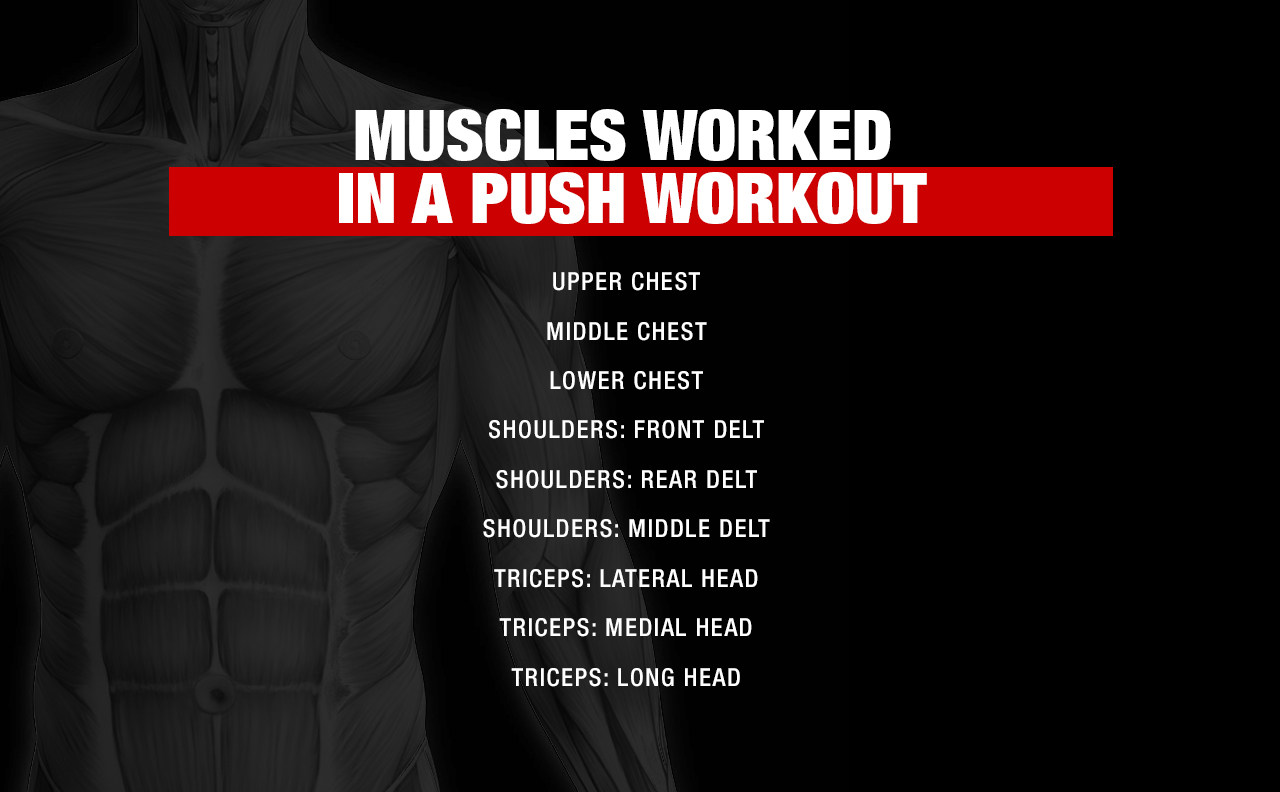
A push day typically includes exercises that involve pushing movements. These movements target the anterior deltoids (front of the shoulders), pectorals (chest), and triceps brachii (back of the upper arm). The triceps make up about two-thirds of your upper arm size, so they play a big role in how your arms look and perform.
When you do presses (like bench press or overhead press), your triceps help extend your elbows. But compound lifts don’t always hit all parts of the triceps equally. That’s why most push day routines include both compound and isolation exercises for the triceps.
It’s important to understand that push day isn’t just about lifting heavy and hoping for results. The triceps are active in almost every pressing movement, but if you want them to grow and look defined, you need to give them focused work.
This is especially true for people whose triceps lag behind their chest or shoulders. For example, if your arms look small compared to your chest, you may not be targeting your triceps enough.
Compound Vs. Isolation Movements
- Compound exercises: Work multiple muscles at once. Examples are bench press, push-ups, and overhead press. These often involve the chest and shoulders along with the triceps.
- Isolation exercises: Focus mainly on one muscle, in this case, the triceps. Examples are tricep pushdowns, overhead tricep extensions, and skull crushers.
A balanced push day should include both types. Compound lifts build overall strength, while isolation moves help you target the triceps more directly for muscle growth.
Some people make the mistake of thinking that compound exercises are enough for arm development. While bench presses and shoulder presses do engage the triceps, they don’t always target all three heads equally. Isolation exercises allow you to work areas that compound lifts might miss, especially the long head of the triceps, which is crucial for that full, rounded look.
How Many Tricep Exercises Should You Do?
The ideal number of tricep exercises on push day depends on your goals, experience, and how your routine is structured. However, most effective routines use 2 to 3 tricep-specific exercises after your main pushing lifts. Let’s break down why this range works for most people.
Why 2 To 3 Tricep Exercises Is Optimal
- Compound Movements Provide a Base: Your triceps are already working hard during bench presses, incline presses, or overhead presses. This means they’re getting a lot of indirect stimulation.
- Direct Work for Complete Development: Adding 2 to 3 targeted tricep exercises ensures you hit all heads of the muscle for balanced growth.
- Avoiding Overtraining: More isn’t always better. Doing 4 or 5 tricep moves in one session often leads to fatigue, poor form, and increased injury risk.
Overdoing tricep isolation work can be counterproductive. For example, adding too many exercises may lead to elbow pain, poor recovery, and slower progress. On the other hand, skipping direct tricep work can leave your arms underdeveloped. The sweet spot is usually two or three exercises that challenge the muscle from different angles.
A Sample Push Day Structure
Here’s an example of how a well-designed push day might look:
- Barbell Bench Press (compound, chest/triceps/shoulders)
- Overhead Dumbbell Press (compound, shoulders/triceps)
- Incline Dumbbell Fly (isolation, chest)
- Tricep Rope Pushdown (isolation, triceps)
- Overhead Tricep Extension (isolation, triceps)
In this plan, the first three exercises already work your triceps. The last two directly target them from different angles. This structure ensures your triceps get enough stimulation without taking away energy from your chest or shoulder work.
If you want to add variety, you can swap in exercises like skull crushers or close-grip bench press. Rotating exercises every few weeks keeps training fresh and prevents plateaus.
Factors That Affect Tricep Exercise Selection
No two people are exactly alike. Your optimal number of tricep exercises can depend on several factors:
1. Training Experience
- Beginners: Usually do best with 1–2 tricep isolation exercises per push day. Their muscles adapt quickly to new stress, and compound lifts already provide strong stimulus.
- Intermediate/Advanced: Can handle 2–3 isolation tricep exercises. They need more variety and volume to keep progressing.
Beginners often see quick gains with simple routines. Too many exercises can overwhelm them or lead to poor technique. As you gain experience, you can safely add more exercises, but always focus on form and recovery.
2. Training Volume
Training volume is the total amount of work you do (sets x reps x weight). For triceps, most research suggests 10 to 16 sets per week for growth. If you train push day twice per week, splitting 5–8 sets each session with 2–3 exercises works well.
It’s important not to confuse volume with simply doing more exercises. You can get the same results from fewer, high-quality sets as you would from many sets with poor form. Tracking your sets and reps can help you see if you’re getting enough volume for muscle growth.
3. Total Workout Length
If your push day is already long, cramming in more tricep exercises can lead to rushed sets and poor focus. Quality always beats quantity.
For example, if you spend over 90 minutes in the gym, your energy levels may drop, and your tricep work becomes less effective. Instead, focus on making each set count and avoid going through the motions just to tick off more exercises.
4. Recovery Ability
Some people recover faster than others. If you notice elbow pain or lingering soreness, you may be doing too much direct tricep work. Adjust down as needed.
Recovery isn’t just about rest days. Nutrition, sleep, and stress all affect how quickly your muscles repair. If you’re feeling tired or sore all week, it’s a sign to cut back on volume or change your routine.
5. Overlap With Other Muscle Groups
Compound pushing movements often fatigue the triceps. If you do heavy chest and shoulder training, you may not need as many direct tricep exercises.
This is especially true if you do a lot of dips or close-grip bench press. In these cases, one or two isolation exercises may be enough to finish off your triceps.
Anatomy Of The Triceps: Why Variety Matters
The triceps brachii has three heads:
- Long head: Runs along the back of the arm, helps with elbow extension and shoulder movement.
- Lateral head: Outside of the upper arm, gives the horseshoe shape.
- Medial head: Underneath, helps stabilize the elbow.
Different exercises target these heads in slightly different ways. To develop strong, balanced triceps, use movements that emphasize each part.
Many people don’t realize that the long head is the largest part of the triceps. It’s also the most neglected because most pressing movements don’t fully activate it. Overhead extensions and certain isolation moves are essential for hitting this area.
Example: Exercise Emphasis
- Overhead extensions: Emphasize the long head.
- Tricep pushdowns: Hit the lateral head strongly.
- Close-grip bench press: Good all-around, but especially for the medial head.
Mixing these exercises ensures your triceps look full from every angle. If you only do pushdowns, you might see growth on the outside of your arm but miss the thickness that comes from training the long head.
Choosing The Best Tricep Exercises For Push Day
Not all tricep exercises are equal. Some are better for building mass, others for carving detail, and some simply feel better on your joints.
Popular Tricep Exercises Ranked By Muscle Activation
Here’s a comparison of common tricep exercises and how much they activate the muscle, based on EMG studies:
| Exercise | Muscle Activation Level | Best For |
|---|---|---|
| Skull Crusher | High | Mass, Long Head |
| Tricep Rope Pushdown | High | Lateral Head |
| Overhead Extension | High | Long Head |
| Close-Grip Bench Press | Medium-High | All Heads |
| Bench Dip | Medium | All Heads, Bodyweight |
Based on this, you can choose 2–3 exercises that cover all three heads and use different movement patterns.
Don’t forget to consider your own comfort and joint health. Some people find skull crushers hurt their elbows, while others prefer cable work. Experiment to find what feels best and delivers results.
Example Push Day Tricep Routines
Let’s look at sample routines for different experience levels.
Beginner Routine
- Bench Press (compound)
- Dumbbell Shoulder Press (compound)
- Tricep Pushdown (isolation)
- Overhead Dumbbell Extension (isolation)
This keeps things simple. You do two compound presses, then two direct tricep exercises.
Beginners should focus on learning good form before increasing weight or adding more exercises. It’s better to do a few movements well than many with poor technique.
Intermediate Routine
- Incline Barbell Press (compound)
- Arnold Press (compound)
- Skull Crusher (isolation)
- Rope Pushdown (isolation)
- Overhead Cable Extension (isolation)
Here, the extra tricep exercise adds volume and variety, helping to break plateaus.
Intermediate lifters often benefit from changing up their routine every few weeks. Swapping skull crushers for bench dips, or rope pushdowns for single-arm extensions, helps stimulate new growth.
Advanced Routine
- Close-Grip Bench Press (compound)
- Weighted Dips (compound)
- Skull Crushers (isolation)
- Cable Rope Overhead Extension (isolation)
- Single-Arm Reverse Grip Pushdown (isolation)
Advanced lifters sometimes use three isolation moves, but they adjust weight and reps to avoid overtraining.
At this level, tracking progress and monitoring recovery is essential. Advanced trainees may also use techniques like drop sets, supersets, or pause reps to further challenge their triceps.
Credit: jeffnippard.com
Training Volume And Intensity: Quality Over Quantity
Adding more exercises doesn’t always mean faster growth. The quality of your sets, not just the number, matters most. Here’s what to keep in mind:
- Total sets: 10–16 per week for triceps is ideal for most people.
- Reps per set: 8–15 is a good range for muscle growth.
- Rest: 60–90 seconds between sets is enough for recovery.
- Progression: Increase weight or reps over time to keep challenging your muscles.
If you do two push days per week, you might do 3 tricep exercises per session, 2–3 sets each. If you only have one push day, you can do up to 4 exercises, but don’t go overboard.
A common mistake is thinking that high volume always leads to bigger muscles. In reality, your muscles grow when you push them with challenging sets and recover properly. Use a training log to track your sets, reps, and weights, and aim for steady progress.
Common Mistakes When Training Triceps On Push Day
Many people make errors that slow their progress or increase injury risk. Watch out for these:
- Overemphasizing Isolation Work: Relying only on tricep pushdowns or extensions and ignoring compound lifts leads to weak, unbalanced arms.
- Doing Too Many Exercises: Four or more tricep exercises in one session often leads to poor form and overuse injuries.
- Ignoring Range of Motion: Using partial reps with heavy weight instead of full range of motion limits muscle growth.
- Poor Elbow Position: Flaring elbows can stress your joints and shift focus off the triceps.
- Not Varying Exercises: Doing the same movements every push day makes your gains stall.
Another mistake is skipping warm-ups. Cold muscles and joints are more likely to get injured, especially during heavy pressing or isolation moves. Always start with light sets and gradually increase weight.
Credit: learn.athleanx.com
Advanced Tips For Tricep Growth
Some insights are often missed by beginners and even intermediate lifters:
Use Different Angles And Equipment
Switch between cables, dumbbells, and barbells. Changing the angle and resistance curve keeps the muscles guessing and helps avoid plateaus.
For example, you can do overhead extensions with a rope, dumbbell, or barbell. Each variation hits the triceps slightly differently and challenges stabilizing muscles.
Focus On Muscle Mind Connection
Think about squeezing the triceps during each rep. A strong mind-muscle connection can make each set more effective, especially with isolation movements.
Try pausing at the top of each rep and flexing your triceps hard for one or two seconds. This increases activation and helps you feel which exercises work best for you.
Don’t Neglect Recovery
Triceps need time to repair and grow. If you’re training them hard on push day, avoid hitting them again the next day with chest or shoulder work.
Recovery is more than just taking days off. Good sleep, nutrition, and mobility work help your muscles rebuild. Try stretching your triceps after workouts to keep them healthy.
Watch For Elbow Health
Isolation exercises, especially with heavy weight, can strain your elbows. If you feel pain, try using cables or switching grips to reduce joint stress.
Using wrist wraps or elbow sleeves can also help protect your joints during heavy lifts. If pain persists, reduce load and focus on higher reps with lighter weight.
Keep Form Tight
It’s better to use lighter weights with perfect form than heavy weights with sloppy technique. Controlled reps build muscle and protect your joints.
If you struggle with form, ask a coach or experienced lifter for feedback. Filming your sets and reviewing them can help you spot mistakes and improve technique.
Comparing Tricep Exercise Volume For Different Goals
Your goal should shape your push day tricep routine. Here’s a quick comparison:
| Goal | Tricep Exercises per Push Day | Weekly Sets | Notes |
|---|---|---|---|
| Muscle Growth (Hypertrophy) | 2–3 | 10–16 | Focus on full range of motion |
| Strength | 1–2 | 6–10 | Heavier weights, lower reps |
| Endurance | 2–3 | 12–20 | Lighter weights, higher reps |
| Maintenance | 1–2 | 6–8 | Just enough to preserve muscle |
For most people, focusing on 2–3 exercises per session with 3–4 sets each gives the best balance of volume and recovery.
If you have limited time, you can focus on compound lifts and add a single isolation exercise to cover your triceps. For those looking to maximize muscle growth, aim for variety in movement and volume.

Credit: www.skimble.com
Real-world Example: Push Day Tricep Session
Let’s imagine a typical push day for an intermediate trainee:
- Flat Barbell Bench Press: 4 sets x 8 reps
- Seated Dumbbell Shoulder Press: 3 sets x 10 reps
- Incline Dumbbell Fly: 3 sets x 12 reps
- Rope Tricep Pushdown: 3 sets x 12 reps
- Overhead Cable Extension: 3 sets x 12 reps
Here, the triceps are worked hard in the first two compound exercises. The final two moves target the triceps directly. This approach ensures all heads are trained, and the total volume stays in the ideal range.
For added intensity, you can finish your tricep work with a “burnout” set — pick a lighter weight and do as many reps as possible with good form. This helps flood the muscle with blood and can boost growth.
How To Progress With Tricep Training
To keep building muscle, you need to progressively overload your triceps. This means making your workouts harder over time. Here’s how:
- Add weight: Increase the load when you can do all reps with good form.
- Add reps: Do more repetitions with the same weight.
- Add sets: Occasionally add an extra set to your tricep exercises.
- Change tempo: Slow down the lowering phase to increase time under tension.
Another method is to change the order of your exercises. Start with an isolation move before your compound lifts once in a while. This “pre-exhausts” the triceps and can help break plateaus.
When To Change Your Tricep Routine
If you’re not seeing progress, it might be time to switch up your exercises or volume. Some signs you should change things:
- You haven’t added weight or reps in weeks.
- Your triceps never feel fatigued after workouts.
- You have nagging pain or discomfort in your elbows.
- Your arms look or feel the same after months of training.
Try rotating new exercises, changing grip, or adjusting your set and rep scheme to break through plateaus.
If you’re stuck, consider tracking your workouts more closely. Sometimes small changes — like adjusting grip width or using a different handle — can make a big difference in muscle activation.
Frequently Asked Questions
How Many Tricep Exercises Should I Do On Push Day?
Most people see best results with 2 to 3 tricep-specific exercises after their main compound lifts on push day. This hits all three heads of the triceps without overtraining.
Can I Do More Than 3 Tricep Exercises On Push Day?
You can, but it’s usually not necessary. More than three often leads to overuse injuries and doesn’t give better results. Focus on quality sets with good form.
Should I Always Do The Same Tricep Exercises Every Push Day?
No. Vary your exercises every few weeks to avoid plateaus and target different parts of the triceps. Change angles, grips, and equipment for balanced growth.
Do Compound Exercises Like Bench Press Count As Tricep Work?
Yes. Compound movements like bench press and shoulder press work the triceps indirectly. That’s why you don’t need many isolation exercises on push day.
How Do I Know If I’m Overtraining My Triceps?
Warning signs include elbow pain, constant soreness, and lack of progress. If you feel these, reduce your volume or take an extra rest day.
The Bottom Line
Finding the right number of tricep exercises on push day is simple but important. For most people, 2 to 3 well-chosen isolation exercises, after your main chest and shoulder pushes, gives the best results. This approach builds size and strength while avoiding injury and burnout. Remember, quality and consistency matter more than doing lots of exercises. Adjust your routine as you get stronger, listen to your body, and always focus on good form. For more exercise science and muscle-building tips, check out resources like PubMed Central.
Train smart, stay consistent, and your triceps — and your entire upper body — will grow stronger week by week.
