

How Many Tricep Exercises Do You Need for Maximum Growth?
How Many Tricep Exercises Do You Need
Building strong, defined triceps is a common goal for anyone looking to improve their upper body. The triceps make up almost two-thirds of your arm size, so working them is essential if you want bigger, more powerful arms. But one question often comes up: How many tricep exercises do you actually need in your workout routine? Is it better to do many different moves, or can you get results with just a few key exercises?
This article will help you understand how to structure your tricep training. You’ll learn what really matters when choosing exercises, how many you should include, and why doing more isn’t always better. We’ll cover science-backed insights, common mistakes, and practical advice so you can make smart decisions for your arm workouts.
Whether you’re a beginner or have been training for years, you’ll discover the best way to build strong triceps without wasting time or risking injury.
Why Tricep Training Matters
The triceps brachii is a three-headed muscle on the back of your upper arm. It’s responsible for straightening your elbow and plays a big role in pressing movements like push-ups, bench presses, and dips. Well-developed triceps don’t just look good—they’re important for strength and performance in many sports and daily activities.
Most people focus on the biceps because they’re more visible, but triceps are actually larger and more powerful. When you increase tricep strength, you can press heavier weights, improve athletic performance, and reduce the risk of elbow injuries.
Triceps: More Than Just Arm Size
- Strength: The triceps help you push, lift, and stabilize your arms.
- Function: They support movements like throwing, pushing, and swimming.
- Balance: Strong triceps balance out the biceps, preventing muscle imbalances.
If your goal is bigger arms, you must train the triceps regularly and effectively. But how many exercises do you need for maximum growth?
Understanding Tricep Anatomy
To design a good workout, it’s important to know the triceps’ structure. The triceps have three parts or “heads”:
- Long head: Runs down the back of your arm; the largest part.
- Lateral head: On the outer side; gives the “horseshoe” shape.
- Medial head: Underneath; supports overall muscle thickness.
Different exercises target these heads in slightly different ways. For example, overhead moves focus more on the long head, while pressing movements hit the lateral and medial heads.
Why This Matters
Choosing exercises that work all three heads ensures you develop complete triceps. If you only do one type of movement, you might miss out on full growth and strength.

Credit: www.menshealth.com
The Science Behind Exercise Selection
How many exercises do you really need? Research shows that quality is more important than quantity. You don’t need a long list of tricep moves each session. Instead, it’s better to focus on a few well-chosen exercises that work the muscle from different angles.
A typical tricep workout can include 2 to 4 different exercises. This is enough to:
- Hit all three heads
- Provide variety for muscle growth
- Avoid overtraining
Doing more than four exercises per workout can lead to fatigue, poor form, and risk of injury. Also, your muscles need time to recover, so more isn’t always better.
Key Takeaways From Research
- Most studies recommend 2–3 exercises per session for optimal growth.
- Changing exercises every few weeks helps prevent plateaus.
- Overtraining can reduce progress, especially for beginners.
If you’re new to training, start with 2 exercises. If you’re advanced, use 3–4, but only if you can maintain good technique.
Popular Tricep Exercises And Their Benefits
Let’s look at some of the best tricep exercises and see how they target different muscle heads. Here’s a simple comparison to help you choose:
| Exercise | Main Target | Equipment | Difficulty |
|---|---|---|---|
| Close-Grip Bench Press | Lateral & Medial Head | Barbell | Intermediate |
| Overhead Tricep Extension | Long Head | Dumbbell/Cable | Beginner |
| Tricep Pushdown | Lateral Head | Cable Machine | Beginner |
| Skullcrusher | Long & Lateral Head | Barbell/Dumbbell | Intermediate |
| Bench Dip | All Heads | Bodyweight | Beginner |
Choosing 2–4 exercises from this list covers all the tricep heads and gives you variety in movement and equipment.
How Many Tricep Exercises Should You Include?
The best number depends on your experience, goals, and how often you train arms. Here’s a practical guide:
For Beginners
If you’re new to weight training, start with 2 tricep exercises per workout. This helps you learn proper form and avoid overtraining. Pick exercises that use different equipment or angles. For example:
- Tricep Pushdown (cable)
- Overhead Tricep Extension (dumbbell)
This combination works both the long and lateral heads.
For Intermediate Lifters
If you’ve been training for several months, use 2–3 exercises per session. Increase the variety by using free weights and bodyweight moves. For example:
- Close-Grip Bench Press
- Skullcrusher
- Bench Dip
This routine covers all heads and gives you different movement styles.
For Advanced Lifters
If you’re experienced, you can add a fourth exercise if you train triceps only once a week. Use 3–4 exercises, but make sure each is unique. For example:
- Close-Grip Bench Press
- Overhead Tricep Extension
- Tricep Pushdown
- Skullcrusher
This covers all heads and provides both heavy and light options.
Training Frequency Matters
If you train triceps twice a week, you can split exercises across days. For example:
- Day 1: Close-Grip Bench Press, Tricep Pushdown
- Day 2: Overhead Tricep Extension, Bench Dip
This prevents overuse and gives muscles time to recover.
Exercise Variety Vs. Repetition
Variety in exercise selection is important for muscle growth. Doing the same exercise every session can lead to plateaus, where your progress stops. Switching up your routine every 4–6 weeks keeps your muscles challenged.
But too much variety can be confusing and reduce results. Focus on consistency with a few proven exercises. Change one or two moves after several weeks, not every session.
Common Mistakes With Exercise Selection
- Doing too many exercises in one workout (more than 4)
- Changing exercises every session without tracking progress
- Ignoring proper form to try new moves
- Using only machines or only free weights
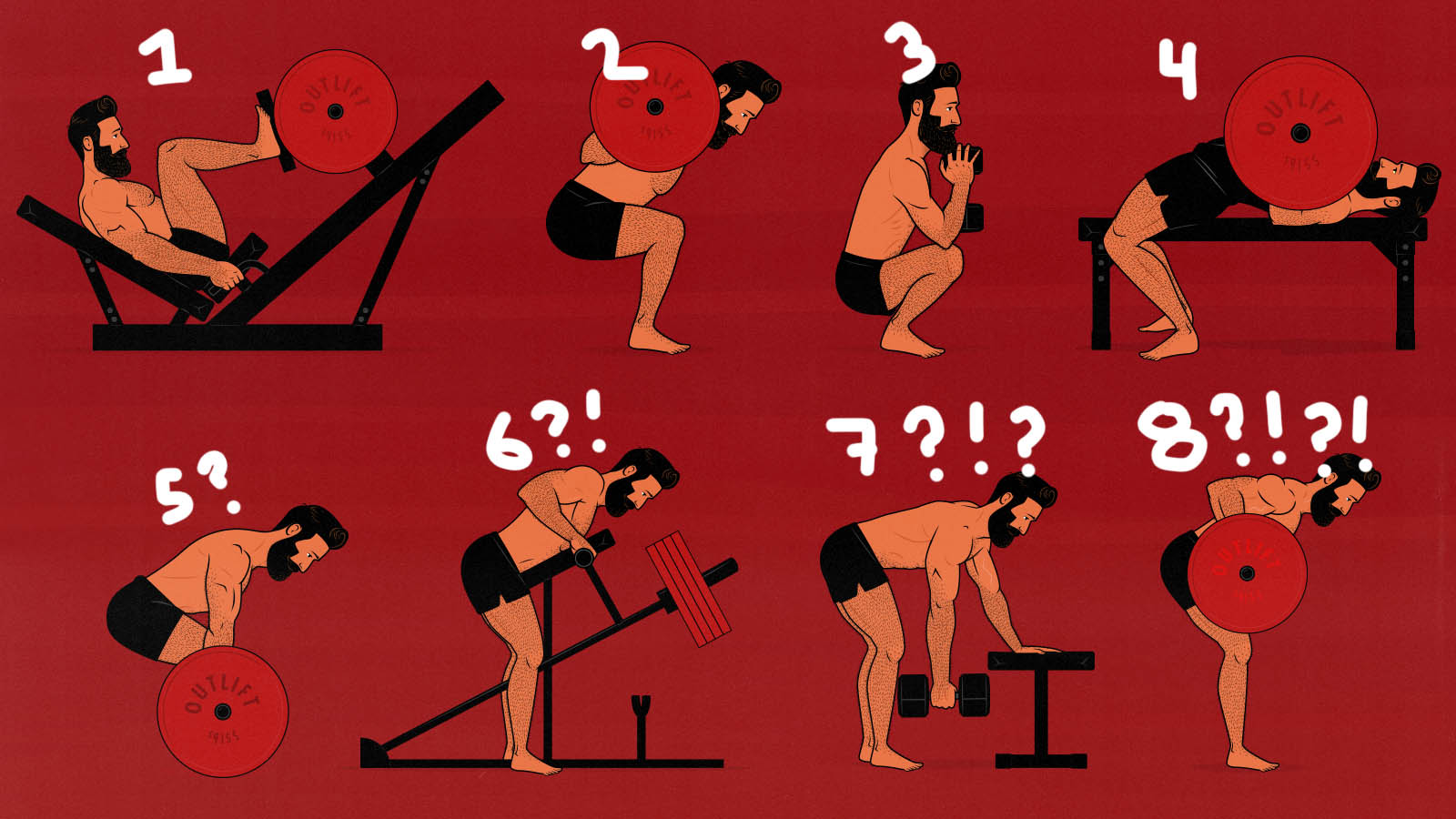
Stick to a few key exercises, master them, and only add new ones when you need a fresh challenge.
Credit: outlift.com
Sets, Reps, And Volume For Tricep Growth
Choosing the right number of exercises is only part of the plan. You also need to set your training volume correctly. Here’s what science and expert coaches suggest:
- Sets per exercise: 3–4
- Reps per set: 8–12 for muscle growth, 12–15 for endurance
- Total sets per workout: 6–12
If you do 2 exercises, use 4 sets each. If you do 3 exercises, use 3 sets each. This keeps volume high enough for growth without overtraining.
Weekly Volume
Studies show that 10–14 sets per week for triceps is ideal for muscle growth. You can split these sets across two workouts or do them all in one session.
| Training Frequency | Total Sets per Week | Exercises per Workout | Sets per Exercise |
|---|---|---|---|
| Once | 10–12 | 3–4 | 3 |
| Twice | 10–14 | 2 | 4 |
This table shows how you can adjust your routine based on how often you train triceps.
Choosing Exercises For Your Goals
Different goals require different exercise choices. Here’s how you can decide:
For Muscle Growth (hypertrophy)
Choose compound and isolation exercises. Compound moves like the close-grip bench press use heavy weight, while isolation moves like tricep pushdowns target specific heads.
A typical routine:
- Close-Grip Bench Press (3 sets)
- Skullcrusher (3 sets)
- Tricep Pushdown (3 sets)
For Strength
Focus on compound movements and lower reps. Use heavier weight and fewer exercises.
Sample routine:
- Close-Grip Bench Press (4 sets, 6 reps)
- Weighted Dip (4 sets, 6 reps)
For Endurance
Use lighter weights and higher reps. Choose exercises you can do with good form for many repetitions.
Sample routine:
- Overhead Tricep Extension (3 sets, 15 reps)
- Bench Dip (3 sets, 15 reps)
For Injury Prevention
Include exercises that don’t stress the elbows. Use cables or bands, avoid heavy skullcrushers if you have joint pain.
Sample routine:
- Tricep Pushdown (cable)
- Overhead Extension (band)
Exercise Order: What Comes First?
The order of your tricep exercises matters. Start with compound moves first—these use the most muscle and require more energy. Isolation exercises come after.
Example sequence:
- Close-Grip Bench Press (compound)
- Skullcrusher (isolation)
- Tricep Pushdown (isolation)
This prevents fatigue before the heavy lifts and allows you to use maximum weight for compound moves.
Non-obvious Insight
Many beginners start with isolation exercises because they’re easier. But this can limit your progress. Always begin with the hardest or heaviest exercise, then finish with lighter, focused moves.
Should You Change Exercises Every Workout?
Changing exercises every session is popular but not always helpful. The body needs time to adapt and improve technique. Stick with the same routine for at least 4–6 weeks. Then change one or two exercises to keep things fresh.
This approach improves strength, muscle memory, and tracking progress. If you change moves too often, you may not see real improvement.
Practical Example
If you use a routine with:
- Close-Grip Bench Press
- Skullcrusher
- Tricep Pushdown
Keep these for a month. After that, swap skullcrusher for overhead extension. Small changes help avoid plateaus and keep progress steady.
How To Tell If Your Routine Has Enough Tricep Work
You know you have enough tricep exercises if:
- Your muscles feel challenged but not exhausted
- You can maintain good form through all sets
- You see steady progress in strength and size
- You don’t have joint pain or overuse injuries
Too many exercises can cause fatigue, reduce motivation, and risk injury. Too few may not provide enough stimulation. The sweet spot is 2–4 exercises per session, depending on your experience.
Common Mistakes To Avoid
Many people make mistakes when planning their tricep routines. Here are some to watch out for:
- Doing 5 or more exercises: Overkill and leads to poor form.
- Ignoring exercise variety: Only using machines or only free weights.
- Skipping compound movements: Compound exercises grow triceps faster.
- Neglecting recovery: Not resting enough between workouts.
- Poor technique: Using bad form to lift heavier weights.
Avoid these mistakes by sticking to a balanced routine and focusing on quality over quantity.
Real-world Examples Of Effective Tricep Routines
Let’s see some practical routines used by athletes and trainers.
Beginner Routine
- Tricep Pushdown (cable): 3 sets of 12 reps
- Overhead Tricep Extension (dumbbell): 3 sets of 12 reps
Intermediate Routine
- Close-Grip Bench Press: 3 sets of 10 reps
- Skullcrusher: 3 sets of 10 reps
- Bench Dip: 3 sets of 12 reps
Advanced Routine
- Close-Grip Bench Press: 4 sets of 8 reps
- Overhead Tricep Extension: 3 sets of 10 reps
- Tricep Pushdown: 3 sets of 12 reps
- Skullcrusher: 2 sets of 10 reps
Each routine covers all three heads and uses compound and isolation exercises.
Comparing Machine Vs. Free Weight Tricep Exercises
Many tricep exercises can be done with machines or free weights. Which is better? Here’s a quick comparison:
| Type | Pros | Cons | Best For |
|---|---|---|---|
| Free Weight | More muscle activation, improves balance | Harder to learn, risk of bad form | Intermediate & Advanced |
| Machine | Easier to use, safer for beginners | Less balance, limited range | Beginners |
Most experts recommend mixing both for the best results.
Non-obvious Insights For Better Tricep Training
- Fatigue can limit progress: If you do too many tricep exercises, your elbows and shoulders may get tired, which reduces performance in other workouts.
- Isolation exercises aren’t always needed: Compound moves like close-grip bench press work the triceps just as well, so you don’t always need separate isolation exercises unless you want extra focus.
How To Progress Your Tricep Routine
Progression is key for results. Increase weight, reps, or sets as you get stronger. But don’t add more exercises just to make your routine harder. Instead:
- Increase weight slowly
- Add 1–2 reps per set when you can
- Reduce rest time between sets
Track your progress and make changes every month. This keeps your routine effective without overloading your muscles.
When To Add Or Remove Exercises
You may need to change the number of tricep exercises if:
- You’re not seeing progress after several weeks
- You feel joint pain or fatigue
- You want to train more often
If you train triceps twice a week, reduce the number of exercises per session. If you want more intensity, add another set rather than another exercise.
How Many Tricep Exercises Do Top Athletes Use?
Top athletes and bodybuilders often use 3–4 exercises per session. They focus on quality, not quantity. Here’s an example from a professional bodybuilder:
- Close-Grip Bench Press
- Overhead Dumbbell Extension
- Tricep Rope Pushdown
- Weighted Dip
Each exercise works a different angle and head. They rarely use more than four moves in one workout.
Should You Train Triceps With Other Muscles?
Many people train triceps with chest or shoulders. This is called a “push day. ” In this case, you may do fewer tricep exercises since compound moves already work the triceps.
Sample Push Day:
- Bench Press (works chest and triceps)
- Shoulder Press (works shoulders and triceps)
- Tricep Pushdown (isolation)
- Skullcrusher (isolation)
If you train triceps separately, you can use 3–4 exercises. If you combine with chest or shoulders, use 2–3.
Recovery And Rest
Triceps need time to recover between workouts. Training them too often or with too many exercises can slow progress. Rest at least 48 hours before working triceps again.
Signs you need more rest:
- Weak performance
- Sore elbows
- No progress in strength
Recovery is just as important as exercise selection.
How To Adjust For Age, Gender, And Fitness Level
Older adults and women may need fewer exercises per session. Focus on good form and lighter weights.
- Older adults: 1–2 exercises per session, 2–3 sets each
- Women: 2–3 exercises, moderate weight, high reps
Adjust your routine based on how you feel and your results.
Sample Weekly Tricep Training Plan
Here’s a practical weekly plan for different levels:
Beginner
Day 1: Tricep Pushdown, Overhead Extension (3 Sets Each)
Day 2: Rest
Day 3: Close-grip Bench Press, Bench Dip (3 Sets Each)
Day 4–7: Rest Or Other Muscle Groups
Intermediate
Day 1: Close-grip Bench Press, Skullcrusher (3 Sets Each)
Day 2: Rest
Day 3: Tricep Pushdown, Overhead Extension (3 Sets Each)
Day 4–7: Rest Or Other Muscle Groups
Advanced
Day 1: Close-Grip Bench Press, Skullcrusher, Overhead Extension (4 sets each)
Day 2: Rest
Day 3: Tricep Pushdown, Weighted Dip, Bench Dip (3 sets each)
Day 4–7: Rest Or Other Muscle Groups

Credit: www.youtube.com
Tracking Progress
Use a workout log to track:
- Exercises used
- Sets and reps
- Weight lifted
- How you feel after each session
Make changes every month based on your results. If you’re not seeing progress, adjust the number of exercises or sets.
Tricep Training For Sports Performance
Athletes need strong triceps for throwing, pushing, and swimming. Sports routines often use compound exercises and fewer isolation moves.
Sample athlete routine:
- Close-Grip Bench Press: 4 sets
- Weighted Dip: 3 sets
Focus on strength and power, not just muscle growth.
Safety Tips For Tricep Exercises
Always warm up before training triceps. Use light weights for the first set. Avoid locking your elbows during exercises. If you feel pain, stop and adjust your routine.
Safety matters more than the number of exercises.
Frequently Asked Questions
How Many Tricep Exercises Should I Do Per Workout?
Most people need 2–4 tricep exercises per session. Beginners can start with 2, while advanced lifters may use up to 4. Choose exercises that target different heads of the triceps.
Is It Bad To Do Only One Tricep Exercise?
Doing only one tricep exercise can limit your results. You may miss working all three heads of the triceps. It’s better to use at least 2 exercises that cover different angles.
Can I Train Triceps Every Day?
No, it’s not recommended. Triceps need time to recover between workouts. Training them every day can cause fatigue and slow progress. Aim for 1–2 sessions per week.
Should I Use Machines Or Free Weights For Triceps?
Both are effective. Machines are safer and easier for beginners. Free weights offer more muscle activation and variety. Mixing both gives the best results.
What’s The Best Way To Avoid Elbow Pain During Tricep Workouts?
Use proper form and avoid locking your elbows. Don’t use heavy weights if you feel pain. Include exercises that use cables or bands, and give your muscles time to recover.
If you want more science-backed advice, check out Healthline for detailed muscle building guidance.
Building strong triceps doesn’t mean doing as many exercises as possible. Focus on 2–4 quality moves, adjust based on your experience, and always prioritize good form and recovery. By choosing the right number and type of exercises, you’ll see steady progress and avoid setbacks.
Remember, consistency and smart planning lead to the best results.
