

Gym Glute Workout: Best Exercises for a Stronger, Rounder Butt
Gym Glute Workout: Build Strong, Shapely Glutes With Confidence
Building strong, shapely glutes is a top goal for many gym-goers. Whether you want to improve your appearance, boost athletic performance, or reduce back pain, glute training delivers big benefits. But many people feel lost in the gym, unsure which exercises to pick or how to structure their routine for the best results.
If you want glutes that stand out, you need more than just squats and lunges. The right mix of exercises, technique, and workout planning helps you target all three glute muscles: the gluteus maximus, medius, and minimus. This guide brings together proven exercises, practical advice, and science-backed tips to help you build glutes that are strong, powerful, and balanced.
Let's dive into everything you need to know about the gym glute workout: from exercise selection to sets, reps, equipment options, and common mistakes. You'll also find real-world examples, easy-to-follow tables, and answers to questions most beginners miss. By the end, you'll have a complete blueprint for glute gains—no confusion, just results.
Why Glute Training Matters
The glute muscles are more than just for looks. They play a key role in movement, posture, and strength. Strong glutes help you:
- Improve athletic performance (running, jumping, lifting)
- Support lower back health
- Enhance balance and stability
- Prevent injuries (especially in knees and hips)
- Boost confidence and appearance
Weak glutes can cause poor posture, back pain, and lower-body injuries. If you sit a lot or live a sedentary lifestyle, your glutes can become inactive (“glute amnesia”). A focused gym glute workout wakes up these muscles and keeps your body strong.
Anatomy Of The Glutes: What You’re Training
Understanding the glute muscles helps you train smarter:
- Gluteus maximus: The largest muscle in your butt; gives shape and power. It drives hip extension (straightening your hip), like when you stand up or climb stairs.
- Gluteus medius: Sits on the side of your hip. It controls hip abduction (moving your leg out) and keeps your pelvis stable.
- Gluteus minimus: The smallest; lies under the medius. Also helps with hip abduction and stability.
Each muscle has a different function. The best glute workout hits all three for balanced strength and shape.
Essential Gym Equipment For Glute Training
You don’t need fancy machines, but some gym tools make glute workouts more effective:
- Barbell: For squats, hip thrusts, deadlifts
- Dumbbells: For lunges, step-ups, single-leg moves
- Resistance bands: For activation, abductions, added tension
- Cable machine: For kickbacks, abductions, pull-throughs
- Leg press: For pressing and single-leg variations
- Smith machine: For controlled squats and thrusts
- Bench or box: For hip thrusts, step-ups, Bulgarian squats
Mixing these tools lets you target your glutes from different angles and intensities. Beginners can start with just dumbbells and bands; advanced lifters can use barbells and machines.
Best Gym Glute Exercises: Proven Builders
Not all glute exercises are equal. Some moves activate the muscles more and deliver faster results. Here’s a rundown of the most effective gym glute exercises, plus their benefits:
Barbell Hip Thrust
The hip thrust tops the list for glute activation. You roll a barbell over your hips, rest your upper back on a bench, and drive your hips upward. Studies show hip thrusts activate the gluteus maximus more than squats or lunges.
- Benefits: Maximum glute activation, easy to increase weight, targets glutes directly
- Tip: Keep your feet flat and push through your heels
Squats
Squats build overall leg and glute strength. You can use a barbell, dumbbells, or Smith machine.
- Benefits: Works glutes, quads, hamstrings; improves lower-body strength
- Tip: Go low enough for your thighs to be parallel or below
Romanian Deadlift (rdl)
This deadlift variation focuses on hip hinge, targeting glutes and hamstrings.
- Benefits: Excellent for gluteus maximus, builds strength and muscle
- Tip: Keep your back straight and push hips backward
Bulgarian Split Squat
A single-leg squat with your back foot elevated. This move lights up your glutes and quads.
- Benefits: Unilateral (one leg at a time) for balance, glute and quad activation
- Tip: Lean forward slightly for more glute focus
Cable Glute Kickback
Using a cable machine, kick your leg back to target the gluteus maximus.
- Benefits: Isolates glute, easy to adjust resistance
- Tip: Squeeze at the top for max contraction
Step-up
Step onto a bench or box, driving through your heel. Great for glutes and functional strength.
- Benefits: Mimics real-life movements, works glutes and stabilizers
- Tip: Keep knee in line with toes
Leg Press (wide Stance)
Using a wide stance on the leg press shifts more work to your glutes.
- Benefits: Heavy loading, glute and hamstring focus
- Tip: Don’t lock knees at the top
Glute Bridge
Similar to hip thrust, but without bench. Good for beginners and warm-ups.
- Benefits: Easy to learn, activates glutes and core
- Tip: Pause at the top for better activation
Abduction Machine Or Band Abduction
Seated machine or resistance band around knees. Push legs outward to hit medius and minimus.
- Benefits: Targets glute side muscles, improves stability
- Tip: Control movement, don’t rush
Single-leg Deadlift
Balancing on one leg, hinge forward and lower weight. Hits glute maximus and stabilizers.
- Benefits: Improves balance, unilateral strength
- Tip: Keep hips square, avoid twisting
Sample Gym Glute Workout Routines
A good glute workout includes compound lifts, isolation moves, and activation exercises. Here are two sample routines for different levels:
Beginner Glute Workout
- Glute bridge – 3 sets x 12 reps
- Dumbbell squat – 3 sets x 12 reps
- Step-up – 3 sets x 10 reps (each leg)
- Band abduction – 2 sets x 15 reps
Rest 60–90 seconds between sets. Focus on form, not heavy weight.
Intermediate/advanced Glute Workout
- Barbell hip thrust – 4 sets x 8–10 reps
- Bulgarian split squat – 3 sets x 8 reps (each leg)
- Romanian deadlift – 3 sets x 10 reps
- Cable glute kickback – 3 sets x 12 reps
- Band abduction – 2 sets x 20 reps
Rest 90–120 seconds between sets. Use heavier weights, but keep good form.
Sets, Reps, And Rest: How To Plan For Glute Growth
Choosing the right sets, reps, and rest periods helps you build muscle faster. Here’s a quick guide:
- Hypertrophy (muscle growth): 8–12 reps per set, 3–4 sets per exercise
- Strength: 4–6 reps per set, 4–5 sets per exercise
- Endurance: 15–20 reps per set, 2–3 sets per exercise
- Rest: 60–120 seconds between sets
Mixing rep ranges works best. Start with heavy compound moves (hip thrust, squat) for low reps, then add isolation moves (kickbacks, abductions) for higher reps.
Exercise Comparison: Glute Activation And Difficulty
Some glute exercises activate the muscles more than others. Here’s a simple comparison:
| Exercise | Glute Activation | Difficulty | Equipment Needed |
|---|---|---|---|
| Barbell Hip Thrust | Very High | Intermediate | Barbell, Bench |
| Squat | High | Intermediate | Barbell/Dumbbell |
| Romanian Deadlift | High | Intermediate | Barbell/Dumbbell |
| Bulgarian Split Squat | High | Advanced | Dumbbell/Bench |
| Cable Kickback | Medium | Intermediate | Cable Machine |
| Step-Up | Medium | Beginner | Bench/Dumbbell |
| Glute Bridge | Medium | Beginner | Bodyweight |
| Band Abduction | Medium | Beginner | Resistance Band |
| Single-Leg Deadlift | Medium | Advanced | Dumbbell |
Common Glute Workout Mistakes (and How To Fix Them)
Many people train glutes but see little progress. Avoid these mistakes to get better results:
- Not activating glutes: If you sit a lot, your glutes may “switch off.” Always start with activation exercises like glute bridges or band abductions.
- Using too much weight: Heavy loads with bad form don’t help. Focus on muscle contraction, not just numbers.
- Not using full range of motion: Partial reps limit gains. Go all the way down and up.
- Neglecting unilateral moves: Only training both legs together creates imbalances. Add single-leg exercises.
- Skipping progressive overload: Your body adapts. Gradually increase weights, reps, or difficulty.
One non-obvious insight: Many beginners don’t realize that glute training can affect posture and spinal health. Weak glutes make your lower back work harder, leading to pain over time. Training glutes helps keep your spine safe.
Another insight: Glute workouts need variety. Doing only one exercise (like squats) won’t build all parts of the glute. Mix hip thrusts, abductions, and single-leg moves to hit every angle.
Glute Workout Progress Tracking: How To Measure Results
Seeing progress motivates you to keep going. Here’s how to track your glute gains:
- Strength increases: Are you lifting heavier weights?
- Muscle growth: Are your glutes getting firmer and rounder?
- Performance: Are you jumping higher, running faster, or feeling more stable?
- Photos: Take pictures every month (same lighting, pose)
- Measurements: Use a tape measure around hips and thighs
Progress is slow at first, but consistency pays off.
Advanced Glute Training Tips
If you want extra gains or hit a plateau, try these advanced tips:
- Add pause reps: Pause at the top of hip thrust or bridge for 2–3 seconds. This increases muscle tension.
- Use drop sets: After your main sets, drop the weight and do more reps.
- Try tempo training: Slow down the lowering phase (3–4 seconds down), then explode up.
- Use bands with weights: Adding a resistance band to barbell hip thrusts boosts glute activation.
- Change angles: Mix in exercises like frog pumps or diagonal kickbacks for variety.
Gym Glute Workout Frequency: How Often Should You Train?
Most people need 2–3 glute workouts per week for best results. Muscles need time to recover and grow. If you train glutes more often, use lower volume each session.
Here’s a simple weekly plan:
- Day 1: Heavy compound moves (hip thrust, squat)
- Day 2: Unilateral and isolation moves (split squat, kickback)
- Day 3: Activation and endurance (bridge, band abduction)
Rest at least one day between intense glute sessions. If your glutes are sore, give them time to recover.
Glute Training For Different Goals
Your glute workout should match your goals:
For Muscle Growth
- Focus on heavy compound lifts
- Use 8–12 reps, 3–4 sets
- Increase weight regularly
For Strength
- Use lower reps (4–6), higher weights
- Focus on hip thrusts, squats, deadlifts
For Endurance Or Toning
- Use higher reps (15–20), lighter weights
- Add circuits or supersets for more volume
For Athletic Performance
- Mix plyometrics (jumping) with strength moves
- Include single-leg and balance exercises
Glute Workout Table: Exercise, Sets, Reps, Rest
Here’s a practical table for planning your gym glute workout:
| Exercise | Sets | Reps | Rest |
|---|---|---|---|
| Barbell Hip Thrust | 4 | 8–10 | 90 sec |
| Bulgarian Split Squat | 3 | 8 | 90 sec |
| Romanian Deadlift | 3 | 10 | 60 sec |
| Cable Kickback | 3 | 12 | 45 sec |
| Band Abduction | 2 | 20 | 30 sec |
Use this as a starting point. Adjust based on your experience and energy.
Glute Activation: Warming Up For Success
Activating your glutes before the main workout is crucial. This helps you “feel” the muscles and prevents injury. Here’s a quick warm-up:
- Glute bridge – 2 sets x 15 reps
- Band abduction – 2 sets x 20 reps
- Bodyweight squat – 2 sets x 10 reps
Spend 5–7 minutes warming up. This simple step boosts workout quality.

Credit: www.kaylaitsines.com
Nutrition And Recovery For Glute Gains
Muscle growth isn’t just about exercise. Eating well and recovering matters. Here’s what to focus on:
- Protein: Aim for 0.7–1 gram per pound of bodyweight daily. Helps repair and build muscle.
- Carbs: Fuels workouts and recovery. Include rice, potatoes, oats, fruit.
- Healthy fats: Support hormone balance. Avocado, nuts, olive oil are good choices.
- Hydration: Drink enough water (at least 2 liters per day).
- Sleep: 7–9 hours per night for best recovery.
One overlooked insight: Many people skip meals after workouts, thinking it saves calories. But muscles need nutrients to grow. Try to eat protein and carbs within 2 hours after your gym session.
Glute Training For Women Vs Men
Both men and women benefit from glute workouts, but goals and genetics can vary. Women often focus on shaping and toning, while men aim for strength and muscle.
- Women: Higher reps, more isolation moves, focus on shape
- Men: Heavier weights, lower reps, focus on size and strength
Genetics play a role in glute shape and growth. Some people build muscle faster, others slower. The key is consistency.
Glute Workout Recovery Table: Methods And Benefits
Recovery helps your glutes repair and grow. Here’s a comparison:
| Method | Benefit | How to Use |
|---|---|---|
| Stretching | Reduces soreness | After workout, 5–10 min |
| Foam rolling | Improves blood flow | Roll glutes, hamstrings |
| Sleep | Muscle repair | 7–9 hours/night |
| Nutrition | Supports growth | Protein, carbs post-workout |
| Rest days | Prevents overtraining | 1–2 days/week |
Include these methods in your routine for faster results.
Glute Training And Functional Benefits
Strong glutes help with daily activities, not just gym performance. Examples:
- Walking and climbing stairs: Glute strength makes these easier and safer
- Lifting objects: Protects your back and knees
- Sports: Running, jumping, and agility all depend on glute power
Many people notice better posture and less back pain after regular glute workouts. It’s not just about looks—it’s about living better.

Credit: www.menshealth.com
Safety Tips For Gym Glute Workouts
Training glutes is safe if you follow good practices. Here’s how to stay injury-free:
- Warm up: Always activate glutes before heavy lifts
- Use proper form: Watch your back and knees
- Start light: Don’t rush into heavy weights
- Listen to your body: If you feel pain (not just soreness), stop
- Progress slowly: Increase weights and reps gradually
Most injuries happen from poor technique or doing too much too soon. Take your time.
How To Make Glute Workouts Fun And Motivating
Sticking to a routine is easier when you enjoy the process. Here are some ways to stay motivated:
- Train with friends: Workout partners boost energy and accountability
- Track progress: Use photos, journals, or apps
- Try new exercises: Change your routine every few weeks
- Join classes: Group workouts like glute circuits or HIIT
- Reward yourself: Celebrate milestones (new PR, bigger glutes)
Motivation comes and goes, but discipline keeps you moving forward.
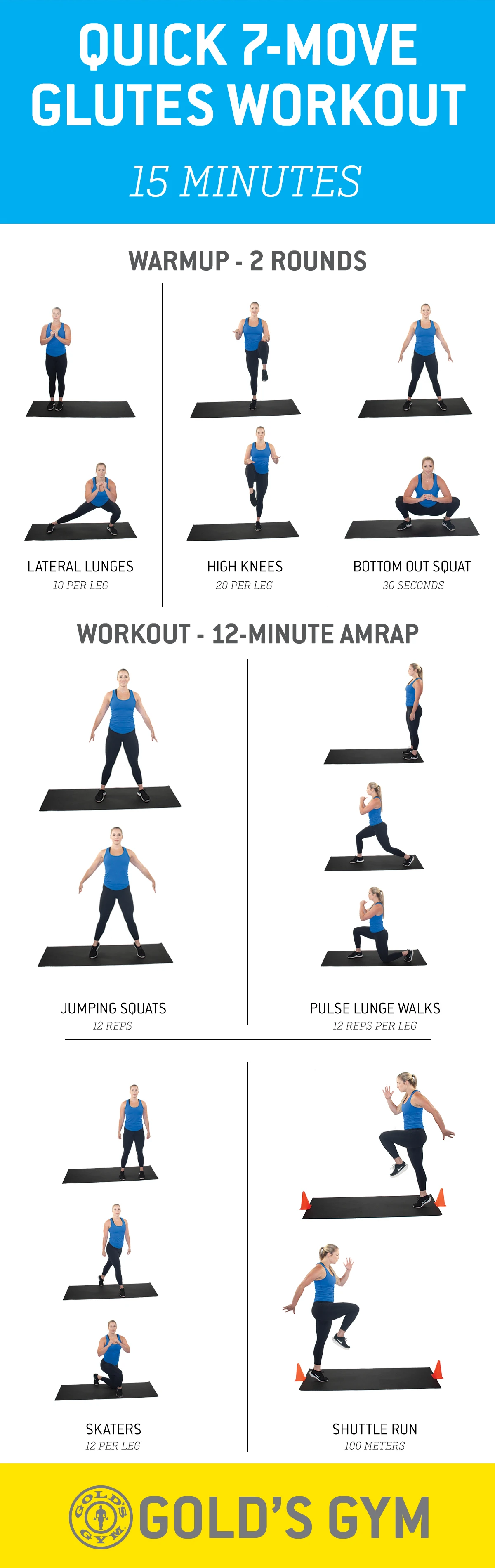
Credit: www.goldsgym.com
Glute Workout Modifications For Injuries Or Limitations
If you have knee, back, or hip issues, you can still train glutes safely:
- Use glute bridges and band abductions instead of heavy squats
- Shorten range of motion if needed
- Avoid exercises that cause pain
- Try water-based workouts (pool exercises)
- Consult a physical therapist for personalized advice
Never ignore pain. Modify your workout or seek help.
Science Behind Glute Training: What Research Shows
Studies confirm that hip thrusts, squats, and lunges activate glutes best. For example, EMG studies (measuring muscle activity) show hip thrusts lead to higher glute activation than squats or deadlifts.
Progressive overload and variety are key. Muscles grow when challenged with new stress, but doing the same exercise every session limits results.
For more science-backed advice, check out this research paper.
Frequently Asked Questions
How Long Does It Take To See Results From Gym Glute Workouts?
Most people notice changes in strength and muscle tone after 4–8 weeks of consistent training. Visible size or shape changes may take longer (8–16 weeks). Progress depends on your workout intensity, nutrition, genetics, and consistency.
Can I Train Glutes Every Day?
Training glutes every day is not recommended. Muscles need time to recover and grow. Aim for 2–3 sessions per week, with rest days in between. Overtraining can lead to injury and slow progress.
What Is The Best Exercise For Glute Growth?
The barbell hip thrust is often called the best for glute growth. It activates the gluteus maximus more than squats or lunges. However, combining hip thrusts with squats, deadlifts, and abductions delivers full development.
Do I Need Heavy Weights To Build Glutes?
Heavy weights help, but you can build glutes with lighter weights and higher reps if you focus on muscle contraction and progressive overload. Bodyweight exercises and resistance bands are also effective, especially for beginners.
How Can I Avoid Common Glute Workout Mistakes?
Start with glute activation exercises, use proper form, mix compound and isolation moves, track your progress, and gradually increase difficulty. Avoid using too much weight, skipping single-leg exercises, or repeating the same routine every session.
Building strong, shapely glutes is possible for anyone with the right plan and motivation. Mix proven exercises, smart programming, good nutrition, and recovery. Stay consistent, track your progress, and enjoy the journey. Your glute gains will be worth the effort.
