

Glute Workout: Top Exercises for Stronger, Rounder Glutes
Glute Workout: Build Stronger, Shapelier Glutes With Proven Exercises
A well-developed glute is more than just for looks. Strong glute muscles help you move better, stand taller, and protect your lower back. People often focus on abs or arms, but the glutes—your butt muscles—are some of the largest and most powerful in your body.
If you want to run faster, lift heavier, or simply feel more confident in jeans, a focused glute workout is key.
But building great glutes takes more than just endless squats. The glutes—especially the gluteus maximus, gluteus medius, and gluteus minimus—respond best to smart training plans. These plans include different exercises, proper form, and the right recovery. This article will guide you through everything you need to know: glute anatomy, why glute training matters, top exercises (with real examples), sample workout routines, and answers to common questions.
Why Train Your Glutes?
Many people think glute workouts are just for athletes or fitness models. In reality, anyone can benefit. Here’s why:
- Better movement: Strong glutes help you walk, run, and jump with power and control.
- Injury prevention: Weak glutes make your hips and knees unstable, which can cause pain.
- Improved posture: Your glutes support your lower back and pelvis.
- Boosted athletic performance: Almost every sport uses the glutes for speed, strength, and balance.
- Aesthetic benefits: Firm, lifted glutes change your body shape and confidence.
Recent research shows that glute weakness is linked to problems like lower back pain and knee injuries. Many people sit too much, causing these muscles to get “lazy.” That’s why targeted glute workouts are important for everyone, not just gym lovers.
Understanding Glute Anatomy
Knowing your glute muscles helps you train smarter. There are three main muscles in your buttocks:
| Muscle | Main Function | Exercise Example |
|---|---|---|
| Gluteus Maximus | Hip extension, thigh rotation | Barbell Hip Thrust |
| Gluteus Medius | Hip abduction, pelvis stabilization | Side-Lying Leg Raise |
| Gluteus Minimus | Hip abduction, internal rotation | Clamshell |
The gluteus maximus is the largest and gives your butt its shape. The gluteus medius and minimus sit more on the sides and play a big role in stabilizing your hips, especially when you walk or stand on one leg.
A good glute workout should target all three muscles with different movements.

Credit: www.youtube.com
Key Principles For Effective Glute Training
Training your glutes is not just about doing lots of squats. Here are the main principles you should follow for real results:
- Exercise Variety: Mix compound movements (like squats) with isolation exercises (like glute bridges).
- Progressive Overload: Gradually increase weight or resistance to challenge your muscles.
- Proper Form: Quality is better than quantity. Bad form can reduce results and cause injuries.
- Mind-Muscle Connection: Focus on feeling your glutes working during each rep.
- Recovery: Muscles grow when you rest, not just when you train. Give your glutes 48–72 hours to recover between hard sessions.
Many beginners forget about progressive overload—if you don’t add weight or reps over time, your progress will stop. Also, it’s common to let other muscles (like your lower back or quads) “take over” in glute exercises. Thinking about squeezing your glutes will help keep the focus where it belongs.
Top Glute Exercises (with How-to Guides)
There are many glute exercises, but some are much more effective than others. Here’s a breakdown of the best, with simple instructions:
1. Barbell Hip Thrust
This is one of the most powerful glute builders. It works the gluteus maximus directly and can be loaded heavy.
How to do it:
- Sit on the ground with your upper back against a bench.
- Roll a barbell over your hips (use a pad or towel for comfort).
- Bend your knees and keep your feet flat.
- Push through your heels, lifting your hips until your body forms a straight line from shoulders to knees.
- Squeeze your glutes at the top, pause, then lower.
Tip: Keep your chin tucked and ribs down to avoid arching your back.
2. Glute Bridge
Similar to the hip thrust but done on the floor. Great for beginners and can be done with or without weight.
How to do it:
- Lie on your back with knees bent, feet flat, arms at your side.
- Push through your heels, lift your hips toward the ceiling.
- Squeeze your glutes at the top, then lower back down.
Tip: Pause for 2–3 seconds at the top for extra burn.
3. Bulgarian Split Squat
This single-leg exercise targets the glutes and also works your balance.
How to do it:
- Stand in front of a bench and place one foot behind you on the bench.
- Lower your back knee toward the ground while keeping your front knee above your ankle.
- Push through your front heel to stand up.
Tip: Lean forward slightly to feel your glutes more.
4. Romanian Deadlift
A great move for your entire backside, especially the glutes and hamstrings.
How to do it:
- Stand tall holding a barbell or dumbbells.
- With a slight bend in your knees, hinge at your hips and lower the weight down your legs.
- Keep your back flat and go as low as your flexibility allows.
- Return to standing by pushing your hips forward.
Tip: Don’t round your back; move slowly for best results.
5. Cable Kickback
This isolation exercise targets the gluteus maximus.
How to do it:
- Attach an ankle strap to a low cable.
- Stand facing the machine, hold on for support.
- Kick your working leg back and up, squeezing your glute.
- Lower with control.
Tip: Avoid swinging your leg—control the motion.
6. Step-up
This functional exercise builds strength and power.
How to do it:
- Stand in front of a bench or sturdy box.
- Step up with one foot, pressing through your heel.
- Bring your other leg up, then step back down.
Tip: Drive through your heel and avoid pushing off with your back leg.
7. Clamshell
Targets the gluteus medius and minimus—important for hip stability.
How to do it:
- Lie on your side with knees bent and feet together.
- Keep your feet touching and open your top knee as wide as you can.
- Lower with control.
Tip: Place a resistance band above your knees for more challenge.
8. Lateral Band Walk
Strengthens the muscles on the side of your hips.
How to do it:
- Place a resistance band around your thighs or ankles.
- Stand with feet hip-width apart, knees slightly bent.
- Step to the side, keeping tension on the band.
Tip: Stay low and take small, controlled steps.
9. Sumo Squat
A wide-stance squat that emphasizes the inner thighs and glutes.
How to do it:
- Stand with feet wider than shoulder-width, toes turned out.
- Squat down, keeping your chest tall.
- Push through your heels to stand up.
Tip: Pause at the bottom to increase difficulty.
10. Single-leg Glute Bridge
A harder version of the glute bridge, focusing on one side at a time.
How to do it:
- Lie on your back, one knee bent, other leg straight.
- Push through the heel of the bent leg, lifting hips.
- Squeeze glutes at the top, then lower.
Tip: Keep your hips level; don’t let one side drop.
Sample Glute Workout Routines
You can train your glutes with bodyweight, bands, or weights, depending on your level and equipment. Here are sample routines for beginners, intermediates, and advanced levels.
Beginner Glute Workout
Perfect for those new to exercise or returning after a break.
- Glute Bridge – 3 sets of 12 reps
- Bodyweight Squat – 3 sets of 15 reps
- Clamshell (with or without band) – 3 sets of 15 reps per side
- Step-Up (low step) – 2 sets of 10 reps per leg
- Lateral Band Walk – 2 sets of 12 steps per side
Rest: 60 seconds between sets
Intermediate Glute Workout
For those comfortable with basic moves and ready to add weight.
- Barbell Hip Thrust – 4 sets of 8–10 reps
- Bulgarian Split Squat – 3 sets of 10 reps per leg
- Romanian Deadlift (dumbbells or barbell) – 3 sets of 10 reps
- Cable Kickback – 3 sets of 12 reps per leg
- Sumo Squat – 3 sets of 12 reps
Rest: 60–90 seconds between sets
Advanced Glute Workout
For experienced lifters who want maximum challenge.
- Barbell Hip Thrust (heavy) – 5 sets of 6–8 reps
- Bulgarian Split Squat (with dumbbells) – 4 sets of 8 reps per leg
- Romanian Deadlift – 4 sets of 8 reps
- Single-Leg Glute Bridge (weighted) – 3 sets of 10 reps per leg
- Lateral Band Walk (heavy band) – 3 sets of 15 steps per side
Rest: 90 seconds between sets
You can do these routines 2–3 times a week, leaving at least one rest day between sessions for recovery.
Comparing Glute Exercises: Muscle Activation And Difficulty
Not all glute exercises are created equal. Some work the muscle harder than others. Here’s a comparison of popular moves based on muscle activation (how much the glutes are used) and difficulty:
| Exercise | Glute Activation (1–5) | Difficulty (1–5) |
|---|---|---|
| Barbell Hip Thrust | 5 | 4 |
| Romanian Deadlift | 4 | 4 |
| Bulgarian Split Squat | 4 | 5 |
| Glute Bridge | 3 | 2 |
| Clamshell | 2 | 1 |
| Lateral Band Walk | 3 | 2 |
Insight: Barbell hip thrusts and split squats provide high muscle activation, but they are also more challenging. Beginners should start with bridges and band walks, then progress.
Common Mistakes In Glute Workouts
Even with the right exercises, simple mistakes can slow your results or even cause injuries. Here are some common issues and how to fix them:
- Not feeling the glutes: If you feel squats only in your thighs, your glutes may not be firing. Focus on pushing through your heels and squeeze your glutes at the top.
- Overarching the lower back: This can lead to pain. Always keep your core tight and ribs down.
- Too much weight, poor form: Using heavy weights with bad technique does not help. Start light, master the movement, then increase the load.
- Not enough variety: Doing only squats misses other glute muscles. Mix in bridges, hip thrusts, and single-leg moves.
- Ignoring recovery: Training glutes every day can lead to overuse injuries. Rest is essential for muscle growth.
A less obvious mistake: skipping single-leg exercises. These help fix muscle imbalances. Another is not including hip abduction moves (like clamshells), which stabilize your hips and improve results.
How To Progress Your Glute Workout
Getting better results means making your workouts harder over time. Here’s how you can do it:
- Increase weight: Add more resistance as you get stronger.
- Add reps or sets: If you can do 12 reps easily, try 15.
- Change tempo: Slow down the lowering phase (eccentric) for more muscle work.
- Try advanced variations: Move from regular squats to Bulgarian split squats, or from glute bridges to single-leg bridges.
- Shorten rest times: Less rest means your muscles work harder.
A good rule: If an exercise feels too easy, make it harder. But always keep your form perfect.
Glute Training For Different Goals
Not everyone trains glutes for the same reason. Here are some ways to adjust your workout for your main goal:
For Size And Shape
- Focus on heavy hip thrusts and squats for maximum muscle growth.
- Use 6–12 reps per set; go close to failure.
- Eat enough protein to support muscle building.
For Strength And Power
- Use lower reps (3–6) with heavy weights for main lifts.
- Add explosive moves like box jumps or kettlebell swings.
- Focus on good technique and full range of motion.
For Endurance And Tone
- Higher reps (15–20) with lighter weights or bands.
- Shorter rest periods to keep your heart rate up.
- Include circuits with little rest between moves.
For Injury Prevention
- Focus on single-leg exercises and hip abduction (clamshells, band walks).
- Work on balance, stability, and core strength.
- Keep movements slow and controlled.
Glute Activation: Waking Up “lazy” Muscles
Many people have “sleepy” glutes from sitting too much. Glute activation exercises wake up these muscles before your main workout. They help you feel your glutes working, so you get more out of every exercise.
Best glute activation moves:
- Mini band glute bridge
- Lateral band walk
- Clamshell with band
- Standing kickback with band
How to use them: Do 2–3 sets of 10–15 reps for 2–3 moves before your main workout. You should feel your glutes burning—this means they’re ready to work.

Credit: www.afvt.org
Equipment For Glute Workouts: What You Need
You don’t need a gym to build great glutes. Here’s a quick comparison of equipment and what it offers:
| Equipment | Benefits | Best For |
|---|---|---|
| Resistance Bands | Cheap, portable, good for activation | Home, travel, beginners |
| Dumbbells | Versatile, easy to progress | Home, intermediate |
| Barbell | Heavy lifting, maximum strength | Gym, advanced |
| Cable Machine | Constant tension, isolation moves | Gym, shaping |
| Step or Box | Bodyweight moves, power | All levels |
Tip: If you train at home, start with bands and bodyweight, then add dumbbells as you get stronger.
Nutrition For Glute Growth
Training is only half the battle—nutrition matters too. To build muscle, you need to eat enough:
- Protein: Aim for 0.7–1 gram per pound of body weight per day.
- Carbs: Give you energy for tough workouts.
- Healthy fats: Support hormones and recovery.
- Water: Muscles are mostly water—stay hydrated.
If your goal is to shape and grow your glutes, you need a slight calorie surplus (eat more than you burn). If you want to tone and lose fat, aim for a small calorie deficit while keeping your protein high.
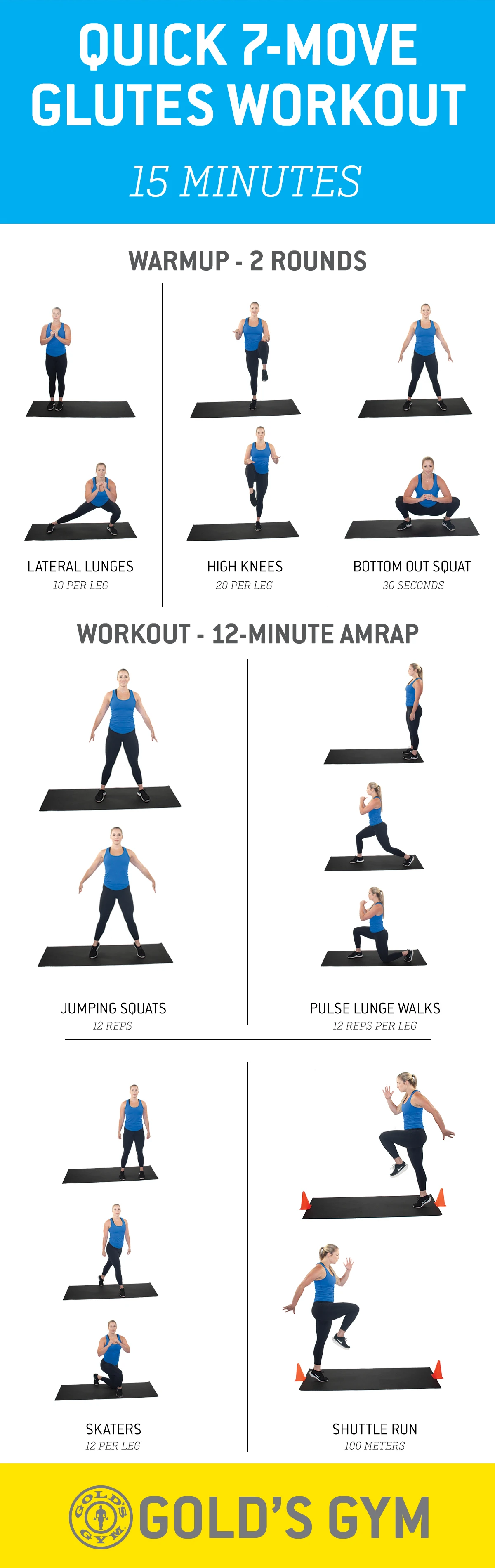
Credit: www.goldsgym.com
Tips For Better Results
Here are some less obvious tips that can make a big difference:
- Foot placement matters: In hip thrusts, try different foot positions to hit the glutes better. Farther feet = more hamstring, closer = more quad, but find your “sweet spot” for maximum glute squeeze.
- Pause at the top: Holding the top position of hip thrusts or bridges for 2–3 seconds increases muscle tension.
- Don’t skip warm-up: Activation work before your main set helps prevent injuries and improves performance.
- Track your progress: Write down weights, sets, and reps. Progress comes from small, steady increases.
- Use mirrors or film yourself: Checking your form helps you catch mistakes, like uneven hips or rounded backs.
Real-world Examples: Success Stories
Many people have transformed their bodies and health with focused glute training. For example, a recreational runner who added hip thrusts and single-leg bridges twice a week reported less knee pain and faster running times. A desk worker who included clamshells and band walks improved their posture and felt less lower back discomfort after just a few weeks.
These stories show that you don’t need to be a professional athlete to get benefits. Consistency and smart exercise choices are what matter most.
Frequently Asked Questions
How Often Should I Train My Glutes?
Most people see best results with 2–3 glute workouts per week. This allows your muscles to recover and grow between sessions. Training more often can lead to overuse injuries, while less may not give enough stimulus for growth.
What If I Only Feel My Quads Or Hamstrings, Not My Glutes?
This is a common problem. Try glute activation exercises before your main workout, focus on pushing through your heels, and slow down your reps. Sometimes, reducing the weight and perfecting your form can help your glutes “switch on. ”
Can I Grow My Glutes Without Going To The Gym?
Yes. You can build strong, shapely glutes at home using bodyweight exercises and resistance bands. Progress by increasing reps, sets, or band resistance. When you get stronger, consider adding dumbbells or a weighted backpack.
How Long Does It Take To See Results From Glute Training?
With consistent effort and good nutrition, you may notice changes in 4–8 weeks. Muscle growth and shape take time, but you should feel stronger and more stable within a few sessions. For visible changes, patience and regular training are key.
Are Glute Workouts Safe For People With Back Pain?
Glute training often helps reduce back pain, since strong glutes stabilize your pelvis and lower back. However, use good form and avoid over-arching your back. If pain continues, consult a professional. For more guidance, check resources like Mayo Clinic.
Building strong, shapely glutes is possible for anyone—no matter your age or fitness level. By understanding your muscles, choosing the right exercises, avoiding common mistakes, and staying consistent, you’ll see real results. Whether your goal is performance, aesthetics, or health, the right glute workout will help you move better and feel more confident every day.
