

Glute Workout for Bad Knees: Safe Exercises for Stronger Glutes
Glute Workout For Bad Knees
Strong glutes are not just about looks—they are key to healthy movement and lower body strength. But what if your knees hurt during regular leg workouts? Many people with knee pain avoid glute exercises, thinking they will make things worse. The truth is, you can train your glutes safely with bad knees if you pick the right moves and follow smart techniques.
Glute weakness is actually a common cause of knee pain. When your glutes are weak, other muscles (like the quads or hamstrings) have to work harder. This can put extra stress on your knees. Building stronger glutes can help support your knees, improve your balance, and make everyday tasks easier.
This article is your practical guide to effective glute workouts for anyone with sore or sensitive knees. You will learn which exercises are safe, how to do them, and what to avoid. With clear instructions, data, and expert tips, you can build strong glutes—without hurting your knees.
Why Glute Strength Matters For Knee Pain
The glute muscles—especially the gluteus maximus, gluteus medius, and gluteus minimus—do much more than move your hips. They stabilize your pelvis and help control the position of your knees when you walk, squat, or climb stairs. Weak glutes can cause the knees to collapse inward (called valgus), which increases injury risk.
Research shows that people with knee pain often have weak glutes. For example, studies found that those with patellofemoral pain syndrome (pain around the kneecap) usually have less glute strength compared to healthy people. The same pattern appears in people with arthritis and runners with knee injuries.
Stronger glutes can:
- Reduce knee stress during movement
- Improve balance and stability
- Help prevent falls and injuries
- Make standing, walking, and climbing stairs easier
If you have bad knees, glute training is not just allowed—it is recommended. The key is to choose knee-friendly exercises and progress at your own pace.
What Makes A Glute Exercise Knee-friendly?
Not all glute exercises are safe for sensitive knees. Some moves, like deep squats or lunges, put a lot of pressure on the knee joint. Others let you target your glutes without much knee movement.
Knee-friendly glute exercises usually have these features:
- Little or no knee bending (flexion)
- Minimal weight on your knees
- Focus on hip movement, not the knee
- Can be done lying down or on all fours
Some exercises can be made safer by changing how far you move (your range of motion), using support, or choosing resistance bands instead of heavy weights.
A simple rule: If an exercise hurts your knee (not just feels tiring), skip it or change it.
Common Mistakes When Training Glutes With Bad Knees
People often make mistakes when trying to strengthen their glutes with sore knees. Avoid these to keep your workouts safe and effective:
1. Using Heavy Weights Too Soon
More weight is not always better. Start light or with body weight.
2. Poor Form
Letting your knees collapse inward or forward can increase pain. Focus on slow, controlled movements.
3. Ignoring Pain
“No pain, no gain” does not apply. Stop if you feel sharp or shooting pain in your knee.
4. Choosing The Wrong Exercises
Moves like deep squats and jump lunges can stress knees. Pick ones with less knee load.
5. Doing Too Much Too Fast
Muscles need time to adapt. Increase sets, reps, or resistance gradually.
6. Not Activating The Glutes First
If your glutes are “sleepy” (not firing well), you may overuse your quads or lower back.
Many beginners skip warm-ups or activation drills, leading to poor results and higher injury risk. A few minutes of glute activation can make your main workout much more effective.
The Best Glute Exercises For Bad Knees
Below are the top exercises for building glutes without hurting your knees. Each one is explained in detail, with tips for form and safety. You can mix and match these to create your own workout.
1. Glute Bridge
The glute bridge is a classic move that isolates your glutes with very little knee strain.
How to do it:
- Lie on your back, knees bent, feet flat on the floor (hip-width apart).
- Push through your heels and lift your hips until your body forms a straight line from shoulders to knees.
- Squeeze your glutes at the top, then lower slowly.
Tips:
- Keep knees pointing straight, not flaring out or collapsing in.
- Avoid arching your lower back.
- For more challenge, try one-leg glute bridges.
2. Clamshell
The clamshell targets the gluteus medius, which stabilizes your hips and knees.
How to do it:
- Lie on your side, knees bent, feet together.
- Keep your feet touching and lift your top knee as high as possible, then lower.
- Do not let your hips roll back.
Tips:
- Use a resistance band above your knees for extra tension.
- Focus on slow, controlled movement.
3. Standing Hip Abduction
This move isolates your side glutes while you stand.
How to do it:
- Stand tall, holding a chair or wall for support.
- Slowly lift one leg straight out to the side.
- Pause, then lower with control.
Tips:
- Do not lean your body to the side.
- Keep your toes pointing forward.
4. Quadruped Hip Extension (donkey Kicks)
A safe way to target glutes while on all fours.
How to do it:
- On hands and knees, keep your back straight.
- Lift one heel toward the ceiling, keeping your knee bent.
- Squeeze your glute at the top, then lower.
Tips:
- Do not arch your lower back.
- Hold for a second at the top for best results.
5. Seated Band Abduction
This move is great for beginners and those with limited mobility.
How to do it:
- Sit on a bench or chair, feet flat on the floor.
- Place a resistance band above your knees.
- Push your knees outward against the band, hold, then relax.
Tips:
- Sit up tall, do not lean back.
- Use a medium-strength band for best control.
6. Side-lying Leg Raise
Simple but effective for your side glutes.
How to do it:
- Lie on your side, legs straight.
- Raise your top leg to about 45 degrees, then lower slowly.
Tips:
- Keep your toes pointing forward.
- Do not swing your leg; move slowly.
7. Step-ups (low Step)
If your knees allow, small step-ups can build glute strength with less risk than lunges.
How to do it:
- Use a low step (6-8 inches).
- Step up with one foot, push through your heel, then step down slowly.
Tips:
- Start with a low step and no weights.
- Avoid locking your knee at the top.
8. Hip Thrust (bench Or Floor)
This move allows heavy loading without much knee stress.
How to do it:
- Sit on the floor with your upper back against a bench.
- Feet flat, push through your heels to lift hips up.
- Squeeze glutes, then lower.
Tips:
- Start with body weight, then add a dumbbell or barbell if safe.
- Keep knees at about a 90-degree angle at the top.
9. Standing Kickback
Targets the glutes with little knee movement.
How to do it:
- Stand tall, hold a chair or wall.
- Kick one leg straight back, squeezing your glute.
- Pause, then return.
Tips:
- Do not arch your back.
- Control the movement, do not swing.
Sample Glute Workout Routine For Bad Knees
Here’s a sample routine that combines the safe exercises above. You can do this 2-3 times per week.
| Exercise | Sets | Reps | Rest |
|---|---|---|---|
| Glute Bridge | 3 | 12-15 | 30 sec |
| Clamshell | 2 | 15 (each side) | 20 sec |
| Standing Hip Abduction | 2 | 12 (each side) | 20 sec |
| Donkey Kicks | 3 | 12 (each side) | 30 sec |
| Seated Band Abduction | 2 | 20 | 20 sec |
Instructions:
- Warm up for 5-10 minutes (walking or gentle cycling)
- Move slowly and focus on form
- Rest as needed—never rush
- If any exercise causes pain, skip it
How To Modify Glute Exercises For Bad Knees
You may need to change some exercises to make them even safer for your knees. Here are ways to adapt them:
1. Reduce Range Of Motion:
Do not bend your knees as far. For bridges, do not lift hips as high at first.
2. Use Bands Instead Of Weights:
Resistance bands add challenge without heavy load.
3. Support Your Body:
Hold onto a wall or chair for balance during standing moves.
4. Shorten Workout Time:
Start with fewer sets or reps and build up as you get stronger.
5. Try Water-based Exercises:
Aquatic workouts reduce knee stress and allow safe movement.
6. Rest Between Sets:
Give your knees time to recover.
7. Ice After Exercise:
If your knees get sore, use ice for 10-15 minutes.
Listen to your body. Soreness in your muscles is normal, but sharp pain in your knee is not.
Exercises To Avoid With Bad Knees
Some glute exercises are risky if you have knee pain. It is best to skip these or only do them with expert guidance:
- Deep squats
- Lunges (especially walking or jumping)
- Pistol squats
- Step-downs from high steps
- High-impact exercises (jump squats, box jumps)
These moves can put a lot of force on your knees, especially if you have arthritis, meniscus tears, or patellar pain. Even if you see others doing them, choose safer options for now.
How Glute Strength Supports Knee Health: Real Data
Many people with knee pain worry that exercise will make things worse. The right glute training can actually help reduce pain and improve function.
A study published in the *Journal of Orthopaedic & Sports Physical Therapy* found that a 6-week glute strengthening program improved pain and walking ability in people with patellofemoral pain. Other research shows that stronger glutes help control knee alignment during walking and stairs, reducing injury risk.
Here’s how glute strength compares between people with and without knee pain, based on research data:
| Group | Average Glute Strength (Nm/kg) |
|---|---|
| Knee Pain | 0.74 |
| No Knee Pain | 1.02 |
Insight:
People with knee pain often have about 25% less glute strength. Improving this can help your knees feel and work better.
How To Progress Your Glute Workout Safely
Building glute strength takes time. Here’s how to get results without risking your knees:
1. Start With Bodyweight Only:
Master the form before adding resistance.
2. Increase Reps, Then Sets:
Add more repetitions before adding new sets or resistance.
3. Add Resistance Bands:
Bands are safer than heavy weights and still very effective.
4. Slowly Add Weights:
If you want more challenge, use light dumbbells or ankle weights, but only if pain-free.
5. Track Your Progress:
Write down your reps, sets, and how you feel. This helps spot patterns and see improvement.
6. Try New Exercises:
As you get stronger, you can add moves like mini-squats or low step-ups.
7. Stay Consistent:
Two to three sessions per week will give better results than one big session.
Non-obvious tip:
If your knee hurts during an exercise, try shifting your weight slightly back onto your heel. This often reduces knee strain and makes the glutes work harder.
Warm-up And Activation: Preparing For Glute Workouts
A good warm-up is important, especially if you have knee pain. It gets your blood flowing, warms your joints, and wakes up your glutes so they are ready to work.
Sample warm-up routine (5-8 minutes):
- March in place or walk briskly (2 minutes)
- Gentle hip circles (30 seconds each way)
- Standing glute squeezes (10 reps)
- Bodyweight glute bridges (10 reps)
- Clamshells without a band (10 reps per side)
Glute activation drills “turn on” your muscles. Many people with knee pain have “sleepy” glutes because the quads or hamstrings take over. Simple activation before your main workout can improve results and reduce knee stress.

Credit: www.youtube.com
How To Know If Your Glute Workout Is Working
You may not see results right away, but you should notice changes within a few weeks.
Signs of progress:
- Your hips feel stronger or more stable
- Going up stairs feels easier
- Less knee pain during daily activities
- You can do more reps or use a tougher band
Common mistake:
People often judge progress by soreness. Soreness is not a sign of a good workout. Focus on better function and less knee pain instead.
When To See A Professional
If you have severe knee pain, swelling, or your pain gets worse with exercise, see a physical therapist or doctor. They can check for more serious problems and give personalized advice.
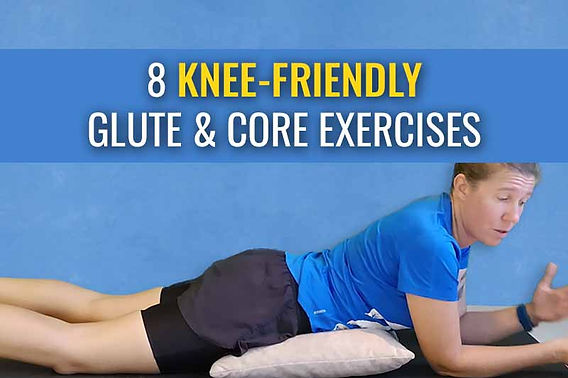
A physical therapist can create a custom glute workout based on your knee condition, flexibility, and goals. This is especially helpful if you have:
- Knee arthritis
- Meniscus tears
- Patellar tracking problems
- Recent knee surgery
It is better to get help early than to push through pain and risk injury.
Credit: www.sports-injury-physio.com
Nutrition And Recovery For Glute Growth
Exercise is only part of building strong glutes. Recovery and nutrition matter too.
- Protein: Eat enough protein to help your muscles repair and grow.
- Hydration: Drink water before, during, and after workouts.
- Sleep: Aim for 7-9 hours per night for muscle recovery.
- Rest days: Give your muscles 48 hours to recover between hard workouts.
Non-obvious insight:
If you have chronic knee pain, a diet with more anti-inflammatory foods (like fatty fish, berries, and leafy greens) may help reduce swelling and discomfort.
Comparing Glute Exercise Options For Bad Knees
Here’s a quick look at how safe and effective the top exercises are for those with knee pain:
| Exercise | Knee Strain | Glute Activation | Beginner Friendly |
|---|---|---|---|
| Glute Bridge | Low | High | Yes |
| Clamshell | Very Low | Moderate | Yes |
| Standing Hip Abduction | Very Low | Moderate | Yes |
| Donkey Kicks | Low | High | Yes |
| Step-Ups (Low Step) | Moderate | High | Yes, with caution |
Choose exercises with very low or low knee strain for best results. Add moderate options as your strength improves.
Credit: www.zing.coach
Frequently Asked Questions
What If My Knee Hurts During Glute Exercises?
If you feel sharp or sudden pain, stop the exercise right away. Check your form—make sure your knee is not moving inward or too far forward. Try a smaller range of motion or switch to a different exercise. If pain continues, talk to a physical therapist.
Can I Do Squats If I Have Bad Knees?
Deep squats are risky for people with knee pain. Mini-squats (only a few inches down) may be safe if done slowly and with good form. But glute bridges, clamshells, and other exercises are usually better choices for sensitive knees.
How Often Should I Do Glute Workouts For Knee Pain?
Aim for 2-3 sessions per week, with at least one day of rest between. Consistency is more important than intensity. You do not need to work out every day to see progress.
Will Strengthening My Glutes Really Help My Knee Pain?
Yes, research supports this. Stronger glutes can help your knees stay stable and reduce pain during daily activities. For more details, see resources like Verywell Health.
Can I Do Glute Exercises If I Have Arthritis In My Knees?
Yes, but choose low-impact moves like glute bridges, clamshells, and seated band abductions. Avoid deep bending or high-impact exercises. Always check with your doctor or physical therapist before starting a new program.
Building strong glutes is possible—even if you have bad knees. With the right exercises, careful progression, and a focus on form, you can boost your strength, reduce knee pain, and move with more confidence. Remember, listen to your body and celebrate every small victory along the way.
