

Glute Gym Workout: Top Exercises for a Stronger, Firmer Butt
Glute Gym Workout: Build Stronger, Shapelier Glutes
Most people dream of a strong, balanced body. But often, they miss one key area: the glutes. Glutes are not just for looks—they are essential for power, stability, and health. Whether you want to boost your athletic performance, prevent injuries, or simply fill out your favorite jeans, smart glute training can change everything.
But how do you create a glute gym workout that actually works? Many programs promise results but fail to target the glutes effectively. Some focus too much on machines, while others use only bodyweight. The truth: you need a blend of science-backed exercises, the right techniques, and consistent effort.
This guide will show you how to design the best glute gym workout for your goals. You’ll learn about anatomy, exercise choices, common mistakes, and tips for every level. By the end, you’ll know exactly how to build your glutes in the gym, see real progress, and avoid spinning your wheels.
Why Glute Training Matters
The glute muscles—gluteus maximus, gluteus medius, and gluteus minimus—are the largest and strongest muscles in your body. They play a crucial role in:
- Posture and alignment: Glutes keep your hips, back, and knees in line.
- Powerful movements: Jumping, sprinting, and lifting all depend on glute strength.
- Injury prevention: Weak glutes can cause back pain, knee problems, and poor balance.
Aesthetically, strong glutes give your body a balanced, athletic shape. They add curves, lift, and definition.
A surprising insight: Most people’s glutes are underactive, even if they work out. Sitting for long periods can “turn off” the glutes, making other muscles compensate. This means you need to train them on purpose—not just hope they activate during squats or running.
Anatomy Of The Glutes: What You Need To Know
Understanding the glute muscles helps you train them correctly.
- Gluteus maximus: The largest muscle, responsible for hip extension (moving your leg backward), outward rotation, and creating the round shape.
- Gluteus medius: Located on the outer side, important for hip stability and moving your leg to the side.
- Gluteus minimus: The smallest, supports the medius and helps with side movements.
Most gym exercises target the gluteus maximus, but true glute development also needs exercises for the medius and minimus. Neglecting these smaller muscles can lead to poor balance and limited shape.
Key Principles For Effective Glute Gym Workouts
Not all glute workouts are created equal. Here are the essential principles for real results:
- Progressive overload: Gradually increase the weight, reps, or difficulty over time.
- Exercise variety: Use different movements to target all glute muscles.
- Mind-muscle connection: Focus on feeling the glutes work during each rep.
- Full range of motion: Go deep enough to stretch and contract the glutes.
- Frequency: Train glutes 2–3 times a week for best results.
Many beginners skip the mind-muscle connection. Just moving weight isn’t enough—learning to “fire” your glutes makes a huge difference. Also, avoid only doing squats; add hip thrusts, abductions, and bridges for full development.
Best Glute Gym Exercises
Here are the most effective exercises for building glutes in the gym. Each one plays a unique role.
Barbell Hip Thrust
Why it works: Maximizes glute activation, especially at the top.
How to do it: Sit on the floor with your upper back on a bench, barbell over your hips. Drive through your heels and thrust your hips upward, squeezing your glutes at the top. Lower under control.
Tip: Pause for 2 seconds at the top for better activation.
Romanian Deadlift (rdl)
Why it works: Targets the gluteus maximus and hamstrings.
How to do it: Stand with feet hip-width apart, barbell in hands. Hinge at your hips, push your butt back, and lower the bar to mid-shin. Keep your back flat, then stand up by driving your hips forward.
Tip: Don’t round your back. Focus on stretching and squeezing the glutes.
Squats
Why it works: Works the glutes, quads, and core. Deeper squats activate more glute muscle.
How to do it: Stand with barbell on your upper back, feet shoulder-width. Lower down, keeping your chest up and knees out. Go as deep as comfortable, then drive up through your heels.
Tip: Go below parallel if you can, but not at the expense of form.
Glute Bridge
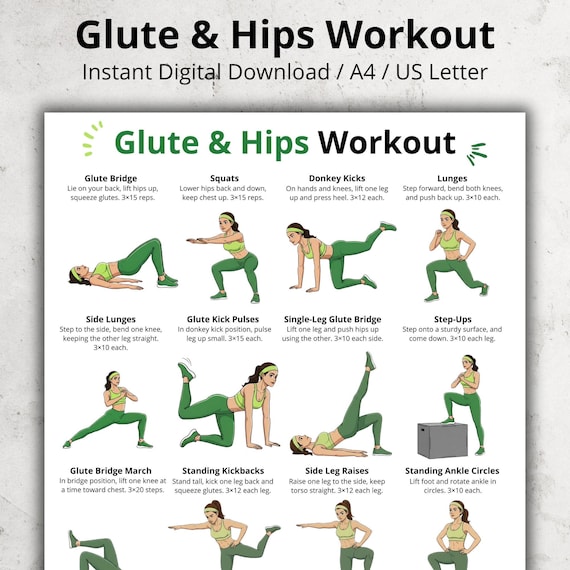
Why it works: Simple, effective, and easy to learn. Great for beginners.
How to do it: Lie on your back, feet flat and close to your body. Push through your heels, lift your hips, and squeeze your glutes.
Tip: Add a band above your knees for extra tension.
Cable Kickback
Why it works: Isolates the gluteus maximus with constant tension.
How to do it: Attach an ankle strap to a low cable. Stand, lean forward, and kick your leg straight back while squeezing your glute.
Tip: Use light weight and slow reps for better control.
Abduction Machine
Why it works: Targets the gluteus medius and minimus for side shape and stability.
How to do it: Sit in the machine, knees bent, pads against your outer thighs. Push your legs out against resistance.
Tip: Lean forward slightly for more glute activation.
Step-ups
Why it works: Functional, works each side separately, challenges balance.
How to do it: Hold dumbbells, step one foot onto a bench, drive through your heel to stand up. Lower under control.
Tip: Do not push off with the lower leg.
Lateral Band Walk
Why it works: Hits the gluteus medius and minimus, improves hip stability.
How to do it: Place a band around your legs above your knees. Squat slightly, step sideways, keeping tension on the band.
Tip: Move slowly and don’t let your feet touch.
Single-leg Glute Bridge
Why it works: Great for glute isolation and correcting imbalances.
How to do it: Lie down, one foot on the floor, other leg straight up. Push through your heel, lift hips, and squeeze glutes.
Tip: Keep your hips level.
Sample Glute Gym Workout Plans
Choosing the right plan depends on your experience and goals. Here are three sample routines for different levels.
Beginner Glute Workout
Focus on learning form and activating the glutes. Rest 60–90 seconds between sets.
- Glute Bridge: 3 sets x 15 reps
- Bodyweight Squat: 3 sets x 12 reps
- Step-Up: 2 sets x 12 reps per leg
- Lateral Band Walk: 2 sets x 20 steps
Intermediate Glute Workout
Add more weight and variety. Rest 60–120 seconds between sets.
- Barbell Hip Thrust: 4 sets x 10 reps
- Romanian Deadlift: 3 sets x 10 reps
- Dumbbell Step-Up: 3 sets x 10 reps per leg
- Abduction Machine: 3 sets x 15 reps
Advanced Glute Workout
Use heavy weights, supersets, and increased volume. Rest 90–120 seconds between sets.
- Barbell Hip Thrust: 5 sets x 8 reps (last set is a drop set)
- Back Squat: 4 sets x 8 reps
- Romanian Deadlift: 4 sets x 10 reps
- Cable Kickback: 3 sets x 12 reps per leg
- Lateral Band Walk: 3 sets x 25 steps
Practical insight: Advanced lifters often benefit from changing foot positions and angles to hit the glutes from different directions.
Weekly Glute Workout Schedule Examples
You can train glutes two or three times a week, depending on your total routine and recovery.
| Day | 2-Day Focus | 3-Day Focus |
|---|---|---|
| Monday | Glute Workout | Glute Workout |
| Wednesday | Upper Body | Glute Accessory |
| Friday | Glute Workout | Glute Workout |
On “Glute Accessory” days, do lighter exercises like cable kickbacks, lateral band walks, or single-leg glute bridges.
Glute Activation: Waking Up The Muscles
Many gym-goers have “sleepy” glutes. This means their glutes don’t fire well during workouts, so other muscles (like hamstrings or lower back) take over. To fix this, start each glute session with activation exercises.
Good activation choices:
- Clamshells (with a resistance band)
- Glute bridges (bodyweight)
- Monster walks (banded)
- Fire hydrants
Do 1–2 sets of 15–20 reps for each activation exercise before your main workout. This helps you feel the glutes and improves results.
Non-obvious tip: Sometimes, foam rolling your quads and hip flexors before activation makes it easier to “find” your glutes.
Common Mistakes In Glute Gym Workouts
Avoid these errors to make your time in the gym count:
- Not using enough weight: Glutes need challenge to grow. If you can do 20 reps easily, add resistance.
- Poor form: Relying on your back or quads means your glutes miss out. Focus on hip movement, not just bending knees.
- Neglecting the mind-muscle connection: If you don’t feel your glutes working, slow down and adjust your form.
- Always doing the same exercises: Muscles adapt. Change your routine every 6–8 weeks.
- Skipping warm-ups: Cold muscles are harder to activate and more likely to get injured.
A surprising insight: Overtraining glutes (working them hard every day) can slow growth. Muscles need recovery time to rebuild stronger.

Credit: www.kaylaitsines.com
Choosing The Right Gym Equipment For Glutes
Gyms are full of machines and tools. Which ones are really worth your time for glute training?
Free Weights Vs. Machines
| Equipment | Pros | Cons |
|---|---|---|
| Barbells/Dumbbells | Versatile, trains balance, large range of motion | Requires good form, more setup time |
| Smith Machine | More stable, easier for beginners | Less stabilizer muscle work, fixed path |
| Cable Machines | Constant tension, great for isolation | Can be busy in crowded gyms |
| Abduction Machine | Targets side glutes, easy to use | Limited range of movement |
| Resistance Bands | Portable, adds tension, great for activation | Harder to progress weight |
Tip: Combine free weights and machines for the best results. For example, hip thrusts with a barbell, abduction machine for sides, and cable kickbacks for isolation.
Proper Form And Technique Tips
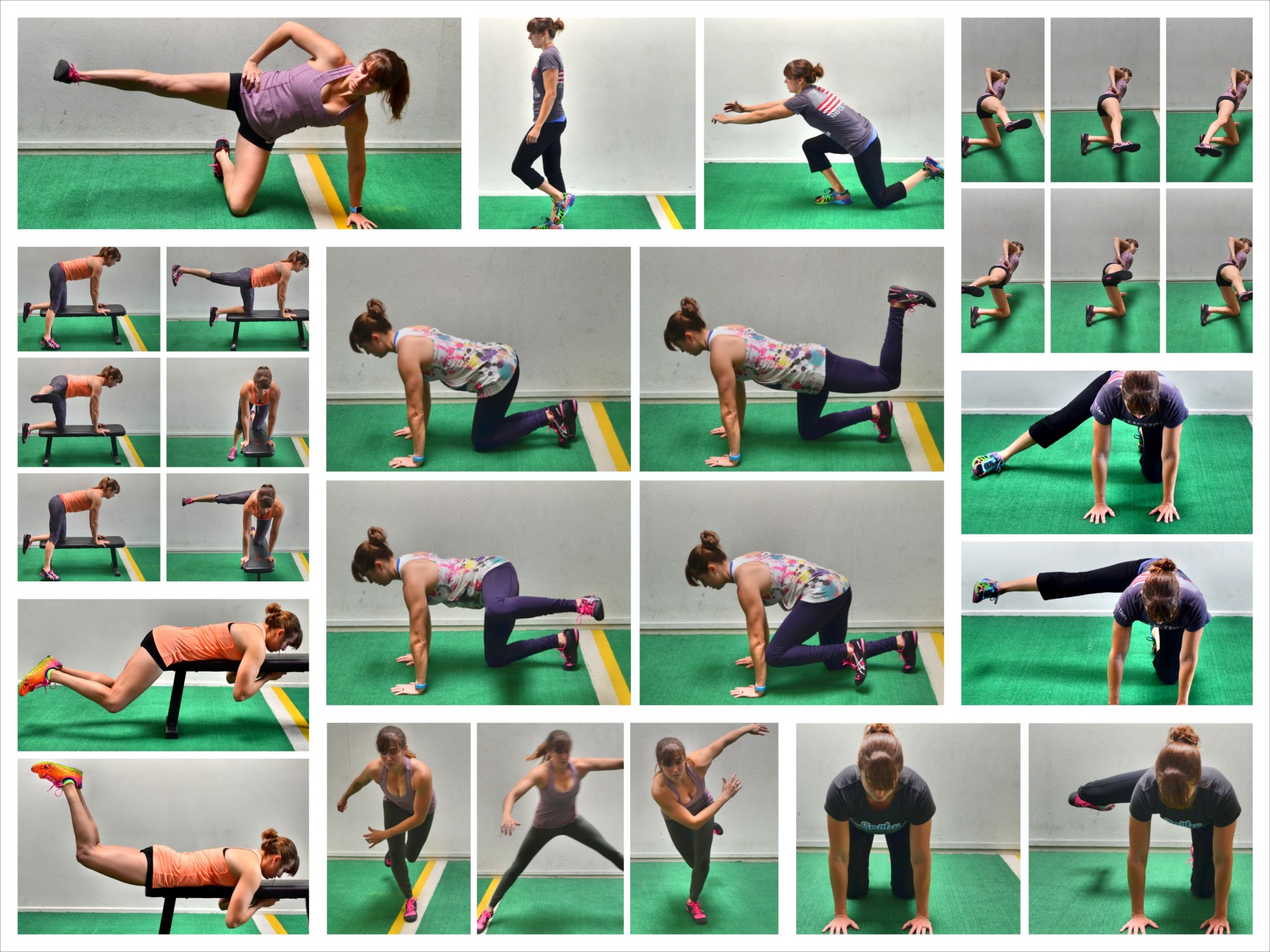
Good form is everything in glute training. Here’s how to get the most out of each rep:
- Keep knees out: When squatting or thrusting, drive your knees outward, not just forward.
- Push through heels: This helps the glutes activate more than the quads.
- Control the lowering phase: Lower slowly for more muscle tension and less injury risk.
- Squeeze at the top: For hip thrusts and bridges, pause and squeeze the glutes.
- Don’t hyperextend the back: Stop when your hips are in line with your body, not arched.
Beginner mistake: Looking at the mirror too much can make you lean forward or arch your back. Focus on your body position and feel.
Credit: redefiningstrength.com
How To Progress Your Glute Workouts
Progression is key to growth. Here’s how to keep improving:
- Add weight: Increase barbell or dumbbell load when you can do all your reps with good form.
- Increase reps or sets: Add more volume if you can’t add weight.
- Slow the tempo: Take longer to lower and raise the weight.
- Use advanced techniques: Pause reps, drop sets, or supersets to challenge the glutes in new ways.
Practical tip: Write down your workouts. Tracking progress makes it easier to see changes and stay motivated.
Nutrition For Glute Growth
Training is only half the equation. Without proper nutrition, glutes won’t grow or shape up.
Protein
Muscles need protein to rebuild and grow. Aim for 0.7–1 gram per pound of body weight daily.
Carbohydrates
Carbs provide energy for tough workouts. Include whole grains, fruits, and vegetables.
Fats
Healthy fats (avocado, nuts, olive oil) support hormone balance, which matters for muscle growth.
Hydration
Drink enough water. Dehydrated muscles recover slower and feel weaker.
| Goal | Calories | Protein (g) | Carbs (g) | Fat (g) |
|---|---|---|---|---|
| Muscle Gain | +250 above maintenance | 0.7–1 per lb | 2–2.5 per lb | 0.3–0.4 per lb |
| Fat Loss | -300 below maintenance | 1 per lb | 1.5–2 per lb | 0.3 per lb |
Practical advice: If you struggle to eat enough protein, try shakes or Greek yogurt as quick options.
Cardio And Glute Training: Do They Mix?
Many people worry cardio will hurt glute growth. The truth: The right cardio can help burn fat and reveal muscle, but too much can interfere with muscle building.
- Best choices: Uphill walking, stair climbing, or sled pushes. These use the glutes more than running or cycling.
- Limit intense cardio to 2–3 times per week if glute growth is your main goal.
Non-obvious tip: Sprints (short, fast runs) are excellent for glutes and can be used once per week for extra power.
Recovery And Rest For Glute Growth
Muscles grow when you rest, not just when you work out. Here’s how to recover:
- Sleep: Aim for 7–9 hours per night.
- Active recovery: Light walking or stretching on off days keeps blood flowing.
- Foam rolling: Helps reduce soreness and tightness in the hips and glutes.
Advanced insight: If you feel sore for more than three days after a workout, reduce the intensity or volume until recovery improves.
Tracking Progress And Staying Motivated
Glute changes can be slow. Here are ways to keep yourself on track:
- Take progress photos every four weeks. Sometimes, visual changes appear before the scale moves.
- Measure your hips with a tape measure.
- Track strength: Note when you lift heavier weights or do more reps.
- Celebrate small wins: Each new PR (personal record) is progress.
Motivation tip: Find a workout partner or share your journey online. Accountability helps you push harder and stay committed.
Advanced Glute Training Strategies
If you’re no longer seeing progress, try these advanced methods:
- Contralateral loading: Hold a weight on the opposite side of your working leg during single-leg exercises. This increases core and glute activation.
- Tempo training: Slow down the lowering phase (count to 3–4 seconds) for greater muscle stress.
- Paused reps: Pause at the hardest part of the movement (bottom of a squat, top of a thrust) for 2 seconds.
- Giant sets: Combine 3–4 glute exercises back-to-back with little rest for a big pump.
Warning: Only add advanced techniques after you master basic form.
Glute Workouts For Different Goals
For Size (hypertrophy)
- 3–5 sets of 8–15 reps per exercise
- Focus on moderate to heavy weights
- Use a mix of compound (multi-joint) and isolation moves
For Strength
- 3–6 sets of 4–8 reps with heavier weights
- Longer rest periods (2–3 minutes)
- Emphasize big lifts like hip thrusts, deadlifts, and squats
For Endurance And Tone
- 2–4 sets of 15–25 reps with lighter weights
- Short rest periods (30–60 seconds)
- Add bands and bodyweight moves for high reps
Example: For shaping, you might do hip thrusts (heavy), then abduction machine (medium), then finish with lateral band walks (high reps).
Safety Tips For Glute Gym Workouts
- Warm up: Always do 5–10 minutes of movement before heavy lifts.
- Start light: Increase weight slowly to avoid injury.
- Ask for help: If unsure about form, ask a trainer or experienced lifter.
- Listen to your body: Sharp pain means stop. Soreness is normal, but pain is not.
- Stretch after training: Gentle stretching can reduce tightness and improve flexibility.
Pro tip: If you have knee or back pain during glute exercises, adjust your form or substitute for a pain-free movement.
Additional Tips For Faster Glute Gains
- Don’t skip single-leg exercises: These build balance and fix muscle imbalances.
- Change foot positions: Pointing toes out or in slightly can shift emphasis on different glute parts.
- Stay consistent: Glutes need regular work—results take time but are worth the effort.
- Don’t ignore other muscles: Strong hamstrings, core, and hips support glute growth and prevent injuries.
Hidden insight: The gluteus medius and minimus shape the upper, outer part of your butt. Don’t just focus on the maximus (the biggest part).
Frequently Asked Questions
How Long Does It Take To See Glute Growth?
Most people notice some changes in 4–8 weeks, but significant growth usually takes 3–6 months of consistent, focused training. Progress depends on your starting point, genetics, and how well you follow your workout and nutrition plan.
Can I Train Glutes Every Day?
It’s not recommended. Glute muscles need time to recover and grow. Training them hard every day can lead to overtraining and slow your progress. 2–3 times per week is enough for most people.
Are Bodyweight Exercises Enough For Glute Growth?
Bodyweight exercises are great for beginners and activation, but for serious growth, you need to add resistance (weights or bands). Over time, increase the challenge to keep making progress.
What If I Don’t Feel My Glutes Working During Workouts?
Try glute activation drills before your main workout. Focus on mind-muscle connection—move slower, squeeze the glutes, and adjust your form. Sometimes, small changes (like foot position or range of motion) make a big difference.
Where Can I Learn More About Glute Anatomy And Exercise Science?
A reliable resource is the Wikipedia page on gluteus maximus. It covers muscle anatomy, function, and related exercises.
Building strong, shapely glutes is more than just a fitness trend—it’s a foundation for total-body strength, power, and health. With the right gym workout, proper technique, and smart recovery, your glutes can become one of your biggest assets. Stay patient, stay consistent, and you’ll see—and feel—the difference.
Credit: www.etsy.com
