

Glute And Quad Workout Gym: Sculpt Stronger Legs Fast
Glute And Quad Workout Gym
Building strong glutes and quads is more than just about looks. These muscles are the foundation for powerful legs, better athletic performance, and healthy movement. Whether your goal is to lift heavier, run faster, or simply improve your daily activities, focusing on your glutes and quads can make a big difference.
Many people walk into the gym unsure how to train these muscles safely and efficiently. This article will guide you step by step, from understanding muscle anatomy to practical workouts, common mistakes, and real-world tips. You’ll find clear advice, easy explanations, and actionable strategies to help your gym sessions deliver results.
Why Glutes And Quads Matter
The glutes are the largest muscle group in your body. They support your hips, pelvis, and core. Strong glutes protect your lower back, improve posture, and help with explosive movements like sprinting and jumping. The quads, or quadriceps, are located at the front of your thighs. They are key for knee stability, walking, running, squatting, and jumping. Weak glutes or quads can cause pain, poor movement, and even injuries.
Many beginners only focus on the upper body or think squats are enough. But neglecting glutes and quads limits your progress. For athletes, these muscles are crucial for speed and agility. For everyone else, they help you climb stairs, lift objects, and keep your joints healthy as you age.
Understanding Glute And Quad Anatomy
Knowing the main muscles helps you train smarter.
Glute Muscles
The glutes are made up of three main parts:
- Gluteus maximus: The largest, responsible for hip extension, outward rotation, and movement.
- Gluteus medius: Stabilizes your hips and helps with side movements.
- Gluteus minimus: Assists with hip abduction and rotation.
Quad Muscles
The quads are a group of four muscles:
- Rectus femoris: Helps with knee extension and hip flexion.
- Vastus lateralis: Located on the outer thigh.
- Vastus medialis: On the inner thigh, stabilizes the knee.
- Vastus intermedius: Sits between the other three, under rectus femoris.
Understanding which muscles work during each exercise helps you target weaknesses and avoid imbalances.
Key Benefits Of Glute And Quad Workouts
Focusing on glutes and quads brings many advantages:
- Increased strength: Better performance in sports and daily activities.
- Improved posture: Strong glutes support your lower back and core.
- Enhanced balance: Quads stabilize your knees and hips.
- Reduced injury risk: Prevents knee and back injuries.
- Better aesthetics: Toned legs and glutes create a balanced physique.
Many people notice stronger glutes and quads improve confidence and movement. For example, runners often see faster times after adding glute training.
Gym Equipment For Glute And Quad Training
Gyms offer a wide range of tools. Here’s a quick overview:
| Equipment | Main Use | Beginner Friendly? |
|---|---|---|
| Barbell | Squats, lunges, hip thrusts | Yes, with proper form |
| Dumbbells | Lunges, step-ups, split squats | Yes |
| Leg Press Machine | Quad and glute targeting | Yes |
| Cable Machine | Kickbacks, abductions, extensions | Yes, adjustable resistance |
| Resistance Bands | Glute activation, warm-ups | Yes |
| Smith Machine | Squats, lunges | Yes, guided bar path |
Each tool has its strengths. Beginners should start with lighter weights and learn proper technique before progressing.
Essential Warm-up For Glute And Quad Workouts
A good warm-up prepares muscles, increases blood flow, and reduces injury risk. Skipping this step is a common mistake.
Dynamic Warm-up Routine
- Leg swings: 10 reps each leg, forward and sideways
- Bodyweight squats: 12–15 reps
- Walking lunges: 10 reps each leg
- Glute bridges: 12–15 reps
- Hip circles: 10 reps each direction
This routine takes about 5–8 minutes and wakes up your glutes and quads. If you feel stiff, spend extra time on hip circles.
The Best Glute And Quad Exercises
Not all exercises are equal. Some target both muscles, while others focus more on one area. Here are gym-tested movements that deliver results.
Squat Variations
- Barbell Back Squat: Classic movement, targets both glutes and quads. Keep your feet shoulder-width apart, chest up, and go as low as comfortable.
- Front Squat: Barbell rests on shoulders. More quad activation, helps improve core stability.
- Goblet Squat: Hold a dumbbell or kettlebell at your chest. Good for beginners.
- Sumo Squat: Wider stance, toes slightly outward. More glute focus.
Lunges And Step-ups
- Walking Lunges: Step forward, lower your back knee, keep chest upright. Works glutes and quads.
- Reverse Lunges: Step backward. Reduces knee strain, good for joint health.
- Bulgarian Split Squat: Place back foot on a bench, squat down with front leg. Intense for both muscle groups.
- Step-Ups: Step onto a platform or bench, drive through the heel. Great for glute activation.
Hip-focused Movements
- Hip Thrust: Barbell or bodyweight, shoulders on bench, lift hips up. Strong glute activation.
- Glute Bridge: Similar to hip thrust, but shoulders on floor. Good for beginners.
- Cable Kickbacks: Stand and kick leg back using cable machine. Isolates glutes.
- Abductor Machine: Push legs outward against resistance. Targets glute medius.
Quad Isolation Exercises
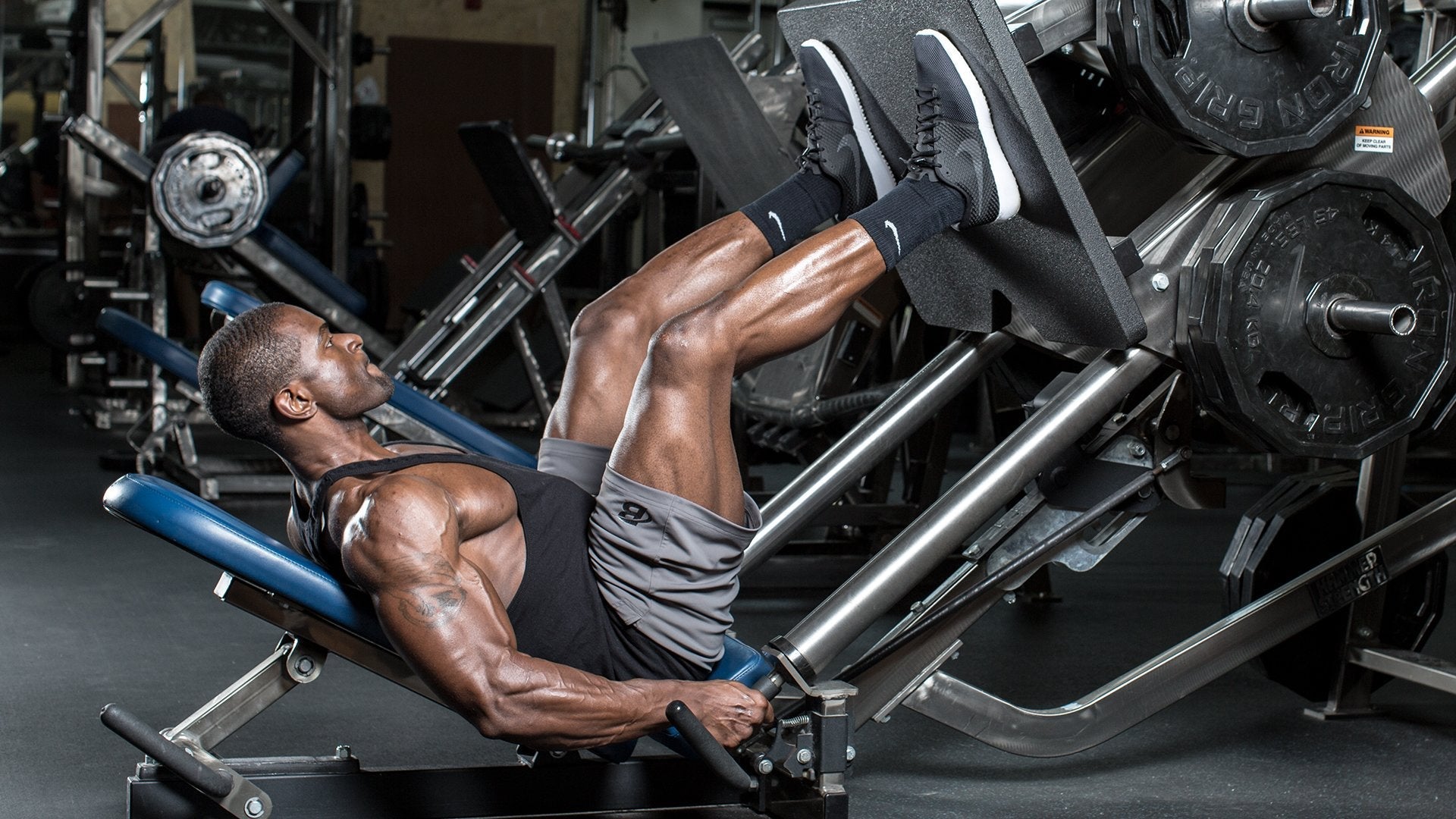
- Leg Press: Push weight with legs. Adjust foot position for more quad or glute focus.
- Leg Extension: Seated machine, extend knees. Direct quad targeting.
- Hack Squat Machine: Feet on angled platform, squat down and up. More quad load.
- Sissy Squat: Uses bodyweight, knees forward, lean back. Advanced quad exercise.
Some exercises work both areas. For example, back squats activate glutes and quads, but front squats focus more on quads. Mixing both types helps balance strength.
Sample Glute And Quad Gym Workout Plans
Different goals require different approaches. Here are three sample routines for various fitness levels.
Beginner Workout (2 Days Per Week)
Day 1:
- Bodyweight squats: 3 x 12
- Walking lunges: 3 x 10 each leg
- Glute bridges: 3 x 12
- Step-ups: 3 x 10 each leg
Day 2:
- Goblet squats: 3 x 10
- Reverse lunges: 3 x 10 each leg
- Leg press (light): 3 x 10
- Cable kickbacks: 3 x 12 each leg
Intermediate Workout (3 Days Per Week)
Day 1:
- Barbell back squat: 4 x 8
- Bulgarian split squat: 3 x 8 each leg
- Hip thrust: 3 x 10
- Leg extension: 3 x 12
Day 2:
- Front squat: 4 x 8
- Step-ups (weighted): 3 x 10 each leg
- Glute bridge (weighted): 3 x 10
- Abductor machine: 3 x 15
Day 3:
- Sumo squat: 4 x 8
- Walking lunges (weighted): 3 x 12 each leg
- Leg press (moderate): 3 x 12
- Cable kickbacks: 3 x 15 each leg
Advanced Workout (4 Days Per Week)
Day 1: Heavy Squats
- Barbell back squat: 5 x 6
- Leg press: 4 x 8
- Bulgarian split squat: 4 x 8 each leg
- Hip thrust: 4 x 10
Day 2: Glute Focus
- Hip thrust (heavy): 5 x 8
- Glute bridge: 4 x 12
- Cable kickbacks: 4 x 15 each leg
- Abductor machine: 4 x 20
Day 3: Quad Focus
- Front squat: 5 x 6
- Leg extension: 4 x 12
- Hack squat: 4 x 8
- Sissy squat: 3 x 10
Day 4: Athletic/power
- Jump squats: 4 x 12
- Walking lunges (explosive): 4 x 10 each leg
- Step-ups (high): 4 x 10 each leg
- Single-leg Romanian deadlift: 4 x 10 each leg
For each workout, rest 60–90 seconds between sets. Adjust weights so the last reps are challenging, but safe. If you feel pain (not just muscle fatigue), stop and check your form.
Glute And Quad Training Frequency And Volume
How often should you train these muscles? Most experts recommend:
- Beginners: 2 times per week
- Intermediate: 3 times per week
- Advanced: 3–4 times per week
Each session should include 16–24 total sets for glutes and quads combined. Overtraining can lead to fatigue and injuries, so listen to your body. If you struggle to recover, reduce frequency or volume.
Recovery Tips
- Sleep 7–9 hours per night
- Eat enough protein (0.7–1g per pound of body weight)
- Stretch after workouts
- Use foam rollers for muscle release
Many people miss recovery and wonder why progress stalls. Muscles grow when you rest, not just when you train.
Common Mistakes In Glute And Quad Workouts
Avoiding these errors will speed up your results:
- Poor form: Rounding your back, knees caving in, or using momentum.
- Too much weight: Sacrificing technique for heavier loads.
- Neglecting warm-up: Increases injury risk.
- Ignoring glute activation: Some people’s glutes don’t “fire” properly. Add banded warm-ups.
- Training only one muscle group: This causes imbalances and weakness.
- Skipping recovery: Leads to fatigue and injuries.
- Not progressing: Using the same weight and reps every week stalls growth.
A non-obvious mistake: Many gym-goers focus only on squats, thinking it’s enough. However, the glutes need hip extension exercises (like hip thrusts) for full development. Another overlooked error is not adjusting foot placement on machines. Moving feet higher or wider can shift the focus between glutes and quads.
Glute And Quad Activation: Why It Matters
Muscle activation means your target muscles are working during exercises. If your glutes are “sleepy,” other muscles (like hamstrings or lower back) take over, reducing results and increasing injury risk.
How To Activate Glutes And Quads
- Use resistance bands for warm-up (monster walks, lateral steps)
- Focus on mind-muscle connection: Think about squeezing glutes during hip thrusts
- Pause at the top of movements (hip thrust, bridge)
- Try slow, controlled reps
- Change foot placement and angles
Activation drills before your main workout help the glutes and quads “wake up. ” This is especially useful for people who sit a lot or struggle to feel their glutes during squats.
Progression: How To Keep Improving
Progression means making workouts harder over time. This is key for muscle growth.
Ways To Progress
- Increase weight: Use heavier dumbbells or barbells.
- Add reps or sets: Do more repetitions or extra sets.
- Change tempo: Slow down the lowering phase.
- Use advanced variations: Try single-leg movements or unstable surfaces.
- Shorten rest: Less rest increases difficulty.
A useful tip: Track your workouts in a notebook or app. Note exercises, weights, reps, and how you felt. If you can do more than 12 reps easily, increase weight next session.
Glute And Quad Workout For Fat Loss
Training these muscles helps burn more calories. Larger muscles use more energy, which supports fat loss.
High-intensity Training
Try circuit-style workouts:
- Squats: 12 reps
- Lunges: 10 reps each leg
- Step-ups: 10 reps each leg
- Hip thrusts: 12 reps
Do each exercise back-to-back with little rest. Repeat 3–4 rounds. This keeps your heart rate up and burns calories. Pair with a balanced diet for best results.
Nutrition For Glute And Quad Growth
Muscle growth needs proper nutrition. Many people train hard but ignore diet.
Key Points
- Protein: Build and repair muscles. Aim for 0.7–1g per pound of body weight.
- Carbohydrates: Fuel workouts. Include whole grains, fruit, and starchy veggies.
- Healthy fats: Support hormone health.
- Hydration: Drink enough water to support recovery.
A common mistake: Not eating enough food. If you’re trying to build muscle, you need a slight calorie surplus.
Tracking Progress: Measuring Glute And Quad Results
Progress is not only about bigger muscles. Use these methods:
| Method | What It Measures | Accuracy |
|---|---|---|
| Mirror/photos | Visual changes | Medium |
| Measurements | Thigh/hip size | High |
| Strength tests | Squat/press performance | High |
| Body fat tests | Muscle/fat ratio | Medium |
Take photos every few weeks. Measure your thighs and hips with a tape. Note your squat or leg press numbers. If progress stalls, adjust your workout or nutrition.
Safety Tips And Injury Prevention
Staying safe is key to long-term progress.
- Always warm up before heavy lifting.
- Use proper form, even with light weights.
- Don’t rush through reps—control the movement.
- Listen to your body. Sharp pain is a warning sign.
- Rest and recover if you feel soreness or fatigue.
- If unsure, ask a trainer for guidance.
Overuse injuries often happen when people train too hard, too fast. Building muscle takes time. It’s better to progress slowly than risk injury.
Glute And Quad Workouts For Women Vs. Men
Both men and women benefit from glute and quad training. However, some differences exist.
Women
- Usually want toned, rounded glutes and lean legs.
- Can often train glutes more frequently due to faster recovery.
- Tend to focus on hip thrusts, lunges, and abductor exercises.
Men
- Often aim for powerful quads and bigger legs.
- May focus more on squats, leg presses, and heavy lifts.
- Sometimes neglect glute isolation, which can cause imbalances.
Regardless of gender, both should include a mix of compound (multi-muscle) and isolation (single-muscle) exercises.
Glute And Quad Training For Athletes
Athletes need strong glutes and quads for speed, jumping, and stability.
- Sprinters: Focus on hip thrusts, squats, lunges.
- Jumpers: Add explosive exercises like jump squats, plyometrics.
- Soccer players: Include single-leg movements for balance.
Training should match the demands of your sport. For example, basketball players benefit from step-ups and lunges to improve jumping and direction changes.
Real-world Example: Progress Story
A practical case can help illustrate the process. Maria, a beginner, started with bodyweight squats and lunges. She trained twice a week, focusing on form. After four months, she could squat with a barbell and do Bulgarian split squats with dumbbells.
Her thigh measurements increased by 2 inches, and she felt stronger climbing stairs. Maria also added hip thrusts, which improved her glute strength and running speed.
Many beginners underestimate the impact of consistent training. Small improvements each week add up over months.
Glute And Quad Workout Variations For Limited Equipment
Not everyone has access to a full gym. Here are alternatives:
- Bodyweight squats
- Lunges
- Step-ups using stairs
- Glute bridges on floor
- Single-leg squats (pistol squats)
- Resistance band kickbacks
You can build strong glutes and quads even with minimal equipment. Focus on slow, controlled reps and higher volume.
How To Combine Glute And Quad Workouts With Other Training
Many people wonder if they should train glutes and quads with other muscles.
- Combine with hamstring and calf exercises for balanced legs.
- Avoid training heavy glutes/quads right after a hard cardio session.
- If you do full-body workouts, include 2–3 leg movements per session.
For split routines, have dedicated “leg days” but allow at least 48 hours between sessions for recovery.
Credit: shop.bodybuilding.com
Supplements For Glute And Quad Growth
Supplements can help, but are not required.
Useful Options
- Protein powder: Helps reach daily protein goals.
- Creatine: Supports strength and muscle size.
- Branched-chain amino acids (BCAAs): May help with recovery.
Always focus on real food first. Supplements are just a bonus for those who struggle with diet or want faster recovery.
Glute And Quad Workout Challenge: Test Your Progress
A challenge can keep training fun.
Try this once a month:
- Squat test: How many bodyweight squats in 60 seconds?
- Lunge test: How many lunges (each leg) in 60 seconds?
- Hip thrust test: Maximum reps in 60 seconds.
Record your results. Aim to improve each time. This helps measure endurance and strength gains.

Credit: www.steinerspub.com
Advanced Tips For Faster Progress
Most people focus only on basics. Here are two non-obvious ideas:
- Tempo training: Slow down the lowering phase (3–4 seconds), then explode up. This increases muscle tension and growth.
- Partial reps: After full reps, add half reps at the bottom of squats or hip thrusts. This targets weak points and boosts strength.
Another advanced tip: Try unilateral training (single-leg movements). This improves balance and fixes imbalances between legs.
Resources For More Information
If you want deep scientific details, check Wikipedia's Gluteus Maximus page. It offers anatomy, function, and more.

Credit: www.afvt.org
Frequently Asked Questions
How Often Should I Train Glutes And Quads?
Most people see good results with 2–4 sessions per week. Beginners should start with 2, then add more as they recover faster.
What’s The Best Exercise For Glutes?
Hip thrusts are highly effective. They target the glutes directly and allow heavy resistance safely.
Can I Build Glutes And Quads Without Weights?
Yes. Bodyweight squats, lunges, step-ups, and glute bridges work well. Resistance bands add difficulty.
How Long Does It Take To See Results?
You may notice strength gains in a few weeks. Visible muscle changes usually appear after 2–3 months of consistent training and nutrition.
Should I Train Glutes And Quads On The Same Day?
You can. Many workouts combine both. If you prefer, split them up for more focused sessions and better recovery.
Building strong glutes and quads is achievable for anyone, regardless of experience. It takes smart training, good nutrition, and patience. The gym offers many tools and exercises, but the key is consistency and gradual progress. Avoid common mistakes, focus on activation, and track your results.
Over time, you’ll enjoy stronger, healthier legs that support every activity in life.
