

Glute And Ab Workout: Sculpt a Stronger Core and Booty Fast
Glute And Ab Workout: Build Strength, Shape, And Stability
Building strong glutes and abs is not just about looking good—it's about improving your movement, strength, and confidence. Many people focus on these muscles for aesthetic reasons, but their real value goes deeper. Well-developed glutes help you run faster, jump higher, and lift heavier. Strong abs protect your spine, keep your posture tall, and help you move with ease.
If you want a workout routine that targets both glutes and abs, you’re in the right place. This guide gives you clear exercises, practical tips, common mistakes, and advanced options. Whether you’re a beginner or someone with experience, you’ll discover routines you can use at home or in the gym.
Let’s dive in and learn how to build a balanced, strong body.
Why Glutes And Abs Matter
Your glutes are the biggest muscle group in your body. They sit at the back of your hips and include three muscles: gluteus maximus, gluteus medius, and gluteus minimus. These muscles help you walk, run, climb, and stand up. Weak glutes can lead to knee pain, back pain, and poor movement.
Your abs (abdominal muscles) include the rectus abdominis (the “six-pack”), transverse abdominis, and obliques. Together, they support your spine, keep your posture straight, and help you twist, bend, and lift. Weak abs can cause lower back pain and make daily tasks harder.
Glutes and abs work together. For example, when you lift something heavy, your glutes push your hips forward, and your abs stabilize your spine. Balanced strength in these areas helps you avoid injury, stand taller, and feel stronger.
Key Principles For Glute And Ab Training
Before you start exercising, it’s important to understand these basic principles:
- Progressive overload: To build muscle, you need to slowly increase the weight or difficulty. Start with bodyweight, then add resistance bands or dumbbells as you get stronger.
- Proper form: Good technique keeps you safe and makes each rep count. Focus on slow, controlled movements.
- Muscle activation: Many people don’t feel their glutes or abs working. Learn to “feel” the muscle before adding weight. Glute activation drills and ab bracing help.
- Consistency: Training 2-3 times per week is better than once a month. Set a schedule you can stick to.
- Recovery: Muscles grow when you rest. Give at least 48 hours between glute and ab workouts.
Non-obvious insight: Glutes often “turn off” when sitting all day. Doing quick glute activation before your main workout can wake up the muscles and improve results.
Essential Glute Exercises
You don’t need fancy machines to train your glutes. Simple exercises can make a big difference. Here are some that work for all levels:
1. Hip Thrust
This exercise targets the gluteus maximus. Sit on the ground with your upper back against a bench. Place your feet flat on the floor, knees bent. Push your hips up by squeezing your glutes, then lower slowly.
- Tip: Keep your chin tucked and your core tight.
- Variation: Add a dumbbell or barbell across your hips for more resistance.
2. Glute Bridge
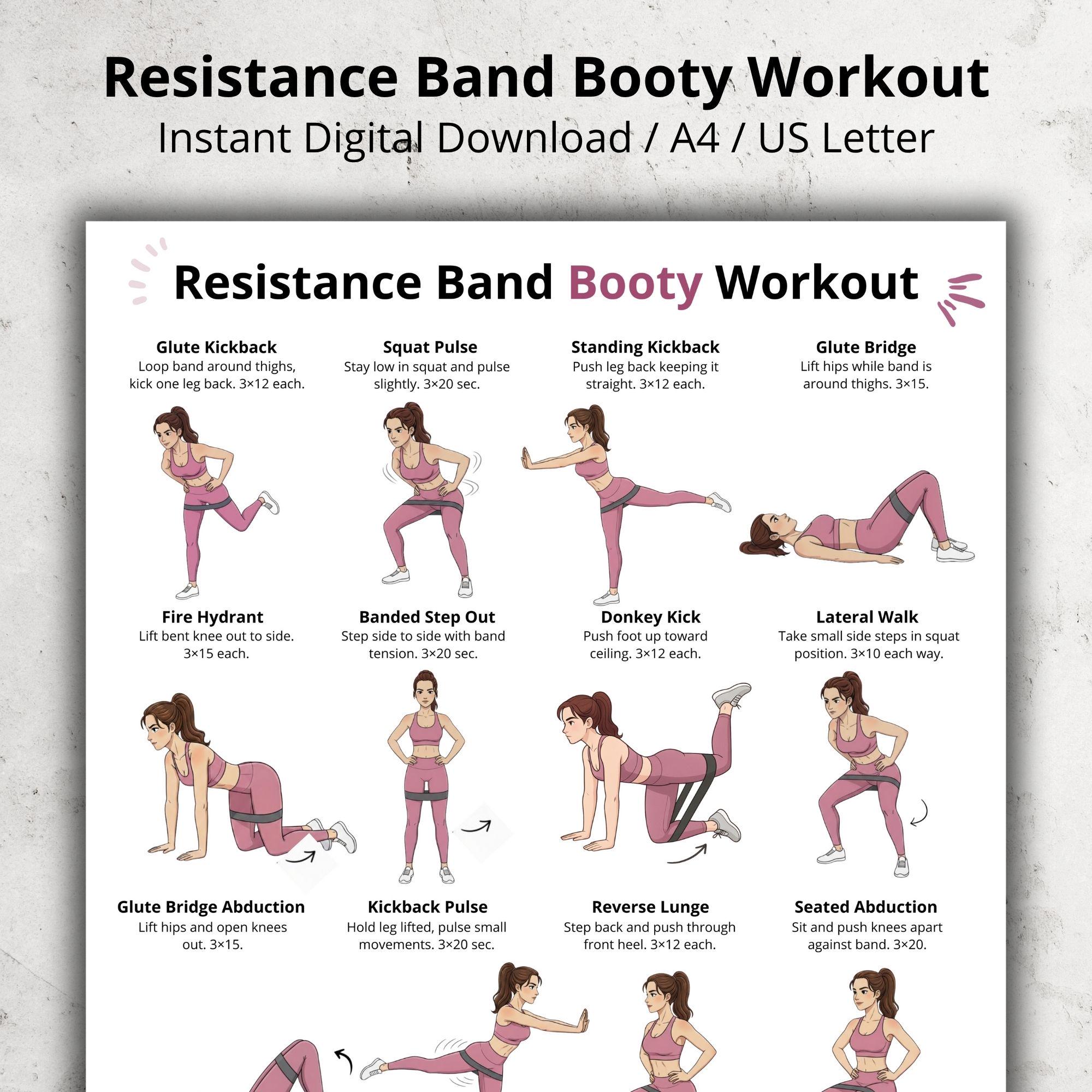
Similar to hip thrust, but your back stays on the floor. Lie on your back, knees bent, feet flat. Push hips upward by squeezing your glutes, then lower.
- Practical advice: Pause at the top for 2 seconds to “feel” the muscle.
3. Bulgarian Split Squat
Stand a few feet from a bench. Put one foot behind you on the bench. Lower your hips until your front thigh is almost parallel to the floor, then push back up.
- Common mistake: Letting your knee go too far forward. Keep your knee over your ankle.
4. Deadlift (romanian Style)
Hold a pair of dumbbells or a barbell. Stand tall, feet hip-width apart. Bend at your hips (not your back), keeping your chest up. Lower the weights to mid-shin, then stand back up.
- Non-obvious tip: Focus on pushing your hips back, not just bending forward.
5. Clamshell
Lie on your side, knees bent, feet together. Keep your feet touching and open your top knee as far as you can. Close and repeat.
- Variation: Use a resistance band above your knees for extra challenge.
6. Step-up
Stand facing a sturdy bench or box. Step up with one leg, drive through your heel, and bring the other leg up. Step down and repeat.
- Tip: Keep your chest tall and don’t let your knee collapse inward.
Essential Ab Exercises
Strong abs are more than just crunches. Here are exercises that build core stability and strength:
1. Plank
Place your forearms on the floor, elbows under shoulders. Legs straight, toes on the ground. Hold your body in a straight line.
- Tip: Squeeze your glutes and abs—don’t let your hips sag.
2. Dead Bug
Lie on your back, arms pointing to the ceiling, knees bent. Lower your right arm and left leg toward the floor, then return to start. Alternate sides.
- Practical advice: Keep your lower back pressed into the ground.
3. Bicycle Crunch
Lie on your back, hands behind your head. Bring your knees toward your chest. Twist your body so your right elbow moves toward your left knee, then switch sides.
- Common mistake: Pulling your neck. Keep elbows wide and lead with your shoulder.
4. Hanging Knee Raise
Hang from a pull-up bar. Lift your knees toward your chest, then lower slowly.
- Variation: Straighten your legs for more difficulty.
5. Russian Twist
Sit on the floor, knees bent. Lean back slightly, holding a weight or medicine ball. Twist your torso to one side, then the other.
- Tip: Move slowly and control the twist. Don’t rush.
6. Mountain Climber
Start in a plank position. Bring one knee toward your chest, then switch quickly.
- Non-obvious insight: Focus on keeping your hips stable, not bouncing.
Sample Glute And Ab Workout Routine
Here’s a routine you can use 2-3 times a week. It works for beginners and can be scaled up as you get stronger.
Warm-up
Start with 5-7 minutes of light cardio (jumping jacks, brisk walking). Then do:
- 10 glute bridges
- 10 dead bugs
Circuit
Do each exercise for 12-15 reps (or 30 seconds for planks). Rest 30-60 seconds between moves. Repeat the circuit 2-3 times.
- Hip Thrust
- Plank
- Bulgarian Split Squat (each leg)
- Bicycle Crunch
- Step-Up (each leg)
- Russian Twist
Cool-down
Stretch your glutes and abs for 5 minutes. Try:
- Standing quad stretch
- Seated forward fold
- Cat-cow stretch
Practical tip: If you feel pain in your lower back, check your form and reduce the difficulty. Pain means something is wrong—discomfort means your muscles are working.
Advanced Glute And Ab Training
When you’re ready for more, try these advanced methods:
1. Add Resistance
Use dumbbells, barbells, or resistance bands. For example, place a band around your knees during hip thrusts or use a weighted plate for Russian twists.
2. Increase Volume
Add more sets or reps. For example, move from 2 sets to 4 sets, or increase reps from 12 to 20.
3. Try Unilateral Exercises
Training one side at a time helps balance strength and improves stability. Examples: single-leg glute bridge, one-arm plank.
4. Use Tempo Training
Slow down the lowering (eccentric) part of each movement. For example, take 3 seconds to lower in a Bulgarian split squat.
5. Combine Moves
Create “complexes” by linking exercises. For example, do a lunge with a twist to work both glutes and obliques.
Non-obvious insight: Advanced athletes often use “pre-exhaustion”—doing a small isolation move (like clamshells) before a compound move (like hip thrusts). This makes big muscles work harder and boosts growth.
Credit: www.afvt.org
Home Vs Gym: Comparing Glute And Ab Workouts
You can train glutes and abs anywhere, but the tools and exercises may differ. Here’s a comparison:
| Location | Equipment Needed | Exercise Examples | Benefits | Limitations |
|---|---|---|---|---|
| Home | Bodyweight, resistance bands | Glute bridge, plank, clamshell | Convenient, no cost | Limited resistance, fewer exercise options |
| Gym | Dumbbells, barbells, machines | Hip thrust, deadlift, hanging knee raise | More resistance, variety | Requires membership, travel time |
Practical advice: If you train at home, invest in a set of resistance bands and a sturdy box or bench. This opens up many more exercises.
Common Mistakes In Glute And Ab Workouts
Many people make these mistakes. Avoid them to get the best results:
- Poor form: Rushing through exercises or using wrong technique can lead to injury.
- Neglecting warm-up: Skipping the warm-up means muscles aren’t ready and risk getting hurt.
- Not feeling the muscle: If you don’t feel your glutes or abs working, try slowing down and focusing on the squeeze.
- Overtraining: Training every day without rest can cause soreness, fatigue, and slow progress.
- Ignoring other muscles: Focusing only on glutes and abs can create imbalances. Train your whole body for best health.
Non-obvious tip: Many people arch their back during hip thrusts and planks. This puts stress on your spine. Keep your ribs down and abs tight to protect your back.
Nutrition For Glute And Ab Growth
Exercise alone isn’t enough. Your muscles need the right fuel to grow and recover.
Protein
Aim for 0.7–1 gram of protein per pound of body weight. Good sources: chicken, fish, eggs, beans, tofu.
Carbohydrates
Carbs give you energy for workouts. Choose whole grains, fruits, and vegetables.
Fats
Healthy fats support hormone balance. Eat avocados, nuts, seeds, olive oil.
Hydration
Drink plenty of water. Muscles are about 75% water—a dehydrated muscle won’t perform well.
Sample Daily Meal Plan
| Meal | Food Example | Protein (g) | Carbs (g) | Fat (g) |
|---|---|---|---|---|
| Breakfast | Eggs, whole grain toast | 18 | 30 | 10 |
| Lunch | Chicken breast, brown rice, vegetables | 30 | 45 | 8 |
| Snack | Greek yogurt, berries | 15 | 25 | 2 |
| Dinner | Grilled salmon, sweet potato | 28 | 35 | 12 |
Practical tip: If you struggle to get enough protein, use a protein shake. Many people miss their daily target and slow their progress.
Tracking Progress And Setting Goals
Progress is not always visible right away. Tracking makes you see improvement and stay motivated.
- Photos: Take a photo every 4 weeks. Compare changes in shape and muscle tone.
- Measurements: Use a tape measure around your hips and waist.
- Strength: Write down how much weight you lift or how many reps you do.
- Consistency: Mark workouts on a calendar.
Non-obvious insight: Sometimes the scale goes up as you gain muscle and lose fat. Don’t panic. Look at how you feel and move, not just your weight.
Glute And Ab Workout For Beginners
If you’re new to exercise, start simple. Here’s a 20-minute routine:
Beginner Routine
- Glute bridge – 12 reps
- Clamshell – 10 reps each side
- Plank – 20 seconds
- Dead bug – 10 reps each side
- Step-up – 8 reps each leg
Rest 30 seconds between moves. Do 2 rounds.
Tip: Focus on quality, not speed. Build a strong foundation before adding weight or complexity.
Glute And Ab Workout For Intermediate And Advanced
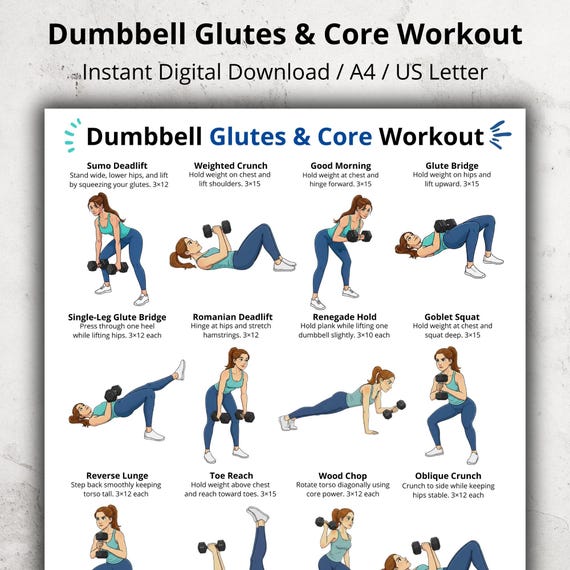
Ready for more challenge? Here’s a routine for those with experience:
Intermediate/advanced Routine
- Hip thrust (weighted) – 15 reps
- Bulgarian split squat – 12 reps each leg
- Romanian deadlift – 10 reps
- Hanging knee raise – 12 reps
- Russian twist (weighted) – 20 reps
- Plank – 45 seconds
Rest 45-60 seconds between moves. Do 3 rounds.
Practical advice: Try “supersets”—pair two exercises with no rest between. Example: hip thrust + plank.
Credit: www.etsy.com
Glute And Ab Workout For Women Vs Men
Both men and women benefit from glute and ab training. But goals and muscle response can differ.
| Group | Common Goals | Muscle Response | Training Tips |
|---|---|---|---|
| Women | Shape, tone, strength | Often build endurance faster | Use higher reps, focus on form |
| Men | Strength, size, power | Build muscle size more quickly | Add weight, lower reps for strength |
Non-obvious tip: Women often have stronger glute endurance, while men usually build muscle size faster. But everyone should train for both strength and endurance.
How To Stay Motivated
Consistency is the hardest part. Try these ideas:
- Set clear goals: “I want to do 20 hip thrusts with a 40-pound weight” is better than “I want strong glutes.”
- Track progress: Use a journal or app.
- Find a workout buddy: Training with a friend boosts motivation.
- Change your routine: Try new exercises every month.
- Reward yourself: Celebrate small wins. Buy new workout gear or enjoy a healthy treat.
Practical advice: Motivation comes and goes. Discipline and habit are stronger. Set a schedule—even when you don’t feel like it.
Glute And Ab Workout Myths
Don’t fall for these common myths:
- “Spot reduction works”: You can’t burn fat from just your abs or glutes. Fat loss comes from whole-body calorie burning.
- “Heavy weights make you bulky”: Lifting heavy improves strength and shape. Bulking up takes years and special diets.
- “Crunches alone give a six-pack”: Ab shape is about training all core muscles and lowering body fat.
- “Glute exercises are only for women”: Men benefit too. Strong glutes help with sports, lifting, and injury prevention.
Injury Prevention And Safety
Always put safety first. Here’s how:
- Warm up properly: Get blood flowing and muscles ready.
- Use good form: If unsure, ask a coach or watch videos.
- Listen to your body: Sharp pain is a warning sign. Stop and check.
- Don’t rush progress: Build up weights and difficulty slowly.
- Cool down: Stretch after each workout.
Practical tip: If you injure yourself, rest and seek advice. Don’t try to “push through” pain.
Credit: www.afvt.org
Glute And Ab Training For Different Ages
Glute and ab workouts fit all ages, but the approach changes:
- Teens: Focus on form and bodyweight exercises. Don’t rush into heavy weights.
- Adults: Add resistance, train regularly, mix exercises.
- Older adults: Use safe, slow movements. Focus on stability and balance. Avoid high-impact jumps.
Non-obvious insight: Glute strength helps prevent falls in older adults, while core stability reduces back pain.
Combining Glute And Ab Training With Other Fitness Goals
You don’t need to train glutes and abs alone. Combine them with cardio, flexibility, or sport-specific training:
- Cardio: Add sprints, cycling, or HIIT for fat loss.
- Flexibility: Stretch regularly to keep muscles loose.
- Sports: Glute and ab strength boost performance in running, jumping, and lifting.
Practical advice: Mix glute and ab workouts into your weekly plan. Example: Monday (glutes/abs), Wednesday (cardio), Friday (full body).
Real-world Example: Progress Story
Jessica, a busy office worker, struggled with lower back pain. She started doing glute bridges and planks at home, three times a week. After eight weeks, she noticed stronger hips, better posture, and her back pain improved. She added hip thrusts and dead bugs, increased the difficulty, and now enjoys running and hiking without pain.
Non-obvious insight: Small steps add up. Even 10 minutes a day can change how you feel and move.
Additional Resources
If you want more science-backed information on glute and ab training, check out this research summary from NCBI.
Frequently Asked Questions
How Many Times Per Week Should I Train Glutes And Abs?
Aim for 2–3 sessions per week. This gives your muscles time to recover and grow. Training every day can lead to fatigue and injury. If you feel sore, add an extra rest day.
Can I Do Glute And Ab Workouts At Home Without Equipment?
Yes. Many effective exercises need only your bodyweight, such as glute bridges, planks, and clamshells. Resistance bands can add challenge if you want more. Start simple and focus on form.
How Long Does It Take To See Results From Glute And Ab Workouts?
Most people notice strength and shape changes in 4–8 weeks if they train consistently and eat well. Visible results depend on your starting point and body fat levels. Progress photos and measurements help track changes.
Should I Train Glutes And Abs Together Or On Separate Days?
Training together is convenient and efficient. Both muscle groups help with stability and movement. If you want to focus on each, split them into different days (e. g. , glutes on Monday, abs on Wednesday).
What Should I Do If I Feel Pain During Glute Or Ab Exercises?
Stop the exercise and check your form. Pain may mean you are doing the movement incorrectly or pushing too hard. If pain continues, rest and seek advice from a coach or medical professional.
Building strong glutes and abs helps your whole body move better, prevents injuries, and improves confidence. With the right routine, nutrition, and mindset, you’ll see progress. Start slow, stay consistent, and celebrate every step forward.
