

Can You Workout Triceps And Chest Together for Maximum Gains?
Can You Workout Triceps And Chest
Many people who want to build a strong upper body wonder if they can train their triceps and chest together. Both muscles are important for strength, shape, and performance. But is it smart to work them on the same day? Will you get better results, or could you risk overtraining? This guide will answer all your questions, including practical advice, workout examples, science-backed tips, and common mistakes. Whether you are a beginner or someone with experience, you will learn how to make your workouts more effective and safer.
Understanding Triceps And Chest Muscles
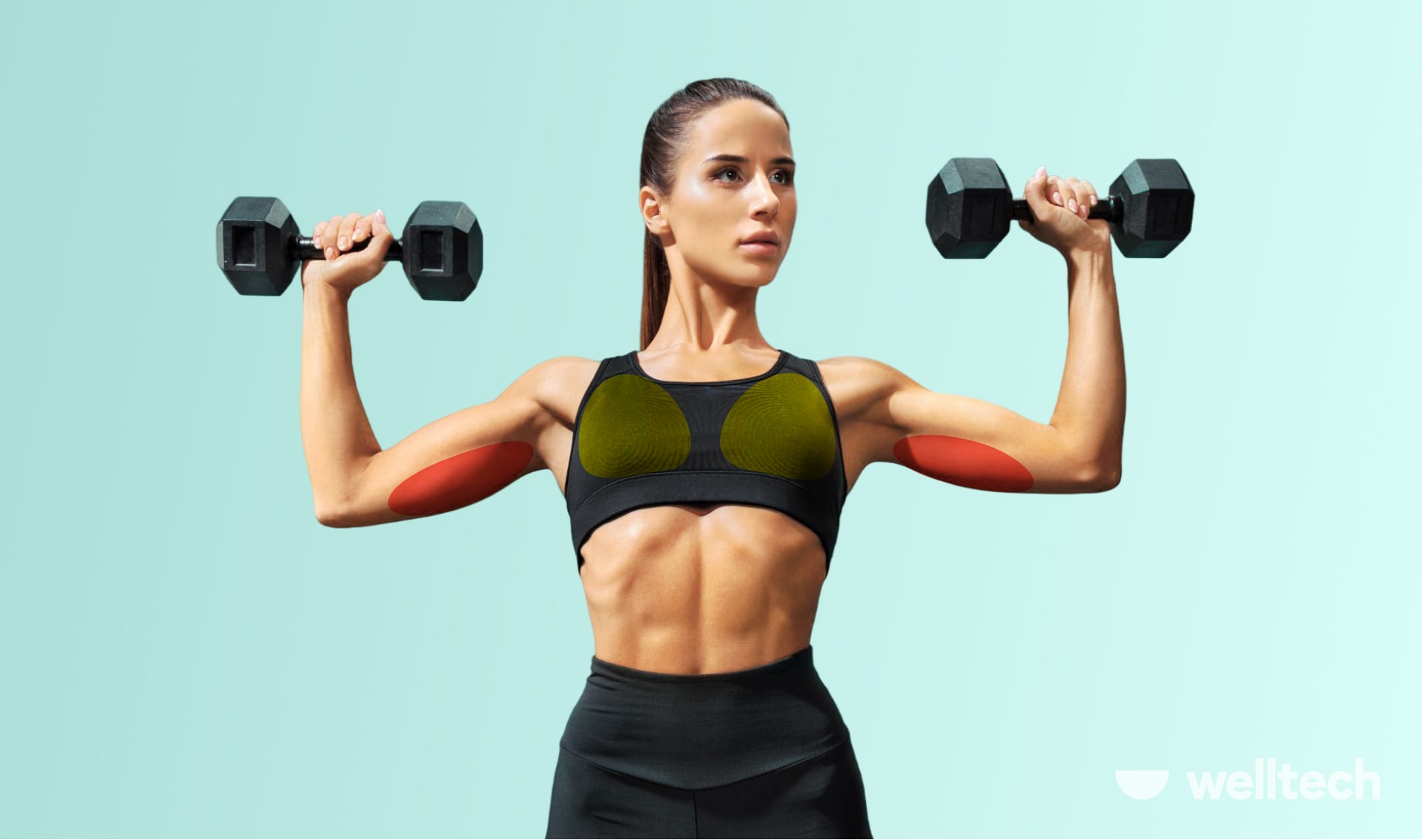
The triceps are located on the back of your upper arm. They help you extend your elbow, push, and stabilize your arm. The chest, mainly the pectoral muscles, sit on the front of your upper body and are responsible for pushing movements and bringing your arms together. Together, these muscles are used in many daily actions, from pushing a door to lifting heavy objects.
Chest muscles include:
- Pectoralis major (large, main chest muscle)
- Pectoralis minor (smaller, underneath the major)
Triceps muscles include:
- Long head
- Lateral head
- Medial head
Many chest exercises, like the bench press or push-ups, also use the triceps. That’s why training them together seems logical. But you need to understand how they work, how they recover, and how to maximize your results.
Should You Train Triceps And Chest Together?
You can absolutely train triceps and chest in the same workout. In fact, many fitness coaches recommend it. Here’s why:
- Synergy: When you perform chest exercises (like bench press), your triceps are already working. Training them together saves time and boosts efficiency.
- Recovery: Grouping these muscles allows other muscle groups (like back and legs) to rest, so you can train more often.
- Strength Gains: Working chest and triceps together can help you lift heavier weights, since both muscles assist each other.
However, there are some downsides:
- Fatigue: If you train chest first, your triceps may be tired when you start direct triceps exercises.
- Overtraining: Doing too many sets for both muscles on the same day can lead to slow recovery or injury.
The key is balance. You need to plan your workout so you don’t overwork your muscles.
Benefits Of Training Triceps And Chest Together
Combining chest and triceps in one session has clear advantages:
- Time efficiency: You save time by training muscles that work together.
- Better pump: Blood flows to both areas, helping you feel stronger and more energized.
- Improved muscle growth: When both muscles are worked, they get a strong signal to grow.
- Smoother recovery: You can rest both muscles on other days, allowing for better recovery.
Some research shows that pairing muscle groups leads to faster progress. For example, a study found that muscle groups trained together had more growth compared to random training.
How To Structure A Chest And Triceps Workout
To make your workout effective, follow a clear structure:
- Start with compound chest exercises (these use both chest and triceps).
- Move to isolation triceps exercises (these focus only on triceps).
- Finish with stretching and cool-down.
Sample Chest And Triceps Workout
Here’s an example workout plan for beginners and intermediate lifters:
- Bench Press: 4 sets x 8 reps
- Incline Dumbbell Press: 3 sets x 10 reps
- Chest Dips: 3 sets x 10 reps
- Triceps Pushdown: 3 sets x 12 reps
- Overhead Triceps Extension: 3 sets x 12 reps
Rest 60–90 seconds between sets.
Advanced Routine Example
For advanced lifters, here’s a more challenging plan:
- Barbell Bench Press: 5 sets x 6 reps
- Incline Barbell Press: 4 sets x 8 reps
- Cable Flyes: 3 sets x 12 reps
- Weighted Dips: 4 sets x 8 reps
- Skull Crushers: 4 sets x 10 reps
- Close-Grip Bench Press: 3 sets x 8 reps
Rest 90–120 seconds between sets.
Choosing The Right Exercises
Selecting the right exercises is essential for progress. Here’s a breakdown of common chest and triceps exercises.
| Exercise | Main Muscle | Type | Equipment |
|---|---|---|---|
| Bench Press | Chest + Triceps | Compound | Barbell |
| Push-Ups | Chest + Triceps | Compound | Bodyweight |
| Chest Flyes | Chest | Isolation | Dumbbell/Cable |
| Triceps Pushdown | Triceps | Isolation | Cable |
| Skull Crushers | Triceps | Isolation | Barbell/Dumbbell |
| Dips | Chest + Triceps | Compound | Bodyweight |
Compound exercises work several muscles at once. Isolation exercises focus on one muscle. For chest and triceps, start with compound moves, then finish with isolation.
How Many Sets And Reps Should You Do?
The right number of sets and reps depends on your goals:
- Muscle Growth (Hypertrophy): 8–12 reps per set, 3–5 sets per exercise
- Strength: 4–6 reps per set, 4–6 sets per exercise
- Endurance: 15–20 reps per set, 2–3 sets per exercise
Beginners should aim for 3 sets of 8–12 reps per exercise. Advanced lifters can do more sets, but must watch for overtraining.
Weekly Volume Example
Let’s compare weekly training volume for chest and triceps:
| Experience Level | Chest Sets/Week | Triceps Sets/Week | Frequency |
|---|---|---|---|
| Beginner | 9–12 | 6–9 | 2–3 sessions |
| Intermediate | 12–16 | 9–12 | 2–4 sessions |
| Advanced | 16–20 | 12–16 | 3–5 sessions |
Too many sets can cause fatigue and slow progress. Listen to your body and adjust if you feel tired or sore.
Rest And Recovery: Why It Matters
Muscles need time to recover after a workout. When you train chest and triceps together, both need at least 48 hours to rest before being trained again. Without enough rest, you risk overtraining, which can lead to injuries, soreness, or poor results.
- Sleep: Aim for 7–9 hours per night.
- Nutrition: Eat enough protein (1.2–2 grams per kg of body weight) to help muscles repair.
- Hydration: Drink water before, during, and after your workout.
If you feel tired, weak, or have sore muscles, take an extra day off. Recovery is as important as training.
Common Mistakes When Training Chest And Triceps Together
Avoid these frequent mistakes to get better results:
- Overlapping exercises: Doing too many similar movements can tire your triceps before isolation work.
- Ignoring warm-up: Skipping warm-up increases risk of injury.
- Poor technique: Bad form reduces effectiveness and can hurt your joints.
- Too many sets: Doing more than your body can handle slows progress.
- Neglecting other muscles: Only training chest and triceps may cause imbalance. Work your back and legs too.
Many beginners also forget to stretch after their workout. Stretching helps reduce soreness and improves flexibility.
How To Warm Up For Chest And Triceps Workouts
A good warm-up prepares your muscles and joints for hard work. Try this simple routine:
- Arm circles: 1 minute
- Push-ups: 2 sets of 10 reps
- Light bench press or dumbbell press: 1–2 sets of 10 reps (using very light weights)
- Triceps extensions with light weight: 1 set of 15 reps
Focus on increasing blood flow and mobility. Warm-up can reduce injuries and make your workout more effective.
Should You Train Chest Or Triceps First?
Most people start with chest exercises. Here’s why:
- Chest exercises are usually heavier and require more energy.
- Triceps assist in chest movements. If you train triceps first, they may be too tired for chest exercises.
If your main goal is bigger triceps, consider starting with triceps once a week. Otherwise, chest first is best for most people.
Training Frequency: How Often Should You Workout Chest And Triceps?
You can train chest and triceps together 1–3 times per week. Here are some examples:
- Beginners: 1–2 times per week
- Intermediate: 2–3 times per week
- Advanced: Up to 3 times per week, but with different intensity
Remember, more is not always better. If you feel sore or weak, reduce frequency.
Example Weekly Chest And Triceps Workout Plan
Here’s a sample weekly routine:
Day 1 (Chest + Triceps)
- Bench Press: 4 x 8
- Incline Dumbbell Press: 3 x 10
- Triceps Pushdown: 3 x 12
- Overhead Triceps Extension: 3 x 12
Day 2 (Back + Biceps)
- Pull-ups: 4 x 8
- Barbell Row: 3 x 10
- Biceps Curl: 3 x 12
Day 3 (Rest)
Day 4 (Chest + Triceps)
- Weighted Dips: 4 x 8
- Cable Flyes: 3 x 12
- Skull Crushers: 3 x 10
- Close-Grip Bench Press: 3 x 8
Day 5 (Legs)
- Squat: 4 x 8
- Leg Press: 3 x 10
- Calf Raise: 3 x 15
Day 6 (Rest or Cardio)
Day 7 (Rest)
This plan allows enough time for recovery and trains all major muscle groups.

Credit: toneopfit.com
How To Progress Over Time
Improvement comes from increasing difficulty over time. This is called progressive overload. Here’s how you can progress:
- Increase weight gradually
- Add extra sets or reps
- Improve technique
- Reduce rest time between sets
Track your workouts in a notebook or app. Aim to make small improvements every week.
Chest And Triceps Training For Women
Women can train chest and triceps just like men. Building these muscles improves strength, shape, and confidence. Don’t worry about getting too bulky; women naturally build muscle slower.
Benefits for women include:
- Better posture
- Stronger arms
- Improved athletic performance
Women should follow the same routines, but adjust weights and volume as needed.
Can You Workout Chest And Triceps If You’re Older?
Age is not a barrier. Older adults can safely train chest and triceps, but should be careful:
- Use lighter weights at first
- Focus on good form
- Warm up longer
- Rest more between sets
Strength training can help older adults maintain muscle, bone health, and independence.
Nutrition Tips For Chest And Triceps Growth
Muscle growth depends on training and eating well. Here are simple nutrition tips:
- Eat protein with every meal (chicken, fish, eggs, beans)
- Include healthy carbs (rice, oats, potatoes)
- Get healthy fats (avocado, nuts, olive oil)
- Drink water often
Aim for a protein intake of 1.2–2 grams per kg of body weight. After workouts, eat a meal with protein and carbs within 2 hours.
Credit: welltech.com
Signs You Should Change Your Chest And Triceps Workout
Sometimes, your routine stops working. Look for these signs:
- No strength or muscle gains
- Feeling bored or unmotivated
- Always tired or sore
- Stalled progress for weeks
Change your exercises, sets, reps, or try new equipment. Keep your workouts fresh.
Advanced Techniques For Chest And Triceps
Once you master basics, try advanced methods:
- Supersets: Doing two exercises back-to-back with no rest
- Drop sets: Doing an exercise, then reducing the weight and continuing
- Rest-pause: Doing as many reps as possible, resting briefly, then repeating
These methods increase intensity and can boost results.
How To Avoid Injury
Injury is common if you don’t train carefully. Protect yourself by:
- Using good form
- Starting with light weights
- Warming up
- Not rushing your reps
- Stretching after workout
If you feel pain (not soreness), stop immediately. Get advice from a coach or doctor if needed.
Science Behind Training Chest And Triceps Together
Research shows muscles grow when they are challenged and allowed to recover. Training chest and triceps together is effective because:
- Both muscles are used in pushing exercises
- Grouping them reduces overlap and speeds recovery
- You can train other muscle groups on different days
For more scientific details, see the National Institutes of Health.
Comparing Chest And Triceps Training With Other Muscle Pairings
How does chest and triceps training compare to other combinations, like chest and biceps or back and triceps?
| Muscle Pairing | Exercise Overlap | Recovery Time | Suitability |
|---|---|---|---|
| Chest + Triceps | High | 48–72 hours | Efficient |
| Chest + Biceps | Low | 48–72 hours | Less efficient |
| Back + Triceps | Medium | 48–72 hours | Good for variety |
| Back + Biceps | High | 48–72 hours | Efficient |
Chest and triceps is a smart pairing because both are used in pushing movements.
Two Non-obvious Insights For Better Results
- Order matters more than you think: If you always do chest first, your triceps may never reach their full potential. Try switching the order once a week to boost triceps growth.
- Mind-muscle connection: Focusing on feeling the muscle work during each rep (not just moving weight) can double your results. This is proven by studies showing better growth when you focus on the muscle.
Tracking Progress: How To Know You’re Improving
Keep a simple log of:
- Weight lifted
- Sets and reps
- How you feel during and after workout
If numbers go up and you feel stronger, you’re progressing. If not, change your routine or increase rest.
Frequently Asked Questions
Can I Train Chest And Triceps Two Days In A Row?
It’s best to avoid training the same muscles two days in a row. Muscles need at least 48 hours to recover. Training again too soon can lead to poor results and increase injury risk.
What Should I Eat After A Chest And Triceps Workout?
After your workout, eat a meal with protein (like chicken or eggs) and carbohydrates (like rice or potatoes). This helps repair muscles and restore energy. Drinking water is also important.
Is It Okay To Train Chest And Triceps If I Am Sore?
If you are mildly sore, you can train, but use lighter weights and fewer sets. If you are very sore or feel pain, rest until you recover. Training while sore can cause injury.
How Do I Avoid Overtraining Chest And Triceps?
To avoid overtraining, limit your weekly sets, rest at least 48 hours between sessions, sleep well, and eat enough food. Listen to your body and stop if you feel tired or weak.
Can Beginners Train Chest And Triceps Together?
Yes, beginners can safely train chest and triceps together. Start with basic exercises, use light weights, and focus on good form. Increase weight and sets slowly as you gain experience.
Building a strong upper body takes time, planning, and patience. Training chest and triceps together is not only possible, but highly effective for most people. By using smart routines, proper rest, and good nutrition, you can make steady progress and enjoy better strength, shape, and health. Remember, listen to your body, change your routine when needed, and focus on quality over quantity. With the right approach, you’ll see results and avoid common mistakes.

Credit: www.vbafitness.com
