

Body Weight Glute Workout: Sculpt Stronger Glutes Anywhere
Body Weight Glute Workout: Build Stronger Glutes Anywhere
Many people want stronger glutes for better health, sports, and appearance. But not everyone has access to a gym or heavy weights. The good news? You can build and shape your glutes using only your body weight. This approach does not require fancy equipment, and you can do it at home, in the park, or while traveling.
Why focus on glutes? The gluteal muscles are the largest in your body. They help you walk, run, climb stairs, and even stand up straight. Weak glutes can cause back pain, poor posture, and slow athletic progress. A well-designed body weight workout can wake up these muscles, making them stronger and rounder over time.
This article will guide you through everything you need: the science of glute training, the most effective body weight exercises, how to structure your routine, and how to get the best results. You’ll also discover practical tips, common mistakes, and a FAQ section to answer your top questions.
Understanding Your Glutes
Before jumping into exercises, it’s important to know what you’re training.
The glutes are made of three main muscles:
- Gluteus maximus: The largest, responsible for hip extension and power.
- Gluteus medius: Located on the side, helps with hip stability and leg movement.
- Gluteus minimus: The smallest, assists in hip stabilization.
Each muscle has its role, and a good workout activates all three. If you only focus on one, you’ll miss out on full strength and shape.
Why Body Weight Training Works
Some people think only heavy weights can build muscle. In reality, body weight exercises can be very effective, especially for the glutes. Here’s why:
- High repetitions: Without weights, you can do more reps to reach muscle fatigue.
- Better form: No heavy load means less risk of bad technique.
- More control: You learn to squeeze and activate the right muscles.
- Versatility: You can adjust exercises to make them harder or easier.
Benefits Of Body Weight Glute Workouts
Body weight glute workouts offer unique advantages. Here’s why you should consider them:
- No equipment needed: Save money and space.
- Accessible for all levels: Beginners and advanced athletes can adjust intensity.
- Can be done anywhere: Home, park, hotel room—no excuses.
- Improve daily movement: Strong glutes help you stand, walk, and lift safely.
- Reduce injury risk: Balanced glutes protect your knees and lower back.
- Boost athletic performance: Faster sprints, higher jumps, and better agility.
A surprising benefit is that body weight training often improves mind-muscle connection. You learn to feel your glutes working, which many people miss when rushing through gym exercises.
Key Body Weight Glute Exercises
Let’s dive into the most effective body weight exercises for your glutes. Each one targets the muscles in a slightly different way. This variety helps you build a well-rounded, strong backside.
1. Glute Bridge
The glute bridge is a classic for a reason. It’s simple, but very effective.
How to do it:
- Lie on your back with knees bent, feet flat on the floor, hip-width apart.
- Push through your heels to lift your hips up. Squeeze your glutes at the top.
- Lower back down slowly.
Tips: Do not over-arch your back. Pause at the top for extra muscle activation.
Common mistake: Using your lower back instead of your glutes. Focus on pushing through your heels.
2. Single-leg Glute Bridge
This version increases the difficulty and adds balance work.
How to do it:
- Start as above, but lift one foot off the ground.
- Push through the heel of the planted foot to lift your hips.
- Lower and repeat, then switch sides.
Tip: Keep your hips level. Do not let one side drop.
3. Hip Thrust (body Weight)
Similar to the bridge but with your upper back on a chair or bench. This increases the range of motion.
How to do it:
- Sit with your upper back on a bench, knees bent.
- Feet flat, push hips up until your body forms a straight line.
- Squeeze glutes at the top, then lower hips down.
Insight: The hip thrust allows for a deeper stretch and stronger contraction compared to a glute bridge.
4. Donkey Kicks
This exercise isolates the glutes and builds endurance.
How to do it:
- Start on all fours, hands under shoulders, knees under hips.
- Lift one leg behind you, knee bent at 90 degrees.
- Push your foot toward the ceiling, squeezing your glute.
Tip: Keep your back flat. Do not twist your hips.
5. Fire Hydrants
Targets the side glutes and helps with hip stability.
How to do it:
- Same starting position as donkey kicks.
- Lift one knee out to the side, keeping it bent.
- Lower and repeat.
Practical tip: Move slowly and control the motion.
6. Bulgarian Split Squat
This is a single-leg squat with your back foot on a chair or bench.
How to do it:
- Stand in front of a chair, place one foot behind you on the seat.
- Lower your back knee toward the ground, front knee over ankle.
- Push through the front heel to stand up.
Common mistake: Letting your knee go past your toes. Keep your torso upright.
7. Step-ups
A great way to build glute strength and coordination.
How to do it:
- Stand in front of a sturdy chair or bench.
- Step one foot onto the chair, press through your heel to lift your body.
- Lower and repeat on the other side.
Tip: Avoid pushing off with your back leg.
8. Curtsy Lunge
Works the glutes in a unique sideways angle.
How to do it:
- Stand tall, step one leg behind and across your body.
- Bend both knees, lowering your body.
- Push up to starting position and switch sides.
Insight: This move also strengthens your outer thighs and hips.
9. Clamshells
Targets the side glutes and helps with knee health.
How to do it:
- Lie on your side, knees bent, feet together.
- Keeping feet touching, open your top knee as high as possible.
- Lower and repeat, then switch sides.
Tip: Do not roll your hips back.
10. Frog Pumps
Similar to a glute bridge but with feet together and knees out.
How to do it:
- Lie on your back, knees bent, soles of feet touching.
- Push hips up, squeezing glutes.
- Lower and repeat.
Tip: Focus on controlled movement, not speed.
11. Reverse Lunge
A lunge variation that is easier on the knees.
How to do it:
- Stand tall, step one leg back, lowering your knee toward the floor.
- Front knee stays over ankle.
- Push through the front heel to return.
Non-obvious insight: Slowing down the descent increases glute activation.
12. Squat Variations
Squats are a foundation movement. You can adjust foot position to hit different parts of the glutes.
- Body weight squat: Feet shoulder-width, lower hips back and down.
- Sumo squat: Wider stance, toes out. Hits inner and outer glutes.
Tip: Go as low as comfortable without rounding your back.
13. Lateral Band Walks (optional)
If you have a mini resistance band, place it above your knees and step side to side. This is not strictly body weight, but a great addition.
How To Structure A Body Weight Glute Workout
Knowing the exercises is half the battle. The next step is building a routine that delivers results.
Warm-up (5–10 Minutes)
Warming up is essential to avoid injury and improve performance. Try:
- Light cardio (jumping jacks, jogging in place)
- Dynamic stretches (leg swings, hip circles)
- Glute activation moves (body weight bridges, clamshells)
Sample Glute Workout Routine
Here’s a sample workout you can do 2–3 times per week. Adjust sets and reps based on your level.
| Exercise | Sets | Reps |
|---|---|---|
| Glute Bridge | 3 | 15–20 |
| Donkey Kicks (each leg) | 3 | 12–15 |
| Fire Hydrants (each leg) | 3 | 12–15 |
| Bulgarian Split Squat (each leg) | 3 | 10–12 |
| Curtsy Lunge (each leg) | 2 | 12–15 |
| Clamshells (each side) | 2 | 15–20 |
Rest 30–60 seconds between sets. As you get stronger, increase the reps or add another set.
Progression: How To Keep Challenging Your Glutes
Your body adapts quickly. To keep growing, you need to make exercises harder over time—a principle called progressive overload.
Ways to progress without weights:
- Increase repetitions or sets
- Slow down the lowering phase (eccentric)
- Pause at the hardest point (for example, hold the top of the bridge)
- Try single-leg versions
- Add resistance bands if available
Here’s a comparison of progression options:
| Method | Effect | When to Use |
|---|---|---|
| Higher reps | More endurance, muscle pump | When 15 reps feels easy |
| Single-leg moves | More strength, balance | After mastering two-leg basics |
| Slower tempo | Increased tension, better control | To improve muscle focus |
| Bands | Extra resistance | When body weight is not enough |
Non-obvious tip: Sometimes, just focusing on “squeezing” your glutes harder can increase intensity, even without changing the exercise.
How Often To Train Glutes
For most people, 2–3 workouts per week is enough. Muscles need time to recover and grow. If you’re sore, give your glutes a break before the next session.
The Science Behind Glute Growth (without Weights)
You might wonder: can you really grow your glutes without lifting heavy?
Research shows: Muscle growth depends on reaching “muscle fatigue”—not just lifting heavy. High-repetition body weight exercises can create enough tension for muscle growth, especially for glutes.
A study published in the *Journal of Applied Physiology* found that training to failure (doing reps until you cannot do more) with light resistance can build as much muscle as heavy loads, if the volume is high enough.
Muscle activation is also higher when you focus on glute contraction. Many people accidentally use their thighs or back instead. Practicing the “mind-muscle connection” is key.
Takeaway: Body weight glute exercises, done with enough intensity and focus, can absolutely build a stronger, rounder backside.
Common Mistakes In Body Weight Glute Training
Even simple exercises lose their power if done wrong. Here are mistakes to avoid:
- Not feeling the glutes: If you feel your thighs or back more, adjust your form.
- Rushing reps: Quality beats quantity. Slow down and squeeze.
- Skipping single-leg work: These moves build balance and power.
- Neglecting variety: Use different angles and movements to hit all glute muscles.
- Overtraining: More is not always better. Muscles need time to recover.
- Ignoring warm-up: Cold muscles are more likely to get injured.
Pro tip: Record yourself or use a mirror to check your form.
How To Activate Your Glutes More
Many people have “sleepy glutes”—they don’t work as hard as they should. This is common if you sit a lot during the day.
To wake them up:
- Do activation drills: Bridges, clamshells, and band walks before your main workout.
- Practice squeezing: At the top of each move, hold and squeeze your glutes for 1–2 seconds.
- Think about your glutes: Imagine them working as you move.
Non-obvious insight: Sometimes, changing your foot position (for example, pointing your toes outward or inward) can help you “feel” your glutes more. Experiment to find what works for your body.
How Body Weight Glute Workouts Compare To Weight Training
Some people worry that body weight is not enough compared to gym workouts. Here’s a balanced look:
| Body Weight | Weights |
|---|---|
| Accessible anywhere | Requires equipment/gym |
| Lower injury risk | Higher injury risk if form is poor |
| Great for beginners/intermediate | Better for advanced muscle gain |
| Improves control and stability | Can build muscle faster with heavy loads |
| Less joint stress | More joint stress possible |
For most people, body weight training can deliver excellent results, especially for glute strength and function. Advanced athletes may add weights later for even more growth.
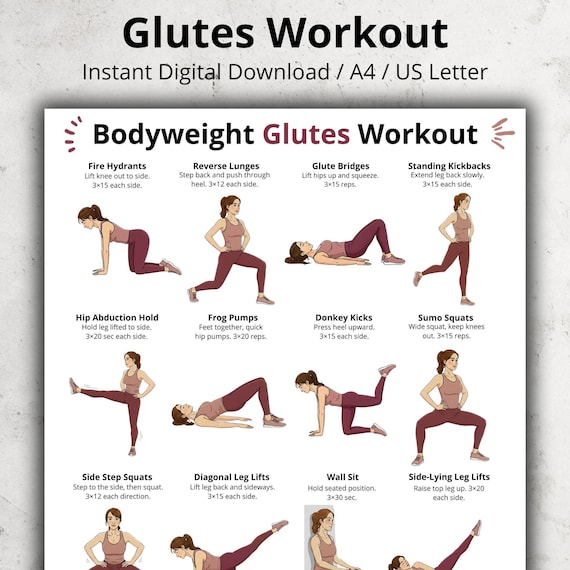
Credit: www.afvt.org
Practical Tips For Faster Glute Results
To get the most from your body weight glute workouts, follow these tips:
- Consistency is key: Stick to your routine for at least 8–12 weeks before judging results.
- Eat enough protein: Muscles need protein to grow. Try to include a source of protein at each meal.
- Get enough sleep: Muscles recover and grow during rest.
- Track your progress: Write down sets, reps, and how each exercise feels. Increase numbers over time.
- Stay hydrated: Water helps with muscle recovery and performance.
Extra tip: If you hit a plateau, change your routine—try new exercises, adjust tempo, or add a resistance band.
Who Should Do Body Weight Glute Workouts?
Body weight glute workouts are for everyone:
- Beginners: Learn correct form and build a foundation.
- Busy people: No time for the gym? Do a quick session at home.
- Travelers: Stay fit on the road.
- Athletes: Use as warm-up or for injury prevention.
- Older adults: Low-impact and joint-friendly.
People with knee or back problems can often do glute bridges and clamshells safely, but always check with your healthcare provider first.
How To Combine Glute Workouts With Other Training
If you do other workouts (running, cycling, sports), you can add glute sessions 2–3 times per week. If you lift weights, use body weight glute work as a warm-up or “finisher” to ensure full muscle activation.
Tip: Don’t train glutes hard the day before a big run or leg workout, to avoid soreness.
How Long Does It Take To See Results?
This is a common question. Most people notice a difference in 4–8 weeks with consistent effort. Your glutes will feel firmer, and you may see more shape. Visible growth takes longer and depends on genetics, diet, and how hard you train.
Insight: Progress is not always visible at first. Pay attention to how your glutes feel during daily activities—climbing stairs, standing up, or running.
Stretching And Cool-down
After your workout, take 5–10 minutes to stretch the glutes and surrounding muscles. This helps with recovery and flexibility.
Good stretches include:
- Seated figure-four stretch
- Standing quad stretch
- Pigeon pose
- Hip flexor stretch
Hold each stretch for 20–30 seconds. Do not bounce.
Real-world Example: Glute Workout For Busy People
Let’s say you only have 20 minutes. Here’s a quick routine:
- 2 minutes of light cardio (jog in place)
- 2 sets of glute bridges (20 reps)
- 2 sets of donkey kicks per leg (15 reps)
- 2 sets of Bulgarian split squats per leg (10 reps)
- 2 sets of fire hydrants per leg (12 reps)
- 1 set of frog pumps (20 reps)
- Stretch for 3 minutes
Even this short routine, done 3 times per week, can make a big difference over time.
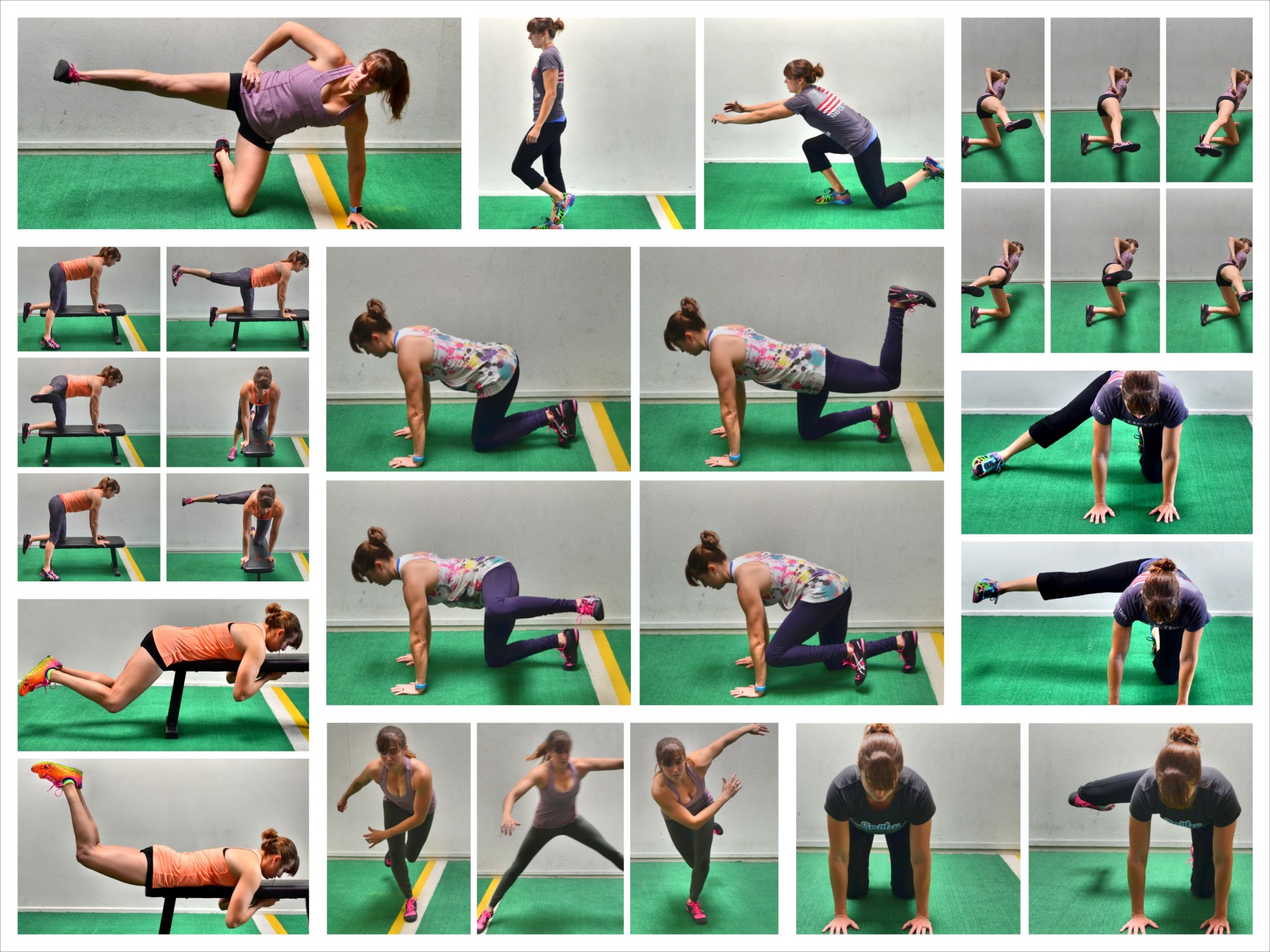
Credit: redefiningstrength.com
When To Add Resistance Bands Or Weights
If you feel your body weight routine is too easy, add a mini band above your knees for extra resistance. This is a cheap and easy way to increase difficulty without going to the gym.
For advanced lifters, adding dumbbells, barbells, or a weighted backpack can further increase glute growth. But this is not required for most people to see results.
Glute Workout Myths
Let’s clear up some common myths:
- Myth: You must lift heavy to build glutes.
- Fact: High-repetition body weight training can also build muscle, especially for beginners and intermediates.
- Myth: Squats are enough for glutes.
- Fact: Squats mostly work your thighs unless you use special form and range of motion. Hip thrusts and bridges are better for glutes.
- Myth: Glute workouts will make you bulky.
- Fact: Most people see firmer, rounder glutes, not bulk.
For more on glute science, check out this Wikipedia article.
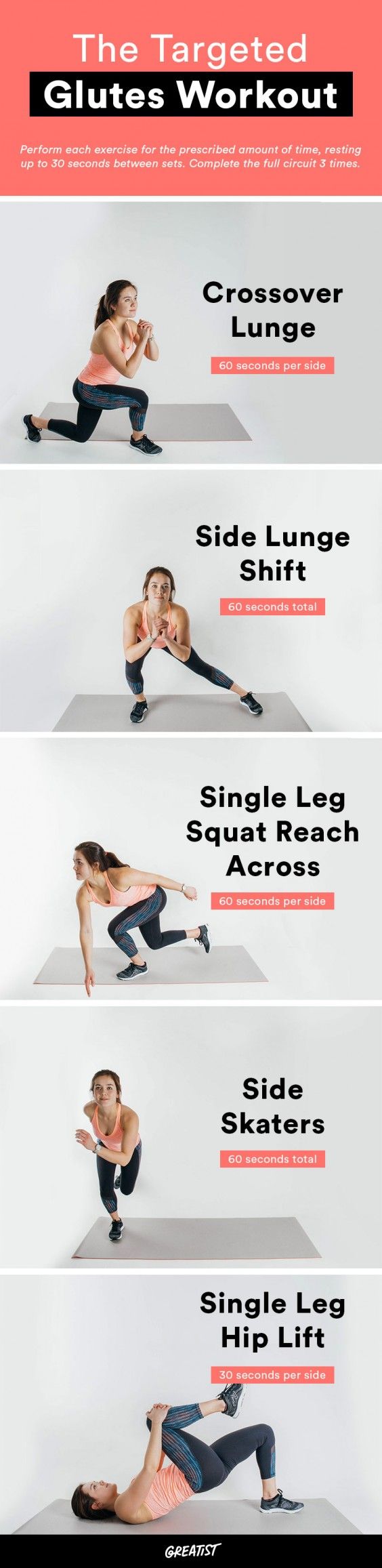
Credit: greatist.com
Frequently Asked Questions
How Many Times A Week Should I Do Body Weight Glute Workouts?
2–3 times per week is enough for most people. Make sure you allow at least one day of rest between sessions for muscle recovery and growth.
How Long Does It Take To See Changes In My Glutes?
Most people feel stronger and see some change in 4–8 weeks with consistent training and good nutrition. Visible growth takes longer and depends on genetics, effort, and diet.
Can I Build Big Glutes With Only Body Weight Exercises?
Yes, especially if you are a beginner or intermediate. The key is to train with enough intensity and reach muscle fatigue in each set. As you progress, you may need to add single-leg moves, bands, or more advanced variations.
Should I Do All Glute Exercises In One Session Or Split Them?
You can do all in one session or split them over several days. The important thing is to hit your glutes from different angles each week for best results.
What Should I Do If I Only Feel My Thighs During Glute Exercises?
Check your form, slow down the movement, and focus on squeezing your glutes. Sometimes, moving your feet or changing the angle helps. Try activation drills before your main workout to “wake up” your glutes.
A strong, balanced body starts with strong glutes. With the right body weight exercises, consistency, and attention to form, you can build better glutes—no gym required. Your future self will thank you for the effort you put in today.
