

Best Tricep Workout at Home: Build Strong Arms Fast
Best Tricep Workout At Home
Building strong, defined triceps does not require an expensive gym membership or complex machines. In fact, some of the most effective tricep exercises can be done in your living room, using just your body weight or simple equipment like dumbbells or resistance bands. The triceps make up about two-thirds of your upper arm size, so working them regularly at home will help you achieve toned and powerful arms. Many people focus on the biceps, but strong triceps are essential for pushing strength, daily movements, and injury prevention.
This guide will show you how to get the best tricep workout at home, no matter your starting point. You’ll discover exercises for all levels, how to create an effective routine, common mistakes to avoid, and tips to maximize your results.
Whether you have no equipment, a pair of dumbbells, or resistance bands, these home tricep workouts will help you build muscle and strength efficiently.
Why Train Triceps At Home?
Training triceps at home offers several unique benefits. First, it saves time—no need to travel to a gym. You can fit in a workout anytime, even with a busy schedule. Second, home workouts can be adjusted to your fitness level and available equipment.
You can progress from simple bodyweight moves to advanced exercises using household objects or minimal gear.
Another advantage is privacy. Many people feel self-conscious performing new movements in public gyms. At home, you can practice until you master proper form, which is crucial for safety and results. Finally, training at home teaches you to use your own body weight effectively, building functional strength that translates to daily activities.
Understanding The Triceps Muscle
Before starting any workout, it helps to understand the muscle you’re targeting. The triceps brachii is a three-headed muscle on the back of your upper arm. Its main job is to extend the elbow—straightening your arm from a bent position. This action is used in pushing, reaching, and even supporting your body weight.
The triceps has three parts:
- Long head (runs along the back of your arm)
- Lateral head (outer side, adds arm width)
- Medial head (deeper, close to the elbow)
A good home tricep workout will target all three heads, helping you build balanced strength and visible definition. Different angles and grips can emphasize different heads, which is why variety is important in your routine.

Credit: www.youtube.com
Key Principles For Effective Tricep Workouts At Home
To get the most from your home tricep workouts, keep these principles in mind:
- Progressive Overload: Your muscles grow when you challenge them with increasing resistance or volume. This means adding reps, sets, or using heavier objects over time.
- Proper Form: Focus on quality, not just quantity. Using correct technique protects your joints and ensures the triceps do the work.
- Full Range of Motion: Lower and raise your arms fully in each rep. Half-reps limit muscle growth.
- Rest and Recovery: Muscles need time to repair and grow. Give your triceps at least 48 hours between tough workouts.
- Variety: Mix up exercises to hit all parts of the triceps and prevent plateaus.
Common Myths About Tricep Training
- You need heavy weights for triceps: Bodyweight and light equipment can be very effective if you use good form and enough reps.
- More sets are always better: Quality and challenge matter more than endless sets.
- Only men should train triceps: Everyone benefits from strong arms, regardless of gender.
Best Bodyweight Tricep Exercises At Home
Bodyweight exercises are perfect for home workouts. They need little space and no special tools. Here are some of the most effective moves:
1. Tricep Dips (using A Chair Or Bench)
Sit on a sturdy chair or low table. Place your hands beside your hips, fingers forward. Slide your hips off the edge and bend your elbows to lower your body. Push back up by straightening your arms.
- Tip: Keep your elbows close to your body to target the triceps.
- Make it harder: Straighten your legs or elevate your feet.
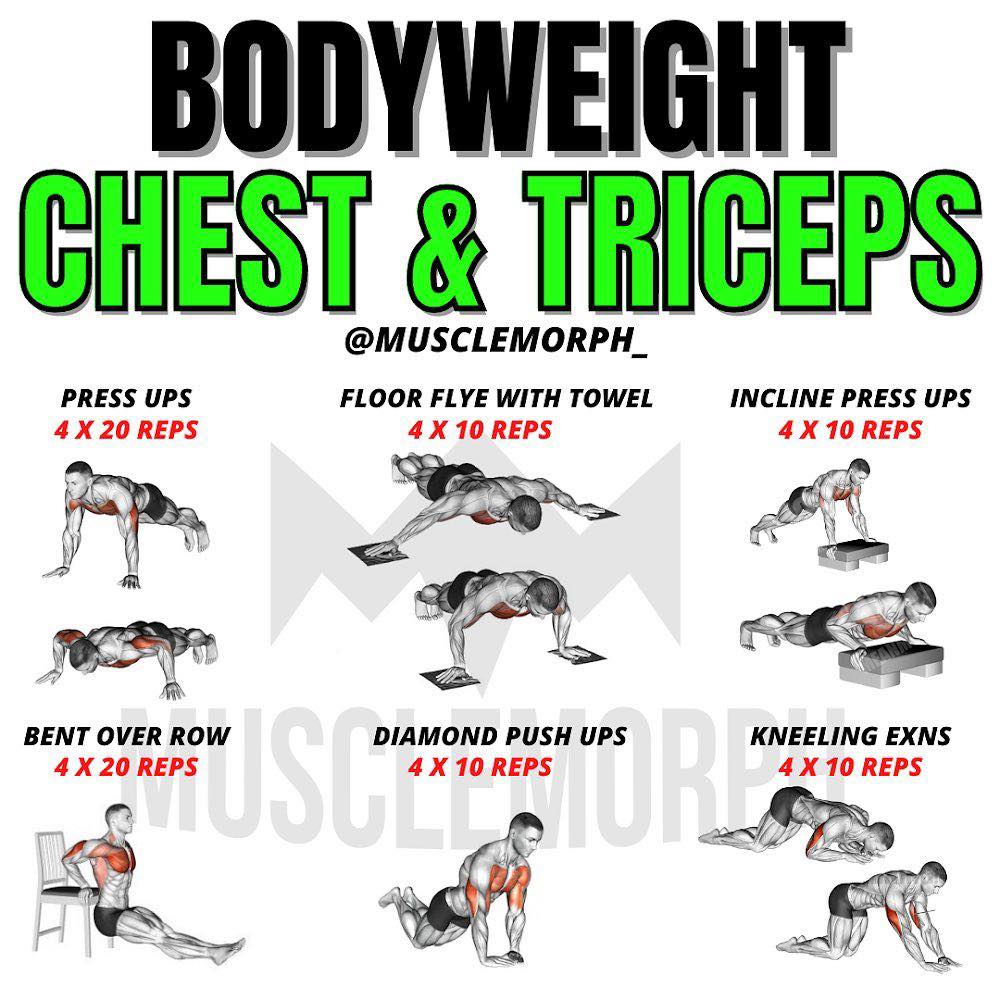
2. Diamond Push-ups
Get into a push-up position. Place your hands together so your thumbs and index fingers form a diamond shape under your chest. Lower your chest toward your hands, then push up.
- Works: All three tricep heads, plus chest and shoulders.
- Beginner tip: Do these on your knees if full push-ups are too hard.
3. Close-grip Push-ups
These are like regular push-ups, but your hands are just under your shoulders. This narrow grip shifts more work to the triceps.
- Tip: Keep your body in a straight line from head to heels.
4. Bench Or Tabletop Push-ups
Place your hands on a raised surface like a table or bench. Perform push-ups with a narrow grip. The incline makes it easier for beginners.
5. Tricep Extension Plank
Start in a forearm plank. Push up onto your hands, one arm at a time, then lower back down. This move challenges your triceps and core.
6. Bodyweight Skullcrushers (on A Bench Or Floor)
Kneel in front of a bench or low table. Place your hands on the edge, arms straight. Bend your elbows to lower your head toward your hands, then extend your arms back up.
- Tip: The further your feet are from the bench, the harder it gets.
7. Wall Tricep Extensions
Stand facing a wall. Place your palms flat, about shoulder-width. Step back, bend your elbows, and lean toward the wall. Push yourself back to start.
- Good for: Absolute beginners or as a warm-up.

Credit: www.kettlebellkings.com
Top Dumbbell Tricep Exercises For Home
If you have a pair of dumbbells, you can add more resistance and variety. These exercises are great for muscle growth.
1. Overhead Tricep Extension
Stand or sit. Hold one dumbbell with both hands overhead. Lower the weight behind your head, keeping your elbows close. Extend your arms to lift the weight back up.
- Targets: The long head of the triceps.
- Mistake to avoid: Flaring elbows outward.
2. Dumbbell Kickbacks
Bend forward with a flat back, knees slightly bent. Hold a dumbbell in each hand. Bend elbows to 90 degrees, then straighten your arms behind you, squeezing the triceps.
- Tip: Move only your forearms; keep upper arms still.
3. Lying Tricep Extensions (skullcrushers)
Lie on your back (floor or bench). Hold dumbbells above your chest. Bend your elbows to lower the weights toward your head, then extend back up.
- Tip: Keep elbows pointed upward, not out to the sides.
4. Close-grip Dumbbell Press
Lie on your back. Hold two dumbbells together above your chest, arms straight. Lower the weights toward your chest, keeping elbows close to your sides. Press up.
- Works: Triceps and chest.
5. Seated Tricep Press (one Arm)
Sit on a chair. Hold a dumbbell overhead with one hand. Lower the weight behind your head, then press upward. Repeat on the other arm.
- Why it’s good: Helps fix muscle imbalances between arms.
6. Floor Press
Lie on the floor with dumbbells. Press weights up from your chest, stopping when your upper arms touch the floor. This limits shoulder strain and emphasizes triceps.
7. Tate Press
Lie on your back with dumbbells held above your chest, palms facing your feet. Bend elbows out to the sides, lowering weights toward your chest, then extend back up.
- Not obvious: This unusual angle hits the lateral head well.
Resistance Band Tricep Exercises At Home
Resistance bands are cheap, portable, and great for joint-friendly strength training. Here’s how to use them for your triceps:
1. Band Overhead Tricep Extension
Stand on the middle of a band. Hold the handles or ends overhead. Lower your hands behind your head, then extend up. Adjust band length for more resistance.
2. Band Tricep Kickback
Attach a band low (under a door or table leg). Hold the end, bend forward, and extend your arm back. Squeeze the triceps at the end of each rep.
3. Band Pushdown (using A Door Anchor)
Loop a band over a door. Hold the band, elbows at your sides. Push down, straightening your arms. Slowly return to start.
- Tip: Focus on the squeeze at the bottom.
4. Band Skullcrusher
Anchor a band behind you (door or sturdy object). Face away, hold the band overhead, and bend elbows to lower hands, then extend.
5. Single-arm Band Extension
Stand on the band with one foot. Hold the handle with one hand and extend your arm overhead, then lower behind your head and press up.
6. Band Close-grip Press
Lie on your back with a band under your shoulder blades. Hold both ends above your chest, elbows close. Press up and together.
Creating Your Home Tricep Workout Routine
An effective home tricep routine should target all heads of the muscle, provide enough challenge, and fit your schedule. Here’s how to build your plan:
Step 1: Choose Your Equipment
- No equipment: Focus on bodyweight moves (dips, push-ups, wall extensions).
- Dumbbells: Add extensions, kickbacks, and presses.
- Bands: Use for pushdowns, kickbacks, overhead moves.
Step 2: Select 3-5 Exercises
Pick exercises that hit each tricep head. Mix push (press) and extension movements. For example:
- Bodyweight day: Diamond push-ups, tricep dips, tricep extension plank, bodyweight skullcrushers
- Dumbbell day: Overhead extension, kickbacks, close-grip press, Tate press
- Band day: Band pushdowns, overhead extension, kickbacks, close-grip press
Step 3: Plan Your Sets And Reps
- Beginners: 2-3 sets of 8-12 reps per exercise
- Intermediate: 3-4 sets of 10-15 reps
- Advanced: 4-5 sets of 12-20 reps or use slower reps and pauses
Rest 45-90 seconds between sets. Adjust reps to make the last few reps challenging but with good form.
Step 4: Train Triceps 2 Times Per Week
Give at least 48 hours between sessions for recovery. You can add triceps to upper body or push days.
Sample Weekly Plan
| Day | Workout Focus | Tricep Exercises |
|---|---|---|
| Monday | Upper Body Push | Diamond Push-Ups, Tricep Dips, Overhead Extension |
| Wednesday | Lower Body | — |
| Friday | Tricep & Shoulders | Band Pushdown, Kickbacks, Close-Grip Press |
This balanced plan works your triceps directly while letting them recover between sessions.
How To Make Home Tricep Workouts Harder
Many people worry that home workouts are too easy. But with a few smart changes, you can make any tricep exercise more challenging:
- Slow down the tempo: Lower slowly (3-4 seconds) and pause at the bottom.
- Add more reps or sets: Increase total work if you’re not tired.
- Use one arm at a time: Single-arm dips or extensions double the challenge.
- Change the angle: Elevate feet for dips, try decline push-ups.
- Shorten rest times: Less rest increases intensity and muscle burn.
- Hold the squeeze: At the top of each rep, pause and flex your triceps.
Non-obvious insight: Many people forget to adjust resistance as they get stronger. Use backpacks with books, heavier bottles, or double up bands to keep progressing.
Common Mistakes In At-home Tricep Training
Even with the best exercises, poor habits can slow your progress or cause injury. Watch out for these mistakes:
1. Flaring Elbows
Letting your elbows drift out during dips, push-ups, or extensions shifts work away from the triceps and stresses the shoulders. Keep elbows tucked close to your sides.
2. Using Too Much Weight
Trying to go heavy before mastering form leads to cheating and less muscle growth. Start light, focus on feeling the triceps, then add resistance.
3. Not Using Full Range Of Motion
Partial reps reduce muscle activation. Lower all the way down and extend fully at the top of each move.
4. Neglecting The Long Head
The long head gives your arms most of their size. Overhead moves are best for this part, but many skip them.
5. Ignoring Rest And Recovery
Training triceps daily leads to fatigue and can stall growth. Muscles need rest to repair and get stronger.
6. Not Tracking Progress
Without tracking sets, reps, or resistance, it’s hard to know if you’re improving. Keep a simple workout log.
Non-obvious insight: Many people focus only on “feeling the burn” and ignore form. Good technique is more important than chasing fatigue.
Comparing Equipment For Home Tricep Workouts
Choosing the right tool depends on your goals and what you have at home. Here’s a quick comparison:
| Equipment | Pros | Cons | Best For |
|---|---|---|---|
| Bodyweight | Free, easy to start, functional moves | Hard to increase resistance at advanced levels | Beginners, travel, small spaces |
| Dumbbells | Progressive resistance, many exercise choices | Need to buy/own dumbbells, storage space | All levels, muscle growth |
| Resistance Bands | Portable, joint-friendly, adjustable resistance | May snap or wear out, less precise weight | All levels, rehab, variety |
For most people, a mix of bodyweight and bands/dumbbells gives the best results and keeps workouts interesting.
Warm-up And Mobility For Tricep Training
Warming up your arms and shoulders before training the triceps is crucial for safety and performance. Start with 5–7 minutes of light cardio (jumping jacks, arm circles, jogging in place). Then try these mobility drills:
- Arm swings: Swing your arms forward and back to loosen shoulders.
- Elbow circles: Make circles with your forearms to warm up elbows.
- Shoulder taps: In a plank, tap each shoulder with the opposite hand.
- Band pull-aparts: Hold a band, pull ends apart to activate upper back and triceps.
Warming up improves blood flow, reduces injury risk, and primes your muscles for harder work.
Cooldown And Stretching
After your workout, spend 3–5 minutes stretching your triceps and shoulders. This helps your muscles recover and prevents tightness.
- Overhead tricep stretch: Reach one arm overhead, bend the elbow, and use your other hand to gently push your elbow back.
- Cross-body arm stretch: Pull one arm across your chest, feeling a stretch in the back of your arm.
- Foam rolling: If you have a foam roller, gently roll the back of your upper arm.
Deep breathing during stretching helps relax your body and signals that your workout is done.
Nutrition Tips To Support Tricep Growth
Exercise is only half the equation. For your triceps to grow stronger and more defined, you need to support them with good nutrition:
- Protein: Aim for 0.6–0.8 grams per pound of body weight daily. Good sources are chicken, eggs, tofu, beans, and Greek yogurt.
- Carbohydrates: Needed for workout energy. Choose whole grains, fruits, and vegetables.
- Healthy Fats: Avocado, nuts, olive oil help hormone balance and recovery.
- Hydration: Muscles need water to work well and repair after exercise.
Practical tip: If you find it hard to eat enough protein, try smoothies with protein powder, milk, or nut butter.
How To Measure Tricep Progress At Home
Tracking progress keeps you motivated and helps you adjust your plan. Here’s how to measure tricep growth and strength:
- Arm measurements: Use a soft tape to measure around the thickest part of your upper arm. Track every 2–4 weeks.
- Photo progress: Take photos from the front and back with the same lighting and pose.
- Strength tests: Record how many dips, diamond push-ups, or overhead extensions you can do with good form.
- Feel: Do your arms feel firmer or stronger? Can you do more reps or use heavier objects?
Remember, muscle growth can be slow. Small changes add up over weeks and months.
Credit: www.fondation-enovos.lu
Advanced Tips For Faster Results
If you want to push past plateaus and see faster gains, try these advanced strategies:
- Supersets: Pair two tricep exercises back-to-back with no rest. Example: dips followed by overhead extensions.
- Eccentric focus: Emphasize the lowering phase (3–5 seconds) on each rep to boost muscle growth.
- Pause reps: Hold at the hardest part (bottom of a dip) for 2–3 seconds before pushing up.
- Drop sets: Do a set to failure, then immediately reduce resistance (lighter band or bodyweight) and keep going.
Advanced insight: Training triceps after your chest or shoulder workout can pre-fatigue them, making bodyweight exercises more challenging.
Motivation And Sticking To Your Home Tricep Routine
Staying consistent at home can be hard with distractions and no gym environment. Here’s how to keep going:
- Set a schedule: Block out specific times for your workouts, just like appointments.
- Track your progress: Use a workout journal or app to log sets, reps, and improvements.
- Find a workout buddy: Even online, sharing your goals with a friend boosts accountability.
- Reward yourself: Celebrate milestones—new PRs, more reps, or visible changes.
- Change it up: Try new exercises or routines to stay interested.
Experience-based tip: Don’t expect visible arm changes in just a week or two. Focus on strength, consistency, and good habits, and results will follow.
Frequently Asked Questions
How Often Should I Train My Triceps At Home?
Training triceps 2 times per week is enough for most people. This gives your muscles time to recover and grow. If you’re advanced, you can add a third session, but only if you feel fully recovered.
Can I Build Big Triceps At Home Without Heavy Weights?
Yes, you can build impressive triceps using bodyweight exercises and household items. The key is progressive overload—making exercises harder over time with more reps, slower tempo, or added resistance like backpacks or bands.
What’s The Best Exercise For Overall Tricep Growth?
Diamond push-ups and overhead tricep extensions are great for hitting all three tricep heads. Including both in your routine ensures balanced development.
How Can I Avoid Elbow Pain During Tricep Workouts?
Warm up your elbows and shoulders well, use proper form, and avoid locking out your joints. If an exercise hurts, stop and try a different movement or use lighter resistance.
Do Tricep Exercises Also Work The Chest And Shoulders?
Yes, many tricep moves, like push-ups and dips, also involve the chest and shoulders. This is why they are so effective for upper body strength. For more focused work, add isolation exercises like kickbacks or extensions.
If you want more scientific information about muscle anatomy and exercise, you can visit the Wikipedia Triceps Brachii page.
Building strong triceps at home is not only possible—it’s practical, effective, and rewarding. With these exercises, routines, and tips, you can achieve real muscle growth and stronger arms, all from the comfort of your own space. Stick with your plan, adjust as you progress, and enjoy the results as your arms become stronger and more defined.
