

Best Male Glute Workout: Build Stronger, Bigger Glutes Fast
The Best Male Glute Workout: Build Powerful, Stronger Glutes
A well-developed gluteus maximus isn’t just for looks—strong glutes help you run faster, lift heavier, and even reduce back pain. Many men focus on chest, arms, or abs, but often ignore the glutes. This can lead to weak hips, poor posture, and less athletic performance.
If you want a strong, athletic body, you need to train your glutes with the same attention as any other muscle group.
Some men think glute workouts are only for women. That’s a myth. The glutes are the largest and one of the most powerful muscles in the body. Whether you want to sprint faster, jump higher, deadlift more, or simply fill out your jeans better, glute training is a must.
This guide gives you everything you need to build stronger, more powerful glutes—workouts, exercises, tips, and common mistakes to avoid.
Why Glute Strength Matters For Men
The glute muscles—gluteus maximus, gluteus medius, and gluteus minimus—are responsible for hip extension, rotation, and stabilization. They help you stand, walk, run, jump, and lift. Weak glutes can lead to problems in your lower back, knees, and even shoulders. Many men with back pain or tight hips don’t realize the cause is often weak or inactive glutes.
Strong glutes improve:
- Athletic performance: You’ll sprint, jump, and move faster.
- Posture: Glutes help keep your hips and lower back aligned.
- Lower back health: They take pressure off your lumbar spine.
- Lifting power: Almost every big lift—deadlift, squat, lunge—relies on your glutes.
- Injury prevention: Strong glutes protect your knees and hips.
Anatomy Of The Glutes: What You Need To Know
Understanding the muscles you’re training helps target them better. The glutes are made of three main muscles:
- Gluteus maximus: The largest and most visible. It powers hip extension (standing up, jumping, climbing).
- Gluteus medius: On the side of your hip, stabilizes your pelvis, helps with hip abduction and rotation.
- Gluteus minimus: Deepest of the three, assists the medius with stabilization and movement.
Many exercises hit all three, but some moves target one more than others. For balanced development, your workout needs a mix of compound and isolation exercises.

Credit: www.menshealth.com
Key Principles For Effective Glute Training
Building strong glutes isn’t just about doing endless squats. To see real progress, keep these principles in mind:
- Exercise Variety: Use different movements—hip thrusts, lunges, squats, deadlifts, abductions.
- Progressive Overload: Gradually increase weight, reps, or intensity.
- Full Range of Motion: Stretch and contract the muscle through its complete movement.
- Mind-Muscle Connection: Focus on squeezing your glutes during each rep.
- Frequency: Train glutes at least twice per week for best results.
The Best Glute Exercises For Men
Not all glute exercises are equal. Some target the muscle better, activate more fibers, or allow you to use heavier weight. Here are the top moves for building glute strength and size.
1. Barbell Hip Thrust
This is the king of glute exercises. It isolates the glutes, lets you use heavy weight, and gives a strong contraction at the top.
- Sit on the ground with your upper back against a bench.
- Roll a barbell over your hips.
- Plant your feet flat, shoulder-width apart.
- Drive through your heels, lifting your hips until your thighs are parallel to the floor.
- Squeeze your glutes hard at the top.
- Lower slowly.
Tip: Pause for 1-2 seconds at the top for maximum tension.
2. Romanian Deadlift (rdl)
RDLs hit the glutes and hamstrings, focusing on the stretch.
- Stand with feet hip-width, barbell in front of thighs.
- Keep knees slightly bent.
- Hinge at your hips, lowering the bar while keeping your back straight.
- Go down until you feel a stretch in your hamstrings.
- Return to standing by pushing hips forward.
Insight: Many men bend their knees too much—keep them slightly bent, but focus on the hip hinge for maximum glute stretch.
3. Bulgarian Split Squat
This single-leg squat builds strength, balance, and glute activation.
- Stand in front of a bench, place one foot behind you on the bench.
- Lower your body until your front thigh is parallel to the floor.
- Push up through your front heel.
Common mistake: Leaning too far forward. Keep your chest up to target the glutes.
4. Walking Lunge
Walking lunges challenge your glutes through a long range of motion.
- Step forward into a lunge, lowering your back knee toward the ground.
- Push up and bring your back foot forward to the next lunge.
- Alternate legs as you move forward.
Variation: Hold dumbbells for more resistance.
5. Sumo Deadlift
A wider stance and toes pointed out target the glutes more than a conventional deadlift.
- Stand with feet wider than shoulder-width, toes out.
- Grip the bar with hands inside your knees.
- Push through your heels, keep your chest up, and stand tall.
Pro tip: Drive your knees out as you lift to activate glutes more.
6. Cable Kickback
This isolation exercise helps you feel the contraction.
- Attach an ankle strap to a low cable.
- Stand facing the machine, hold for support.
- Extend your leg back and up, squeezing your glute.
- Lower with control.
Non-obvious insight: Go slow on the lowering phase—this builds more muscle.
7. Glute Bridge
A bodyweight version of the hip thrust, great for activation.
- Lie on your back, knees bent, feet flat.
- Drive through your heels, lift hips off the ground.
- Squeeze glutes at the top.
Variation: Place a weight plate on your hips for added resistance.
8. Step-up
Simple, but very effective for building single-leg strength.
- Stand in front of a bench or box.
- Step up with one foot, drive through your heel to lift your body.
- Step down and repeat.
Mistake to avoid: Using momentum. Move slowly and control the movement.
9. Clamshell
Targets the gluteus medius, which helps with hip stability.
- Lie on your side, knees bent, feet together.
- Open your top knee as far as you can, keeping feet together.
- Lower slowly.
Tip: Use a resistance band above your knees for more challenge.
10. Single-leg Romanian Deadlift
Balances strength and stability while isolating each glute.
- Stand on one leg, hold a dumbbell in the opposite hand.
- Hinge at the hips, extend your free leg behind as you lower the weight.
- Return to standing by driving your hips forward.
Non-obvious insight: Keep your hips square to the ground to prevent twisting.
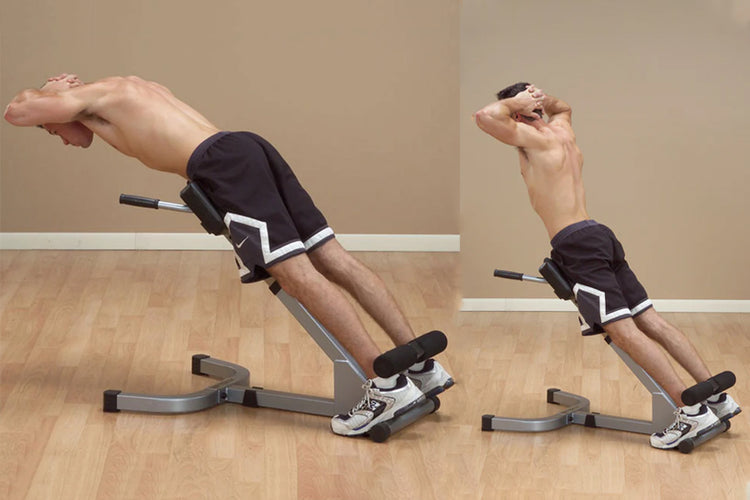
Credit: promocionesgloria.com
Sample Male Glute Workout Routine
A great glute workout for men should include both heavy compound lifts and focused isolation exercises. Here’s a sample routine you can do twice per week.
Workout A
- Barbell Hip Thrust: 4 sets of 8-10 reps
- Bulgarian Split Squat: 3 sets of 10-12 reps (per leg)
- Romanian Deadlift: 3 sets of 8-10 reps
- Cable Kickback: 3 sets of 12-15 reps (per leg)
- Clamshell with Band: 2 sets of 15-20 reps
Workout B
- Sumo Deadlift: 4 sets of 6-8 reps
- Walking Lunge: 3 sets of 12 steps (per leg)
- Step-up: 3 sets of 10 reps (per leg)
- Glute Bridge: 3 sets of 15 reps
- Single-Leg RDL: 2 sets of 10 reps (per leg)
Rest 60-90 seconds between sets for isolation moves, 2-3 minutes for heavy lifts.
How Glute Exercises Compare: Activation And Effectiveness
Some exercises activate the glutes more than others. Here’s a comparison of glute activation levels for popular exercises, based on electromyography (EMG) studies.
| Exercise | Glute Activation (Relative %) | Best For |
|---|---|---|
| Barbell Hip Thrust | 100% | Maximal growth |
| Bulgarian Split Squat | 85% | Single-leg strength |
| Romanian Deadlift | 80% | Stretch and length |
| Sumo Deadlift | 75% | Heavy lifting |
| Cable Kickback | 70% | Isolation |
| Step-up | 60% | Functional strength |
| Clamshell | 40% | Stabilization |
Key takeaway: The barbell hip thrust offers the highest activation, but combining different exercises gives the best results.
Sets, Reps, And Workout Frequency: What Works Best?
How you structure your sets and reps impacts your glute gains. Here are the proven recommendations for men:
- Heavy lifts (hip thrusts, deadlifts, squats): 3–5 sets of 6–10 reps
- Moderate isolation (lunges, step-ups): 3–4 sets of 8–12 reps
- Light isolation (kickbacks, clamshells): 2–3 sets of 12–20 reps
Train glutes 2–3 times per week for best results. More is not always better—your glutes need time to recover and grow.
How To Warm Up For Glute Workouts
Warming up prepares your muscles, improves performance, and reduces injury risk. A good warm-up for glute training should activate and mobilize your hips.
- Foam rolling: Glutes, hamstrings, and hip flexors (1–2 minutes each)
- Dynamic stretches: Leg swings, lunges with twist (10–15 reps each)
- Glute activation: Bodyweight glute bridges, banded clamshells (2 sets of 15 reps)
Non-obvious insight: Many men skip the activation step, but it helps “wake up” your glutes, so you feel them working during big lifts.
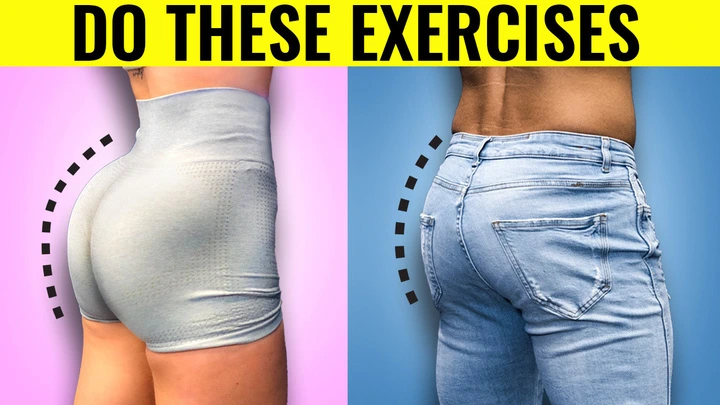
Credit: builtwithscience.com
Common Glute Training Mistakes (and How To Fix Them)
Even experienced lifters often make mistakes that limit glute growth. Here are the most common issues and how to avoid them:
1. Not Using A Full Range Of Motion
Half-reps don’t fully stretch or contract the glutes. Use a full range for every exercise, especially squats and hip thrusts.
2. Letting Other Muscles Take Over
If you feel squats or deadlifts mostly in your quads or lower back, your glutes aren’t working hard enough. Focus on pushing through your heels and squeezing your glutes.
3. Skipping Single-leg Work
Single-leg moves like split squats and step-ups build balance and fix strength imbalances. Don’t rely only on two-legged lifts.
4. Ignoring Glute Medius And Minimus
Only training the gluteus maximus creates imbalances. Include exercises like clamshells and side-lying abductions.
5. Poor Mind-muscle Connection
Rushing through reps or using too much weight can reduce glute activation. Slow down, focus, and feel the muscle working.
Glute Growth: How Long Does It Take To See Results?
Glute development is a gradual process. Most men notice small changes in 4–6 weeks of focused training. Bigger, visible changes usually take 3–6 months. Genetics, nutrition, and training intensity all play a role.
Tip: Take progress photos every month. The scale won’t show muscle growth, but photos and measurements will.
Nutrition For Glute Growth
Building muscle, including glutes, requires the right nutrition. Here’s what matters most:
- Protein: Essential for repair and growth. Aim for at least 0.7 grams per pound of body weight per day.
- Calories: Eat slightly above maintenance to fuel muscle building.
- Carbohydrates: Important for energy during intense workouts.
- Healthy fats: Support hormone health and recovery.
Without enough calories or protein, glutes won’t grow—no matter how hard you train.
Cardio And Glute Training: How To Combine Them
Cardio is important for health and fat loss, but too much can interfere with muscle growth. Here’s how to balance both:
- High-Intensity Interval Training (HIIT): Short, intense bursts (like sprints) actually train the glutes and improve athleticism.
- Low-Intensity Cardio: Walking or cycling is fine, but avoid long, daily runs if your goal is maximum muscle.
Insight: Hill sprints are excellent for glutes—they combine cardio and muscle training.
Glute Workouts At Home: No Gym, No Problem
You don’t need a gym to build strong glutes. Here’s a sample home workout using just your bodyweight and a resistance band:
- Glute bridge: 4 sets of 15 reps
- Single-leg glute bridge: 3 sets of 10 reps (per leg)
- Bulgarian split squat (using chair): 3 sets of 10 reps (per leg)
- Banded clamshell: 3 sets of 15 reps
- Step-ups (stairs or sturdy chair): 3 sets of 12 reps (per leg)
- Donkey kicks: 2 sets of 15 reps (per leg)
Pro tip: Slow down the reps and add a 2-second hold at the top for more challenge.
Advanced Glute Training: Techniques For Faster Progress
If you’ve been training glutes for a while, try these advanced methods:
1. Pause Reps
Pause at the hardest point (usually the top) for 2–3 seconds. This increases time under tension.
2. Drop Sets
After your last heavy set, drop the weight by 30–50% and continue until failure.
3. Slow Negatives
Lower the weight slowly (3–4 seconds down) to increase muscle damage and growth.
4. Bands And Chains
Adding resistance bands or chains to barbell lifts changes the resistance curve, challenging your glutes differently.
5. Pre-exhaustion
Start with an isolation move (like kickbacks), then do a heavy compound lift (like hip thrusts). This ensures the glutes are already tired and work harder.
How Glute Training Improves Athletic Performance
Strong glutes aren’t just for looks. Here’s how they boost your athletic ability:
- Speed: Powerful glutes help you sprint faster by driving your hips forward.
- Jumping: Vertical leap depends on explosive hip extension.
- Agility: Quick changes in direction require strong, stable hips.
- Lifting: Deadlifts, squats, and cleans all rely on glute power.
Many elite athletes, from sprinters to football players, prioritize glute training. If you want to move like an athlete, train your glutes like one.
Measuring Glute Progress: Beyond The Mirror
Building glutes isn’t just about looks. Use these methods to track real progress:
| Progress Method | How to Measure | Why It Matters |
|---|---|---|
| Strength gains | Track weights/reps on hip thrusts, deadlifts, squats | Shows muscle and nervous system improvements |
| Body measurements | Measure hip/glute circumference monthly | Shows muscle growth, even if weight is stable |
| Performance | Test sprint speed, vertical jump, or single-leg stability | Proves functional progress, not just size |
| Progress photos | Take front/side/back photos every 4 weeks | Visible changes motivate and guide training |
Tip: Don’t rely on the scale alone. Muscle weighs more than fat, so your bodyweight may not change much even as your glutes grow.
How To Avoid Plateaus In Glute Training
Many men see fast progress at first, then hit a wall. Here’s how to keep growing:
- Change exercises: Swap in new moves every 4–6 weeks.
- Increase intensity: Add weight, reps, or sets as you get stronger.
- Improve form: Focus on quality, not just quantity.
- Deload: Take a lighter training week every 8–10 weeks to recover.
Non-obvious insight: Plateaus often happen when you stop paying attention to the mind-muscle connection. Stay focused on squeezing your glutes every rep.
Glute Training For Different Body Types
Not all men build muscle the same way. Here’s how to adapt glute training:
- Hardgainers (ectomorphs): Focus on heavy compound lifts and eat more calories.
- Easy gainers (mesomorphs): Mix heavy lifts with isolation, keep cardio moderate.
- Stocky builds (endomorphs): Use higher reps and more single-leg work, watch calories.
Genetics play a role, but everyone can improve with consistent effort and smart training.
Glute Training Myths (debunked)
Many men avoid glute workouts because of myths. Here are the most common—and the truth:
- Myth: Squats are enough.
Fact: Squats alone don’t fully target the glutes. Hip thrusts and other moves are needed.
- Myth: Glute training is for women.
Fact: Strong glutes are essential for men’s health, strength, and performance.
- Myth: Running or cycling builds glutes.
Fact: Most cardio doesn’t build muscle. You need resistance exercises.
- Myth: You need special machines.
Fact: Free weights and bodyweight moves are just as effective.
For more science-backed information, check out this research overview.
Frequently Asked Questions
How Often Should Men Train Glutes For Best Results?
Most men get great results training glutes 2–3 times per week. This allows enough stimulus for growth while giving your muscles time to recover and rebuild.
What’s The Best Glute Exercise For Building Size?
The barbell hip thrust has the highest glute activation and is the best for building size, according to multiple EMG studies. Combine it with other compound and isolation moves for balanced growth.
Can You Build Glutes With Just Bodyweight Exercises?
Yes, you can make good progress with bodyweight moves like glute bridges, Bulgarian split squats, and step-ups. Adding resistance bands or single-leg variations can make these even more effective.
How Long Does It Take To See Noticeable Glute Growth?
You’ll usually see some changes in 4–6 weeks of consistent training, but significant growth often takes 3–6 months. Progress depends on your genetics, nutrition, and how hard you train.
Is Glute Training Safe For Men With Back Pain?
Glute training can actually help reduce back pain by strengthening the muscles that support your lower back. Start with bodyweight exercises and focus on good form. If you have serious pain, consult a professional first.
A strong, powerful set of glutes is one of the best investments you can make in your health, athleticism, and appearance. Whether you’re training for sports, lifting heavier weights, or just want to move better, glute workouts deserve a top spot in your fitness plan.
Start with the exercises and routines here, stay consistent, and you’ll see and feel the results—both in the gym and in daily life.
