

What'S Business Casual: Your Ultimate Guide to Office Style
What’s Business Casual?
The phrase business casual often confuses people starting a new job or attending professional events. It sounds simple, but what does it really mean? There’s no single answer, because business casual is not a strict uniform. It’s a flexible dress code that sits between formal business wear and casual clothing. Getting it right shows respect for your workplace, helps you fit in, and can even boost your confidence.
Many companies use business casual because it allows employees to feel comfortable, while still looking polished and professional. But the line between “too casual” and “not casual enough” can be blurry. Different industries, countries, and even individual offices may have their own rules about what’s acceptable.
This guide will break down everything you need to know about business casual, from the basic guidelines to common mistakes, so you can always show up looking your best.
Understanding Business Casual
Business casual is a dress code that combines elements of traditional business wear with more relaxed clothing. The goal is to look neat, professional, and approachable, without the stiffness of a suit and tie. It’s about finding the right balance.
In the past, business attire meant a dark suit, formal shirt, and tie for men, and a suit or conservative dress for women. Casual meant jeans, T-shirts, and sneakers. Business casual sits comfortably between these two extremes. It lets you express your personality, but still keeps a professional appearance.
Why Do Companies Choose Business Casual?
Many workplaces choose business casual for a few key reasons:
- Comfort: People work better when they feel comfortable. Looser rules about clothing can reduce stress and make employees happier.
- Modern Image: Companies want to appear open-minded and friendly, especially to younger workers or creative professionals.
- Productivity: When people don’t have to worry about strict uniforms, they can focus on their work instead.
However, even in companies with a relaxed dress code, looking “too casual” can send the wrong message. Dressing well shows respect for your job, your colleagues, and yourself.
Key Elements Of Business Casual
What exactly counts as business casual? The answer depends on your workplace, but there are some general rules.
For Men
- Shirts: Collared shirts are standard. This can be a button-down shirt, a polo, or sometimes a neat sweater.
- Pants: Dress pants (slacks), chinos, or khakis. Jeans are sometimes allowed if they are dark, plain, and free of holes.
- Shoes: Loafers, Oxfords, brogues, or other closed-toe dress shoes. Clean sneakers may be acceptable in more relaxed offices.
- Jackets: Blazers or sports coats are optional, but can add a polished touch.
- Accessories: Minimal jewelry, a classic watch, and a belt that matches your shoes.
For Women
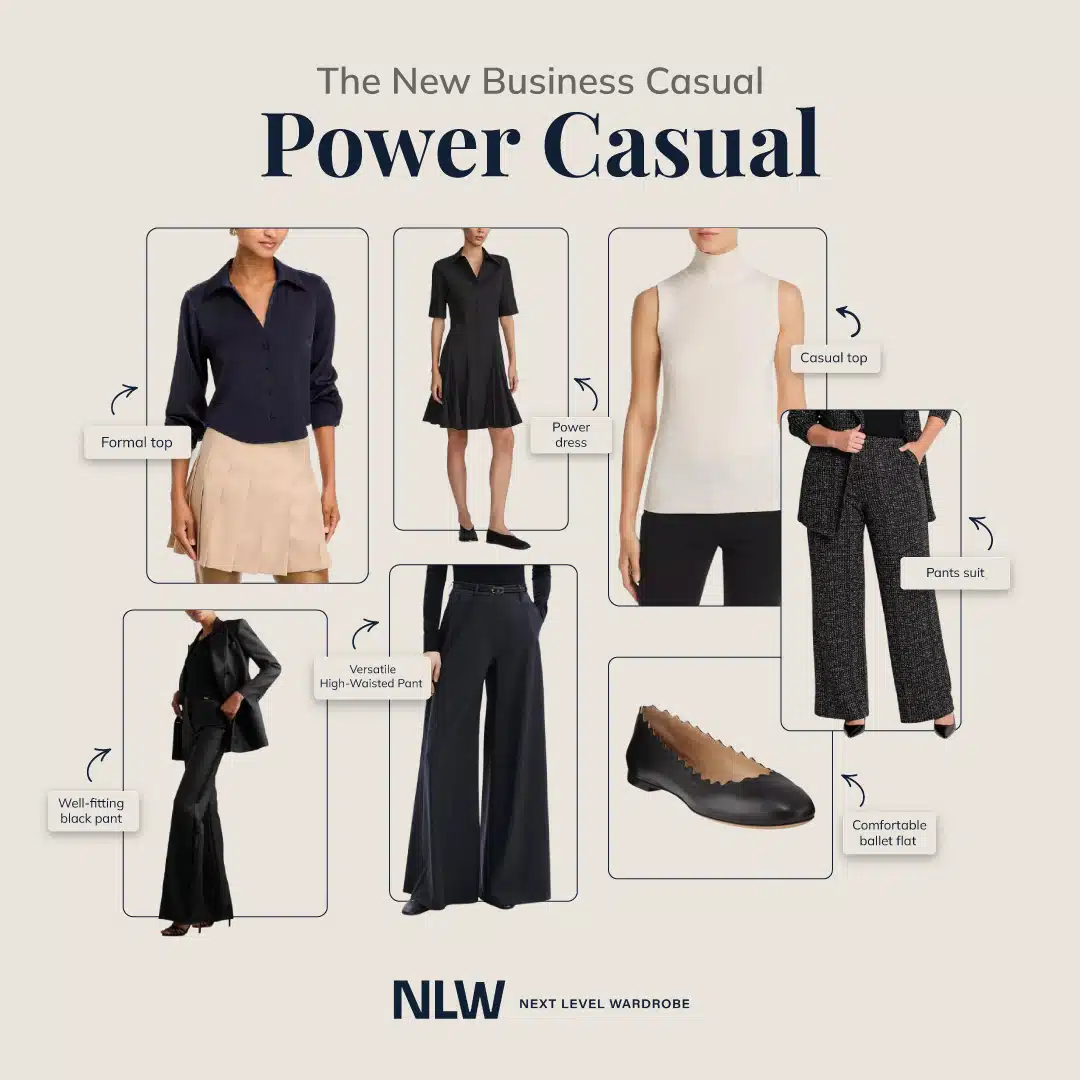
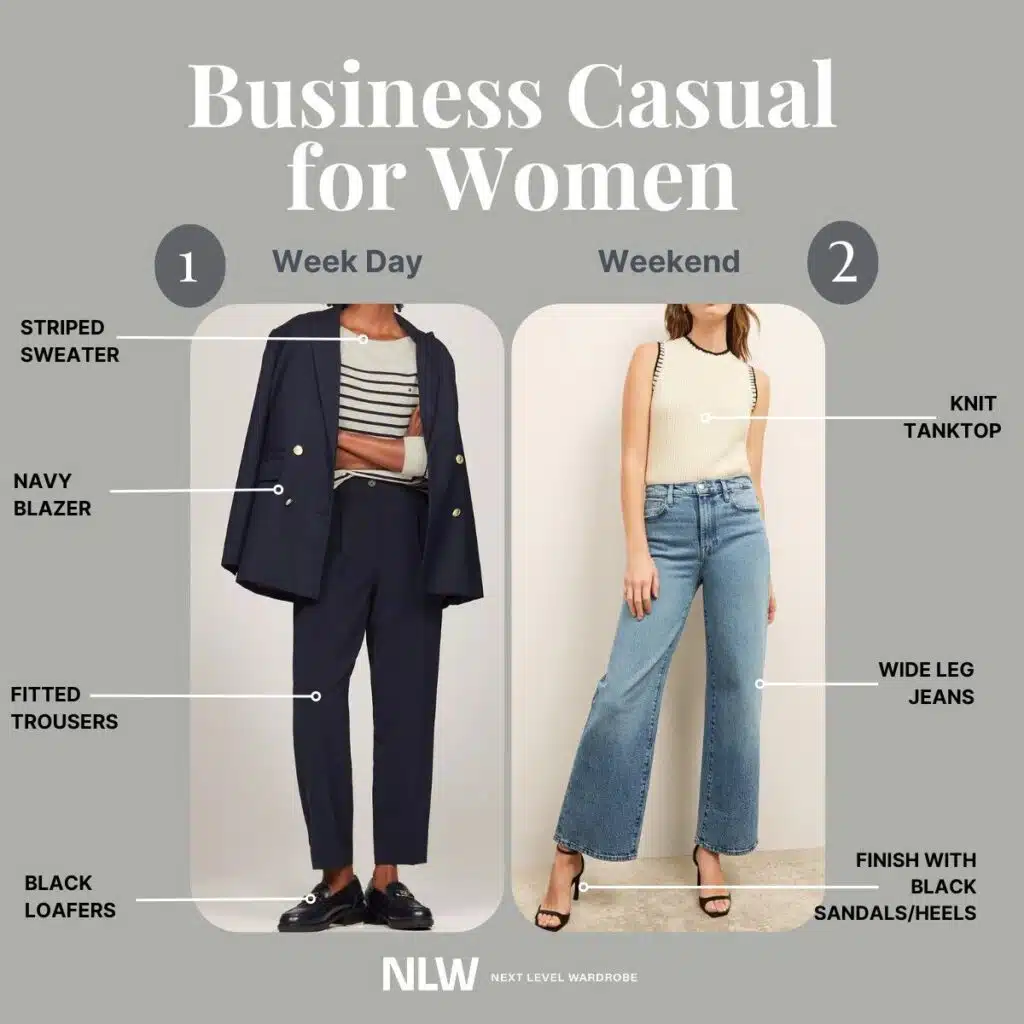
- Tops: Blouses, sweaters, collared shirts, or neat tops. Avoid low-cut or overly casual shirts.
- Bottoms: Dress pants, skirts that are knee-length or longer, and sometimes dark, clean jeans.
- Dresses: Simple dresses in solid colors or subtle patterns. Avoid party dresses or anything too revealing.
- Shoes: Flats, loafers, low to medium heels, or dressy boots. Open-toe shoes may be acceptable, but flip-flops or casual sandals are not.
- Accessories: Simple jewelry, a structured bag, and a belt if needed.
Clothing Items To Avoid
Business casual has boundaries. Some items are almost never acceptable:
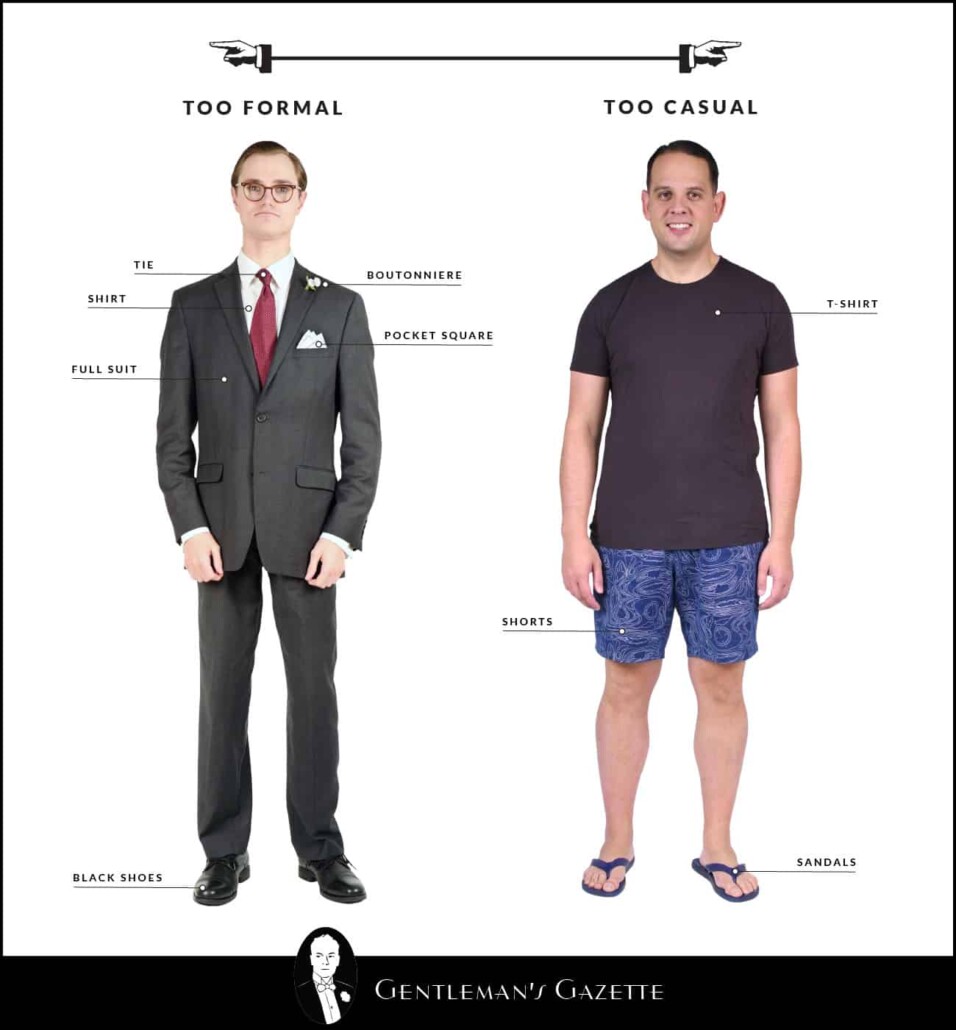
- Graphic T-shirts or shirts with slogans
- Ripped, faded, or distressed jeans
- Shorts or very short skirts
- Hoodies or sweatshirts
- Flip-flops or athletic shoes (unless your office allows them)
- Tank tops or spaghetti straps (unless layered)
- Very bright, flashy, or loud patterns
Credit: nextlevelwardrobe.com
Comparing Business Casual With Other Dress Codes
To see where business casual fits, it helps to compare it with other common dress codes.
| Dress Code | Typical Attire | Formality Level |
|---|---|---|
| Formal/Business Professional | Suit, tie, dress shirt, formal shoes | High |
| Business Casual | Collared shirt, dress pants/skirts, loafers | Medium |
| Casual | Jeans, T-shirts, sneakers | Low |
| Smart Casual | Neat jeans, blouse/polo, dressy sneakers | Medium-Low |
Business casual is less formal than a suit-and-tie outfit, but more structured than jeans and a T-shirt. Smart casual is even more relaxed, often allowing stylish jeans and sneakers.
Business Casual For Different Industries
Business casual means different things depending on your industry. In a law firm, it might lean closer to formal. In a tech company, it could be nearly casual. Here’s a look at common industry expectations:
Finance, Law, And Consulting
These fields are traditionally conservative. Even on business casual days, employees often wear:
- Dress shirts, slacks, and blazers (men)
- Blouses, tailored pants, and modest skirts or dresses (women)
- Leather shoes
Jeans are usually not allowed, and ties are sometimes optional.
Technology And Startups
Tech companies are known for relaxed dress codes. Business casual here might include:
- Polo shirts or neat T-shirts
- Dark jeans or chinos
- Casual, clean shoes
However, there’s still an expectation to look tidy, especially during meetings or presentations.
Creative Industries
Advertising, design, and media companies often encourage individual expression. Business casual may allow:
- Bright colors or unique patterns
- Stylish shoes or accessories
- Trendy but appropriate outfits
Still, clothing should be clean and not too revealing.
Healthcare And Education
Offices in these sectors usually require:
- Simple, comfortable clothing
- Avoidance of strong perfume or cologne
- Closed-toe shoes for safety
Medical staff may have uniforms, but administrators follow business casual rules.
Business Casual Around The World
Expectations for business casual can change depending on the country or even the city.
- United States and Canada: Business casual is very common. Jeans are sometimes allowed, but it depends on the company.
- Europe: UK offices tend to be more formal; Southern Europe may allow more color and style.
- Asia: In places like Japan and China, business casual is still quite formal compared to Western standards. Conservative colors and styles are preferred.
- Australia and New Zealand: Attire is relaxed, but still neat. Open-toe shoes may be acceptable.
When traveling for work, always check local customs or ask your host company about their dress code.
Tips For Building A Business Casual Wardrobe
Building a business casual wardrobe can feel overwhelming, especially if you’re starting from scratch. But you don’t need dozens of outfits. Focus on versatile, high-quality pieces that you can mix and match.
Essential Items For Men
- Button-down shirts: White, light blue, or soft patterns work for almost any occasion.
- Chinos or dress pants: Neutral colors like navy, gray, or khaki are best.
- Blazer or sports coat: Instantly makes any outfit look more professional.
- Dress shoes: One pair of brown and one pair of black shoes cover most needs.
- Sweaters: V-neck or crew neck in solid colors for layering.
Essential Items For Women
- Blouses and tops: Stick to classic colors, but add a few with subtle patterns.
- Dress pants or skirts: Navy, black, or beige are easy to match.
- Cardigans or blazers: Add polish to any outfit.
- Simple dresses: Knee-length, in solid colors.
- Comfortable shoes: Loafers, ballet flats, or low-heeled pumps.
Example Capsule Wardrobe
A capsule wardrobe uses a small number of items to create many outfits.
| Item | Men | Women |
|---|---|---|
| Tops | 3 shirts, 2 sweaters | 3 blouses, 2 cardigans |
| Bottoms | 2 pairs chinos, 1 dark jeans | 2 pants, 1 skirt |
| Outerwear | 1 blazer | 1 blazer |
| Shoes | 1 black, 1 brown dress shoe | 1 flat, 1 low heel |
| Accessories | 1 belt, watch | 1 belt, simple jewelry |
With these basics, you can make a week’s worth of outfits, and adjust for seasons.
How Business Casual Has Changed Over Time
The meaning of business casual has shifted in recent years, especially with the rise of remote work and younger generations entering the workforce. Here are some key trends:
- Relaxed rules: Many companies now allow jeans, sneakers, or even T-shirts, as long as they look neat.
- Gender-neutral options: More workplaces focus on comfort and inclusivity, allowing employees to choose what fits their identity.
- Remote work impact: With online meetings, people focus on looking professional from the waist up, leading to more flexibility in dress codes.
- Sustainability: Employees care more about where their clothes come from. Thrifted, eco-friendly, or local brands are popular choices.
Even with these changes, the main idea stays the same: look professional, feel comfortable, and match the culture of your workplace.
How To Know What’s Acceptable In Your Office
If you’re not sure what counts as business casual in your company, use these strategies:
- Ask HR or your manager: They can explain the dress code or share the employee handbook.
- Observe what others wear: Pay attention to what your managers and colleagues wear on a daily basis.
- Look at company events: Photos from company events can give clues about what’s appropriate.
- Start slightly more formal: It’s safer to be a bit overdressed at first. You can adjust once you understand the office culture.
One insight many beginners miss is that business casual isn’t just about clothing. Grooming, posture, and attitude also matter. Clean, well-fitting clothes and tidy hair can make any outfit look more professional.
Credit: nextlevelwardrobe.com
Business Casual For Special Situations
Not every day at work is the same. Sometimes you need to adjust your business casual outfit for special events.
Client Meetings
Even in a business casual office, meeting with clients usually requires stepping up your look. Add a blazer, choose darker colors, and avoid anything that could be seen as too casual.
Presentations Or Interviews
Dress slightly more formal than you think you need to. A good rule is to aim for the upper end of business casual, or even business professional if you’re unsure.
Casual Fridays
Many companies have “casual Fridays,” where the dress code is more relaxed. Jeans may be allowed, but avoid anything too casual like graphic T-shirts or sneakers unless you know it’s okay.
Company Events
Holiday parties, team-building events, or off-site meetings can have their own dress codes. When in doubt, ask for guidance or check previous event photos.
Common Business Casual Mistakes
Even experienced professionals make mistakes with business casual. Here are some to watch out for:
- Wearing wrinkled or stained clothes: No matter the style, clothes should always be clean and pressed.
- Ignoring fit: Baggy or too-tight clothes look unprofessional. Tailoring can make a big difference.
- Overdoing accessories: Keep jewelry, makeup, and fragrance subtle.
- Not updating your wardrobe: Styles change. Replace worn-out or outdated pieces regularly.
- Assuming all jeans are okay: Only wear jeans if your company allows them, and make sure they’re dark and free of rips.
A non-obvious tip: If you’re unsure about a new item, wear it on a day when you have no important meetings. See how others react, and adjust if needed.
Credit: www.gentlemansgazette.com
The Role Of Colors And Patterns
Color and pattern choices can say a lot in a business casual setting. Neutral colors like navy, gray, white, black, and beige are always safe. These shades mix easily and look professional. Light blues, soft pinks, or subtle pastels can add variety without drawing too much attention.
Patterns are fine, but should be subtle. Thin stripes, small checks, or muted prints work well. Loud patterns or neon colors can feel distracting.
One insight: shoes and belts are often overlooked. A clean pair of shoes and a matching belt can upgrade your whole outfit, even if the rest is simple.
Business Casual In A Remote Work World
Remote work has changed the way we think about business casual. On video calls, you may only be visible from the waist up, but first impressions still count. Here are tips for business casual while working from home:
- Choose collared shirts or blouses: These look good on camera and signal professionalism.
- Pay attention to lighting and background: A neat background and good lighting help your outfit look its best.
- Comfort still matters: You can wear comfortable pants or shoes, but always be ready in case you need to stand up.
Some companies have dropped dress codes entirely for remote workers, but many expect the same standards as the office—at least for meetings.
How To Adapt Business Casual For Different Seasons
Weather can affect your clothing choices, but you still need to look professional.
Warm Weather
- Choose breathable fabrics like cotton or linen.
- Wear short-sleeve shirts or blouses (but avoid tank tops).
- Sandals may be allowed in some places, but always check company rules.
Cold Weather
- Layer with sweaters, cardigans, or blazers.
- Choose wool or heavier fabrics for pants and skirts.
- Boots are fine if they look polished.
If you commute in harsh weather, carry your work shoes and change once you arrive.
Shopping Tips For Business Casual
Finding the right business casual pieces doesn’t mean spending a fortune. Here are some practical shopping tips:
- Quality over quantity: A few well-made items last longer than many cheap ones.
- Try before you buy: Fit is everything. Tailored clothes look more professional.
- Look for sales and outlet stores: You can often find high-quality brands at lower prices.
- Check return policies: Especially important when shopping online.
- Consider secondhand shops: Thrift stores or online resale shops have great deals on business wear.
For more advice on dressing well for work, the Business Insider guide is a helpful resource.
Business Casual For Plus Sizes And Different Body Types
Business casual should be comfortable and flattering for everyone, no matter your body shape or size. Many brands now offer extended sizes and better fits. Here are some tips:
- Know your measurements: This helps you find the right size faster.
- Tailoring is your friend: Small changes can make off-the-rack clothes fit perfectly.
- Choose structured fabrics: They create a clean shape and don’t cling.
- Don’t hide behind oversized clothes: Well-fitting outfits look more confident.
Confidence is the most important accessory. When you feel good in your clothes, it shows.
Sustainable And Ethical Choices In Business Casual
More people want their work wardrobe to reflect their values. Here’s how to build a business casual wardrobe that’s good for the planet:
- Buy less, choose well: Fewer, higher-quality pieces reduce waste.
- Look for sustainable fabrics: Organic cotton, linen, and recycled materials are eco-friendly.
- Support ethical brands: Research how brands treat workers and the environment.
- Secondhand shopping: Vintage or thrifted clothes have less impact on the planet.
Sustainability is not just a trend—it’s a smart, long-term way to build your wardrobe.
Frequently Asked Questions
What’s The Main Difference Between Business Casual And Smart Casual?
Business casual usually means dress pants or skirts, collared shirts, and dress shoes. Smart casual is more relaxed, allowing neat jeans, stylish sneakers, and more personal style. Business casual is expected in most offices, while smart casual is common for social events or creative industries.
Can You Wear Jeans In A Business Casual Office?
It depends on your company’s rules. Many offices now allow dark, plain jeans with no rips or distressing, but some still prefer dress pants or chinos. Always check with HR or observe what your colleagues wear.
Are Sneakers Ever Okay For Business Casual?
Some modern workplaces accept clean, minimalist sneakers as part of business casual, especially in tech or creative fields. Avoid athletic or brightly colored sneakers, and choose styles that look neat and understated.
How Do I Dress Business Casual For An Interview?
For interviews, aim for the upper end of business casual. Men should wear a button-down shirt, dress pants, and possibly a blazer. Women can choose a blouse with dress pants or a knee-length skirt, and closed-toe shoes. It’s better to be slightly overdressed than too casual.
What’s A Safe Business Casual Outfit When You’re Unsure?
A collared shirt or blouse, neutral dress pants or skirt, and closed-toe shoes work almost everywhere. Add a blazer if you want to look more polished. This combination fits most business casual environments and helps you feel confident.
Business casual is about more than just clothes—it’s a sign of respect for your workplace and yourself. By understanding the basics, paying attention to fit and detail, and adapting to your company’s culture, you’ll always make the right impression. Remember, when in doubt, it’s better to be a little more formal than too relaxed.
