

What to Wear And What Not to Wear for an Interview: Expert Tips
What to Wear And What Not to Wear for an Interview
A job interview is more than just a conversation—it's your first chance to show professionalism, confidence, and respect. Your outfit matters because it tells your interviewer how seriously you take the opportunity. The right choice can help you stand out in a positive way, while the wrong one can hold you back even before you say a word.
Many people worry about what to wear. Should you dress formally or casually? Is it okay to wear bright colors? How much jewelry is too much? These questions are common because interview expectations can feel confusing, especially for non-native English speakers or those new to the job market.
This article gives clear advice, practical examples, and data-backed tips to help you make smart choices. We will explore the best clothing for different types of interviews, mistakes to avoid, how to adapt to company culture, and ways to boost confidence with your style.
Whether you are applying for your first job or aiming for a senior role, you will find guidance here to help you dress for success.
Why Interview Attire Matters
Your outfit is part of your first impression. It tells employers about your attention to detail, awareness of workplace norms, and respect for the company. Research shows that people form opinions within the first seven seconds of meeting someone, and clothing is a big part of this snap judgment.
A survey by CareerBuilder found that 49% of hiring managers say that a candidate’s appearance is a key factor in their decision. Another study from Princeton University highlighted that it takes less than a second for someone to judge competence based on looks. This means that what you wear can influence your chances of getting hired even before you start talking.
Dressing correctly also boosts your own confidence. When you feel comfortable and look polished, you are more likely to speak clearly and act confidently during the interview. On the other hand, uncomfortable or inappropriate clothing can make you feel nervous and distracted.
Understanding Company Culture
Not every company expects the same dress code. Some offices are formal, while others are relaxed. Understanding the company’s culture helps you choose the right outfit.
Formal Vs. Casual Workplaces
- Formal (Corporate, Finance, Law): Suits, ties, blazers, dress shoes.
- Casual (Tech, Creative, Startups): Smart casual, neat jeans, polos, comfortable shoes.
- Business Casual (Education, Healthcare, Mid-size companies): Dress pants, collared shirts, modest dresses.
How To Research Company Dress Codes
- Visit the company website: Look for photos or videos showing employees.
- Check social media: LinkedIn, Instagram, and Facebook often display company events and daily work life.
- Ask your recruiter or HR contact: If you’re unsure, it’s okay to ask for advice.
- Observe the industry standard: For example, tech companies are often more casual, while banking is usually formal.
Non-obvious insight: If you can’t find clear information, it’s safer to dress one level more formal than what you think is needed. This shows respect and flexibility.

Credit: www.youtube.com
Best Outfits For Different Types Of Interviews
Choosing the right outfit depends on the type of interview. Let’s break down popular interview settings and what works best for each.
Corporate Interviews
Men:
- Dark suit (navy, black, or gray)
- White or light-colored dress shirt
- Tie with subtle design
- Polished dress shoes
- Belt matching shoes
Women:
- Tailored pantsuit or skirt suit
- Modest blouse (avoid low-cut or overly bright patterns)
- Closed-toe shoes with low to medium heel
- Minimal jewelry
Tip: Stick with neutral colors like black, navy, gray, and white. Avoid flashy accessories.
Creative Industries (design, Media, Marketing)
Men:
- Smart casual attire (dress pants, chinos, neat jeans)
- Collared shirt or smart polo
- Stylish blazer (optional)
- Clean sneakers or loafers
Women:
- Modern dress or skirt with a neat top
- Stylish but not distracting accessories
- Flats or ankle boots
Tip: You can show personality with color or patterns, but keep them controlled. Avoid anything too bold or distracting.
Tech Startups
Men:
- Clean, well-fitted jeans or chinos
- Polo shirt or casual button-down
- Optional sweater or blazer
- Casual shoes
Women:
- Smart jeans or tailored pants
- Simple blouse or top
- Comfortable shoes
Tip: Comfort matters but avoid looking sloppy. No shorts, flip-flops, or graphic tees.
Retail And Service Roles
Men:
- Dress pants or khakis
- Collared shirt (long or short sleeves)
- Casual loafers
Women:
- Knee-length skirt or pants
- Simple top or blouse
- Comfortable flats
Tip: Show you can interact with customers professionally.
Remote/video Interviews
Men and Women:
- Choose a neat shirt or blouse (even if only your top half shows)
- Avoid bright colors that distract on camera
- Make sure your clothes are clean and wrinkle-free
Tip: Test your camera in advance to see how your outfit looks on screen.
What Not To Wear For An Interview
Making mistakes with your outfit can hurt your chances. Here are key things to avoid:
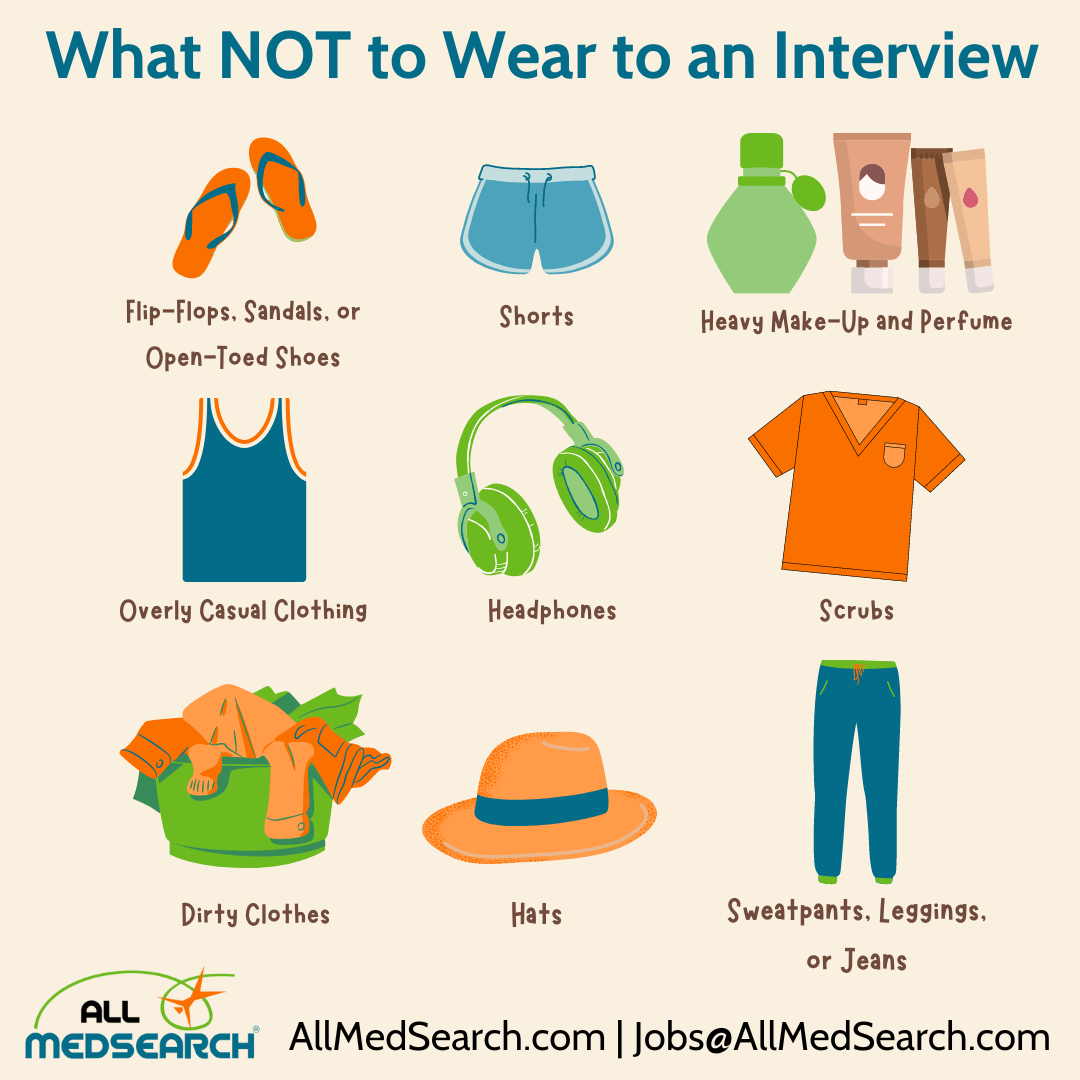
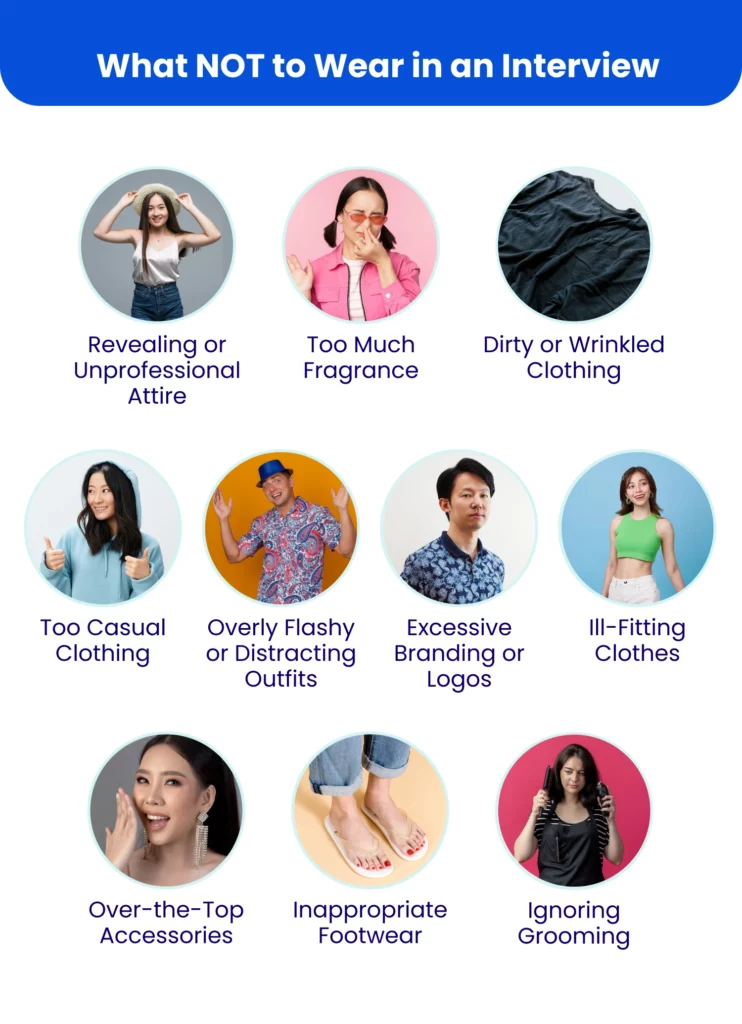
- Casual wear: No shorts, tank tops, flip-flops, or athletic shoes.
- Too much skin: Avoid clothes that are too tight, short, or revealing.
- Overpowering colors: Bright reds, neons, or loud prints can be distracting.
- Heavy perfume or cologne: Strong scents may bother your interviewer.
- Excessive jewelry: Keep it simple—no large earrings, stacks of bracelets, or flashy rings.
- Wrinkled or dirty clothes: Always check for stains and wrinkles before your interview.
- Logo-heavy apparel: Avoid shirts or jackets with big logos or slogans.
- Hats and sunglasses: These are unprofessional unless required for medical reasons.
- Unkempt hair and nails: Grooming is part of your appearance.
- Distracting makeup: Keep makeup natural and subtle.
Non-obvious insight: Even if you think flashy or trendy styles show personality, interviewers often see them as unprofessional unless the company is known for creative freedom.
How Gender Influences Interview Attire
Clothing choices often depend on gender, but professional standards are similar across the board. Here’s a comparison of typical expectations:
| Item | Men | Women |
|---|---|---|
| Suits | Dark color, two-piece | Pantsuit or skirt suit |
| Shirts | Button-down, neutral color | Blouse, modest neckline |
| Shoes | Dress shoes, leather | Closed-toe, flats or heels |
| Accessories | Watch, belt | Minimal jewelry |
| Colors | Neutral tones | Neutral or soft colors |
Tip: If you identify as non-binary or want gender-neutral options, focus on neat, professional, and modest clothing. Avoid anything too tight or loose.
The Power Of Colors And Patterns
Colors and patterns can boost or hurt your interview impact. Let’s look at what works and what doesn’t:
Recommended Colors
- Navy blue: Shows confidence and trustworthiness
- Gray: Neutral and professional
- Black: Classic, but sometimes too formal for casual roles
- White: Clean and crisp
Colors To Avoid
- Red: Too aggressive for many roles
- Orange or yellow: Seen as playful, not serious
- Neon shades: Distracting
Patterns
- Small patterns: Fine stripes or checks are okay
- Large patterns: Avoid anything too bold or loud
Data On Color Choices
A survey by Harris Interactive found that 23% of hiring managers prefer navy blue for interviews, while only 4% favor orange. Another study showed that people wearing neutral colors were rated as more trustworthy and professional.
Non-obvious insight: Patterns look bigger on camera, so for video interviews, stick to plain colors or very subtle patterns.
How Accessories Affect Your Look
Accessories can help you look polished, but too many can distract from your skills.
What Works
- Simple jewelry: One small necklace or pair of earrings
- Classic watch: Makes you look punctual
- Belts: Match belt color to shoes
- Briefcase or portfolio: Professional way to carry resumes
What To Avoid
- Multiple rings or bracelets
- Brightly colored bags
- Large sunglasses or hats
Tip: For job interviews, less is more. Choose one or two accessories, not a full collection.
Shoes: The Forgotten Detail
Shoes are often overlooked, but they matter. Dirty, worn-out shoes can ruin a great outfit.
Best Shoes For Interviews
- Men: Leather dress shoes, clean loafers
- Women: Closed-toe flats, low heels, modest boots
Shoes To Avoid
- Sneakers (unless you know the company is casual)
- Sandals or flip-flops
- Shoes with visible wear or stains
Non-obvious insight: Shoes should be comfortable as well as stylish. If you are nervous, uncomfortable shoes can distract you during the interview.
Grooming And Personal Hygiene
Personal grooming is as important as your clothes. Interviewers notice hair, nails, and even breath.
Checklist Before Your Interview
- Hair: Clean, brushed, and neatly styled
- Nails: Trimmed and clean
- Face: Freshly washed, makeup subtle
- Breath: Brush teeth before interview
- Perfume/Cologne: Use lightly or not at all
Data On Grooming
A survey by Monster.com found that 37% of employers said poor hygiene was a reason for rejecting candidates. Simple steps make a big difference.
Tip: Prepare your outfit and grooming the night before so you don’t rush on interview day.
Adapting To Virtual Interviews
Remote interviews are more common now. Here are special tips for video calls:
Clothing
- Solid colors look best on camera.
- Avoid stripes or busy patterns—they can blur or distract.
- Choose a tidy top, even if only your upper body is visible.
Lighting And Background
- Sit in a well-lit room; avoid shadows.
- Keep your background simple (plain wall or tidy bookshelf).
- Test your camera before the interview.
Example Table: Video Interview Clothing Choices
| Clothing Item | Recommended | Not Recommended |
|---|---|---|
| Shirt | Solid color, fitted | Busy patterns, oversized |
| Jacket | Blazer or cardigan | Bulky hoodies |
| Accessories | Minimal, small | Large, distracting |
Non-obvious insight: Some video platforms change color tones. Test your outfit in advance to see how it looks on screen.
Common Mistakes And How To Avoid Them
Many candidates make small mistakes that can have a big impact. Here’s how to avoid them:
- Wearing new clothes without testing: New shirts or shoes can be uncomfortable. Try them on before the interview.
- Ignoring fit: Baggy or tight clothes look unprofessional.
- Forgetting about weather: Dress for the season. For example, avoid heavy suits in summer or light clothing in winter.
- Not planning ahead: Prepare your outfit the night before.
- Overdoing perfume/cologne: Too much can make interviewers uncomfortable.
- Skipping grooming: Messy hair or nails can ruin a polished look.
Tip: Ask a friend for feedback on your outfit. Sometimes, another person will notice things you miss.
Dressing For Different Levels Of Jobs
The right outfit changes depending on the seniority of the role.
Entry-level Positions
- Aim for business casual unless the company is formal.
- Simple shirt, pants, or modest dress.
Mid-level Positions
- Business formal: Suit, tie, or tailored dress.
- Show you are ready for more responsibility.
Senior Positions
- Full suit, high-quality materials, elegant accessories.
- Polished shoes, well-groomed appearance.
Example Table: Job Level Vs. Dress Code
| Job Level | Recommended Dress Code | Key Detail |
|---|---|---|
| Entry-Level | Business casual | Neat, modest outfit |
| Mid-Level | Business formal | Suit or tailored dress |
| Senior | Executive formal | High-quality materials |
Non-obvious insight: For senior roles, small details matter more—like the quality of your shoes, watch, and even pen.
Practical Steps To Prepare Your Interview Outfit
Getting ready isn’t just about picking clothes. Here’s a step-by-step guide:
- Check the weather: Adjust your outfit so you don’t arrive sweaty or shivering.
- Lay out clothes the night before: Saves time and reduces stress.
- Try everything on: Make sure it fits and feels comfortable.
- Check for stains and wrinkles: Iron or clean as needed.
- Choose shoes and accessories: Keep them simple and neat.
- Pack a backup: Take an extra shirt or blouse in case of spills (especially for in-person interviews).
- Prepare grooming tools: Comb, brush, deodorant, and breath mints.
Tip: If you’re unsure, take a photo of your outfit and review it. Sometimes, photos highlight issues that mirrors don’t.
The Psychology Of Dressing Well
Dressing well can change how you feel and act. Studies show that “enclothed cognition”—how clothing affects your behavior—can help you feel more confident and focused. Wearing professional attire helps you think and act more professionally.
A study published in the Journal of Experimental Social Psychology found that people wearing lab coats performed better on attention tasks. This effect applies to interviews—dress smart, and you’ll perform better.
Non-obvious insight: Choosing your outfit carefully is not just about impressing others—it’s about preparing yourself mentally for success.
Beyond Clothes: Body Language And Attitude
Your outfit is only part of your interview success. Body language, attitude, and communication matter just as much.
- Smile: Shows you are friendly and confident.
- Eye contact: Makes you seem trustworthy.
- Firm handshake: Signals confidence.
- Sit up straight: Good posture shows professionalism.
Tip: Practice your body language in front of a mirror or with a friend.
How To Handle Special Cases
Sometimes, you may face unique situations:
Group Interviews
Dress as you would for a one-on-one interview. If others arrive more casually, you’ll still look professional.
Second-round Interviews
You can repeat your outfit or switch to a different color or accessory. Stay professional and consistent.
Interviews In Other Countries
Research local customs. For example, some cultures value modesty, while others prefer more formal attire. When in doubt, ask your recruiter.
Disabilities And Medical Needs
If you need special clothing (for example, orthopedic shoes), let your interviewer know. Focus on neatness and professionalism.
Credit: www.allmedsearch.com
What To Wear For Internships
Internship interviews can be tricky. You want to look professional, but not overdressed.
- Choose business casual: Neat pants, collared shirt, or modest dress.
- Avoid jeans unless the company is very casual.
- Simple accessories and shoes.
Tip: Aim for a polished but approachable look.
How Age And Experience Influence Dress
Younger candidates sometimes worry about looking too young or inexperienced. Older candidates may worry about looking outdated.
- Choose modern, classic styles.
- Avoid trends that feel too young or too old.
- Aim for timeless pieces, like blazers, button-down shirts, and modest dresses.
Non-obvious insight: Even small upgrades—like a new pair of shoes or a neat blazer—can help you look more experienced.
Handling Last-minute Problems
Things can go wrong before an interview. Here’s how to handle them:
- Stain on shirt: Keep a backup shirt or blouse.
- Lost button: Safety pins can help in a pinch.
- Rainy day: Carry a small umbrella and change shoes if needed.
- Wrinkled clothes: Hang clothes in the bathroom while you shower; steam can help.
Tip: Arrive early so you have time to fix any last-minute issues.
The Role Of Sustainability And Ethics
Many companies care about ethical and sustainable choices. You can show awareness by:
- Choosing clothes made from eco-friendly materials.
- Avoiding fast fashion items.
- Investing in quality pieces that last.
Tip: Ethical choices can give you extra confidence and may impress companies with strong values.
Credit: penbrothers.com
One Final Checklist Before Your Interview
- Clothes are clean, neat, and fit well.
- Shoes are polished and comfortable.
- Accessories are simple and professional.
- Hair and nails are tidy.
- Breath and hygiene are fresh.
- Outfit matches the company culture.
- You feel confident and comfortable.
Tip: If you answer “yes” to all these points, you’re ready to make a great impression.
Frequently Asked Questions
What Should I Wear If I Don’t Know The Company Dress Code?
If you are unsure, wear business formal or business casual. Choose neutral colors, a collared shirt or blouse, and closed-toe shoes. It’s better to be slightly overdressed than underdressed.
Can I Wear Jeans To An Interview?
Jeans are only acceptable for very casual workplaces, such as tech startups. Even then, choose dark, clean, and well-fitted jeans with a neat shirt. Never wear ripped, faded, or baggy jeans.
Is It Okay To Show Tattoos Or Piercings?
This depends on the company culture. For formal or conservative companies, cover tattoos and remove extra piercings. For creative or modern companies, you may show them if they are not distracting. When in doubt, keep them hidden.
Should I Wear A Tie For Every Interview?
A tie is required for corporate, finance, or law interviews. For business casual or creative roles, a tie is optional. If you choose to wear one, keep the design simple and colors neutral.
Where Can I Find More Advice On Interview Attire?
You can find professional advice and examples at The Muse, which offers detailed guides on dressing for different industries and roles.
Making the right outfit choice for your interview isn’t just about looking good—it’s about feeling confident and showing respect for the opportunity. Remember, preparation and attention to detail set you apart. With these tips, you can dress smart, avoid mistakes, and make your best impression.
Good luck!
