

What Not to Wear to the Gym: Essential Style and Safety Tips
What Not To Wear To The Gym
Walking into a gym can feel like stepping into a new world. The right clothes help you move freely, boost your confidence, and keep you safe. But the wrong outfit? It can distract you, cause discomfort, and even lead to injury. Many people focus on what they should wear, but knowing what not to wear to the gym is just as important. You might not notice if your shirt is too tight or your shoes aren’t supportive—until you pull a muscle or slip on the treadmill. In this guide, you’ll discover the clothes and accessories that can turn your workout from good to bad, and learn how to avoid common mistakes that even regular gym-goers make.
Why Gym Clothing Matters
Choosing what to wear for exercise isn’t just about looking good. It’s about safety, comfort, and performance. The right clothing wicks away sweat, prevents chafing, and protects your body as you move. The wrong choices can lead to skin irritation, overheating, and poor posture. Gym etiquette also matters—some clothing can distract others or even break gym rules. Understanding what not to wear to the gym will help you make smart decisions every time you pack your bag.
Common Clothing Mistakes At The Gym
Many people make the same clothing mistakes when heading to the gym. Some choose style over function, while others pick old, worn-out clothes that no longer serve their purpose. Here are some of the most common errors and why they matter.
1. 100% Cotton T-shirts
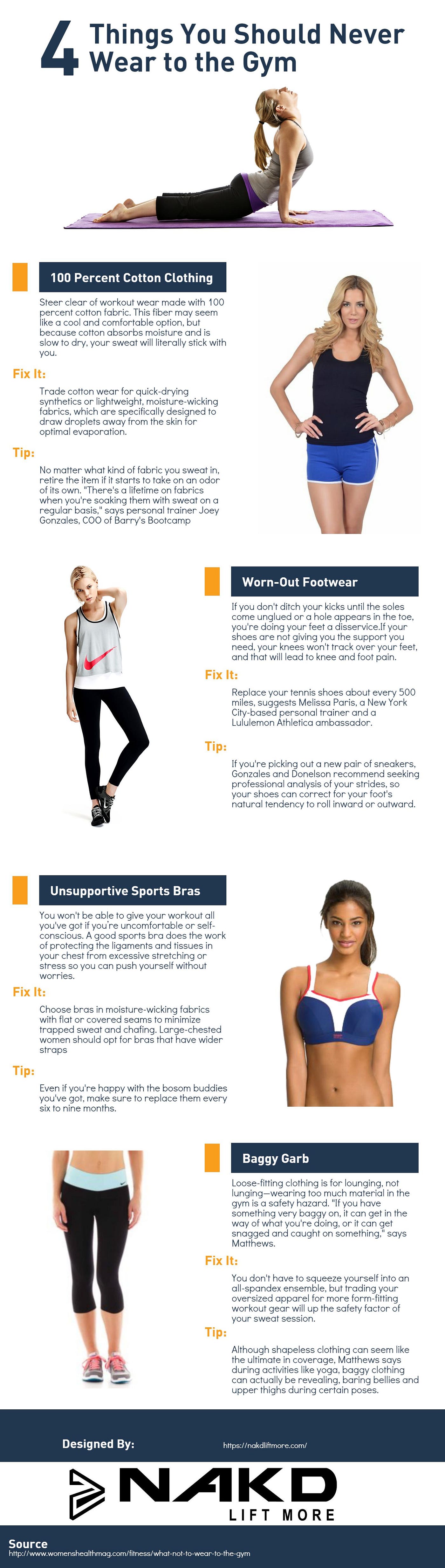
Cotton is soft and comfortable, but it absorbs sweat and holds onto moisture. When you work out, a cotton shirt gets heavy, sticks to your skin, and can cause chills as your body cools down. This fabric does not dry quickly, making it a poor choice for intense exercise. Instead, opt for moisture-wicking fabrics that draw sweat away from your body.
2. Denim Shorts Or Jeans
Denim is too stiff and heavy for the gym. It restricts movement, causes chafing, and doesn’t stretch as you squat, lunge, or run. Wearing jeans at the gym can also make you look out of place and uncomfortable. Choose flexible gym shorts, leggings, or joggers designed for physical activity.
3. Old, Worn-out Shoes
Supportive shoes are crucial for protecting your feet, ankles, and knees. Wearing shoes with worn-out soles or broken support increases your risk of slips and injuries. Old shoes also offer less cushioning, which can lead to joint pain. Replace your gym shoes every few hundred kilometers or if you notice the tread wearing down.
4. Loose Or Baggy Clothing
Loose shirts or pants might feel comfortable, but they can catch on machines, weights, or other equipment. This can cause accidents or limit your range of motion. Baggy clothes can also hide your form, making it harder for trainers to spot problems with your technique.
Choose fitted but not tight clothes that move with your body.
5. Flip-flops Or Sandals
Open-toed shoes offer no protection in a gym environment. Weights can fall, machines can pinch your toes, and floors can be slippery. Flip-flops and sandals also provide no arch support, increasing the risk of injury. Always wear closed, supportive athletic shoes for any workout.
6. Jewelry And Accessories
Wearing rings, necklaces, or bracelets can cause injury during exercise. Rings can pinch your fingers when lifting weights, and necklaces can get caught in machines. Large earrings can snag or pull. Sweatbands are a better choice if you need to keep hair or sweat out of your face.
7. Heavy Fragrances Or Perfume
Strong scents can be overwhelming in a closed gym environment. Sweat mixes with perfume, creating an unpleasant smell for you and those around you. Some people are allergic or sensitive to fragrances. Use deodorant, but avoid heavy colognes or perfumes before your workout.
8. See-through Or Sheer Fabrics
Some leggings, shorts, or tops become see-through when stretched or wet. This can lead to embarrassing moments and make you feel self-conscious. Always check your workout clothes in bright light and try squatting or stretching in front of a mirror before heading out.
9. Everyday Bras Instead Of Sports Bras
Regular bras aren’t designed for movement. They offer little support and can cause discomfort, chafing, or even pain during high-impact activities. A good sports bra supports your chest, reduces movement, and keeps you comfortable through any routine.
10. Dress Shirts Or Button-ups
Sometimes people drop by the gym in office clothes, but dress shirts are not suitable for exercise. They restrict arm movement, trap sweat, and can easily tear. Change into proper gym wear before starting your session to avoid damaging your clothes or limiting your activity.
11. Compression Gear That’s Too Tight
Compression wear can help with muscle support, but if it’s too tight, it restricts blood flow and breathing. Overly tight gear can cause numbness or even bruising. Make sure your compression clothing feels snug, not suffocating.
12. Street Clothes
Gym equipment is designed for workout attire, not streetwear. Wearing clothes like khakis, polos, or dresses limits your movement and increases the risk of getting caught on equipment. Stick to athletic wear for safety and hygiene.
13. Clothes That Reveal Too Much
Some gyms have dress codes to keep the environment comfortable for everyone. Clothes that are too short, low-cut, or revealing might break these rules or make others uncomfortable. Choose outfits that cover you appropriately and stay in place as you move.
14. Excessively Layered Clothing
Wearing too many layers can cause you to overheat quickly. While layering is useful in cold weather, you should be able to remove extra clothing easily as your body temperature rises. Avoid heavy sweatshirts or jackets indoors.
15. Clothing With Offensive Graphics Or Language
Gym is a shared space. Avoid shirts or accessories with offensive words, graphics, or symbols. This keeps the environment positive and welcoming for all members.
16. Non-breathable Fabrics
Certain materials, like plastic-based or rubber suits, are designed to make you sweat more. These are uncomfortable, block airflow, and can cause dangerous overheating. Choose clothes that let your skin breathe.
17. Socks That Are Too Thin Or Too Thick
The wrong socks can lead to blisters, slipping, or poor shoe fit. Thin socks might not protect your feet, while thick socks can make shoes too tight. Pick athletic socks that cushion and wick moisture.
18. Hats And Caps Indoors
Hats can trap heat, cause sweat buildup, and block your vision. In most cases, they aren’t necessary for indoor exercise. If you need to keep hair out of your face, use a headband instead.
19. Watches Or Smart Devices That Get In The Way
Fitness trackers can be helpful, but bulky watches or devices can catch on equipment or distract you. If you wear a device, make sure it fits well and doesn’t interfere with your movements.
20. Clothing That Smells Bad
Even clean-looking clothes can carry odor if not washed properly. Sweat and bacteria build up in gym clothes, especially synthetics. Wash your gear after every use and avoid re-wearing unwashed items.

Credit: testifysc.com
The Science Behind Gym Clothing Choices
What you wear affects more than comfort—it can impact performance and safety. Several studies show that moisture-wicking fabrics lower your skin temperature, reduce chafing, and decrease the risk of overheating. Proper footwear supports your joints and reduces injuries, while ill-fitting shoes are a major cause of gym accidents. Compression gear, when used correctly, can help with muscle recovery and reduce soreness.
Non-breathable materials like plastic or rubber can trap sweat, increasing your risk of dehydration and heat exhaustion. Loose clothes can snag on equipment, leading to falls or accidents. Jewelry can cause cuts or get caught, creating a serious safety hazard.
Even the wrong socks can lead to blisters or foot pain, making it harder to finish your workout.
Real-world Examples: Gym Clothing Fails
Sometimes, seeing what goes wrong can help you avoid the same mistakes. Here are a few real-world examples of what not to wear to the gym:
- A man wore denim jeans to a spin class and ended up with severe chafing after 20 minutes of pedaling.
- Someone wore flip-flops to the treadmill and slipped, injuring their ankle.
- A woman wore a sheer pair of leggings, not realizing they were see-through when stretched during squats.
- An athlete wore a heavy metal necklace, which got caught on a cable machine, causing a painful neck injury.
- Wearing an old t-shirt soaked in sweat, a man caught chills when leaving the gym, leading to a week-long cold.
These stories aren’t rare. Most people learn the hard way, but you can skip the pain by choosing your gym clothes wisely.
Choosing Better: What To Wear Instead
If you’re unsure what to wear, here are some safe, comfortable options:
- Moisture-wicking tops: These draw sweat away and dry fast.
- Athletic shorts or leggings: Flexible, supportive, and designed for movement.
- Supportive athletic shoes: Choose the right type for your workout—running, lifting, or cross-training.
- Sports bras: Offer support and reduce discomfort.
- Athletic socks: Prevent blisters and wick away moisture.
- Minimal accessories: Skip jewelry and use sweatbands or hair ties.
- Layers: Wear a light jacket or hoodie if it’s cold, but be ready to remove it as you warm up.
Here’s a simple comparison of the wrong vs. right clothing choices for the gym:
| What Not to Wear | What to Wear Instead |
|---|---|
| 100% Cotton Shirt | Moisture-Wicking Top |
| Denim Jeans | Athletic Shorts/Leggings |
| Flip-Flops | Supportive Sneakers |
| Everyday Bra | Sports Bra |
| Heavy Jewelry | Sweatband/Hair Tie |
Gym Dress Codes: What You Need To Know
Most gyms have a dress code for safety, hygiene, and comfort. Breaking these rules can get you a warning or even banned from the facility. Here’s what many gyms require:
- Closed-toe shoes at all times
- No jeans or street clothes on gym floors
- No overly revealing clothing
- Shirts required (no working out shirtless)
- No offensive graphics on clothing
If you’re unsure, ask the staff or check the posted rules. Respecting the gym’s dress code helps create a safe and welcoming space for everyone.
Hygiene And Gym Clothes
Wearing clean, dry gym clothes is more important than many people realize. Sweat and bacteria build up quickly, especially in synthetic fabrics. This can lead to body odor, skin infections, or fungal problems like athlete’s foot. Wash your clothes after every workout, and never re-wear items unless they’re freshly cleaned.
It’s also smart to:
- Bring a fresh shirt if you sweat heavily.
- Use a towel to wipe equipment before and after use.
- Change socks and underwear daily.
Proper hygiene protects you and others, making your gym experience more enjoyable.
Weather And Seasonal Mistakes
People often dress for the weather outside, not the gym’s climate. Here’s what to watch for:
- In winter: Avoid wearing heavy coats or scarves inside. Layer with a light jacket that you can remove.
- In summer: Don’t wear clothing that exposes too much skin, as sweat and bacteria spread easily. Choose breathable, quick-drying fabrics.
Gyms control temperature, so focus on comfort and performance—not just outside weather.

Credit: www.youtube.com
Advanced Tips: For Experienced Gym-goers
Even experienced gym users can fall into bad habits. Here are some non-obvious insights:
- Rotate your shoes. Wearing the same pair daily causes them to wear out faster. Rotate two pairs for better support.
- Test your outfit at home. Try squats, lunges, or jumping jacks to check for see-through fabric or restrictive fit.
- Don’t skip washing accessories. Headbands, gloves, and wrist supports can harbor bacteria if not cleaned regularly.
- Upgrade with activity. If you switch sports or routines, update your gear. For example, running shoes are not ideal for weightlifting.
Making small changes can boost your comfort, performance, and confidence.
How The Wrong Clothes Affect Performance
Wearing the wrong gym clothes does more than annoy you. It can slow your progress. Studies show that uncomfortable or restrictive clothing makes you more likely to quit early or lose focus. Poor shoes or socks lead to blisters, forcing you to skip workouts. Heavy or sweaty clothes cause overheating, lowering your endurance.
On the other hand, the right outfit can boost motivation and help you push harder. Feeling comfortable and supported makes it easier to focus on your workout, not your clothes.
Quick Reference: What Not To Wear By Activity
Different workouts require different gear. Here’s a quick guide:
| Activity | Definitely Avoid | Best Choice |
|---|---|---|
| Running | Cotton Shirts, Flip-Flops | Moisture-Wicking Top, Running Shoes |
| Weightlifting | Loose Sleeves, Jewelry | Fitted Shirt, Supportive Sneakers |
| Yoga | Baggy Pants, Thick Socks | Stretchy Leggings, Barefoot/Grip Socks |
| Spin Class | Jeans, Open-Toe Shoes | Bike Shorts, Athletic Shoes |
| HIIT/Cardio | Heavy Layers, Slippery Socks | Light Top, Grip Socks/Sneakers |
How To Build A Gym Wardrobe
Building a good gym wardrobe takes time, but a few smart purchases go a long way:
- Invest in basics: Start with 2-3 tops, 2-3 bottoms, and 2 sports bras or underwear.
- Choose quality over quantity: One good pair of shoes is better than three cheap ones.
- Check fit often: Your body can change with exercise—update clothes as needed.
- Keep spare clothes: Store an extra shirt, socks, and underwear in your gym bag.
- Prioritize comfort and safety: Always choose function before fashion.
Environmental Impact Of Gym Clothes
Not all gym clothes are equal for the planet. Synthetic fabrics like polyester take longer to break down and can release microplastics when washed. When updating your gym wardrobe, consider:
- Choosing recycled materials when possible
- Washing less frequently by airing out clothes if they aren’t soaked
- Donating old clothes instead of throwing them away
Some brands now offer eco-friendly options that balance performance and sustainability. To learn more about the environmental impact of athletic wear, visit the Wikipedia page on activewear.
Common Myths About Gym Clothing
You may hear advice that isn’t always true. Here are some common myths:
- “You have to buy expensive brands.” Not true—mid-range brands often perform just as well.
- “Any shoe is fine.” The right shoe for your activity matters more than the brand.
- “Loose clothes are best for hiding your body.” They can hide poor form and cause accidents.
- “Wearing plastic suits will help lose fat.” It only causes water loss, not fat burning, and is dangerous.
- “You can wear gym clothes multiple times.” Sweat and bacteria build up quickly—wash after every use.
Understanding these myths helps you make smarter choices.
Credit: medium.com
Frequently Asked Questions
What Should I Absolutely Never Wear To The Gym?
Avoid open-toed shoes, denim, heavy jewelry, everyday bras, and clothes that are too tight or revealing. These items are unsafe, uncomfortable, or against most gym rules.
Can I Wear Makeup Or Perfume When Working Out?
It’s best to avoid heavy makeup or perfume. Sweat can mix with these products, causing skin problems or unpleasant odors. Use a light moisturizer and deodorant instead.
How Often Should I Replace Gym Shoes And Clothes?
Replace gym shoes every few hundred kilometers of use or when you notice wear. Replace clothes when they lose shape, become see-through, or no longer wick moisture.
Are Leggings Okay To Wear To The Gym?
Yes, as long as they are not see-through and are made from athletic, moisture-wicking material. Test them in good lighting with movement before wearing them out.
Why Do Some Gyms Have Strict Dress Codes?
Strict dress codes protect safety, hygiene, and comfort for all members. Rules prevent injuries and help everyone feel welcome and focused on their workout.
Choosing what not to wear to the gym is as important as picking the right outfit. With the right knowledge, you can avoid discomfort, prevent injury, and focus on your goals. Smart clothing choices help you look, feel, and perform your best—so your time at the gym is always well spent.
