

What Not to Wear to the Gym: Avoid These Common Mistakes
What Not To Wear To The Gym
Stepping into a gym for a workout is more than just motivation and a good playlist. The clothes you wear can change your performance, safety, and how comfortable you feel. Many people make mistakes with gym outfits that lead to discomfort, injuries, or even embarrassment.
Some choose style over function, while others wear items that are not suitable for sweating and movement. Knowing what not to wear to the gym can help you avoid these problems and get the most from your exercise.
This guide explores what clothing and accessories you should avoid at the gym, why they’re not a good choice, and what to use instead. Some mistakes are obvious, but others catch even experienced gym-goers by surprise. If you want to feel confident and focused while working out, understanding the don’ts of gym wear is as important as the dos.
Common Mistakes People Make With Gym Clothing
It’s easy to grab any comfortable shirt and shorts before heading out. But the wrong choices can affect your workout more than you think. Here are common mistakes many people make:
- Wearing Everyday Cotton Clothing: Cotton feels soft and natural but gets heavy and sticky once you sweat.
- Choosing Clothes That Are Too Tight or Too Loose: Both extremes can restrict movement or become a safety risk with equipment.
- Ignoring Appropriate Footwear: Wrong shoes increase the risk of injury.
- Wearing Jewelry or Accessories: These can get caught on machines or cause distractions.
- Not Considering Hygiene: Dirty or unwashed clothing can smell bad and spread bacteria.
- Selecting Clothes Without Moisture Control: Sweat stays on your skin, making you uncomfortable.
- Wearing Clothes Not Suited for Your Workout: Running, lifting, yoga, and cycling all have different needs.
Let’s look deeper into what you should avoid and why.
Cotton Clothing: Why It’s Not Gym-friendly
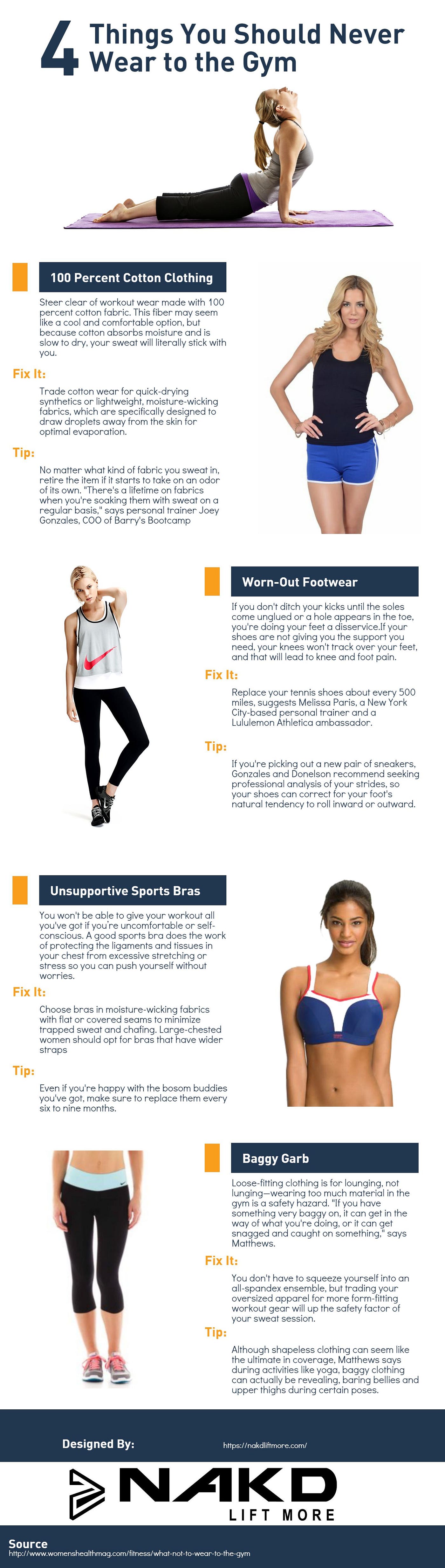
Cotton is a favorite fabric for daily wear, but it’s not ideal for exercise. When you sweat, cotton absorbs moisture and holds it against your skin. This causes several problems:
- You feel heavy and wet, especially during intense workouts.
- Wet fabric increases the risk of chafing and skin irritation.
- Cotton dries slowly, leaving you uncomfortable for the rest of your session.
For example, running on a treadmill in a cotton T-shirt can leave you soaked after just 10 minutes. Instead, look for clothes made from moisture-wicking materials like polyester blends or technical fabrics. These pull sweat away from your skin, keeping you dry and comfortable.
Ill-fitting Clothes: Too Tight Or Too Loose
Choosing the right fit is crucial for gym safety and performance.
Clothes That Are Too Tight
Wearing clothes that squeeze your body can:
- Restrict blood flow and reduce comfort.
- Limit your range of motion during stretches or weightlifting.
- Lead to overheating, as tight fabrics may not breathe.
Some people wear compression gear, but it should be designed for exercise and not cause discomfort. Avoid fashion leggings or tops that feel constricting.
Clothes That Are Too Loose
Baggy clothes may seem comfortable, but they:
- Get caught in gym equipment like treadmills, bikes, or weights.
- Make it hard for trainers to see your form and correct it.
- Distract you during cardio or high-intensity movements.
Loose sweatpants can tangle around your feet when running, and baggy shirts can slip during yoga poses. Choose clothes with a balanced fit—not too tight, not too loose.
Incorrect Footwear: More Than Just A Fashion Mistake
Shoes matter more than most people realize. The wrong footwear can cause:
- Blisters and foot pain.
- Slips, trips, and falls.
- Poor support, leading to knee or ankle injuries.
Wearing running shoes for weightlifting, or vice versa, is a common error. Each activity needs specific support:
- Running: Shoes with cushioning for shock absorption.
- Weightlifting: Flat, stable soles for support.
- Cross-training: Shoes with lateral support for side movements.
- Yoga or Pilates: Flexible soles or barefoot grip socks.
Heels, sandals, or flip-flops are never suitable. They don’t offer grip or protection and are not safe around heavy equipment.
Here’s a comparison of different shoe types for the gym:
| Shoe Type | Best For | Why to Avoid in Other Activities |
|---|---|---|
| Running Shoes | Treadmill, Cardio | Too soft for weightlifting; unstable for lateral moves |
| Weightlifting Shoes | Squats, Deadlifts | Too stiff for running; not enough shock absorption |
| Cross-Trainers | HIIT, Classes | Not specialized for heavy lifting or long-distance running |
| Sandals/Flip-Flops | None | No support or safety; dangerous around weights |
Jewelry And Accessories: Small Items, Big Risks
Wearing jewelry like rings, necklaces, bracelets, or watches is risky at the gym. These items can:
- Get caught in machines or weights, causing injury.
- Scratch your skin or distract you during exercise.
- Collect sweat, dirt, and bacteria, making them hard to clean.
Even smartwatches and fitness bands should be used carefully. If your workout involves lifting, push-ups, or yoga, remove all accessories. If you must track your stats, use devices with sweat-resistant straps and avoid metal bands.
Fashion-first Outfits: Not All Trends Are Safe
Some people wear trending outfits, not realizing they’re not gym-appropriate.
- Sheer leggings may become see-through when you squat or stretch.
- Crop tops can ride up, leaving you adjusting your clothes instead of focusing on your workout.
- Streetwear brands often use fabrics that trap heat or don’t stretch well.
It’s tempting to look stylish, but function should come first. Clothes designed for exercise are tested for movement, sweat, and durability.
Not Wearing The Right Undergarments
Undergarments are often overlooked but play a big role in comfort and hygiene.
For Women
A regular bra does not provide enough support during running or jumping. Choose a sports bra that matches your activity level:
- Low impact: Yoga, stretching.
- Medium impact: Weight training, cycling.
- High impact: Running, HIIT.
Wearing the wrong bra can lead to pain and long-term discomfort.
For Men
Loose underwear may not offer enough support, leading to chafing or discomfort during dynamic movements. Sweat-wicking boxer briefs or athletic underwear are best.
Regular cotton underwear holds sweat and can cause irritation. Choose synthetic blends designed for exercise.
Heavy Or Thick Fabrics: Avoid Overheating
Some people wear hoodies, sweatshirts, or thick tracksuits to sweat more, hoping to lose weight faster. This is a common myth. Sweating more just loses water, not fat, and can lead to overheating or dehydration.
Heavy fabrics:
- Trap heat, raising your body temperature.
- Prevent sweat from evaporating, making you feel tired quickly.
- Increase the risk of heat exhaustion or fainting.
Choose lightweight layers you can remove as you warm up. Save thick clothing for outdoor winter training.
Street Shoes Or Dirty Shoes: Hygiene And Safety
Bringing shoes you wear outside into the gym is a mistake for two reasons:
- Hygiene: Outside shoes bring in dirt, bacteria, and germs, which can spread across gym floors and mats.
- Safety: Street shoes are not designed for gym traction and can slip easily on smooth surfaces.
Always change into clean gym shoes before starting your workout. This is especially important in group classes and shared spaces.
Perfumes And Strong Fragrances: Less Is More
Heavy perfumes or body sprays might seem like a good idea, but in a confined gym, they can cause problems:
- Strong scents become overwhelming as you sweat.
- Others may have allergies or asthma triggered by fragrances.
- Perfume and sweat mix can create an unpleasant smell.
Use a neutral deodorant and shower before your workout if possible. Let your workout clothes and clean body do the talking.
Clothing Without Breathability
Some trendy gym outfits look good but are made from non-breathable fabrics like PVC, rubber, or pure nylon. These trap sweat and heat, causing:
- Rashes or skin irritation.
- Increased body temperature and fatigue.
- Bad odor buildup.
Always check tags for words like “breathable,” “moisture-wicking,” or “ventilated. ” If a shirt or leggings feel sticky after five minutes, they’re not right for exercise.
Clothes That Don’t Match Your Activity
Wearing the wrong clothes for your workout type is a common error. Each activity needs specific features:
- Yoga: Stretchy, flexible fabrics that let you move freely.
- Cycling: Padded shorts to avoid discomfort from the seat.
- Running: Light clothes that reduce chafing and wick sweat.
- Weightlifting: Stable, fitted clothes that don’t catch on bars or machines.
If you do multiple activities, look for versatile gym wear with moderate stretch, support, and sweat management.
Here’s a helpful overview:
| Activity | Recommended Clothing | Clothes to Avoid |
|---|---|---|
| Yoga | Stretchy leggings, fitted tops | Jeans, stiff shorts, loose T-shirts |
| Running | Moisture-wicking shirts, shorts | Cotton tops, baggy pants |
| Weightlifting | Fitted T-shirt, flat shoes | Loose pants, running shoes |
| Cycling | Padded shorts, snug jersey | Baggy shorts, sweatpants |
Makeup At The Gym: Not A Good Idea
Many people wear makeup to the gym for confidence. But heavy makeup is not designed for sweating and movement. It can:
- Block pores, leading to breakouts or acne.
- Run into your eyes, causing irritation.
- Stain your clothes.
If you prefer some coverage, use tinted moisturizer or mineral powder that lets your skin breathe. For long workouts, clean your face before starting.
Unwashed Or Dirty Clothes: More Than Just An Odor Problem
Reusing dirty gym clothes is a serious mistake. Sweat-soaked fabrics:
- Smell bad, even after a short session.
- Grow bacteria and fungi that can cause skin infections.
- Make you uncomfortable and self-conscious.
Always wash your gym clothes after each use. If you exercise daily, have enough outfits for several days. If you forget, use plain water to rinse and hang them to dry.

Credit: testifysc.com
Forgetting About Socks
Socks are not just for style. Wearing the wrong socks, or none at all, can cause:
- Blisters from shoe friction.
- Athlete’s foot or fungal infections.
- Cold feet or lack of support.
Avoid cotton socks that hold sweat. Choose synthetic blends or wool designed for exercise. Socks should fit snugly but not be too tight.
Clothes With Zippers, Buttons, Or Sharp Parts
Some gym-goers wear jackets or pants with zippers, metal buttons, or studs. These can:
- Scratch gym equipment or your skin.
- Get caught in machines, risking injury.
- Damage yoga mats or padded benches.
Choose seamless or soft-edged designs for safety and comfort.
Clothes That Reveal Too Much
Confidence is important, but revealing outfits may not be suitable for shared gym spaces. Clothes that are too short, low-cut, or see-through can:
- Make you or others uncomfortable.
- Distract you from your workout.
- Violate gym dress codes.
Choose clothes that let you move freely but cover enough for group workouts. Check your outfit in good lighting before heading out.
Overly Bright Or Reflective Clothing
High-visibility clothes are great for outdoor running at night, but neon colors or reflective materials can be distracting indoors. They may:
- Attract unwanted attention.
- Reflect gym lighting in ways that bother others.
Subtle colors and simple designs work best for indoor gyms.
Heavy Layers Or Multiple Outfits
Some people wear several layers hoping to “sweat out” fat. In reality, this just causes:
- Dehydration and dizziness.
- Reduced workout quality.
- Extra laundry with little benefit.
Layer lightly and remove as you warm up. Your goal is comfort, not sweating as much as possible.
Clothes That Don’t Support Movement
Some clothes restrict your movement, even if they look sporty. For example:
- Fashion joggers with no stretch.
- Polo shirts with stiff collars.
- Shorts that ride up or slide down.
Test your outfit at home. If you can’t do a deep squat or lift your arms above your head comfortably, change your clothes.
Clothes With Offensive Prints Or Slogans
Workout clothes with offensive language, images, or slogans can make the gym environment uncomfortable for others. Most gyms have dress codes banning such items. Always check your outfit for appropriate content.
Not Considering Temperature Or Season
Some people wear the same outfit all year. This can lead to overheating in summer or feeling cold in winter. Adjust your clothes to the weather:
- In hot weather: Lightweight, sleeveless tops and shorts.
- In cold weather: Breathable base layers with a light jacket.
Always dress in layers for outdoor workouts, and use a hat or gloves if needed.

Credit: www.youtube.com
Common Myths About Gym Clothing
Many gym-goers believe in myths that can lead to poor choices. Here are two common ones:
1. Wearing More Clothes Burns More Fat.
This is not true. Sweating more just loses water weight, which comes back once you rehydrate. Fat loss depends on calorie burn, not sweat.
2. Expensive Brands Mean Better Performance.
Not always. Some affordable brands offer excellent quality and function. Focus on fit, material, and comfort, not just price or logo.
Lesser-known Tips For Choosing The Right Gym Wear
While avoiding the wrong clothes is important, knowing what works best is even better. Here are some tips:
- Test Your Clothes: Do a few squats, jumps, and stretches at home before heading out.
- Check for Seams: Flat seams or seamless designs help prevent chafing.
- Look for Antimicrobial Fabrics: These help reduce odor buildup.
- Double Up on Sports Bras for High Impact: Women with larger busts may benefit from extra support.
- Break in New Shoes Gradually: Avoid wearing new shoes for a long workout on the first day.
Credit: medium.com
How To Build A Functional Gym Wardrobe
You don’t need a closet full of expensive gear. Start with these essentials:
- 2-3 moisture-wicking shirts
- 2 pairs of gym shorts or leggings
- 2 sports bras (for women)
- 3 pairs of athletic socks
- 1 pair of proper gym shoes
- 1 lightweight jacket or hoodie for warm-up
Replace items when they lose their shape, stretch, or absorbency.
How Dress Codes And Gym Etiquette Affect Clothing Choices
Most gyms have dress codes for safety, hygiene, and comfort. Common rules include:
- No open-toe shoes.
- No jeans or cargo pants.
- Shirts must be worn at all times.
- No offensive slogans or images.
Follow these rules to avoid being asked to change or leave. Good etiquette also means respecting shared spaces and not distracting others with your outfit choices.
For more information about gym etiquette and health, you can visit the CDC Physical Activity Guidelines.
Frequently Asked Questions
Is It Okay To Wear Leggings To The Gym?
Yes, as long as the leggings are made of stretchy, moisture-wicking fabric and are not see-through. Avoid fashion leggings that don’t hold up to movement and sweat.
Can I Wear Sandals Or Flip-flops For Light Workouts?
No. Sandals and flip-flops do not offer enough support or protection. Even for light workouts, always wear closed-toe, supportive shoes to avoid injury.
How Often Should I Wash My Gym Clothes?
Wash gym clothes after every use to remove sweat, bacteria, and odor. If you can’t wash them right away, hang them to air out.
What Should I Do If I Sweat A Lot At The Gym?
Choose moisture-wicking clothing and bring a towel. Avoid cotton, and consider wearing a sweatband or wristbands if needed. Hydrate before, during, and after your workout.
Are Compression Clothes Good For The Gym?
Compression clothes can help with muscle support and recovery, but they must fit well—not too tight or loose. Avoid non-athletic compression gear.
Wearing the right clothes can boost your performance, confidence, and safety in the gym. By avoiding the mistakes above and choosing function over fashion, you’ll be ready for every workout with comfort and style.
