

What is Not Business Casual: Common Dress Code Mistakes
What Is Not Business Casual
Many people hear the term business casual and think it means “wear anything but a suit.” But this is not true. Business casual is a dress code with clear boundaries. If you wear the wrong clothes, you might look unprofessional or even disrespectful at work. Understanding what is not business casual is just as important as knowing what is allowed.
This article gives you a practical guide to what does not fit the business casual dress code. You will discover the key mistakes, learn how to avoid them, and see real examples. By the end, you will be able to choose your work clothes confidently, knowing you look professional and fit in.
The Meaning Of Business Casual
Before we explain what is not business casual, let’s clarify what business casual means. Business casual is a blend of professional attire and comfortable clothing. It is less formal than a full business suit, but more polished than everyday casual wear. The goal is to look neat, smart, and ready for work, without appearing too stiff.
Business casual is not about dressing down as much as you want. It is about finding the right balance between looking professional and feeling comfortable. This dress code is common in offices where the work is serious but the environment is not overly strict.
Many people misunderstand this balance and think it means almost anything goes.
Common Features Of Business Casual
- Collared shirts (button-down or polo)
- Dress slacks or khakis
- Closed-toe shoes (dress shoes, loafers)
- Blouses or tops with sleeves
- Skirts at knee-length or longer
- Sweaters, cardigans
A key point is that business casual clothes should look tidy and clean. They should not be wrinkled, stained, or too relaxed. For example, a crisp button-down shirt is business casual, but a wrinkled one is not. Even small details like ironing or tucking in your shirt can make a big difference.
Anything outside these guidelines is likely not business casual. But the line can be blurry, so let’s explore what falls outside the boundary.
Clothing That Is Not Business Casual
Many items are popular in everyday life but do not fit the business casual style. Wearing them can make you look out of place at work.
1. T-shirts And Graphic Tops
A plain t-shirt, especially with logos or graphics, is not business casual. These shirts look too informal and often carry messages that may not be appropriate for the workplace.
Even if a t-shirt is expensive or trendy, it does not meet the business casual standard. For example, a plain white tee is comfortable but lacks the structure needed for a professional look. Graphic tees can also distract coworkers or send the wrong message about your attitude at work.
2. Jeans And Denim
While some workplaces allow dark, well-fitted jeans, most classic business casual dress codes do not. Light-wash, ripped, or distressed jeans are never business casual. Denim jackets also fall outside the dress code.
Jeans are usually seen as weekend wear, not office wear. Even “designer jeans” do not count as business casual unless your company has made an exception. Denim fabrics, whether pants or jackets, signal a casual tone that does not fit business environments.
Some companies allow dark, tailored jeans, but this is rare and should always be checked first.
3. Shorts And Capris
Shorts are always casual, even if they look neat. Capris (pants ending above the ankle) are not considered professional enough for most business environments.
Shorts show too much leg and are better for outdoor or leisure activities. Capris can look stylish, but they break the traditional length rule. Many companies want pants to cover the ankle or go to the knee, so capris and shorts are best avoided unless you see senior staff wearing them.
4. Athletic Wear
Clothes made for sports, like sweatpants, hoodies, track jackets, or leggings, are not business casual. Even if they are new and clean, they are designed for comfort, not professionalism.
Athletic wear often has bold logos, bright colors, and stretchy materials. These features are practical for exercise but not for the office. For example, yoga pants and running shirts look relaxed and can make you seem less serious about your job.
Avoid anything designed for the gym or sports.
5. Sneakers And Sandals
Sneakers, even stylish ones, are too relaxed for business casual. Flip-flops, slides, and open-toe sandals are also not suitable. These shoes can look unprofessional and often break office safety rules.
Shoes matter a lot in business casual dress codes. Even if your sneakers are clean and new, they signal a casual attitude. Sandals expose your feet and can be a safety hazard in some workplaces. Only closed-toe dress shoes, loafers, or low heels are truly business casual.
6. Revealing Or Tight Clothing
Clothes that are very tight, low-cut, or show too much skin are never business casual. Workplaces expect modesty. Crop tops, tank tops, and mini skirts are all outside the dress code.
You should avoid anything that draws attention to your body instead of your work. For example, a low-cut blouse or a skirt above mid-thigh may be fashionable, but it does not meet business standards. Modesty is a key value in most offices.
7. Loud Patterns And Bright Colors
Business casual tends to favor neutral or subdued colors. Neon shades, bold prints, or flashy sequins are not suitable. Clothes should not distract from your work.
Patterns and colors should help you look calm and focused, not loud or playful. For instance, a bright floral dress or a shirt with animal prints might be fun but are better for parties or holidays. Stick to simple designs and colors.
8. Clothing With Rips Or Holes
Any item with visible damage, rips, or holes—whether jeans, shirts, or jackets—is not professional. Even “fashionable” distressing is inappropriate.
Clothing should look well cared for. Rips, holes, or stains suggest you do not value your appearance at work. Even small damages can be noticed and make you look careless.
9. Overly Casual Dresses
Dresses made from casual fabrics (like jersey or cotton), or with very casual designs (like sundresses), are not business casual. Dresses should have structure and be at least knee-length.
Structured dresses, such as sheath or wrap styles, are better choices. Avoid spaghetti straps, short lengths, or loose, flowy fabrics that look like beachwear.
10. Accessories That Are Too Casual
Large backpacks, baseball caps, beanies, or flashy jewelry do not fit business casual. Accessories should be simple and understated.
Accessories should complement your outfit without drawing too much attention. For example, choose a small handbag instead of a backpack, and avoid oversized earrings or bracelets.
Why These Items Are Not Business Casual
Understanding the reasons helps you avoid mistakes. Business casual is about blending comfort with professionalism. Clothes that are too relaxed, too revealing, or too flashy break this balance.
Professional Image
Workplaces want employees to project a professional image. Casual clothing can make you look careless, or even disrespectful. It also affects how others see you and the company.
A professional image helps you earn trust from coworkers and clients. If you wear clothes that are too casual, you may appear less reliable or serious. This can hurt your reputation and limit your opportunities for promotion.
Comfort Vs. Professionalism
Business casual allows some comfort, but not at the cost of professionalism. Athletic wear or sandals focus too much on comfort and not enough on appearance.
It’s important to remember that the goal is not maximum comfort, but a balance. For example, a soft sweater can be business casual, but a hoodie is too relaxed. Think about how your clothing feels, but also how it looks to others.
Safety And Practicality
Open-toe shoes, ripped clothing, and loose accessories can be unsafe in certain work environments. They can also distract coworkers.
Safety is often overlooked in dress codes. Shoes must protect your feet, especially in offices with moving equipment or heavy objects. Loose jewelry or scarves can get caught, and damaged clothes can create hazards.
Comparing Business Casual With Other Dress Codes
Understanding the differences can help you avoid mistakes. Here’s a simple comparison:
| Dress Code | Allowed Items | Not Allowed Items |
|---|---|---|
| Business Formal | Suits, ties, dress shoes | Casual shoes, jeans, t-shirts |
| Business Casual | Collared shirts, slacks, closed-toe shoes | Jeans, sneakers, shorts |
| Casual | T-shirts, jeans, sneakers | Suits, ties, formal dresses |
This table shows how business casual sits between formal and fully casual dress codes. It is less strict than formal, but much more polished than casual.
Business casual is not a “middle ground” for everything. It requires choices that show you care about your job and your company’s standards. If you are unsure, it is always safer to dress slightly more formal than too casual.

Credit: b-movie.ch
Real Examples Of What Is Not Business Casual
Seeing real examples helps make the concept clear. Here are some practical cases:
Example 1: Casual Friday Confusion
Sarah works at a large company. On “Casual Friday,” she wore ripped jeans and a graphic tee. She got a warning from HR. The company meant “business casual,” not “fully casual. ” Her outfit broke the dress code.
This story shows how misunderstandings happen. “Casual Friday” often means you can skip the suit, but you still need to dress professionally. Jeans with holes or t-shirts with slogans cross the line.
Example 2: Footwear Mistakes
John thought his stylish sneakers looked smart. But his manager told him they were not allowed. Business casual means dress shoes or loafers, not athletic footwear.
Many people think “comfortable” shoes are fine, but comfort alone is not enough. Dress shoes are a requirement because they signal professionalism.
Example 3: Summer Dress Problems
Linda wore a sundress with spaghetti straps to the office. It was comfortable, but not professional. The dress was too revealing for business casual.
Summer clothes can be tricky. Even if it’s hot outside, you must follow the company dress code. Structured dresses with sleeves are better for office environments.
Example 4: Accessory Overload
Carlos wore a baseball cap and carried a large backpack to work. His outfit looked clean, but the accessories were too casual. HR asked him to remove the cap and use a smaller bag.
Accessories can be easy to overlook, but they impact your appearance. Baseball caps, beanies, and oversized bags are better for weekends, not office days.
Statistics And Data: Dress Code Violations
Dress code confusion is common. According to a survey by the Society for Human Resource Management, 25% of employees admitted they do not fully understand their company’s dress code. Another study found that 18% of managers have sent employees home for inappropriate clothing.
| Issue | Percent of Employees |
|---|---|
| Unsure of dress code | 25% |
| Sent home for dress code violation | 18% |
| Admit to wearing casual items | 30% |
These numbers show how important clear dress code guidelines are.
In some industries, confusion is even higher. For example, in creative fields, employees may think trendy or unique outfits are fine, but they still need to follow core business casual rules. Dress code violations can lead to warnings, missed work, or lower trust from managers.
Common Mistakes When Dressing For Business Casual
Many people make simple mistakes. Here are the most common:
- Wearing jeans or sneakers because they feel comfortable
- Choosing bright colors or bold prints
- Wearing casual accessories like caps or backpacks
- Picking clothes that are too tight or revealing
- Forgetting about shoe rules (open-toe, sandals)
Another common mistake is ignoring company guidelines. Many employees skip reading the handbook or asking HR for clarity. They assume their personal style is good enough. This can lead to awkward conversations or even disciplinary action.
Business Casual For Men: What Not To Wear
Men face specific challenges. Here are the main things men should avoid:
- T-shirts and tank tops
- Athletic shoes or sneakers
- Shorts or cargo pants
- Hoodies and sweatshirts
- Large, flashy watches or jewelry
- Untucked shirts
Business casual for men often means classic, structured clothing. Button-down shirts, chinos, and dress shoes are always safe choices. Untucked shirts or shirts with bold graphics are not acceptable.
Comparison: Men’s Business Casual Vs. Casual
| Item | Business Casual | Casual |
|---|---|---|
| Shirt | Button-down, polo | T-shirt, tank top |
| Pants | Slacks, khakis | Jeans, shorts |
| Shoes | Dress shoes, loafers | Sneakers, sandals |
This table highlights the key differences.
Men also sometimes wear casual belts or hats, not realizing these are not business casual. Stick to leather belts and avoid hats indoors.
Credit: streetphotographersfoundation.com
Business Casual For Women: What Not To Wear
Women also face confusion. Here are the main things women should avoid:
- Leggings and yoga pants
- Low-cut tops or crop tops
- Short skirts or dresses
- Flip-flops or sandals
- Flashy jewelry or large handbags
- Casual sweaters with logos
Women’s business casual is about modesty and structure. Blouses, cardigans, tailored pants, and knee-length skirts are best. Avoid anything sheer, clingy, or overly casual.
Practical Insight: Skirt Length
A non-obvious tip: Skirts should be at least knee-length. Even if a skirt looks neat, if it is too short, it is not business casual.
Another subtle tip is to check the fabric. Skirts made from heavy cotton or denim are too casual. Choose materials like wool blends or polyester for a more professional look.
The Impact Of Dressing Outside Business Casual
Dressing incorrectly can have several negative effects:
- Professional reputation: You may be seen as careless or less serious.
- Opportunities: You can miss promotions or projects.
- Company image: Your clothing reflects on the business.
A study found that people who dress professionally are 20% more likely to be trusted by coworkers and managers.
Clothing choices can affect workplace relationships. If you dress outside the code, coworkers might hesitate to include you in important meetings. Managers may also question your judgment. These effects happen even if your work skills are strong.
Non-obvious Insights For Beginners
Many beginners miss these points:
- Fabric matters: Even if the style looks business casual, fabrics like denim or jersey are too informal.
- Fit is key: Clothes that are too tight or too loose are not business casual. Proper fit shows professionalism.
Another insight: Avoid visible underwear lines or straps. Small details like these can make a big difference in how others see you. Choose clothing with smooth, structured lines.
How To Avoid Dressing Mistakes
To stay within business casual rules, follow these steps:
- Read company guidelines: Every company has its own rules.
- Look around: Observe what managers and coworkers wear.
- When in doubt, ask: HR or supervisors can clarify.
- Choose neutrals: Safe colors like navy, black, beige, or gray.
- Keep shoes professional: Always wear closed-toe shoes.
A good extra tip is to keep an extra blazer or cardigan in your office. If you are ever unsure about your outfit, adding a layer can make your look more professional.
Business Casual In Different Industries
Business casual can vary depending on the industry. For example:
- Finance and law: Very strict—no jeans, sneakers, or casual dresses.
- Tech and creative fields: More relaxed—sometimes allow dark jeans or smart sneakers.
- Retail and hospitality: Often require business casual for customer-facing roles.
Some industries, like advertising or design, allow more personal style. But even here, avoid crossing the line into fully casual. Always ask your manager or HR if you are unsure.
Dress Code Policy: What Hr Wants
Human Resources departments create dress codes to ensure professionalism. They often use these guidelines:
- No clothing with offensive graphics or text
- No shorts, ripped jeans, or athletic wear
- Shoes must be closed-toe
- Accessories must be simple
HR is focused on consistency and safety. If you break these rules, you may get a warning or even be sent home. Repeated violations can affect your record or job prospects.
Business Casual Vs. Smart Casual
Many confuse business casual with smart casual. But they are different.
| Feature | Business Casual | Smart Casual |
|---|---|---|
| Allowed Jeans | No | Yes, if dark and neat |
| Shoes | Dress shoes, loafers | Smart sneakers allowed |
| Accessories | Simple, understated | Can be stylish or trendy |
Smart casual allows more personal style, but business casual stays closer to professional norms.
Smart casual is often used for events after work or informal business meetings. It gives more freedom but still expects neat, tidy clothing. Do not confuse the two when dressing for your job.
Tips For Choosing Business Casual Clothes
Here are practical tips to help you choose wisely:
- Pick collared shirts and blouses
- Choose dress pants or knee-length skirts
- Avoid bright colors and loud patterns
- Wear closed-toe dress shoes
- Keep accessories minimal
A simple rule: If you would wear it to a party, gym, or beach, it is probably not business casual.
Another tip is to check your outfit in the mirror before leaving home. If you feel unsure, change one item to something more formal.
The Role Of Company Culture
Every company has its own culture. Some are strict, others are relaxed. Always check the company handbook or ask HR. You can also look at senior staff for guidance.
Culture can change how dress codes are enforced. In some startups, business casual means jeans and polos. In traditional firms, it means slacks and button-downs. Pay attention to signals from managers and coworkers.
How Business Casual Is Changing
Business casual is evolving. Some companies now allow dark jeans or trendy shoes. But the basics stay the same: neat, professional, modest clothing.
Remote work has also changed dress codes. Video calls may be less strict, but professional appearance still matters. When in doubt, dress up a little more than you think you need.
For more detailed guidance, you can check the Society for Human Resource Management website.

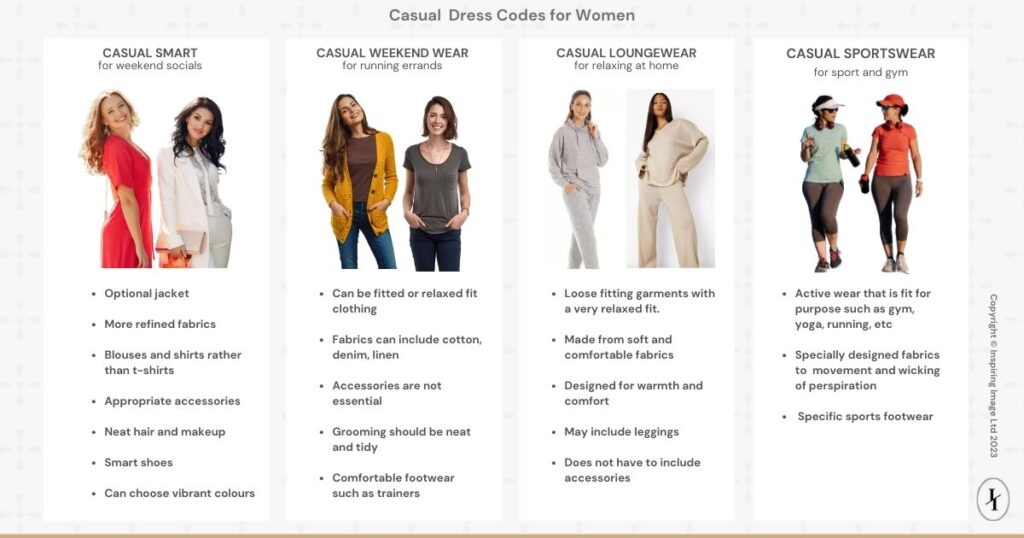
Credit: londonimageinstitute.com
Frequently Asked Questions
What Shoes Are Not Business Casual?
Sneakers, flip-flops, sandals, and open-toe shoes are not business casual. Only closed-toe dress shoes, loafers, or low heels are appropriate.
Are Jeans Ever Allowed In Business Casual?
Classic business casual does not allow jeans. Some modern workplaces accept dark, tailored jeans, but light-wash, ripped, or distressed jeans are never business casual.
Is A Polo Shirt Business Casual?
A polo shirt can be business casual if it is clean, fits well, and has no logos or graphics. But t-shirts or tank tops are never business casual.
Can Women Wear Leggings In A Business Casual Office?
Leggings and yoga pants are not business casual. Only tailored dress pants or knee-length skirts are allowed. Leggings can be worn under dresses, but not as pants.
What Accessories Are Not Business Casual?
Baseball caps, beanies, large backpacks, flashy jewelry, and casual belts are not business casual. Stick to simple, understated accessories.
Business casual is a balance between comfort and professionalism. By knowing what is not business casual, you avoid mistakes and show respect for your workplace. These guidelines help you dress with confidence, build your reputation, and fit in wherever you work.
