

What is Considered Women's Business Casual Attire: Style Guide
What Is Considered Women’s Business Casual Attire
Business casual is a term you often hear, but it can be confusing—especially for women. Many offices say “business casual,” but what does that really mean? Is it jeans and a nice shirt, or is it more formal? If you’re starting a new job, attending a professional event, or just want to look confident at work, knowing the rules of women’s business casual attire can help you feel comfortable and look your best.
This guide will explain what is considered business casual for women, clear up common mistakes, and help you choose outfits that fit your company’s culture. You’ll learn about key clothing items, the best fabrics, and how to put together outfits for different situations.
We’ll also compare business casual with other dress codes, use real examples, and answer the most common questions. Whether you’re new to the workplace or want to update your wardrobe, you’ll get practical tips to help you succeed.
What Does Business Casual Mean For Women?
Business casual is a mix between formal business wear and relaxed, everyday clothes. The goal is to look professional without being too dressed up. You don’t need a full suit, but you should avoid clothes that are too casual.
Here’s what business casual usually means for women:
- Blouses or nice tops (not T-shirts)
- Dress pants, slacks, or tailored trousers
- Skirts that are knee-length or longer
- Dresses that are simple and not too revealing
- Cardigans or blazers (optional but recommended)
- Closed-toe shoes (flats, loafers, low heels)
Business casual does not include jeans, sneakers, flip-flops, or clothing that’s too tight, short, or revealing. However, some companies are more relaxed, so it’s important to check the dress code in your office.
Key Elements Of Women’s Business Casual Attire
Tops
The right top makes your outfit look polished. Here are the most common choices:
- Blouses: Plain or patterned, with sleeves. Avoid deep necklines.
- Button-down shirts: Cotton, silk, or polyester. White, blue, or soft colors work best.
- Knit tops: Simple sweaters or fine-knit pullovers. Not chunky or oversized.
- Cardigans: Wear over a blouse or dress for extra warmth and style.
- Blazers: Optional, but they add a professional touch.
Tips:
- Avoid T-shirts, tank tops, or tops with bold logos.
- Sheer fabrics should be layered with a camisole.
- Sleeveless tops are acceptable in some offices, but check your company policy.
Bottoms
Business casual bottoms should be comfortable but structured.
- Dress pants: Tailored and wrinkle-free. Black, navy, gray, or beige are safe choices.
- Slacks: Similar to dress pants, but may have a softer fit.
- Skirts: Pencil, A-line, or pleated. Knee-length or longer.
- Capris: Only if allowed by your company and the style is tailored.
Tips:
- No jeans, leggings, shorts, or mini skirts.
- Avoid pants that are too tight or too loose.
Dresses
Dresses are a great option for business casual if they are simple and modest.
- Look for knee-length or midi dresses.
- Avoid spaghetti straps, deep necklines, or open backs.
- Patterns should be subtle and professional.
A sheath dress with a cardigan or blazer is a popular choice.
Shoes
Shoes should be comfortable and suitable for the office.
- Flats: Ballet flats, loafers, or slip-ons.
- Low heels: Pumps or block heels, usually under 2.5 inches.
- Dress boots: Ankle boots or knee-high boots in colder months.
- Closed-toe is usually required.
Tips:
- Avoid sneakers, sandals, flip-flops, or shoes with glitter.
- Open-toe shoes may be allowed in some offices, but check policy.
Accessories
Accessories should be simple and not distracting.
- Jewelry: Stud earrings, a simple necklace, or a watch.
- Belts: Match with your pants or dress.
- Scarves: Use for color, but choose small, neat styles.
- Handbags: Medium-sized, structured bags in neutral colors.
Tips:
- Avoid large, flashy jewelry or oversized handbags.
- Keep makeup natural and hair tidy.
Fabrics
Fabric choice matters in business casual.
- Cotton, wool, polyester, and blends are common.
- Avoid denim, leather (except for shoes or bags), or shiny materials.
- Wrinkle-resistant fabrics help you stay neat.
Colors And Patterns
Business casual uses neutral and soft colors.
- Black, navy, gray, beige, and white are always safe.
- Soft pastels or muted colors add interest.
- Patterns should be small—think pinstripes, checks, or floral prints.
Tips:
- Avoid neon colors, large prints, or anything too bold.
Credit: wonder-wardrobe.com
Comparing Business Casual With Other Dress Codes
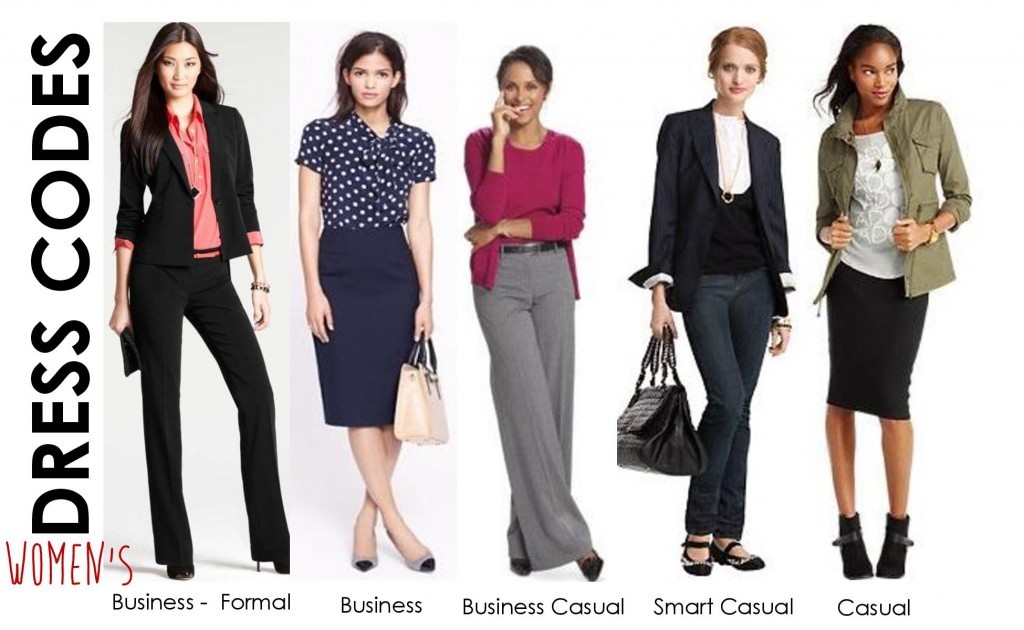
It’s easy to confuse business casual with other dress codes. Let’s compare them:
| Dress Code | Typical Clothing | Allowed Shoes | Accessories |
|---|---|---|---|
| Business Formal | Suits, tailored dresses | Closed-toe heels | Minimal, elegant |
| Business Casual | Blouses, dress pants, skirts | Flats, low heels | Simple, professional |
| Casual | Jeans, T-shirts | Sneakers, sandals | Any style |
| Smart Casual | Blazers, nice jeans, stylish tops | Dressy flats, boots | Trendy, moderate |
Business casual is less formal than business formal, but more polished than casual or smart casual.
Typical Business Casual Outfits For Women
Here are some common business casual outfit ideas:
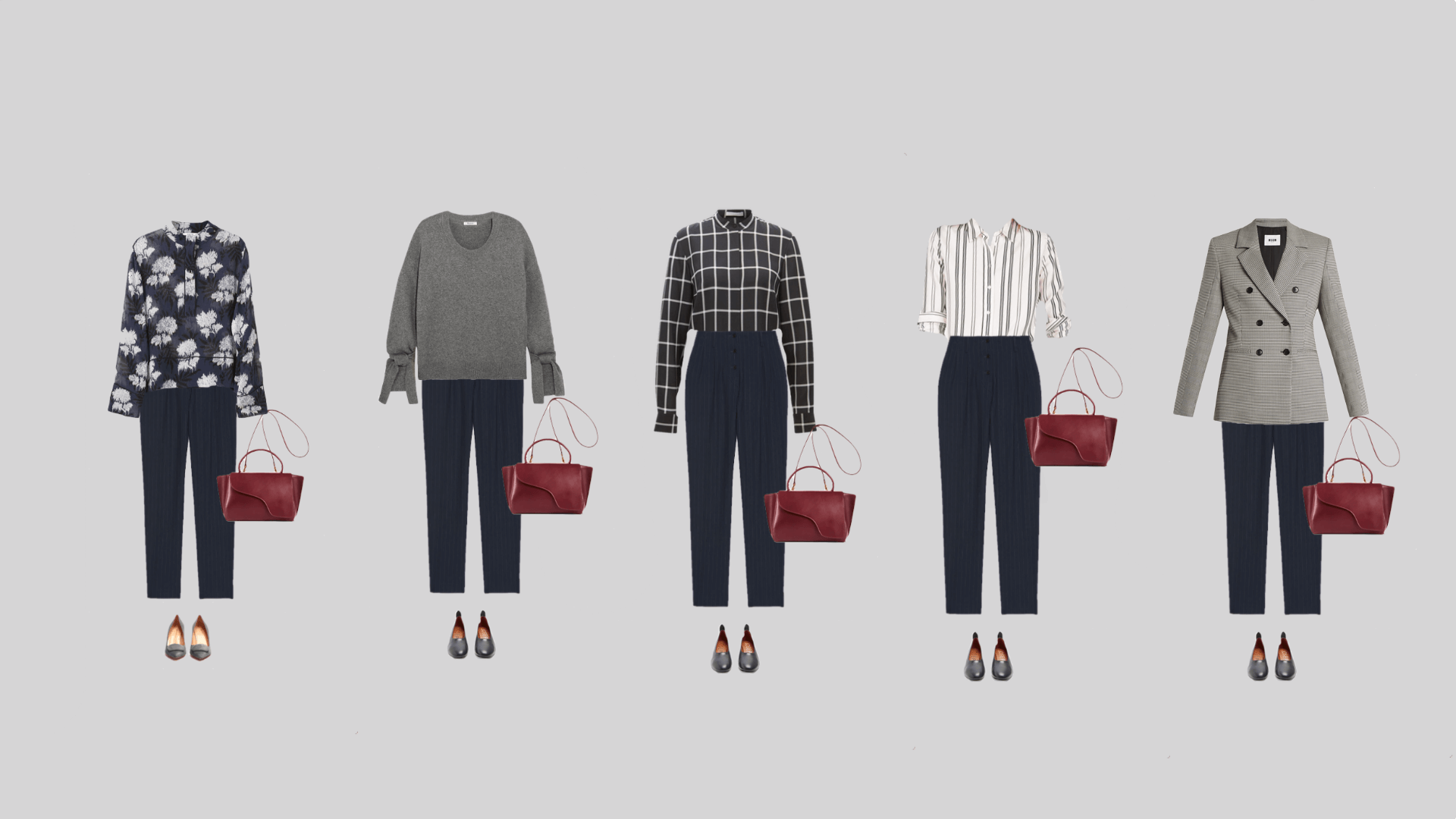
- Blouse + Dress Pants + Flats
- A classic white blouse, navy dress pants, black flats.
- Add a simple watch and stud earrings.
- Sweater + Pencil Skirt + Low Heels
- Light gray sweater, black pencil skirt, nude pumps.
- Small handbag and a thin belt.
- Sheath Dress + Cardigan + Loafers
- Navy sheath dress, beige cardigan, brown loafers.
- Minimal jewelry.
- Button-Down Shirt + A-Line Skirt + Boots
- Soft blue button-down, black A-line skirt, ankle boots.
- Small scarf for extra style.
- Blazer + Knit Top + Tailored Trousers
- Black blazer, cream knit top, gray trousers, black flats.
- Structured handbag.
Real-life Example
Imagine you work in a tech company. On most days, you wear a blouse, tailored pants, and loafers. You add a cardigan when it’s cold. For meetings, you wear a blazer to look more formal. You avoid jeans or sneakers because your office expects a “neat, professional” look.

Credit: wonder-wardrobe.com
What Should You Avoid?
Many beginners make mistakes with business casual. Here are things to avoid:
- Jeans: Even if they are dark, most offices don’t allow them.
- T-shirts or tank tops: Too casual, unless layered under a blazer.
- Sneakers or sandals: Not professional.
- Short skirts or dresses: Always go knee-length or longer.
- Excessive makeup or flashy jewelry: Keep it simple.
Another common mistake is wearing clothes that don’t fit well. Baggy or tight clothes look unprofessional. Always choose well-fitting items.
How Company Culture Affects Business Casual
Each company has its own style. In creative fields, the dress code may be more relaxed. In finance or law, it’s usually stricter. Look around your office, and ask HR if you’re unsure.
Here’s how business casual changes in different industries:
| Industry | Typical Business Casual | Flexibility |
|---|---|---|
| Tech | Polo shirts, blouses, dark pants, clean sneakers (sometimes allowed) | High |
| Finance | Button-down shirts, tailored trousers, blazers | Low |
| Marketing/Creative | Stylish tops, patterned skirts, trendy flats | Moderate |
| Education | Knit tops, slacks, comfortable shoes | Moderate |
| Healthcare Admin | Simple dresses, cardigans, closed-toe shoes | Low |
Non-obvious insight: In many startups, you can wear casual clothes, but for meetings or presentations, switch to business casual. Always keep a blazer or neat dress at your desk for emergencies.
How To Build A Business Casual Wardrobe
Building a wardrobe doesn’t have to be expensive. Start with basics and add a few pieces each season.
- Buy key basics: Two pairs of dress pants, three blouses, one skirt, one dress, one cardigan, one blazer.
- Choose neutral colors: Black, navy, gray, beige. Easier to mix and match.
- Add variety: One patterned blouse, one colored sweater.
- Invest in good shoes: Comfortable flats, low heels.
- Accessorize simply: One structured handbag, simple jewelry.
Sample Capsule Wardrobe
A capsule wardrobe is a small collection of clothes you can mix and match.
- 2 dress pants (black, navy)
- 1 pencil skirt (gray)
- 3 blouses (white, blue, patterned)
- 1 knit sweater (beige)
- 1 sheath dress (navy)
- 1 blazer (black)
- 1 cardigan (cream)
- 2 pairs of shoes (black flats, nude heels)
- 1 handbag (black)
With these pieces, you can create over 10 different outfits. This saves money and time.
Non-obvious insight: If you buy wrinkle-resistant fabrics, you spend less time ironing and always look polished.
Business Casual For Different Seasons
Business casual changes with the weather. Here’s how to adjust:
Spring And Summer
- Lightweight fabrics: Cotton, linen blends.
- Short-sleeve blouses or sleeveless tops (if allowed).
- Light colors: White, pastel, soft blue.
- Closed-toe flats or low heels.
Tips:
- Avoid sandals, even if it’s hot.
- Carry a cardigan for air-conditioned offices.
Fall And Winter
- Heavier fabrics: Wool, polyester blends.
- Long-sleeve tops, sweaters, turtlenecks.
- Dark colors: Navy, black, burgundy.
- Ankle boots or knee-high boots.
Tips:
- Layer with scarves or blazers.
- Choose thicker skirts or pants for warmth.
Credit: gardner-webb.edu
Business Casual For Special Situations
Some events need a bit more care:
Job Interviews
Business casual is safe for most interviews unless the company says otherwise. Wear:
- Blouse or button-down shirt
- Dress pants or skirt
- Blazer (optional)
- Closed-toe shoes
Bring a structured handbag and keep jewelry minimal. Avoid bold colors or patterns.
Presentations And Meetings
If you’re presenting, dress one step up. Add a blazer or choose a dress with a cardigan. This shows confidence and respect.
Office Parties
For office parties, business casual is still best. You can add a colorful scarf or fun jewelry, but avoid anything too flashy.
Common Questions And Misconceptions
Many people wonder about certain items. Here are answers to the most common doubts:
- Can I wear jeans? Usually, no. Some offices allow dark, neat jeans, but only if the policy says so.
- Are leggings business casual? No. Leggings are too informal, unless worn under a long tunic or dress in a creative office.
- Is a sleeveless top okay? Sometimes, but cover with a cardigan or blazer.
- Can I wear open-toe shoes? Only if your office allows. Closed-toe is safest.
- What about prints and patterns? Small, neat patterns are fine. Avoid bold or large prints.
How Business Casual Evolved
Business casual started as a way to relax strict office dress codes. It became popular in tech and creative industries, then spread to other fields. Today, it’s common in many offices, but the meaning changes from company to company.
Interesting fact: In a survey by SHRM, 57% of US offices use business casual as their main dress code. But only 23% allow jeans.
How To Stay Comfortable And Professional
Comfort is important. Choose clothes that fit well and fabrics that breathe. If you’re uncomfortable, you can’t focus at work. Here are some tips:
- Try clothes before you buy. Walk, sit, and move.
- Choose fabrics that stretch a little.
- Avoid shoes that pinch or rub.
- Layer for changing temperatures.
Mistakes Beginners Make
New professionals often make these mistakes:
- Wearing clothes that are too casual (jeans, sneakers)
- Wearing clothes that are too formal (suits, high heels)
- Not checking company policy
- Ignoring fit and comfort
- Using bold colors or patterns
Always ask HR or your manager if you’re unsure.
Business Casual For Remote Work
Remote workers often think dress codes don’t matter. But for video calls or meetings, business casual still applies.
Tips:
- Wear a neat top, even if you’re in sweatpants.
- Avoid busy patterns that distract on camera.
- Keep hair and makeup tidy.
Business Casual Around The World
Business casual is popular in the US, but other countries have different rules. In Europe, business casual is more formal (blazers, tailored pants). In Asia, it may include uniforms or stricter dress codes.
Always check local customs if you work internationally.
How To Personalize Business Casual
You can show your personality with business casual, but keep it subtle.
Ways to personalize:
- Add a colorful scarf or small piece of jewelry.
- Choose a blouse with a unique neckline.
- Wear a patterned skirt with neutral top.
Don’t overdo it. One standout item is enough.
Business Casual Checklist
If you’re unsure, use this checklist before leaving home:
- Is my outfit neat and wrinkle-free?
- Is my skirt or dress knee-length or longer?
- Are my shoes closed-toe and clean?
- Is my top modest (not too low-cut)?
- Are my accessories simple?
- Am I comfortable and confident?
Data On Women’s Business Casual Preferences
Surveys show most women prefer business casual because it’s comfortable and flexible.
- 68% of women say business casual helps them feel confident at work.
- 53% say they spend less time getting ready.
- 80% prefer neutral colors for business casual.
These stats show business casual is practical and popular.
Practical Tips For Success
To make business casual work for you:
- Plan your outfits for the week.
- Buy wrinkle-free fabrics.
- Mix and match to save money.
- Keep one “emergency outfit” at work.
- Update your wardrobe each season.
Where To Find Business Casual Inspiration
You can get ideas from:
- Office style blogs
- Pinterest boards
- Company websites (look at employee photos)
- Professional networking sites
If you want more examples and guidance, check Business News Daily for workplace style tips.
Frequently Asked Questions
What Is Not Allowed In Women’s Business Casual Attire?
Business casual does not allow jeans, shorts, sneakers, flip-flops, or tank tops. Avoid clothes that are too tight, short, or revealing.
Can I Wear Sleeveless Tops In Business Casual?
Sleeveless tops are sometimes allowed, but it depends on your office. If you’re unsure, wear a cardigan or blazer over your top.
How Do I Know If My Outfit Is Business Casual?
Ask yourself: Is it neat, modest, and professional? If yes, it’s probably business casual. Avoid anything you’d wear to the gym or a party.
Are Dresses Part Of Business Casual?
Yes, dresses are allowed if they are knee-length or longer and not too revealing. Choose simple styles and avoid bold prints.
What Shoes Are Best For Business Casual?
Closed-toe flats, loafers, and low heels are best. Avoid sneakers, sandals, or shoes with glitter.
Business casual for women is about looking professional, feeling comfortable, and fitting in with your company culture. With the right wardrobe, you’ll feel confident and ready for anything at work. Use these tips to build your style, avoid mistakes, and succeed in any professional setting.
