

What Does Business Casual Mean Women: The Ultimate Dress Code Guide
What Does Business Casual Mean Women
Many women find the phrase business casual confusing. It appears everywhere—from job listings to office dress codes—but what does it really mean? The answer is not simple, because business casual can change depending on industry, company culture, and even location. Still, knowing how to dress business casual is important for professional settings. A clear understanding helps you look polished, feel comfortable, and avoid awkward moments.
This article explains business casual for women in detail. You’ll learn which clothing pieces work best, what to avoid, and how to adapt your look for different workplaces. We’ll also cover accessories, shoes, seasonal changes, and common mistakes. If you want to feel confident dressing business casual, this guide is for you.
Defining Business Casual For Women
Business casual is a dress code that blends formal and informal clothing. It’s more relaxed than traditional business wear but still professional. For women, this means smart pieces that are less stiff than suits, but not as relaxed as jeans and T-shirts.
Business casual often includes:
- Tailored pants or skirts
- Blouses or smart tops
- Cardigans or blazers
- Closed-toe shoes
The goal is to look neat and professional without being overdressed. It’s different from casual Friday, which allows more relaxed choices. Business casual is also not evening wear; avoid anything too flashy or revealing.
Core Elements Of Business Casual Wardrobe
Every business casual outfit starts with a few basic pieces. Let’s break down what works best for women.
Pants And Skirts
Smart pants and skirts are the backbone of business casual. Here’s what to look for:
- Tailored trousers in neutral colors (black, navy, gray, beige)
- Dress pants with a straight or slight flare leg
- Pencil skirts or A-line skirts that fall at or just below the knee
Avoid pants that are too tight, ripped, or denim. Skirts should not be too short or too tight; comfortable movement is key.
Tops And Blouses
Tops in business casual should be neat, clean, and not too casual.
- Blouses in solid colors or subtle prints
- Button-down shirts with a feminine fit
- Sweaters (fine knit, not bulky)
- Cardigans for layering
Steer clear of tank tops, spaghetti straps, or tops with logos. Sheer fabrics should always be layered over a camisole.
Blazers And Jackets
A blazer instantly adds polish to any outfit. Choose:
- Structured blazers in classic shades
- Lightweight jackets for warmer months
- Cardigans for a softer look
Blazers are not required every day, but they’re useful for meetings or events. A cardigan is acceptable, especially in creative offices.
Shoes
Footwear completes the look. Business casual shoes include:
- Ballet flats
- Loafers
- Low to mid heels
- Ankle boots in colder months
Avoid sneakers, flip-flops, and overly high heels. Shoes should be clean and in good condition.
Accessories
Accessories should be subtle and professional.
- Simple jewelry (stud earrings, small necklace)
- Leather belts
- Structured handbags
- Scarves (optional, but stylish)
Don’t wear oversized or flashy accessories. Keep it understated.
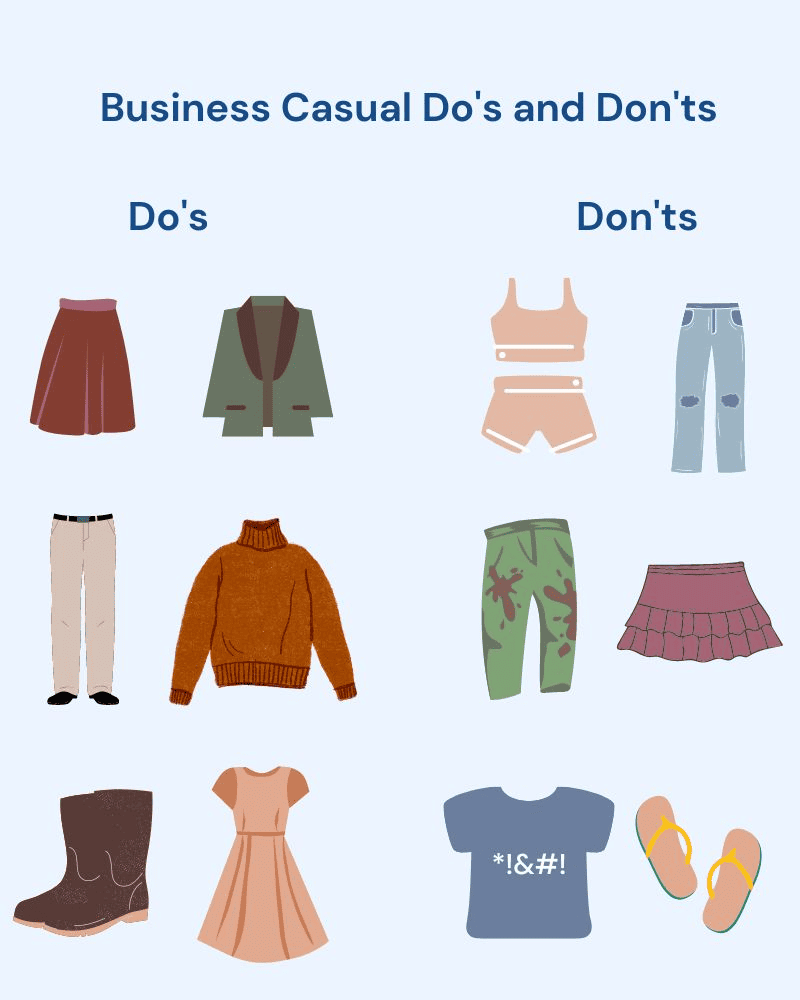
What To Avoid In Business Casual
Some items look casual but are not suitable for business casual.
- Ripped jeans or distressed clothing
- Shorts
- T-shirts with graphics or slogans
- Spaghetti straps or crop tops
- Mini skirts
- Athletic shoes or sandals
Clothes should be clean, ironed, and fit well. Avoid anything that feels like lounge wear or gym gear.
Industry Differences In Business Casual
Business casual varies between workplaces. Let’s compare some common industries:
| Industry | Business Casual Typical | What’s Usually Not Allowed |
|---|---|---|
| Finance | Dark slacks, tailored blouses, closed-toe shoes | Bright colors, denim, casual footwear |
| Tech | Smart jeans, clean sneakers, relaxed blazers | Shorts, flip-flops, graphic tees |
| Creative | Patterned skirts, bold accessories, trendy tops | Overly revealing clothes, messy attire |
| Healthcare Admin | Pantsuits, modest dresses, comfortable shoes | Open-toed shoes, sleeveless tops |
| Education | Cardigans, midi skirts, loafers | Mini skirts, ripped clothes, athletic wear |
If you’re unsure, observe what others wear or ask HR. Company culture matters as much as the industry.
Seasonal Business Casual Tips
Business casual changes with the seasons. Here’s how to adapt:
Spring And Summer
- Lightweight fabrics like cotton or linen
- Short-sleeve blouses (not sleeveless unless allowed)
- Midi skirts or cropped pants
- Neutral sandals with closed toes
Avoid shorts, tank tops, and flip-flops—even in hot weather.
Fall And Winter
- Wool trousers or thick skirts with tights
- Long-sleeve shirts and sweaters
- Blazers or cardigans for warmth
- Boots (ankle or knee-high, not casual hiking boots)
Layering is helpful, but avoid bulky outerwear in the office.
Business Casual Vs Other Dress Codes
It’s easy to confuse business casual with other dress codes. Here’s a quick comparison:
| Dress Code | Description | Key Differences |
|---|---|---|
| Business Formal | Suits, dress shirts, closed-toe heels | Always a suit jacket, more conservative |
| Business Casual | Tailored pants, blouses, cardigans, flats | No suit required, more relaxed fabrics |
| Smart Casual | Dark jeans, trendy tops, smart sneakers | Allows jeans and fashionable shoes |
| Casual | Jeans, T-shirts, sneakers | No restrictions, comfort-first |
Business casual is a balance: not too formal, not too relaxed. Always aim for neatness and a professional look.
Building A Business Casual Wardrobe
A smart business casual wardrobe does not mean buying expensive clothes. Focus on quality basics and mix-and-match options.
Essential Pieces
Start with these:
- Two pairs of tailored pants (one dark, one light)
- Three blouses (solid, print, neutral)
- One blazer (neutral color)
- Two cardigans (different colors)
- One pencil skirt
- Two pairs of shoes (flats, low heels)
- Basic accessories (belt, watch, small jewelry)
With these, you can create many outfits. Add more as needed.
Shopping Tips
- Choose wrinkle-resistant fabrics
- Buy classic shapes—they don’t go out of style
- Prioritize fit and comfort
- Invest in good shoes
You don’t need designer brands. Look for sales and outlet stores.
Example Outfit Combinations
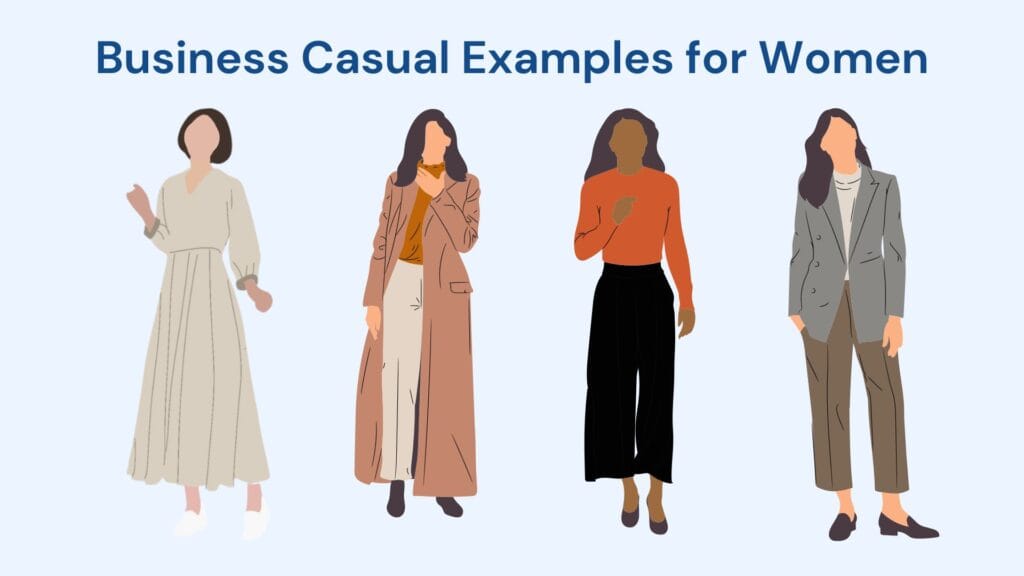
Here are some practical business casual outfits:
- Navy pants + white blouse + gray cardigan + loafers
- Black skirt + pastel blouse + blazer + ballet flats
- Beige pants + patterned top + ankle boots
- Midi skirt + sweater + belt + flats
Each outfit can be changed with accessories.
Business Casual For Remote And Hybrid Work
Remote work has changed business casual. Many companies allow more relaxed attire, but you may still need to look professional on video calls.
Tips for remote business casual:
- Wear solid tops (colors look better on camera)
- Choose comfortable pants (but not pajamas)
- Keep hair and makeup neat
- Avoid distracting backgrounds
For hybrid work, dress business casual at the office, but follow company rules for remote days.

Credit: jkstyle.com
Common Mistakes Women Make With Business Casual
Even experienced professionals make mistakes. Here are some to avoid:
- Wearing clothes that are too casual (like jeans with rips or athletic shoes)
- Choosing ill-fitting clothing—baggy pants or tight skirts are not professional
- Over-accessorizing with large jewelry or bold colors
- Forgetting about grooming—wrinkled clothes, unkempt hair, chipped nails
- Mixing evening wear with business casual (sequins, party dresses)
- Ignoring company culture—every office is different
A non-obvious mistake: Some women wear leggings as pants. Even if they are black and plain, leggings are rarely business casual unless covered by a long tunic.
Another subtle error: Open-toed shoes are sometimes allowed, but only if they are dressy and the office permits. Always check guidelines.
How To Personalize Business Casual
Business casual does not mean boring. You can show personality while staying professional.
Ways to personalize:
- Use subtle prints and patterns
- Add a colorful scarf or statement necklace
- Try different textures (silk blouse, wool skirt)
- Choose fashionable flats or loafers
Don’t forget: Personalization should not distract. Aim for one statement piece per outfit.
Credit: www.poseidonion.com
Grooming And Presentation
Clothes are only one part of business casual. Grooming matters too.
Key points:
- Hair should be clean and styled (ponytails, buns, or loose)
- Makeup should be natural
- Nails should be neat, with light polish if any
- Perfume should be subtle
Some women miss the importance of ironing. Wrinkled clothes look sloppy, even if expensive. Spend a few minutes before work to check your outfit.
Business Casual For Different Ages
Women of all ages can dress business casual. Here are tips for different life stages:
Early Career
- Choose classic basics; avoid trendy items that look too casual
- Try simple jewelry and neat hairstyles
Mid-career
- Invest in quality fabrics; they last longer
- Experiment with layering for style
Senior Professionals
- Opt for tailored jackets and elegant blouses
- Use subtle accessories for sophistication
Age is not a barrier. The key is to stay polished and comfortable.
Sustainable Business Casual Choices
More women are choosing sustainable fashion. Business casual can be eco-friendly.
Tips for sustainability:
- Buy quality over quantity
- Choose natural fabrics (cotton, linen, wool)
- Support ethical brands
- Recycle or donate old clothes
Many workplaces appreciate sustainability. It shows responsibility and awareness.
Business Casual In International Contexts
Business casual looks different around the world. Some countries prefer more formal clothes, others are relaxed.
For example:
- In Japan, business casual is more formal—dark suits and closed shoes
- In Europe, smart pants and blouses are common, but jeans may be allowed in creative industries
- In Australia, lightweight fabrics and open-toed shoes are acceptable
If you travel or work internationally, research local customs. If unsure, dress slightly more formal until you see what others wear.
Data And Trends: Women’s Business Casual
The business casual market for women is big. In the US, surveys show:
- Around 60% of offices use business casual dress codes
- Women spend over $600 a year on work clothing (average)
- Comfort and versatility are top priorities for buyers
A recent survey found that 65% of women prefer pants over skirts for business casual, mainly due to comfort and practicality.
Here’s a quick comparison of preferred business casual items:
| Item | Percent Ownership | Percent Worn Weekly |
|---|---|---|
| Tailored Pants | 80% | 65% |
| Blouses | 75% | 60% |
| Cardigans | 60% | 40% |
| Skirts | 50% | 25% |
| Blazers | 70% | 35% |
| Flats | 85% | 75% |
This data shows that pants and flats are the most popular choices.
Practical Examples Of Business Casual Outfits
Let’s look at some detailed examples. These outfits fit most business casual settings:
- Gray tailored pants + white blouse + navy blazer + black loafers
- Works for finance, administration, or meetings.
- Black pencil skirt + pastel sweater + nude ballet flats + simple necklace
- Great for education or creative offices.
- Beige chinos + patterned blouse + light cardigan + brown ankle boots
- Comfortable for tech or hybrid work.
- Navy midi dress + cream cardigan + pointed flats
- Suitable for presentations or client visits.
- Dark jeans (no rips) + crisp button-down + structured blazer + loafers
- Acceptable in some tech and creative fields.
Each outfit is easy to personalize. Swap colors or accessories for your own style.
Adapting Business Casual For Special Events
Sometimes you’ll need to adjust for events:
- Interviews: Dress slightly more formal—add a blazer, avoid bold prints.
- Presentations: Choose solid colors, neat shoes, minimal jewelry.
- Office parties: Subtle prints, stylish flats, but avoid party dresses.
If unsure, it’s safer to dress up than down. Being slightly overdressed is better than too casual.
Business Casual For Plus Size Women
Business casual works for all sizes. Key points:
- Choose tailored fits that flatter shape
- Avoid baggy clothes; they look less professional
- Try wrap dresses or A-line skirts
- Use structured jackets for polish
Many brands now offer inclusive sizing. Comfort and confidence matter most.
Credit: b-movie.ch
Caring For Business Casual Clothes
Proper care keeps clothes looking sharp.
- Wash according to label instructions
- Iron or steam to remove wrinkles
- Store on hangers for shape
- Rotate outfits to reduce wear
A non-obvious tip: Use a lint roller before leaving for work. Small details make a big difference.
How To Handle Dress Code Uncertainty
If you’re unsure about business casual, here’s what you can do:
- Ask HR or manager for examples
- Observe what colleagues wear
- Check company handbook
- Dress slightly more formal for first days
It’s better to start conservatively and relax once you understand the culture.
Frequently Asked Questions
What Is The Biggest Difference Between Business Casual And Smart Casual?
Business casual is more formal than smart casual. It usually does not allow jeans, sneakers, or trendy items, while smart casual often includes fashionable jeans, smart sneakers, and more relaxed tops.
Can I Wear Jeans In A Business Casual Office?
Most business casual dress codes do not allow jeans, especially ripped or faded ones. However, some tech or creative companies permit dark, neat jeans with blazers or smart tops. Always check your company’s rules.
Are Open-toed Shoes Allowed In Business Casual?
Open-toed shoes can sometimes be worn, but only if they are dressy and office-appropriate. Avoid sandals or flip-flops. Some industries (like finance) may require closed-toe shoes.
Is It Okay To Wear Bold Colors Or Prints?
Subtle prints and muted colors are safe. Bold prints or bright colors can be worn in creative offices, but avoid them in conservative workplaces. Use one statement piece per outfit.
How Can I Build A Business Casual Wardrobe On A Budget?
Start with basic pieces in neutral colors, mix and match, and buy during sales. Outlet stores and second-hand shops offer good deals. Focus on fit and quality over brands. For more tips, see Good Housekeeping’s guide.
Business casual for women is about feeling comfortable, confident, and professional. With the right pieces and a little effort, you can easily build a wardrobe that fits any office. Always check your company’s guidelines and remember: neatness and polish matter more than expensive clothes.
