

What Does Business Casual Look Like for a Woman: Style Guide
Business casual is a common dress code in many offices, but it can mean different things in different places. For women, understanding exactly what business casual looks like is important. You want to look professional without being too formal or too relaxed.
The right outfit can help you feel confident and comfortable, and it can make a strong impression at work.
This guide is designed to help you decode business casual for women. We'll explore what types of clothes fit this dress code, give practical examples, and share tips for creating a wardrobe that works. We'll also discuss common mistakes and show you how to adapt your style for different workplaces.
Whether you're new to the office or just want to refresh your look, you'll find helpful advice here.
What Is Business Casual For Women?
Business casual is a dress code that sits between formal business wear and casual clothing. It's less strict than traditional suits, but more polished than jeans and T-shirts. For women, business casual usually means neat, tailored clothes that are comfortable but still look professional.
Think of business casual as a blend of smart and relaxed. You might wear a blouse with dress pants, or a sweater with a skirt. The goal is to look ready for work without being overdressed. It’s about showing respect for your workplace and your role.
Typical Elements Of Business Casual
Business casual for women often includes:
- Blouses and tops (without bold prints or deep necklines)
- Dress pants or tailored trousers
- Knee-length skirts or modest dresses
- Cardigans and sweaters
- Closed-toe shoes (flats, loafers, or low heels)
- Minimal accessories
It’s important to note that business casual can vary depending on your industry, company culture, and even your location. Some workplaces are stricter, while others are more flexible.
Why Business Casual Matters
The way you dress affects how people see you at work. Business casual helps you look professional, trustworthy, and competent. It’s also practical—these clothes are usually comfortable enough for a full day at the office. Dressing appropriately can also boost your confidence and help you feel ready for meetings, presentations, and teamwork.
Essential Pieces In A Business Casual Wardrobe
Building a business casual wardrobe starts with a few key items. You don’t need a huge collection—just some smart basics that can be mixed and matched. Here are the essentials:
Tops
- Button-down shirts: A classic choice. Choose simple colors or subtle patterns.
- Blouses: Soft fabrics and tailored cuts work well. Avoid anything too sheer or flashy.
- Knit tops: Quality knit shirts or sweaters add comfort and style.
Bottoms
- Dress pants: Look for straight, bootcut, or slim-fit styles. Avoid anything too tight or baggy.
- Skirts: Pencil or A-line skirts, usually knee-length or slightly below.
- Khakis or chinos: A good alternative to dress pants, as long as they’re tailored.
Dresses
- Sheath dresses: Simple, tailored, and knee-length.
- Wrap dresses: Flattering and appropriate if not too revealing.
Layers
- Cardigans: Add warmth and a professional touch.
- Blazers: Not required every day, but great for meetings or presentations.
Shoes
- Flats: Comfortable and professional.
- Loafers: Stylish and easy to walk in.
- Low heels: Under three inches is usually best.
- Boots: Ankle boots are often acceptable, especially in cooler weather.
Accessories
- Simple jewelry: Stud earrings, delicate necklaces, and watches.
- Belts: Match your shoes for a polished look.
- Scarves: Add color, but keep patterns subtle.
Business Casual Vs. Other Dress Codes
Understanding how business casual compares to other dress codes can help you avoid mistakes. Here’s a quick comparison:
| Dress Code | Typical Outfit | Allowed Items | Not Allowed |
|---|---|---|---|
| Business Formal | Suit, dress shirt, closed-toe heels | Blazer, tailored pants, pencil skirt | Jeans, sneakers, casual tops |
| Business Casual | Blouse, dress pants, flats | Cardigan, modest dress, loafers | Ripped jeans, tank tops, flip-flops |
| Casual | T-shirt, jeans, sneakers | Shorts, sandals, hoodies | Formal suits, ties, dress shoes |
Business casual sits comfortably between formal and casual. It’s less strict than business formal, but you still need to avoid clothes that are too relaxed.
Practical Examples Of Business Casual Outfits
Let’s look at some real-life combinations that fit the business casual dress code. These examples can help you visualize what works.
Outfit Ideas
- Light blue blouse + black dress pants + loafers
- White button-down shirt + gray pencil skirt + flats
- Soft sweater + khaki trousers + ankle boots
- Patterned blouse (subtle print) + navy chinos + low heels
- Knee-length sheath dress + cardigan + closed-toe pumps
Season-based Combinations
Business casual outfits can change with the seasons. Here’s how you can adapt:
Spring
- Pastel blouses, light sweaters, cropped pants
- Floral scarves or subtle jewelry
Summer
- Short-sleeved blouses, knee-length skirts, lightweight dresses
- Breathable fabrics like cotton or linen
Autumn
- Long-sleeved tops, wool trousers, ankle boots
- Warm colors like burgundy or olive
Winter
- Thick sweaters, dark dress pants, layered cardigans
- Closed-toe shoes and tailored coats
Non-obvious Insights
Most beginners miss two important points:
- Fit matters more than price. A well-fitted blouse or pant looks professional, even if it’s not expensive. Baggy or tight clothes can make you look sloppy.
- Fabric choice is key. Avoid fabrics that wrinkle easily or look shiny. Cotton, wool blends, and polyester mixes hold shape and look polished.
Dos And Don'ts Of Business Casual
Knowing what to wear is important, but knowing what to avoid is just as critical. Here’s a quick guide:
Dos
- Choose neutral colors: Black, gray, navy, white, beige
- Make sure clothes are clean and pressed
- Keep accessories simple
- Wear closed-toe shoes for safety and professionalism
- Layer with a cardigan or blazer for extra polish
Don'ts
- Avoid ripped jeans or casual denim
- Skip tank tops or spaghetti straps
- Don’t wear flip-flops or casual sandals
- Stay away from bold graphics or slogans
- Avoid too much perfume or flashy makeup
Building A Business Casual Wardrobe On A Budget
A professional wardrobe doesn’t need to be expensive. Here are some strategies for building your collection without spending too much:
Smart Shopping Tips
- Start with basics. Buy a few neutral blouses and pants that can match with many items.
- Shop sales or outlets. Many stores offer good quality clothes at lower prices during sales.
- Choose versatile pieces. A black skirt or navy pants can work with many tops.
- Look for quality fabrics. Cheap fabrics wear out fast. Spend a bit more on items you’ll wear often.
- Buy second-hand. Thrift stores often have gently used business wear.
Wardrobe Planning Table
Here’s a sample plan for a starter wardrobe:
| Item | Quantity | Color | Budget Range |
|---|---|---|---|
| Button-down shirts | 3 | White, blue, gray | $20–$40 each |
| Dress pants | 2 | Black, navy | $25–$50 each |
| Knee-length skirt | 1 | Black | $30–$60 |
| Cardigan | 1 | Gray | $20–$40 |
| Flats | 1 | Black | $30–$60 |
This mix can give you many outfit combinations.
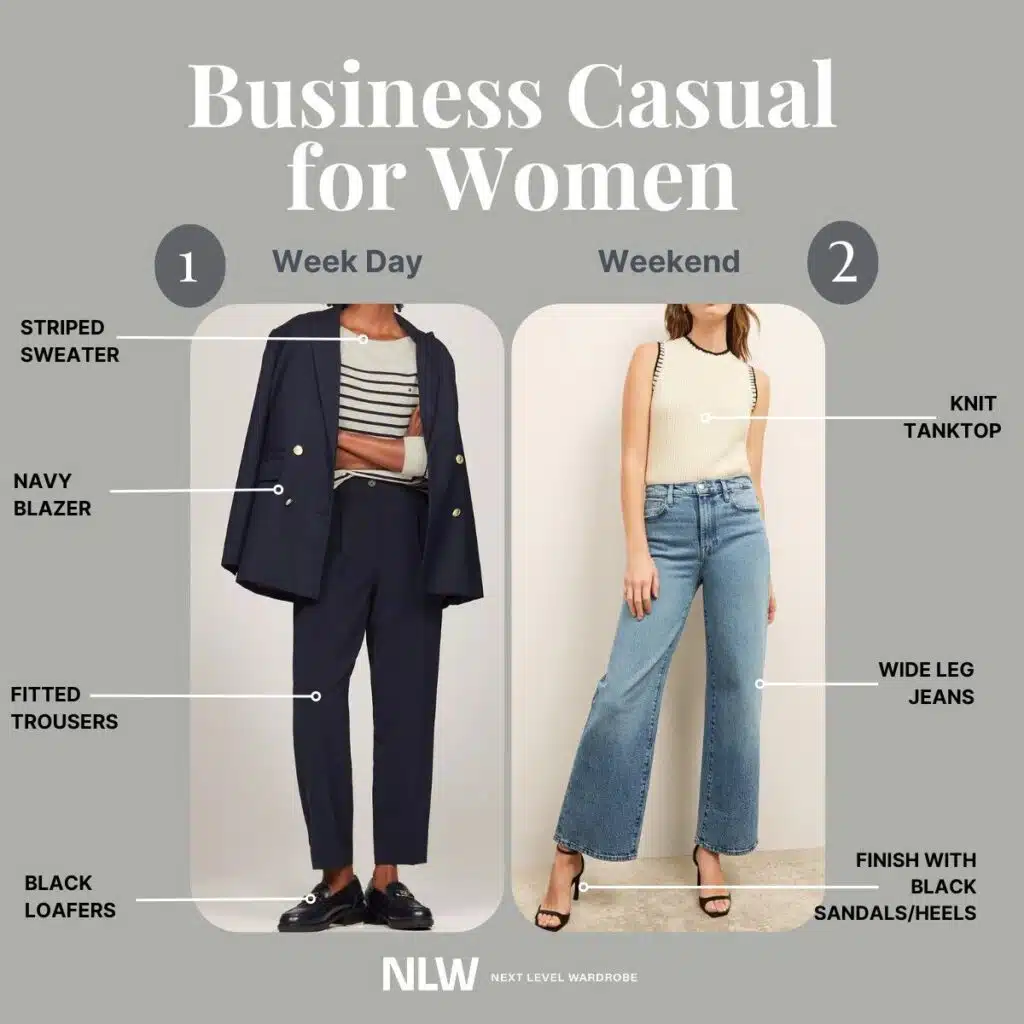
Credit: nextlevelwardrobe.com
Business Casual For Different Industries
Business casual is not the same everywhere. The definition changes by industry, company, and even city. Here are some examples:
Corporate Offices
- More formal business casual: Blouses, tailored pants, skirts, blazers
- Avoid bright colors and patterns
Creative Agencies
- More relaxed: Stylish tops, patterned skirts, bold accessories
- Fashion-forward but still neat
Tech Companies
- Often very flexible: Jeans (if neat), sneakers, casual sweaters
- Always check company rules
Retail And Hospitality
- Comfortable but polished: Polo shirts, khakis, flat shoes
- Focus on clothes that allow movement
Healthcare Administration
- Simple, clean outfits: Scrubs (sometimes), blouses, comfortable shoes
- Avoid jewelry and anything that can catch
Regional Differences
- In big cities, business casual may lean toward formal styles.
- In smaller towns, it can be more relaxed.
Common Mistakes And How To Avoid Them
Many women make simple mistakes when trying to dress business casual. Here’s how to avoid the most common ones:
Mistake 1: Too Casual
Wearing jeans, sneakers, or T-shirts can send the wrong message. Always check your company’s dress code and choose clothes that are smart and neat.
Mistake 2: Over-dressing
Wearing a full suit or high heels every day can look too formal for a business casual office. Save these items for important meetings or events.
Mistake 3: Ignoring Fit
Clothes that are too loose or too tight look unprofessional. Try everything on and ask someone for honest feedback.
Mistake 4: Choosing Loud Colors
Bright colors and bold patterns can distract. Stick to neutral or muted tones unless your office encourages more creativity.
Mistake 5: Neglecting Grooming
Wrinkled clothes, scuffed shoes, or messy hair can ruin a good outfit. Take a few extra minutes to check your appearance.
How To Adapt Business Casual For Your Body Type
Business casual is not “one size fits all. ” Every woman has a unique shape, and dressing for your body type can make you feel more confident.
Tips For Different Body Types
- Petite: Choose fitted clothes, avoid oversized items, try vertical stripes to add height.
- Tall: Wear longer tops or tunics, choose ankle pants for balance.
- Curvy: Look for wrap dresses, belts, and A-line skirts. Avoid clingy fabrics.
- Athletic: Try peplum tops or dresses with shape, add layers for softness.
Tailoring
If you find clothes that almost fit, consider getting them tailored. A simple alteration can turn a $30 blouse into a perfect piece. Tailoring is a smart investment for any wardrobe.
How To Transition From Business Casual To Formal
Sometimes, you need to move from business casual to business formal—for meetings, presentations, or interviews. Here’s how to upgrade your look quickly:
- Add a blazer: Instantly makes any outfit more formal.
- Swap flats for low heels: Adds polish.
- Choose a structured handbag instead of a tote.
- Replace a cardigan with a tailored jacket.
- Use subtle jewelry: Pearls, small studs, or a classic watch.

Credit: www.sumissura.com
The Role Of Accessories In Business Casual
Accessories are often forgotten, but they can make or break a business casual outfit.
Smart Choices
- Watch: Classic and practical.
- Stud earrings: Simple but elegant.
- Necklace: Short, delicate, and not distracting.
- Scarf: Adds color and warmth.
Things To Avoid
- Large earrings: Distract during meetings.
- Too many rings or bracelets: Can be noisy or get in the way.
- Statement necklaces: Too bold for most business settings.
Business Casual For Remote Work
With more people working from home, business casual is changing. You may not need full dress pants, but you should still look professional for video calls.
Tips For Remote Work
- Wear a neat blouse or top.
- Choose comfortable pants, but avoid pajamas.
- Keep hair and makeup tidy.
- Use natural light for video calls.
Many companies still expect a business casual appearance, even from home. It shows respect for your job and your colleagues.

Credit: wonder-wardrobe.com
How To Find Your Style Within Business Casual
Business casual doesn’t mean you have to look the same as everyone else. You can show your personality while staying within the rules.
Personalizing Your Look
- Pick favorite colors that are still office-friendly.
- Add a unique accessory (like a scarf or brooch).
- Try patterned blouses (but keep prints small).
- Choose different shoe styles (loafers, ballet flats, ankle boots).
Experiment Without Breaking Rules
Test new combinations at home. If you’re unsure, ask a coworker or look at what others wear in your office.
Real Statistics: Business Casual Trends
Data shows that business casual is the most common dress code in offices. According to a survey by the Society for Human Resource Management, about 57% of US offices use business casual. More companies are moving away from formal dress codes, especially in tech and creative industries.
Women report feeling more comfortable and productive when they can dress business casual. In a poll by LinkedIn, 78% of women said they feel more confident in business casual clothes compared to formal wear.
Business Casual And Sustainability
Many women want to build a wardrobe that’s good for the planet. You can make smart choices and still look great.
Eco-friendly Ideas
- Buy clothes made from organic cotton or recycled materials.
- Shop at second-hand stores.
- Choose quality items that last longer.
- Avoid fast fashion brands.
Building a sustainable wardrobe is possible, and it can even save money.
Quick Reference: Business Casual Checklist
Here’s a fast checklist for getting ready in the morning:
- Blouse or neat top
- Dress pants or knee-length skirt
- Cardigan or blazer (optional)
- Closed-toe shoes
- Simple accessories
- Hair neat and tidy
- Minimal makeup and perfume
If you can check off these items, you’re ready for business casual.
Business Casual Outfit Combinations Table
Here’s a table with outfit combinations to inspire you:
| Top | Bottom | Shoes | Accessory |
|---|---|---|---|
| White blouse | Black dress pants | Flats | Delicate necklace |
| Soft sweater | Navy pencil skirt | Low heels | Watch |
| Patterned blouse | Gray chinos | Ankle boots | Stud earrings |
| Button-down shirt | Khaki trousers | Loafers | Scarf |
| Sheath dress | — | Pumps | Belt |
Mix and match these combinations for variety.
Frequently Asked Questions
What Colors Are Best For Business Casual?
Neutral colors like black, navy, gray, white, and beige are safe choices. Pastel shades and muted tones also work. Avoid bright colors unless your workplace encourages creativity.
Can I Wear Jeans For Business Casual?
Some offices allow dark, tailored jeans as part of business casual. However, avoid ripped, faded, or baggy jeans. Always check your company’s policy before wearing jeans.
Are Open-toe Shoes Acceptable?
Most business casual offices prefer closed-toe shoes. Open-toe shoes can be risky and less professional. If allowed, keep them simple—no sandals or flip-flops.
How Can I Look Stylish But Still Follow Business Casual Rules?
Choose fitted clothes, add a unique accessory, and mix textures (like cotton and wool). Try subtle patterns or colors. The key is to stay neat and avoid anything too bold.
Where Can I Learn More About Business Casual Dress Codes?
A reliable resource is the Career Explorer website, which offers practical advice and examples for business casual in different industries.
Business casual for women is flexible, practical, and stylish. With the right choices, you can build a wardrobe that fits your workplace, your body, and your personality. Remember: fit and fabric are more important than price. Choose clothes that help you feel confident, stay comfortable, and present your best self every day.
