

What Does Business Casual Look Like? Essential Style Guide
What Does Business Casual Look Like
Stepping into a new office or attending a professional event, you might wonder: What does business casual really mean? Many people struggle with this dress code. It’s not as formal as a suit, but not as relaxed as jeans and sneakers. Business casual is everywhere today, but its definition changes depending on the company, region, or even your role. Understanding what counts as business casual can help you feel confident, make a good impression, and avoid awkward moments.
This guide will help you see what business casual looks like, how to build your wardrobe, and avoid common mistakes. You’ll find practical advice, real examples, and tips to fit the dress code without stress.
What Is Business Casual?
Business casual is a style that blends professional attire with a touch of comfort. It’s designed to look neat and polished, but less strict than traditional formal wear. You’ll see this dress code in many offices, from tech companies to law firms, and even at networking events.
Usually, business casual means you don’t need a suit and tie, but you should avoid clothes that are too casual, like T-shirts or flip-flops. The goal is to look ready for business, while staying comfortable and approachable.
Why Is Business Casual Popular?
Business casual is popular because it helps people feel relaxed and work better. Many companies find that employees are more productive when they aren’t forced to wear formal suits every day. It also helps businesses attract younger talent who prefer flexibility.
A recent survey by LinkedIn found that over 60% of US companies use a business casual dress code. Offices with this policy report higher job satisfaction and teamwork.
Key Elements Of Business Casual
- Clothes must be clean and well-fitted
- Avoid loud patterns or bright colors
- Shoes should be closed-toe and neat
- Accessories should be simple
Business Casual For Men
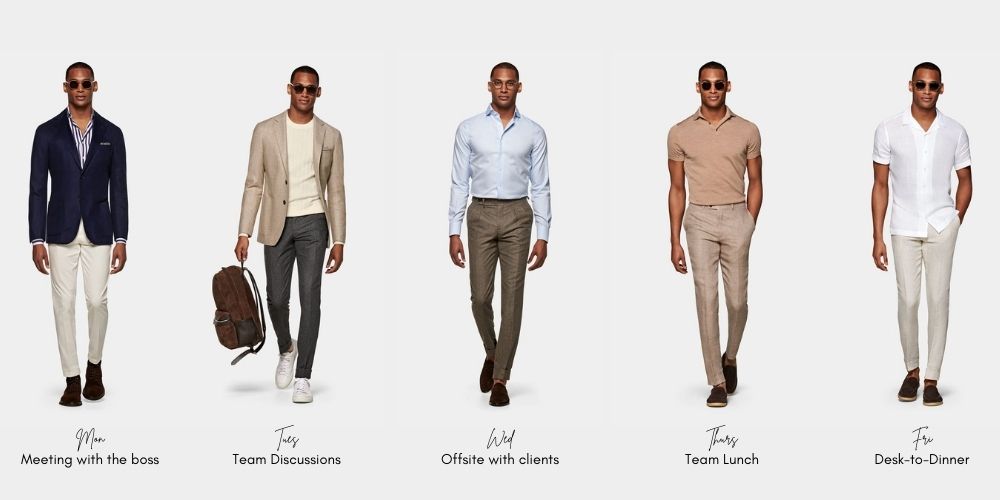
Men often wonder what business casual means for them. The rules are clearer than for women, but there’s still room to make mistakes. Here’s what works and what doesn’t.
Shirts
- Button-down shirts (long or short sleeves) are safe
- Polo shirts are often acceptable
- Avoid T-shirts or shirts with logos
- Neutral colors like white, blue, gray, or pale pink are best
Pants
- Chinos or dress slacks fit well
- Dark jeans may be allowed in some offices, but avoid rips or fading
- Shorts are never business casual
- Avoid cargo pants or athletic wear
Jackets And Sweaters
- Blazers are optional, not required
- Cardigans and pullovers can work, especially in colder weather
- Avoid hoodies or sweatshirts
Shoes
- Loafers, dress shoes, or clean sneakers (if allowed)
- No sandals, flip-flops, or running shoes
- Brown, black, or navy are safest
Accessories
- Belts should match shoes
- Watches and ties are optional
- Avoid flashy jewelry
Example Business Casual Outfit (men)
A typical business casual outfit for men could be:
- Light blue button-down shirt
- Gray dress slacks
- Brown leather belt and loafers
- Navy cardigan
This look is neat, comfortable, and fits most business casual settings.
Business Casual Do’s And Don’ts (men)
| Do | Don't |
|---|---|
| Wear collared shirts | Wear graphic T-shirts |
| Choose neutral colors | Wear shorts or sweatpants |
| Keep shoes clean | Wear sandals |
| Add simple accessories | Wear flashy jewelry |
Business Casual For Women
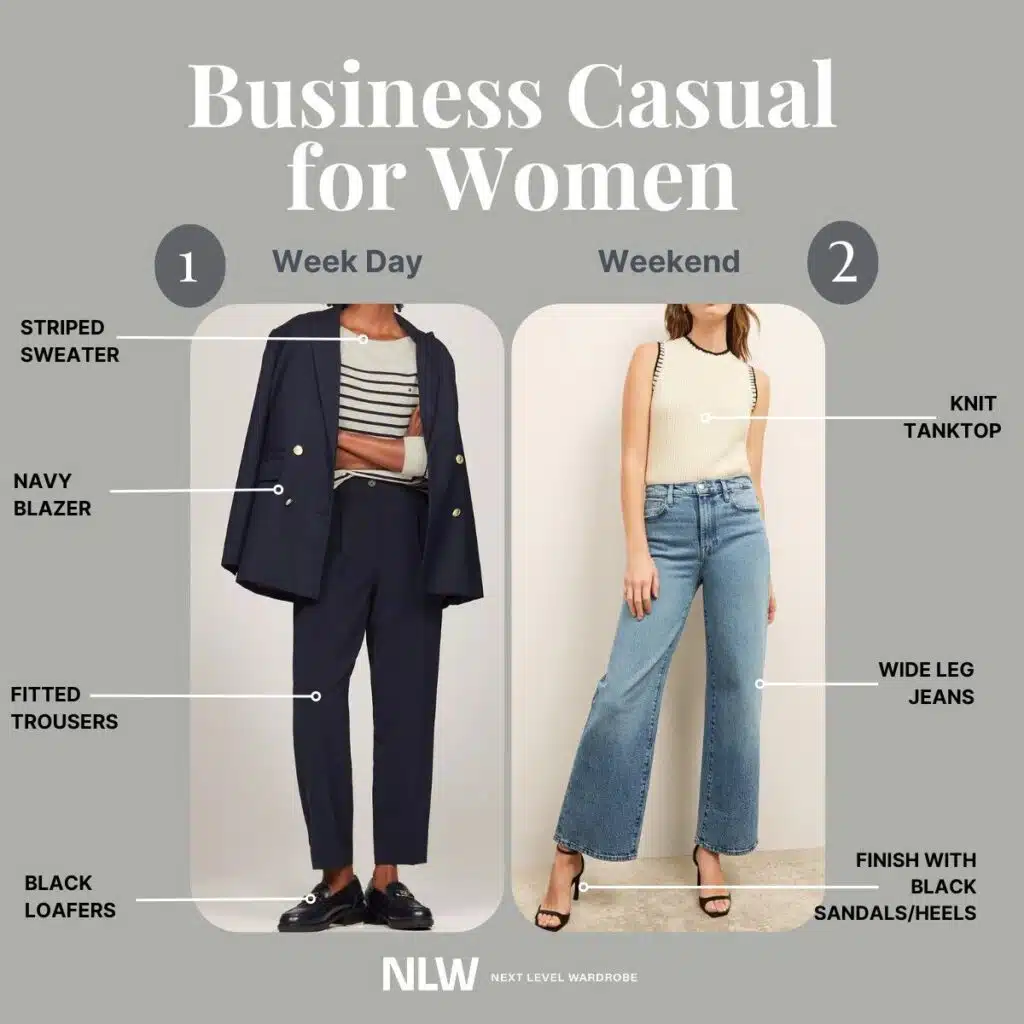
Women’s business casual is more flexible, but also more confusing. With so many options, it’s easy to wonder if a dress or skirt is too formal, or if pants are too casual. Here’s how to get it right.
Tops
- Blouses, button-down shirts, and fine-knit sweaters are safe
- Sleeveless tops are fine if not too revealing
- Avoid spaghetti straps or crop tops
- Neutral colors or soft prints work well
Bottoms
- Dress pants, ankle pants, or tailored slacks
- Skirts should be knee-length or longer
- Dark jeans may be allowed, but avoid holes or excessive fading
- Leggings are only okay under a long top or dress
Dresses
- Simple, knee-length dresses are often perfect
- Avoid anything too tight or flashy
- Wrap dresses, shift dresses, and shirt dresses are popular choices
Shoes
- Flats, loafers, or low heels work best
- Closed-toe shoes are safer in most offices
- Avoid flip-flops, high platform heels, or athletic shoes
Accessories
- Simple jewelry, watches, or scarves
- Keep makeup light and natural
- Handbags should be professional-looking
Example Business Casual Outfit (women)
A solid business casual look for women might include:
- Pale pink blouse
- Black ankle pants
- Gray flats
- Delicate necklace
This outfit shows confidence and professionalism, without being too formal.
Business Casual Do’s And Don’ts (women)
| Do | Don't |
|---|---|
| Wear blouses or sweaters | Wear crop tops |
| Choose knee-length skirts | Wear mini skirts |
| Keep shoes professional | Wear flip-flops |
| Use simple accessories | Wear bold, flashy jewelry |
Business Casual Around The World
The meaning of business casual changes in different countries. What’s accepted in one place might not work elsewhere. Understanding local culture is important.
United States
Most US offices accept khakis, polos, and blouses. Jeans are sometimes allowed, but always check your company’s policy.
Europe
In Western Europe, business casual often includes blazers and more formal shoes. Jeans are less common. In Southern Europe, brighter colors and lighter fabrics are popular.
Asia
Many Asian offices expect more formal business casual. In Japan and South Korea, dark slacks and button-down shirts are standard. Women often wear simple skirts and blouses.
Middle East
Business casual is more conservative. Long sleeves and modest clothing are required. Women may need to cover arms and legs.
Latin America
Colors and patterns are more accepted. Men often wear light pants and short-sleeved shirts. Women can wear dresses with bright prints.
Regional Comparison
| Region | Common Business Casual | Unique Features |
|---|---|---|
| United States | Khakis, polos, blouses | Jeans sometimes allowed |
| Europe | Blazers, formal shoes | Jeans rare, brighter colors |
| Asia | Dark slacks, button-downs | More formal, modest |
| Middle East | Long sleeves, modest dress | Conservative, covered arms/legs |
| Latin America | Light pants, printed dresses | More color, short sleeves |
Credit: nextlevelwardrobe.com
Building A Business Casual Wardrobe
If you’re starting from scratch, building a business casual wardrobe can feel overwhelming. You don’t need to buy everything at once. Start with basics, then add pieces as you learn what works best.
Essential Pieces
- Button-down shirts (at least 2–3 in neutral colors)
- Dress pants or chinos (2 pairs)
- Simple sweaters or cardigans (1–2)
- Closed-toe shoes (loafers, flats, or low heels)
- Blazer (optional, but useful)
Budget-friendly Tips
- Buy high-quality basics that match with many outfits
- Shop at outlet stores or during sales
- Avoid buying trendy items that may go out of style quickly
- Borrow or swap with friends when possible
Mixing And Matching
With just a few pieces, you can make many outfits. For example, a blue button-down shirt pairs with gray slacks or khakis. A cardigan works over a blouse or dress. Shoes in black or brown match almost anything.
Common Mistakes When Building Your Wardrobe
- Buying too many flashy or patterned items
- Ignoring fit—clothes should not be too tight or too loose
- Choosing shoes that are uncomfortable or not professional
- Forgetting about accessories, which can lift your look
Business Casual Vs. Other Dress Codes
Business casual isn’t the only dress code you’ll see. It’s important to know how it compares to others, so you don’t show up underdressed or overdressed.
Comparison Table: Dress Codes
| Dress Code | Typical Attire | Level of Formality |
|---|---|---|
| Business Formal | Suit, tie, dress shoes | Very high |
| Business Casual | Button-downs, chinos, blouses | Medium |
| Smart Casual | Blazers, dark jeans, stylish shoes | Low-medium |
| Casual | T-shirts, jeans, sneakers | Low |
Smart Casual Vs. Business Casual
Smart casual is a newer style, popular in creative fields. It allows more fashion choices, like dark jeans or trendy shoes. Business casual is safer for traditional workplaces.
When To Choose Business Casual
- Office jobs with no strict suit requirement
- Networking events
- Casual meetings with clients
- Job interviews in modern companies
Business Casual For Remote Work
With remote work becoming common, many wonder what business casual means at home. Some companies still expect employees to dress professionally for video calls.
Video Call Dress Tips
- Wear a neat shirt or blouse, even if you’re in pajamas below
- Avoid bright colors or patterns that distract on camera
- Keep hair and makeup tidy
Remote Work Realities
A survey by Gallup found that over 70% of remote workers dress business casual for important video meetings. Many feel it helps them focus and feel more professional.
Home Office Comfort
You can relax your outfit if your company allows it. But always check your company’s guidelines. Some employers have clear rules for remote dress codes.
Business Casual In Different Industries
The meaning of business casual changes depending on the industry. Tech companies may allow jeans and sneakers, while banks stick to slacks and blazers.
Tech Industry
- Jeans and polos often accepted
- Stylish sneakers allowed
- Hoodies may be okay, but check company policy
Finance And Law
- Chinos, button-downs, blazers
- Dark dress shoes only
- No jeans or casual sneakers
Creative Fields
- Bright colors, interesting patterns
- Trendy shoes, stylish accessories
Healthcare And Education
- Comfortable, neat attire
- Cardigans, slacks, clean shoes
Hospitality
- Clean, neat clothes
- Closed-toe shoes
- Simple accessories
Industry Comparison
| Industry | Business Casual Typical | Special Notes |
|---|---|---|
| Tech | Jeans, polos, sneakers | More relaxed |
| Finance | Slacks, blazers, dress shoes | More formal |
| Creative | Trendy, colorful | Fashion-forward |
| Healthcare | Cardigans, slacks, flats | Comfort matters |
| Hospitality | Neat, simple clothes | Cleanliness important |
Business Casual For Different Body Types
Business casual should make everyone feel confident. No matter your body shape, the right fit and style can help you look your best.
Tips For Slim Figures
- Wear shirts with structure or patterns to add shape
- Layering (cardigans, blazers) can add volume
- Avoid clothes that are too tight
Tips For Curvy Figures
- Choose pants or skirts with a bit of stretch
- Wrap dresses or tops highlight your shape
- Avoid oversized clothing, which can look sloppy
Tips For Tall People
- Look for longer inseams and sleeves
- Avoid short jackets or cropped pants
Tips For Short People
- Choose pants that end above the ankle
- Use vertical stripes to elongate your look
- Avoid bulky layers
Business Casual For All Ages
Business casual works for everyone, but younger and older workers often have different style preferences.
Younger Professionals
- May prefer slim-fit pants, trendy blouses, or stylish sneakers
- Can use accessories to show personality
Older Professionals
- Often choose classic styles, comfortable fabrics
- Neutral colors and timeless pieces
How Age Impacts Business Casual
Younger workers sometimes challenge business casual norms, choosing bold colors or modern cuts. Older professionals stick to classics. Both styles are valid, as long as the clothes are neat and professional.
Non-obvious Insights About Business Casual
Many articles give basic advice, but here are some points beginners often miss:
- Fit matters more than brand. A cheap shirt that fits well looks better than an expensive shirt that is too tight or loose.
- Dress for your day. If you have an important meeting, step up your look with a blazer or better shoes. On quieter days, polos or sweaters are fine.
- Check your company’s policy. Every workplace is different. Some allow jeans, others don’t. If unsure, ask HR or look at what managers wear.
- Grooming is part of business casual. Clean nails, tidy hair, and light perfume or cologne show attention to detail.
- Layering helps. Adding a cardigan or blazer can turn a casual outfit into business casual quickly.
Common Business Casual Mistakes
Avoiding mistakes can help you feel confident and respected.
- Wearing clothes that don’t fit well
- Choosing items that are too casual (e.g., athletic wear, ripped jeans)
- Ignoring company dress code specifics
- Forgetting grooming and accessories
- Wearing bright or distracting patterns
How To Fix These Mistakes
- Try on clothes before buying
- Ask a trusted coworker for feedback
- Keep your wardrobe updated
- Use simple accessories to lift your look
Credit: ardenteal.com
Business Casual For Special Occasions
Sometimes, you need to adjust business casual for a special event, like a company party or interview.
Interviews
- Choose conservative colors (navy, gray, black)
- Avoid jeans or flashy accessories
- Use a blazer if unsure
Company Parties
- You can add some color or fun accessories
- Make sure your outfit is still neat and professional
Presentations
- Step up your look with a blazer or dress shoes
- Avoid anything that could distract your audience
How To Transition From Business Casual To Formal
If your office requires formal wear for certain events, you can upgrade your business casual outfit easily.
- Add a blazer or jacket
- Swap chinos for dress slacks
- Wear a tie (for men)
- Choose heels or formal shoes (for women)
This way, you don’t need a full wardrobe change.

Credit: www.hockerty.com
Business Casual In Hot And Cold Weather
Weather can make business casual tricky. You want to stay comfortable and look professional.
Hot Weather
- Light fabrics (cotton, linen)
- Short-sleeved shirts or blouses
- Avoid shorts or sandals
Cold Weather
- Layer with cardigans, sweaters, or blazers
- Use dark colors for warmth
- Closed-toe shoes and socks
Practical Tip
Always keep a spare sweater or jacket at your desk for temperature changes.
Sustainability And Business Casual
Many people now care about the environment. You can build a business casual wardrobe that’s sustainable.
- Buy clothes made from natural fibers (cotton, wool)
- Choose brands that use ethical production methods
- Avoid fast fashion—choose quality over quantity
A sustainable wardrobe saves money and helps the planet.
Where To Buy Business Casual Clothes
You can find business casual clothes almost everywhere. Popular stores include:
- Banana Republic
- J.Crew
- Ann Taylor
- Uniqlo
- Nordstrom
Online shopping offers more choices. Look for brands with good reviews and return policies.
For more details, see this guide from Business News Daily.
Frequently Asked Questions
What Is The Difference Between Business Casual And Smart Casual?
Business casual is more traditional—think button-down shirts and dress pants. Smart casual allows trendier items, like dark jeans and stylish shoes. Smart casual is popular in creative fields, while business casual fits most offices.
Can I Wear Jeans In A Business Casual Office?
It depends on your company. Some offices allow dark, neat jeans; others don’t. Always check the dress code or ask HR. If allowed, pair jeans with a nice shirt and closed-toe shoes.
Are Sneakers Business Casual?
Some modern offices accept clean, simple sneakers. Classic styles in black, white, or navy are safest. Avoid running shoes or flashy designs. If unsure, stick to loafers or dress shoes.
How Can I Tell If My Outfit Is Business Casual?
Ask yourself:
- Is it clean and well-fitted?
- Are the shoes closed-toe and neat?
- Does it avoid loud patterns or slogans?
If yes, it’s likely business casual. When unsure, dress slightly more formal.
What Should I Avoid In Business Casual?
Avoid:
- T-shirts with logos or graphics
- Shorts, sweatpants, or athletic wear
- Flip-flops or sandals
- Bright, flashy accessories
- Clothes that are too tight or too loose
Business casual is about balance: looking professional, feeling comfortable, and fitting in with your company’s culture.
Feeling confident in business casual helps you focus on your work, build strong relationships, and make a positive impression every day. By following these tips and checking your company’s dress code, you’ll always look your best.
