

What Does Business Casual Dress Mean: Essential Style Guide
What Does Business Casual Dress Mean
The idea of "business casual" is everywhere in modern workplaces, but many people still wonder what it really means. You might see this term in a job posting, company email, or even an event invitation, but the details are often unclear.
Different companies, industries, and even cities can have very different standards. This can be confusing, especially for non-native English speakers or anyone entering a professional setting for the first time.
Business casual is more than just wearing clothes that aren’t formal. It’s about looking professional while feeling comfortable. The way you dress sends a message about who you are and how seriously you take your work. In this guide, you’ll learn exactly what business casual means, how it’s different from other dress codes, and how you can build a wardrobe that fits this style.
You’ll also see real examples, practical advice, and tips for avoiding common mistakes.
Understanding Business Casual: The Basics
Business casual is a dress code that sits between formal business wear and casual clothing. It’s meant to look neat and professional, but not too stiff or dressy. This style is common in offices where a suit and tie are not required, but jeans and t-shirts are too relaxed.
The main goal of business casual is to balance professionalism with comfort. You should look polished and ready for work, but you don’t need to wear formal business suits or dresses. Think of it as dressing for a meeting with your boss, rather than a friend’s picnic or a black-tie event.
The meaning of business casual can change depending on the company, country, or even the season. For example, what’s business casual in a tech company may be too relaxed for a law office. Always check if your workplace has its own rules.
Key Elements Of Business Casual
Let’s break down what usually counts as business casual for both men and women. These are general guidelines, but they cover the most common expectations.
Typical Business Casual Clothing For Men
- Pants: Chinos, dress slacks, or khakis in neutral colors like navy, gray, or beige.
- Shirts: Collared shirts such as button-downs or polo shirts. Long or short sleeves are fine.
- Sweaters: V-neck or crewneck sweaters, or sweater vests, often layered over a shirt.
- Blazers (optional): Not required, but can add a more professional look.
- Shoes: Leather loafers, oxfords, or dress shoes. Clean sneakers may be allowed in some workplaces, but check first.
- Accessories: Belts should match shoes; ties are usually optional.
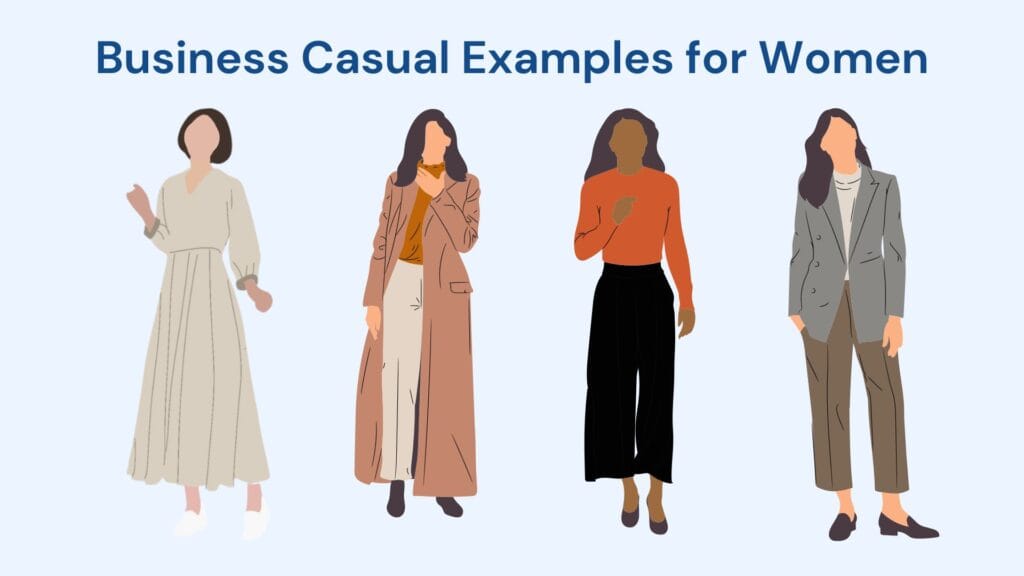
Typical Business Casual Clothing For Women
- Pants/Skirts: Dress pants, chinos, pencil skirts, or knee-length skirts in neutral or dark colors.
- Tops: Blouses, knit tops, sweaters, or button-down shirts. Avoid low-cut or see-through materials.
- Dresses: Simple, knee-length dresses without flashy patterns or very bright colors.
- Blazers/Cardigans: Not required, but can help if you want a sharper look.
- Shoes: Flats, loafers, low to medium heels. Open-toed shoes may or may not be allowed.
- Accessories: Simple jewelry; avoid large or flashy pieces.
Clothing To Avoid
- Jeans (unless your company allows them)
- T-shirts, especially with logos or prints
- Shorts or very short skirts
- Flip-flops or sandals
- Hoodies and sweatshirts
- Athletic wear (leggings, tracksuits)
Business Casual Vs. Other Dress Codes
Knowing how business casual compares to other common dress codes can help you make the right choices. Here’s a simple comparison:
| Dress Code | Description | Common Items |
|---|---|---|
| Formal Business | Most professional, strict rules | Suit and tie for men, tailored suits or dresses for women |
| Business Casual | Mix of professional and relaxed | Dress pants, collared shirts, blouses, flats, loafers |
| Casual | Very relaxed, few rules | Jeans, t-shirts, sneakers, informal dresses |
A useful way to think about business casual is that it should never look too relaxed (like weekend clothes), but it also doesn’t require the full uniform of business formal.
Why Does Business Casual Matter?
The way you dress affects how others see you at work. Dressing business casual can help you:
- Show respect for your workplace and colleagues
- Build confidence for meetings and presentations
- Fit in with company culture
- Open doors for networking and promotions
Research has shown that people who dress professionally are often seen as more competent and trustworthy. According to a study published in Social Psychological and Personality Science, clothing choices can influence both self-perception and how others judge us. In many industries, business casual is now the standard, so understanding it is key for success.
Business Casual For Different Industries
Not all workplaces have the same expectations for business casual. Here’s how it can look in different fields:
Corporate Offices
Banks, law firms, and consulting companies often have a stricter version of business casual. This means no jeans, no bright colors, and always polished shoes. You may need to wear a blazer or a more formal blouse.
Tech Companies
In the tech world, business casual is much more relaxed. Jeans and clean sneakers may be allowed. Hoodies are common in some places, but you should still avoid anything too worn out or sporty.
Creative Industries
Advertising, design, and media companies may allow more personal style. Patterns, colors, and trendy shoes are more acceptable. Still, the clothes should be neat and not distracting.
Education And Healthcare
Teachers and office staff often follow business casual, but comfort is also important. In healthcare offices, clean and simple clothing is best. Avoid anything that could be unsafe, like open-toed shoes.
Retail And Hospitality
Managers in retail or hotel settings may wear business casual. Clothes should be clean, pressed, and approachable to customers.
Building A Business Casual Wardrobe
If you’re starting from scratch or want to update your closet, here’s how to build a business casual wardrobe that works for most offices.
Start With Core Pieces
- Neutral Pants: Choose two or three pairs in black, navy, or gray.
- Collared Shirts/Blouses: Pick three to five in solid colors or simple patterns.
- Sweaters or Cardigans: Useful for layering and changing weather.
- Comfortable Dress Shoes: Loafers, oxfords, flats, or low heels.
- Optional Blazer: One classic blazer can make any outfit look sharper.
Add Versatile Extras
- Belts: Match with your shoes for a polished look.
- Simple Jewelry: Small earrings or a watch.
- Scarves: Add color or pattern without being too bold.
Mix And Match
The strength of business casual is flexibility. Most pieces should work together in different combinations. For example, a pair of navy pants can go with a white shirt, a light blue sweater, or a patterned blouse.
Here’s an example of how you can create multiple outfits from just a few items:
| Item | Outfit 1 | Outfit 2 | Outfit 3 |
|---|---|---|---|
| Navy Pants | White Shirt | Light Blue Sweater | Patterned Blouse |
| Black Skirt | Gray Cardigan | Pink Blouse | Black Sweater |
Shopping Tips
- Choose quality over quantity. Well-made clothes last longer.
- Try on clothes before buying to check fit and comfort.
- Buy clothes that are easy to wash and care for.
- Neutral colors are easiest to mix and match.
- Don’t rush. Build your wardrobe over time.
How To Adjust Business Casual For Weather
Dressing business casual is different in hot summers or cold winters. Here’s how to adapt without breaking the dress code.
Warm Weather
- Choose light fabrics like cotton or linen.
- Short-sleeved shirts or blouses are fine, but avoid tank tops.
- Dresses and skirts can be cooler than pants, but keep them knee-length or longer.
- Light colors reflect heat and look fresh.
- Closed-toe shoes are usually preferred, but some offices allow dress sandals.
Cold Weather
- Layer with sweaters, cardigans, or blazers.
- Wool pants or thick skirts keep you warm.
- Scarves can add both style and warmth.
- Avoid bulky coats at your desk; hang them up when you arrive.
- Boots may be allowed, but stick to classic styles and avoid anything too casual.
Non-obvious Insights: What Most People Miss
While the basics are easy to find, here are some deeper tips that most beginners overlook:
- Fit matters more than brand. Even the most expensive clothes can look sloppy if they don’t fit. Tailoring your pants or shirts can make a huge difference.
- Wrinkles and stains ruin the look. Business casual is about looking put-together. Always check your clothes for wrinkles, missing buttons, or small stains before you leave home.
- Details signal professionalism. Clean nails, simple hair, and fresh breath matter as much as your clothes.
- Ask if unsure. If you’re new, it’s better to ask your manager or HR about the dress code. Most companies prefer questions to mistakes.
- Personal style is possible. You can show personality with color, pattern, or accessories—just don’t overdo it.
Business Casual Dress: Common Mistakes
Even experienced professionals sometimes get business casual wrong. Here are the most frequent mistakes to watch for:
- Wearing athletic shoes or flip-flops
- Choosing clothes that are too tight or too loose
- Over-accessorizing with flashy jewelry or big bags
- Ignoring grooming (hair, nails, and overall neatness)
- Wearing casual jeans or ripped clothing
- Using strong perfumes or colognes
- Assuming all workplaces are the same
If you’re not sure about an item, ask yourself: Would I wear this to meet a client or my boss? If the answer is no, it’s probably not right for business casual.
Business Casual For Remote And Hybrid Work
With more people working from home, the meaning of business casual is changing. Video calls, shared workspaces, and flexible schedules mean you may not dress up every day. But there are still good reasons to maintain business casual, at least from the waist up.
- Dress for meetings: Even if you work from home, wearing a collared shirt or blouse helps you look professional on camera.
- Stay ready: You never know when a video call may come up. Dressing business casual keeps you prepared.
- Boost focus: Studies show that getting dressed for work—even at home—can improve productivity and mood.
For hybrid work (part office, part home), keep a few business casual outfits ready to go. This way, you won’t feel rushed or unprepared on office days.
How To Read The Room: Company Culture And Business Casual
No two companies are exactly alike. Some are more formal, others more relaxed. Here’s how to understand your workplace’s version of business casual:
- Observe your coworkers. See what managers and team leaders wear.
- Ask HR or your supervisor. They know what’s accepted and what isn’t.
- Check the employee handbook. Many companies have a section on dress code.
- Start more formal. It’s easier to dress down later than to fix a mistake.
- Adapt to changes. Dress codes can change after promotions, moves, or company events.
Understanding the unspoken rules can be as important as following written ones.
Business Casual For Special Events
Sometimes business casual is required for a conference, company party, or networking event. These situations might call for a slightly sharper look:
- Choose your best-fitting and newest clothes.
- Add a blazer or jacket, even if you don’t wear one daily.
- Keep accessories simple and professional.
- Remember, events are chances to make a good impression.
If you’re invited as a guest, it’s always better to be slightly overdressed than underdressed.
The Role Of Color And Pattern In Business Casual
Color and pattern are ways to show personality while staying professional. Here are some tips:
- Neutral colors (black, navy, gray, white, beige) are always safe.
- Pastels and soft colors can add interest without being too bold.
- Patterns like stripes, checks, or small prints are fine, but avoid anything too bright or busy.
- Avoid neon or very bright colors unless your company’s culture supports it.
If you want to try a new color, start with a small item like a tie, scarf, or blouse.
Gender And Business Casual
Business casual is not the same for everyone. Some items seen as normal for men may not be for women, and vice versa. It’s important to find what makes you comfortable while still fitting in.
For example, pantsuits are now common for women, but not all offices allow sleeveless tops. Men may have more rules about shoes or facial hair. The key is to balance your own comfort with what is expected in your workplace.
Credit: www.businessinsider.com
Sustainability And Business Casual
More people are thinking about sustainable fashion at work. This means buying fewer, better-quality clothes and caring for them well. Here’s how you can make your business casual wardrobe more eco-friendly:
- Choose natural fibers like cotton or wool.
- Buy from brands with good labor and environmental practices.
- Repair clothes instead of throwing them away.
- Donate or recycle items you no longer need.
This not only helps the planet but can also save you money in the long run.
Business Casual Around The World
Business casual doesn’t mean the same thing everywhere. In some countries, it may be more formal or more relaxed. For example:
- In Japan, business casual is still quite formal, often including a jacket and dress shoes.
- In Australia or Silicon Valley, it may mean polo shirts and khakis.
- In Europe, people often add more style and color, but still keep it neat.
If you travel or work with international teams, ask about local expectations.
Quick Tips For Success
Here’s a summary of the most important points for mastering business casual:
- Keep clothes neat, clean, and well-fitting
- Stick to neutral colors and simple patterns
- Always have a collared shirt or blouse available
- Layer when needed for weather or meetings
- Avoid athletic and overly casual items
- Check your company’s rules and observe others
- Stay true to your style, but keep it professional
Frequently Asked Questions

Credit: jkstyle.com
What If My Company Allows Jeans?
Some companies include dark, clean jeans in business casual, but not all. If jeans are allowed, avoid ripped or faded styles. Always pair them with a smart shirt or blouse and dress shoes to keep the look professional.
Can I Wear Sneakers With Business Casual?
In some modern offices, clean, simple sneakers are accepted as business casual. However, this is not universal. Avoid sporty or colorful sneakers, and check your company’s policy first.
Is Business Casual The Same For Men And Women?
No, the basics are similar, but the details can differ. For example, women have more options for skirts and dresses, while men usually wear pants. Both should aim for neat, modest, and professional clothing.
How Do I Know If My Outfit Is Too Casual?
Ask yourself: “Would I wear this to meet a client or my boss?” If you’re unsure, it’s better to be slightly more formal. Avoid items like t-shirts, shorts, or flip-flops unless you see leaders wearing them too.
Credit: www.poseidonion.com
Where Can I Find More Business Casual Style Tips?
You can find many helpful guides on trusted fashion and career sites like Business Insider. These resources offer visual examples and advice for different industries.
Dressing business casual doesn’t have to be confusing. With these tips, you can build a wardrobe that’s comfortable, professional, and fits your workplace perfectly. Remember, your clothes are part of your personal brand—use them to show your best self every day.
