

What Business Casual Women Should Wear: Essential Style Guide
What Business Casual Women Need to Know: A Complete Style Guide
Dressing for work is not always simple, especially when your company asks for business casual. For women, this dress code can feel confusing. How do you look professional but not too formal? How do you stay comfortable but avoid being too relaxed? These questions are common, and finding the right answers can help you feel confident every day at work.
This article breaks down everything you need to know about business casual for women. You will learn the main rules, see examples of what to wear (and what to avoid), and get practical tips on how to build a wardrobe that works for you. If you want to look polished, feel comfortable, and avoid common mistakes, keep reading.
What Does Business Casual Really Mean?
Business casual is a dress code that sits between formal business wear and everyday casual clothes. It means looking neat and professional but with more freedom and comfort than a full suit. For women, this can include a mix of blouses, dress pants, skirts, cardigans, and sometimes even clean, simple shoes that are not heels.
The key is to look ready for work, but not like you are going to a formal meeting or a party. It is a balance—neat, tidy, and appropriate for an office, but not stiff or old-fashioned.
Why Do Companies Choose Business Casual?
Many companies pick business casual because it helps employees feel relaxed but still look professional. It supports a positive work environment and encourages creativity. Employees do not feel restricted by very formal clothes, but everyone still looks respectful and neat.
According to a study by OfficeTeam, more than 50% of managers say business casual improves morale in the workplace. Employees often report that they are more productive and comfortable when they have some flexibility in their dress.

Credit: www.sumissura.com
Core Elements Of Business Casual For Women
Let’s break down the main parts of a typical business casual wardrobe for women. Each piece is important, and knowing what works will help you dress with confidence.
Tops
- Blouses: Button-down blouses or soft, professional tops in solid colors or simple patterns. Avoid anything too revealing or with flashy designs.
- Knit tops: Fine-knit sweaters or tops can work well, especially in cooler weather.
- Cardigans: A cardigan can add warmth and a touch of class, and it’s easy to layer.
Bottoms
- Dress pants: Classic slacks in black, navy, gray, or khaki are always safe. Look for a good fit—nothing too tight or too baggy.
- Skirts: Pencil skirts or A-line skirts that fall at or just below the knee. Avoid minis or anything with a high slit.
- Chinos: These can be a good alternative to dress pants, especially in less formal offices.
Dresses
- Sheath dresses: Simple, structured dresses in a modest length.
- Wrap dresses: These can be flattering and are often appropriate if not too low-cut.
Outerwear
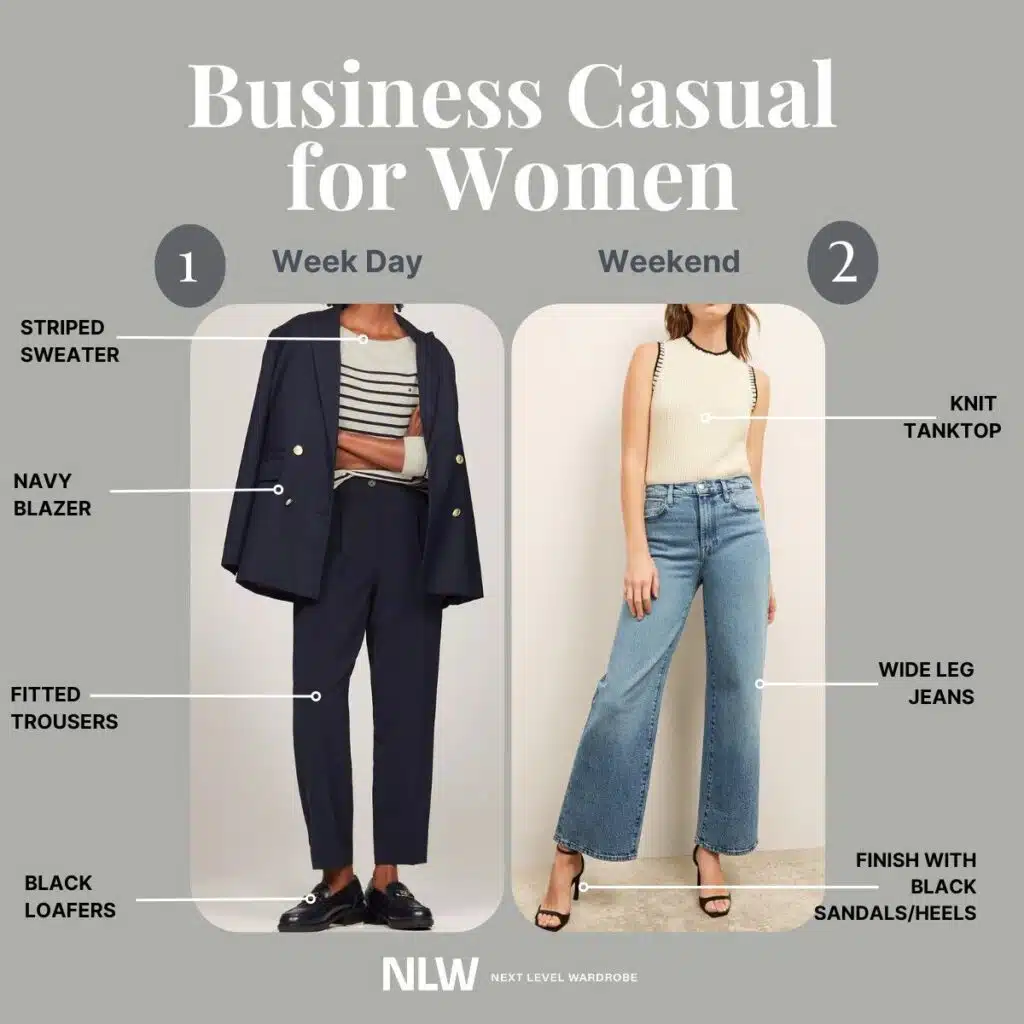
- Blazers: A fitted blazer adds instant polish. You do not need to wear a full suit, but a blazer with dress pants or a skirt always works.
- Light jackets: A structured, neat jacket is also fine in many offices.
Shoes
- Ballet flats: Comfortable and classic.
- Loafers: A good blend of comfort and style.
- Low heels: Closed-toe pumps or block heels are safe choices.
- Boots: Ankle boots can be fine, especially in fall and winter.
Accessories
- Simple jewelry: Stud earrings, a small necklace, or a classic watch. Avoid large, noisy, or flashy items.
- Belts: A slim belt can add polish to your look.
- Scarves: Lightweight, solid, or simply patterned scarves can be a nice touch.
Bags
- Totes: Large enough to hold your essentials but still structured.
- Satchels: Professional and easy to carry.
What To Avoid In Business Casual
Even though business casual is less strict, there are still things you should avoid. Here are some common mistakes:
- Ripped or distressed jeans: Even if your office allows jeans, avoid anything with holes or frays.
- Flip-flops or casual sandals: These are too informal for most workplaces.
- Short skirts or dresses: Anything above mid-thigh is usually not business casual.
- Crop tops or low-cut tops: These show too much skin for a professional setting.
- Athleisure: Leggings, yoga pants, or athletic wear are not business casual.
- Loud graphics or slogans: Save these for the weekend.
Many women forget that “casual” does not mean “anything goes. ” If you are unsure, it is better to dress slightly more formal than too casual.
Business Casual Vs. Business Professional: Key Differences
It is easy to mix up business casual and business professional. Here’s a clear comparison to help you see the differences:
| Business Casual | Business Professional |
|---|---|
| Dress pants, skirts, cardigans, blouses | Full suits, blazers, tailored skirts, button-down shirts |
| Simple shoes, flats, loafers | Heels, closed-toe pumps, formal shoes |
| Some patterns and colors allowed | Mainly solid, neutral colors |
| Minimal, tasteful accessories | Classic, understated accessories |
Knowing these differences will help you dress right for any situation. If your workplace sometimes requires business professional, always have at least one suit ready.
Examples Of Business Casual Outfits
Seeing real examples can make things clearer. Here are a few combinations that work well in most offices:
- Navy dress pants + white blouse + gray cardigan + loafers
- Knee-length black skirt + pastel knit top + fitted blazer + ballet flats
- Sheath dress + lightweight scarf + ankle boots
- Chinos + striped button-down shirt + simple necklace + flats
- A-line skirt + soft sweater + small earrings + satchel bag
Each of these outfits looks clean and professional but is not too formal. You can mix and match to fit your style and comfort.
Color And Pattern Choices
The colors and patterns you pick can have a big effect on your overall look. Here are some simple guidelines:
- Stick to neutrals: Black, navy, gray, beige, and white are always safe.
- Add color with care: Soft pastels or muted tones are usually fine. Bright colors can work, but avoid neon or too many bold items at once.
- Simple patterns: Stripes, small dots, or checks are usually okay. Avoid anything too busy or loud.
- Avoid large logos: These can look too casual or distracting.
A helpful tip: If you want to add a pop of color, do it with your accessories—like a scarf, belt, or bag.
Dressing For Different Seasons
Business casual does not look the same all year. The season can change your choices for fabric, layers, and shoes.
Spring/summer
- Lightweight fabrics: Cotton, linen, or blends keep you cool.
- Short sleeves: Fine, but avoid tank tops unless covered by a jacket or sweater.
- Light colors: Whites, creams, and pastels work well.
- Sandals: Closed-toe or peep-toe sandals can be okay, but check your office rules.
Fall/winter
- Heavier fabrics: Wool, tweed, or thicker knits add warmth.
- Layers: Cardigans, blazers, or sweaters help with colder offices.
- Boots: Ankle or knee-high boots are often fine. Avoid snow boots indoors.
- Dark colors: Navy, burgundy, and forest green are popular.
How To Build A Business Casual Wardrobe
Building your wardrobe does not have to be expensive or stressful. Here’s a step-by-step approach:
- Start with basics: Buy solid color dress pants, a black skirt, a white blouse, and a neutral cardigan.
- Add layers: Get a blazer and a simple dress.
- Pick comfortable shoes: Go for flats or low heels in black or nude.
- Add a few accessories: A classic watch, small earrings, and a structured bag.
- Mix and match: Choose pieces that work well together so you can create many outfits with fewer items.
Many women make the mistake of buying too many trendy pieces. Focus on quality basics that fit well, then add style with accessories.
How To Choose The Right Fit
Fit is more important than brand or price. Clothes that fit well look better and feel more comfortable. Here’s what to check:
- Shoulders: Seams should sit at your shoulder, not hang over.
- Waist: Pants and skirts should sit comfortably, not dig in or slide down.
- Length: Skirts at the knee, pants just above the shoe, sleeves at your wrist.
- Blouses: Not too tight across the chest, no pulling at buttons.
A non-obvious tip: Take your clothes to a tailor for small changes. Even cheap pants can look expensive if they fit perfectly.
Business Casual For Different Workplaces
Not all offices are the same. Business casual at a tech company can look different from a law firm. Here’s a quick overview:
| Industry | Common Business Casual Looks |
|---|---|
| Tech | Dark jeans, nice tops, cardigans, sneakers (clean and simple) |
| Finance | Dress pants, skirts, blazers, closed-toe shoes |
| Creative/Media | More color, patterns, and trendy pieces allowed |
| Education | Comfortable pants/skirts, knit tops, practical shoes |
Always check your company's dress code and look at what your managers wear. When in doubt, dress one step more formal than you think you need to.
Common Business Casual Mistakes
Even smart, stylish women make business casual mistakes. Here are a few to avoid:
- Wearing athletic shoes: Even clean sneakers are usually too informal unless clearly allowed.
- Too many accessories: Large, noisy jewelry can distract from your message at work.
- Wrinkled clothes: Iron or steam your outfits. Wrinkles make you look less serious.
- Ignoring office culture: Some offices are stricter or more relaxed. Notice what others wear.
- Old or worn-out items: Scuffed shoes or faded pants send the wrong signal.
A non-obvious insight: Always keep a spare cardigan or blazer at work. Offices can get cold, and it is an easy way to look more polished for a sudden meeting.
Credit: nextlevelwardrobe.com
Adapting Business Casual For Different Body Types
Every woman’s body is different. The right business casual outfits should help you feel comfortable and confident.
- Petite: Choose pants and skirts that are not too long. Go for fitted blazers and avoid oversized pieces.
- Tall: Midi skirts and longer pants work well. Try layering to add shape.
- Curvy: A-line skirts, wrap dresses, and blouses with a little stretch are flattering. Avoid anything too tight.
- Athletic: Add shape with belts or peplum tops. Skirts and pants with a slight flare can add balance.
If you are unsure, try different styles at home and see what makes you feel best. Confidence shows more than any brand or price tag.
Sustainable And Ethical Choices In Business Casual
More women are thinking about the impact of their clothes. Choosing sustainable and ethical business casual options is possible:
- Buy less, choose well: Invest in a few high-quality pieces instead of many cheap ones.
- Look for organic fabrics: Cotton, linen, or wool from responsible sources.
- Support ethical brands: Some brands focus on fair labor and low-impact materials.
- Care for your clothes: Wash gently, hang dry, and repair when needed to make clothes last.
Many brands now offer business casual pieces made from recycled materials or with eco-friendly dyes. Looking professional does not mean you have to harm the planet.
Business Casual And Remote Work
Remote work has changed how many women dress for their jobs. Even on video calls, looking professional matters.
- Focus on tops: A neat blouse, sweater, or blazer can be seen on camera. Pair with comfortable pants if you are not standing.
- Keep colors simple: Bright patterns can look odd on video. Stick to soft shades.
- Check lighting: Some colors look better than others on screen. Test your outfit before an important meeting.
- Have a backup: Keep a blazer or scarf nearby for last-minute calls.
A helpful tip: Even if you are at home, getting dressed in business casual can help you feel more focused and ready for work.
Real-world Examples: What Women Actually Wear
Hearing from real women can make business casual feel less intimidating. Here are a few examples:
- Maria, accountant: “I usually wear navy dress pants, a white blouse, and a cardigan. Sometimes I add a scarf for color.”
- Leah, designer: “My office is more relaxed, so I often wear dark jeans, a soft sweater, and ankle boots.”
- Jasmine, teacher: “I like A-line skirts, knit tops, and comfortable flats. I move around a lot, so comfort is key.”
- Sophie, project manager: “My go-to is a knee-length dress with a blazer and loafers. I keep jewelry simple.”
As you see, business casual can be flexible. The goal is always to look neat, feel comfortable, and fit your office culture.
How To Shop For Business Casual Clothes
Shopping can feel overwhelming, but it does not have to be. Here’s how to make smart choices:
- Set a budget: Decide how much you want to spend before you shop.
- Start with basics: Buy classic items first—pants, skirts, blouses, a blazer.
- Try things on: Fit is more important than trend.
- Check fabric: Look for quality materials that last longer and feel better.
- Read reviews: See what other women say about sizing and comfort.
- Buy in sets: Choose items that mix and match well.
A non-obvious tip: Take photos of yourself in the dressing room. Sometimes, clothes look different in the mirror than in photos.
Caring For Your Business Casual Wardrobe
To keep your clothes looking good, you need to care for them properly.
- Follow wash labels: Some fabrics need gentle cycles or cold water.
- Air dry: This can make clothes last longer and avoid shrinking.
- Store properly: Hang blouses and pants, fold sweaters to keep shape.
- Remove stains quickly: Act fast if you spill coffee or lunch on your outfit.
- Rotate your wardrobe: Wearing the same things every week can wear them out faster.
A hidden insight: Invest in a simple steamer. It is faster than ironing and keeps your clothes wrinkle-free.

Credit: www.wikihow.com
Business Casual For Special Events
Sometimes, you need to adapt business casual for events like presentations, interviews, or after-work gatherings.
- For interviews: Lean towards the more formal side—dress pants, blouse, blazer, and closed-toe shoes.
- Presentations: Add a blazer or structured jacket to look confident.
- Office parties: You can add a bit more color or a fun accessory, but keep it professional.
If you are not sure, ask a colleague or check with HR. It is better to be a little overdressed than too casual.
Business Casual Around The World
If you work with people in other countries, remember that business casual can look different everywhere.
- Europe: Often more formal, with tailored pieces and neutral colors.
- Asia: Conservative, modest outfits, often with sleeves and higher necklines.
- Australia: Relaxed, but still neat and tidy.
Always research or ask before traveling for work or joining an international video call. Local customs matter.
Frequently Asked Questions
What Is The Safest Business Casual Outfit For Women?
A pair of dress pants, a blouse, and a cardigan or blazer is almost always safe. Add closed-toe flats or low heels, and keep accessories simple. This outfit works in nearly every office that allows business casual.
Can Women Wear Jeans As Business Casual?
In some offices, dark, non-ripped jeans are allowed as business casual. Always check your company’s policy. Pair jeans with a smart blouse and a blazer to look more professional.
Are Sleeveless Tops Business Casual?
Sleeveless tops can be business casual if the armholes are not too low and the neckline is modest. In more formal offices, wear a cardigan or jacket over sleeveless tops.
Is It Okay To Wear Sneakers With Business Casual?
Usually, sneakers are not business casual unless they are very clean, simple, and your office culture allows them. Stick to loafers, flats, or low heels for a safer choice.
Where Can I Find More Examples Of Business Casual Outfits?
Many fashion blogs and company websites share outfit ideas. For more official guidelines, you can visit the Wikipedia: Business Casual page.
Business casual for women does not have to be stressful. With the right basics, a few smart accessories, and an eye for fit and comfort, you can build a wardrobe that makes you look and feel your best. Remember, it is always better to dress a bit more formal than to look too casual, especially when you start a new job or meet new clients.
With these tips, you can walk into any office with confidence, knowing you look just right.
