

Should I Wash Gym Clothes in Hot Or Cold Water? Expert Guide
Should I Wash Gym Clothes In Hot Or Cold Water
Choosing the right way to wash gym clothes is more important than many people think. After a workout, your clothes absorb sweat, bacteria, and sometimes even strong odors. Many people wonder: should I wash gym clothes in hot or cold water? The answer is not as simple as just picking a temperature. It depends on fabric type, odor control, bacteria, energy use, and even how long you want your gym clothes to last.
The wrong washing method can damage your favorite workout gear, cause lingering smells, and even shorten the life of expensive clothes. On the other hand, a smart laundry routine can help your gym clothes stay fresh, clean, and comfortable for much longer.
This article will explain everything you need to know, so you can make the best choice for your routine, your health, and your wallet.
Understanding Gym Clothes Fabrics
Modern gym clothes are designed for performance. They use special fabrics that wick away sweat, stretch with your body, and dry quickly. The most common materials include polyester, nylon, spandex, and sometimes cotton blends. Each fabric reacts differently to water temperature and washing methods.
Synthetic fabrics like polyester and nylon are popular because they manage moisture well. However, they can trap bacteria and odors inside the fibers. Cotton blends are softer and more comfortable, but they soak up sweat and can grow bacteria if not washed properly.
A critical detail: heat can break down the fibers in synthetic fabrics over time. Many people do not realize that while hot water might kill some bacteria, it can also damage gym clothes made of synthetics. On the other hand, cold water is gentler but may not clean as deeply if not done correctly.
Hot Water Vs. Cold Water: The Basics
Choosing between hot and cold water comes down to three main factors: cleaning power, fabric care, and energy use.
Cleaning Power
Hot water is well-known for its strong cleaning ability. It dissolves oils and kills many types of bacteria. This seems like a good idea for sweaty gym clothes. However, some modern detergents are designed to work well even in cold water. With the right detergent, cold water can also remove sweat and bacteria effectively.
Fabric Care
Hot water can be harsh on fabrics, especially synthetic ones. It may cause stretching, fading, or loss of shape. Cold water is much gentler, helping your gym clothes keep their shape and color longer. Using hot water too often can make expensive activewear wear out quickly.
Energy Use
Washing in hot water uses much more energy than cold water. According to the U. S. Department of Energy, up to 90% of the energy used in washing goes toward heating the water. Choosing cold water is not only better for your clothes but also saves on your energy bill and is better for the environment.
The Science Behind Odors And Bacteria
Gym clothes can develop strong odors if not washed correctly. Sweat itself is mostly water and salt, but bacteria feed on sweat and oils, producing smells. Synthetic fabrics can trap these bacteria deep inside the fibers.
Hot water can kill many bacteria, but not all. Some bacteria need extremely high temperatures to die, which home washers rarely reach. Cold water, if paired with a good detergent and proper washing technique, can also remove bacteria and odors.
One insight many people miss: the real key to odor control is not just water temperature, but how quickly you wash your gym clothes after wearing them. Leaving sweaty clothes in a gym bag or hamper allows bacteria to multiply, making smells worse and washing less effective.
When To Use Hot Water
Hot water can be helpful in certain situations:
- Heavy soil or stains: If your gym clothes are caked with mud, blood, or grass, hot water can help break up the dirt.
- Illness or infection: If you have a skin infection, or athlete’s foot, or are recovering from sickness, hot water may help reduce germs.
- All-cotton items: Pure cotton towels or socks can usually handle hot water.
But for most gym clothes, especially those made with synthetic fabrics, it’s better to avoid hot water unless absolutely needed.
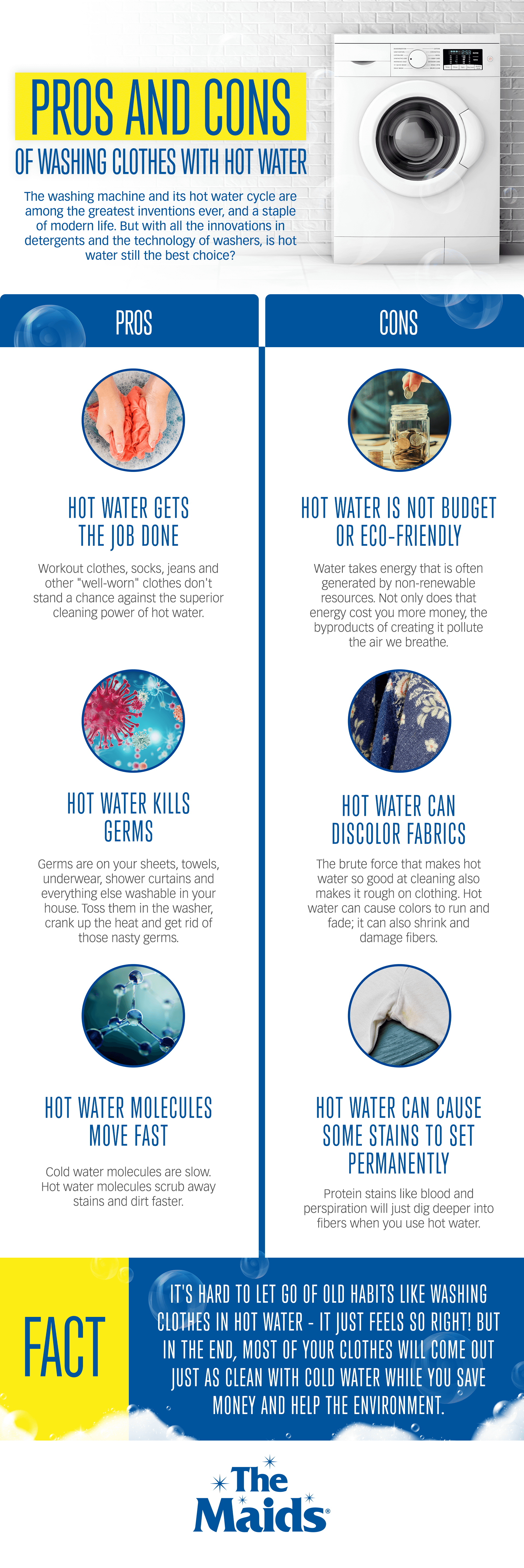
Credit: www.maids.com
When To Use Cold Water
Cold water is usually best for washing gym clothes, especially if they are made from synthetics like polyester or spandex. Here’s why:
- Protects fabric: Cold water does not break down elastic fibers or cause shrinkage.
- Prevents fading: Your clothes keep their colors longer.
- Saves energy: Cold washes are more eco-friendly and cost-effective.
- Modern detergents: Many are designed to work well in cold water, so you don’t lose cleaning power.
A little-known tip: you can add a pre-soak step for very dirty or smelly clothes. Soak them in cold water with a bit of detergent for 30 minutes before washing. This helps break up sweat and odor without needing hot water.
Comparing Washing Results: Hot Vs. Cold
To help you visualize the main differences, here’s a comparison between washing gym clothes in hot water and cold water.
| Factor | Hot Water | Cold Water |
|---|---|---|
| Cleaning Power | High for stains, bacteria | Good with the right detergent |
| Fabric Damage | Possible fading, shrinking, stretching | Gentle, preserves fabric |
| Odor Control | Removes some bacteria, but not all | Removes most bacteria with proper detergent |
| Energy Use | High | Low |
| Color Protection | Colors may fade | Colors stay bright |
Detergents: The Unsung Hero
One of the most overlooked factors in washing gym clothes is the detergent you use. Many people still use regular laundry detergents, but these are not always best for workout gear.
Sports detergents are made for synthetic fabrics and sweat. They contain enzymes and special ingredients that break down oils and bacteria in gym clothes. These detergents often work best in cold water. Using the right detergent can make a bigger difference than water temperature alone.
A common mistake: using too much detergent. Extra soap can build up in stretchy fabrics, actually trapping odors instead of removing them. Always use the recommended amount, and consider an extra rinse if your clothes feel sticky or smell even after washing.
Special Washing Techniques For Gym Clothes
Washing gym clothes is not just about water temperature. The method matters too. Here are some best practices:
- Wash clothes inside out: Sweat and bacteria build up on the inside. Turning clothes inside out helps the detergent reach the dirtiest parts.
- Avoid fabric softeners: These can coat fibers, trapping odors and reducing the fabric’s ability to wick moisture.
- Do not overload the washer: Give clothes space to move and rinse properly.
- Use extra rinse cycle: Removes soap and sweat residue.
- Air dry when possible: High heat from dryers can damage elastic fibers. Hang drying or using low heat extends the life of gym clothes.
A non-obvious tip: If your gym clothes still smell after washing, try adding a cup of white vinegar to the rinse cycle. Vinegar neutralizes odors and breaks down detergent build-up, especially in cold water washes.

Credit: housekeepup.com
Common Mistakes To Avoid
Many people make the same mistakes when washing gym clothes, which can lead to odor, fabric damage, and waste of money.
- Using hot water for all loads: This can ruin synthetic fabrics and elastic.
- Letting sweaty clothes sit too long: Bacteria multiply quickly in damp, dark places.
- Overusing detergent or softener: Leads to build-up and worse smells.
- Drying on high heat: This weakens fabric and causes shrinkage.
Understanding these mistakes can save your favorite workout gear from early retirement.
How Often Should You Wash Gym Clothes?
You should wash gym clothes after every workout. Sweat and bacteria start building up immediately, and re-wearing unwashed clothes can lead to skin irritation or even infections. Unlike jeans or jackets, gym wear should not be worn more than once before washing.
If you do two workouts in one day, change into fresh clothes for each session and wash both sets. For people who do not sweat much, a quick rinse and air dry between wears is tempting, but not recommended for most synthetic fabrics.

Credit: greenllamaclean.com
Special Cases: Washing Shoes, Hats, And Accessories
Many people forget about shoes, hats, and accessories that also get sweaty.
- Shoes: Most athletic shoes can be washed in cold water on a gentle cycle. Remove insoles and laces first, and let them air dry.
- Hats and headbands: Wash in cold water with mild detergent and air dry. Hot water can shrink hats or ruin elastic bands.
- Sports bras: Often made with elastic and special padding, so use cold water and a mesh bag to protect them.
Care for these items like your main gym clothes, and they will last longer and smell better.
Washing Gym Clothes By Hand
If you do not have access to a washing machine, you can wash gym clothes by hand. Use cold or lukewarm water (not hot), a small amount of sports detergent, and gently rub the fabric. Pay extra attention to armpits and seams where sweat collects.
Rinse thoroughly and air dry.
A practical tip: If you travel often, carry a small bottle of sports detergent and a mesh laundry bag. This lets you quickly wash gym clothes in a hotel sink or shower.
What About Washing Machines With “sanitize” Cycles?
Some modern washers offer a sanitize cycle, which uses extra-hot water. While this can kill more bacteria, it is often too harsh for gym clothes made from synthetics. Use this setting only for items like towels or socks that can handle high heat.
Remember, most athletic wear will last longer and stay fresher with cold water and the right detergent.
How Water Temperature Affects Different Fabrics
Not all gym clothes are the same. Here’s how hot and cold water affect the most common fabrics:
| Fabric Type | Hot Water | Cold Water |
|---|---|---|
| Polyester | Weakens fibers, fades colors | Preserves strength and color |
| Nylon | May shrink or stretch | Gentle on fabric |
| Spandex/Lycra | Breaks down elasticity | Keeps stretchiness |
| Cotton blends | Can handle some heat | Best for preserving shape |
| Wool | Shrinks and felts | Best for delicate wool blends |
For most gym clothes, cold water is the safest choice.
The Role Of Washing Frequency
Washing gym clothes often is important, but over-washing in hot water wears them out quickly. Here’s a balanced approach:
- Wash after every use, but use cold water and gentle cycles.
- Only use hot water for special cases (illness, heavy stains).
- Use a sports detergent and avoid harsh chemicals.
This routine keeps your clothes clean and fresh without sacrificing their lifespan.
Environmental Impact Of Your Laundry Choices
Washing in cold water is much better for the environment. Heating water for laundry accounts for a large part of your home’s energy use. Switching to cold water for gym clothes can save energy and lower your carbon footprint. According to the U.
S. Environmental Protection Agency, using cold water instead of hot can reduce energy use for each load by up to 75%.
A less obvious impact: cold water washing also reduces microfiber pollution. Hot water breaks down synthetic fabrics more quickly, releasing more plastic microfibers into the water system, which can harm marine life.
Tips For Smell-free, Long-lasting Gym Clothes
- Wash quickly: Do not let sweat sit in clothes.
- Use a sports detergent: These fight bacteria and odors better.
- Skip the dryer: Air dry to protect fabric.
- Pre-soak if needed: For stubborn smells, soak in cold water with vinegar or baking soda before washing.
- Wash inside out: Helps clean where it matters most.
- Store dry: Make sure clothes are completely dry before putting them away.
What Science And Experts Recommend
Multiple studies and laundry experts agree: for most gym clothes, cold water with the right detergent is safest and most effective. Hot water does not guarantee germ-free clothes and often shortens the life of performance fabrics.
For more on this topic, the experts at the Consumer Reports give detailed guidance on washing athletic wear.
Common Questions About Washing Gym Clothes
Frequently Asked Questions
Should I Always Use Cold Water For Gym Clothes?
For most gym clothes, especially synthetics, cold water is best. It protects the fabric, keeps colors bright, and saves energy. Only use hot water for special cases like illness, heavy stains, or all-cotton items.
Can I Use Regular Detergent For Gym Clothes?
You can, but sports detergents are better for synthetic fabrics. They contain enzymes that break down sweat and bacteria more effectively, even in cold water.
Why Do My Gym Clothes Still Smell After Washing?
This often happens due to detergent build-up or not washing soon enough after use. Try washing inside out, using less detergent, or adding vinegar to the rinse. Avoid fabric softeners, as they can trap odors.
Is It Safe To Air Dry Gym Clothes?
Yes, air drying is safest for most gym clothes. High heat from dryers can damage elastic fibers and shrink fabrics. Hang clothes in a well-ventilated area for best results.
How Do I Wash Gym Shoes And Accessories?
Remove insoles and laces, wash shoes in cold water on a gentle cycle, and always air dry. For hats and headbands, use cold water and mild detergent, then air dry to protect elasticity.
Final Thoughts
Washing gym clothes is not just a matter of hot or cold water. The right method depends on the fabric, the level of sweat, and how quickly you clean them. For most people, cold water with a sports detergent is the best way to keep gym clothes fresh, odor-free, and long-lasting. Avoid hot water unless you have a special reason, and always follow the care label on each item. With a smart laundry routine, you’ll spend less on new clothes, stay more comfortable during workouts, and help the planet at the same time.
