

Shirts Vs Tshirts: Key Differences and Style Guide
Shirts Vs T-shirts: A Complete Guide To Choosing Your Style
When you open your closet, you probably see both shirts and t-shirts hanging side by side. They are two of the most common clothing items around the world. But what makes them different? When should you wear a shirt instead of a t-shirt, or the other way around? Is one better than the other for certain occasions or body types? These questions are more important than many people think, especially if you care about style, comfort, or making a good impression.
This guide will help you understand the real differences between shirts and t-shirts. We’ll look at their history, fabric types, fit, cost, and even how people judge you based on what you wear. You’ll also get practical advice for daily life—whether you are buying clothes for work, picking something for a date, or just want to look your best on a weekend.
If you’ve ever felt unsure about which top to choose, you’re in the right place.
What Makes A Shirt A Shirt?
The word shirt is often used for many types of tops, but in fashion, a shirt usually means a button-up (or button-down) with a collar, cuffs, and long or short sleeves. Shirts can be formal or casual, but they almost always look structured.
Key Features Of Shirts
- Collar: Classic shirts have a collar that can be styled in different ways—pointed, spread, mandarin, or button-down.
- Buttons: Most shirts have a full or partial button placket down the front. Some have extra buttons on the sleeves (cuffs) for adjusting fit.
- Cuffs: The end of the sleeves usually has a cuff, sometimes with a button or even cufflinks.
- Tailored Shape: Shirts are often cut to fit the body closely, especially formal ones.
- Pocket(s): Many shirts have a pocket or two on the chest, though not always.
- Fabrics: Common fabrics include cotton, linen, polyester blends, and sometimes silk or rayon for special occasions.
Types Of Shirts
- Dress shirts: Worn with suits and ties, often in formal settings.
- Casual shirts: Like oxford shirts, chambray shirts, or denim shirts.
- Short-sleeved shirts: Great for warmer weather but still more formal than a t-shirt.
- Flannel shirts: Made from soft, warm fabric, popular in colder months.
When To Choose A Shirt
- Job interviews, business meetings, and office work
- Weddings, formal parties, or religious events
- Any time you want to look polished or professional
What Makes A T-shirt A T-shirt?
The t-shirt is named for its “T” shape. It’s usually a pullover with no buttons, made from soft, stretchy fabric, and has a simple neckline (like a crew neck or v-neck).
Key Features Of T-shirts
- No collar: The neckline is usually round (crew neck) or V-shaped.
- No buttons: T-shirts almost never have buttons or zippers.
- Short sleeves: Most have short sleeves, though long-sleeve t-shirts exist.
- Simple shape: T-shirts are usually loose or semi-fitted for comfort.
- Soft, stretchy fabrics: Mostly cotton, polyester blends, or jersey knit.
- No cuffs: The ends of the sleeves are simple and not structured.
- Prints and graphics: T-shirts often show logos, artwork, or slogans.
Types Of T-shirts
- Plain t-shirts: Solid colors, easy to match with anything.
- Graphic tees: Feature images, band names, or fun messages.
- V-neck and crew neck t-shirts: The two most popular neck styles.
- Long sleeve t-shirts: Good for layering or cooler days.
- Athletic/performance t-shirts: Made with moisture-wicking fabrics for exercise.
When To Choose A T-shirt
- Casual outings, weekends, or relaxed work environments
- Sports, outdoor activities, or gym sessions
- Layering under jackets, hoodies, or shirts
Shirts Vs T-shirts: Main Differences
Understanding the real differences helps you make better choices. Here’s a side-by-side view:
| Feature | Shirt | T-Shirt |
|---|---|---|
| Structure | Tailored, with collar and cuffs | Simple, collarless, unstructured |
| Occasions | Formal, semi-formal, smart casual | Casual, sporty, relaxed |
| Fabrics | Cotton, linen, silk, blends | Cotton, jersey, polyester |
| Maintenance | May need ironing, dry cleaning | Easy wash, low maintenance |
| Price Range | Often higher, especially formal | Usually affordable |
The History Behind Shirts And T-shirts
Clothing tells a story. Shirts have been around for centuries—once worn only by the wealthy or as undergarments. Over time, they became a sign of status and style. Men and women both wear shirts today, but in the past, styles were often gender-specific.
T-shirts started as simple undershirts. Soldiers and workers wore them for comfort. Over the decades, t-shirts became symbols of rebellion, pop culture, and self-expression. Today, almost everyone owns at least one t-shirt.
Non-obvious insight: Many people don’t realize that the t-shirt’s journey from underwear to everyday fashion happened because of movies and music icons. When celebrities wore t-shirts in films or on stage, they became cool and mainstream.
Fabric Choices: What Matters Most?
Both shirts and t-shirts come in many fabric types. But the choice of material can change how a garment looks, feels, and lasts.
Common Shirt Fabrics
- Cotton: Soft, breathable, and easy to dye. Good for all seasons.
- Linen: Lightweight, best for hot climates, but wrinkles easily.
- Polyester blends: Less wrinkling, but can feel less natural.
- Silk or rayon: Luxurious but delicate and often expensive.
- Flannel: Warm and cozy, used in casual shirts.
Common T-shirt Fabrics
- 100% Cotton: Most popular for softness and comfort.
- Polyester or blends: Durable, less shrinking, often used in sportswear.
- Jersey knit: Stretchy and lightweight.
Tip: Always check the label before buying. Pure cotton is great for sensitive skin, but blends may last longer with frequent washing.
Non-obvious insight: High-quality t-shirts often use “combed cotton” or “ring-spun cotton.” These feel softer and last longer than basic cotton, but most buyers never check this detail.
Fit And Comfort: What To Expect
Fit is more than just size. A well-fitted shirt or t-shirt can change how you look and feel.
Shirts
- Slim fit: Closer to the body, modern look, can feel less flexible.
- Regular fit: More room for movement, classic style.
- Loose fit: Relaxed, but may look untidy in formal settings.
Shirts often feel less comfortable than t-shirts for long wear, especially if they’re stiff or not the right size. But a well-fitted shirt boosts confidence and posture.
T-shirts
- Slim fit: Shows body shape, popular with younger people.
- Regular fit: Comfortable for most people.
- Oversized: Trendy for a casual, streetwear look.
T-shirts are famous for comfort. But too loose can look sloppy, and too tight can highlight areas you may want to hide.
Practical advice: Try raising your arms when testing a shirt or t-shirt. If it rides up or feels tight, try a different fit or size.
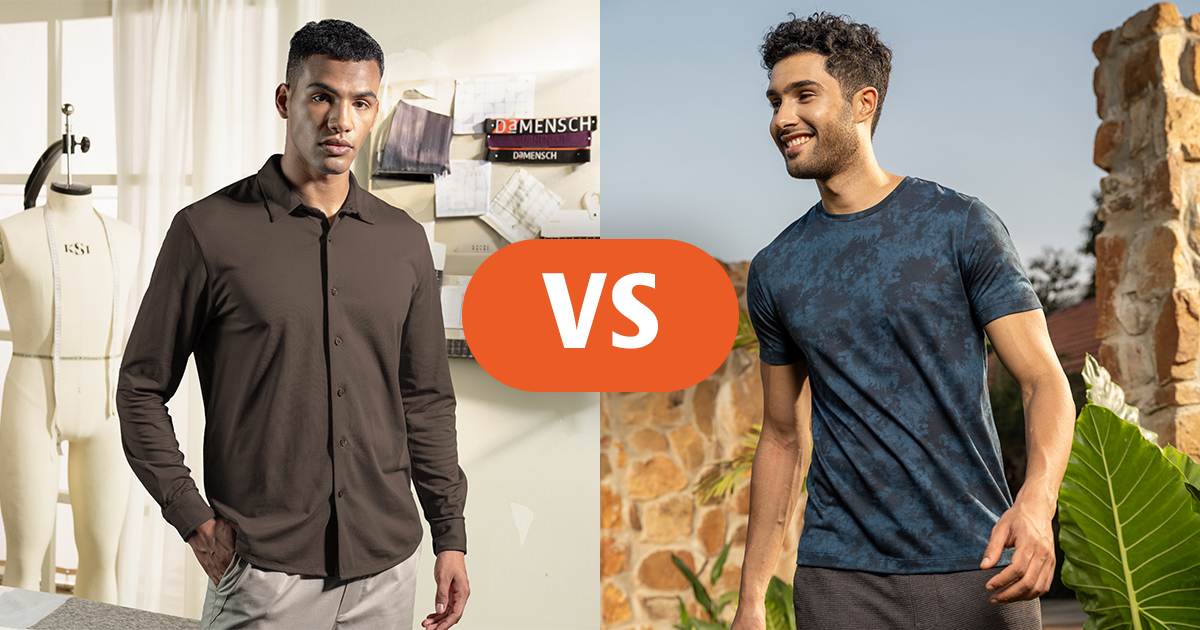
Credit: www.damensch.com
Style Impact: How People See You
Clothes send signals. The choice between a shirt and a t-shirt often affects how others judge you—even if you don’t notice it.
First Impressions
- Shirts: Seen as more mature, serious, or responsible. Great for situations where you want respect.
- T-Shirts: Seen as relaxed, approachable, creative. Good for socializing or fun activities.
Social Situations
If you’re meeting someone important or want to stand out professionally, choose a shirt. For casual gatherings or when you want to blend in, a t-shirt is fine.
Interesting fact: A study in a business magazine showed that people wearing shirts were rated as more trustworthy and competent, while t-shirt wearers were seen as friendlier and more creative.
Practical Uses: Where Each Wins
Different situations call for different tops. Here are some common scenarios:
- Job Interview: Always choose a shirt unless you know the company is very casual.
- Date Night: A shirt shows effort, but a clean, well-fitted t-shirt can work for a casual outing.
- Sporting Event: T-shirts win for comfort and movement.
- Traveling: T-shirts are easy to pack and wash, but a shirt can be dressed up or down for multiple uses.
- Family Gatherings: Either works, but a shirt might please older relatives.
- Outdoor Work: T-shirts for flexibility, unless you need sun protection (then, a long-sleeve shirt is better).
Maintenance And Care
How you care for your clothes affects their look and lifespan.
Shirts
- Ironing: Most shirts, especially formal ones, need ironing for a crisp look.
- Dry cleaning: Some materials or delicate shirts require special cleaning.
- Stain removal: Collars and cuffs get dirty easily—treat stains quickly.
T-shirts
- Washing: Most t-shirts can go in a regular wash. Turn inside out to protect prints.
- Drying: Air-drying helps prevent shrinking, but t-shirts can usually handle a dryer.
- No ironing: Most t-shirts don’t need ironing unless you want a very neat look.
Tip: Fold t-shirts to save space. Hang shirts to keep them wrinkle-free.
Cost And Value: Which Is A Better Investment?
People often think shirts are expensive and t-shirts are cheap, but that’s not always true.
Price Ranges
- Shirts: Basic shirts start at low prices, but high-quality or branded shirts can be costly.
- T-Shirts: Most are affordable, but designer or limited-edition t-shirts can be surprisingly expensive.
Value For Money
- Shirts: Last longer if cared for, and can be used in many settings.
- T-Shirts: Easy to replace, but may fade or lose shape faster.
Here’s a quick comparison:
| Aspect | Shirt | T-Shirt |
|---|---|---|
| Average Lifespan | 2-5 years (with care) | 1-3 years (regular use) |
| Replacement Cost | Medium to high | Low to medium |
| Resale Value | Possible for designer/rare shirts | Low, except for rare collectibles |
Practical tip: If you want to buy fewer clothes, invest in versatile shirts that can be used in both formal and casual settings.
Trends: What’s Popular Right Now?
Fashion trends shift every few years, but some styles stay strong.
- Shirts: Slim-fit, printed, and patterned shirts are popular. Casual shirts like flannels and chambrays are always in style.
- T-Shirts: Oversized, vintage logos, and sustainable fabrics are trending. Plain white t-shirts remain a classic choice.
Non-obvious trend: More workplaces now allow smart t-shirts with blazers, especially in creative industries. This mix of formal and casual is called “business casual,” and it’s changing dress codes worldwide.
Environmental Impact
How your clothes are made affects the planet.
- Shirts: Often made with natural fibers, but some require chemicals in production (like for wrinkle-free finishes). They last longer, so you buy less often.
- T-Shirts: Fast fashion brands make millions of t-shirts every year, which can lead to more waste. Look for organic cotton or recycled materials if you care about sustainability.
Tip: Donate or recycle old clothes instead of throwing them away.
How To Choose: Shirts Or T-shirts?
Choosing the right top depends on your needs. Here’s a simple decision guide:
Ask Yourself:
- What is the occasion? If it’s formal or important, pick a shirt.
- How do you want to feel? Confident or relaxed? Shirts give structure, t-shirts give comfort.
- What’s the weather? Shirts can be layered, but t-shirts are cooler.
- What’s your budget? T-shirts are usually cheaper, but a good shirt is a better investment.
- How much time do you have for care? Shirts need more attention.
Versatility
If you want one item that does it all, a simple oxford shirt is hard to beat. It can be worn with jeans for a casual look or with trousers for a formal event. For pure comfort and ease, nothing beats a plain t-shirt.
Styling Tips For Shirts And T-shirts
You can express your personal style with both shirts and t-shirts. Here’s how:
How To Style A Shirt
- Tuck it in for a formal look, or leave it untucked for casual events.
- Layer with a sweater, blazer, or jacket for cooler weather.
- Add accessories like a watch, tie, or subtle jewelry.
- Roll up the sleeves for a relaxed vibe.
How To Style A T-shirt
- Pair with jeans or shorts for a classic casual look.
- Layer under a jacket or open shirt for a modern style.
- Choose the right fit—not too loose or tight.
- Experiment with colors or graphics to show your personality.
Non-obvious tip: For a smart-casual look, wear a plain t-shirt under a well-fitted blazer. This works well for dates, casual meetings, and even some office environments.
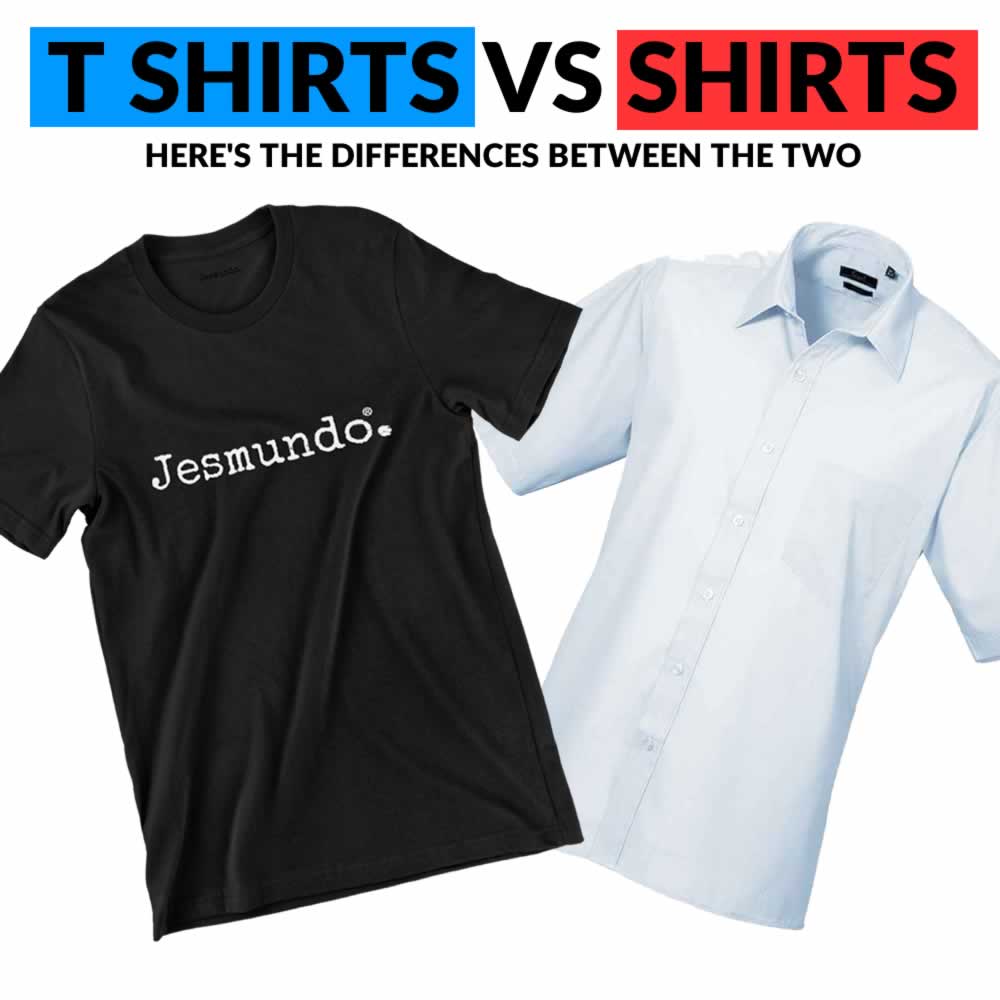
Credit: www.jesmundo.co.uk
Shirts Vs T-shirts: Gender And Age
While both shirts and t-shirts are worn by everyone, some styles work better for different genders and ages.
- Men: Shirts are often seen as more “dressed up,” while t-shirts are for casual settings.
- Women: Shirts can be styled for both power dressing and relaxed looks. T-shirts are often used for layering or as statement pieces.
- Kids and Teens: T-shirts are practical and playful. For special events, kids’ shirts are designed for easy movement.
Tip: For older adults, softer fabrics and looser fits in both shirts and t-shirts add comfort.
Common Mistakes When Choosing Between Shirts And T-shirts
- Ignoring the occasion: Wearing a t-shirt to a formal event can send the wrong message.
- Wrong fit: Too tight or too loose can ruin your look, no matter the type.
- Not checking fabric: Cheap fabrics can feel itchy or look worn out quickly.
- Neglecting care: Wrinkled shirts or faded t-shirts make you look unprepared.
- Overlooking color choices: Bright t-shirts in business settings or dull shirts for parties can feel out of place.
Cultural Meanings And Global Use
In some cultures, shirts are a symbol of respect or status. For example, in many Asian countries, wearing a shirt (especially with long sleeves) is seen as a sign of politeness. In the West, t-shirts are a symbol of freedom and youth culture.
Interesting fact: In some places, “t-shirt weather” means it’s warm enough to go outside without a jacket. In others, wearing a t-shirt to work is still not allowed.
For more on global fashion influence, you can visit Wikipedia’s Fashion page.
Buying Guide: How To Shop Smart
For Shirts
- Check stitching and buttons: Loose threads or cheap buttons are signs of poor quality.
- Try before you buy: Sizes vary by brand.
- Choose classic colors: White, blue, and black never go out of style.
For T-shirts
- Feel the fabric: High-quality cotton feels smooth and not too thin.
- Look at the neckline: Crew necks are more formal, v-necks are casual.
- Check for print quality: Graphics should not crack or peel after washing.
Non-obvious buying tip: Try to find brands that use pre-shrunk fabrics. This means your t-shirt or shirt won’t change size after the first wash.
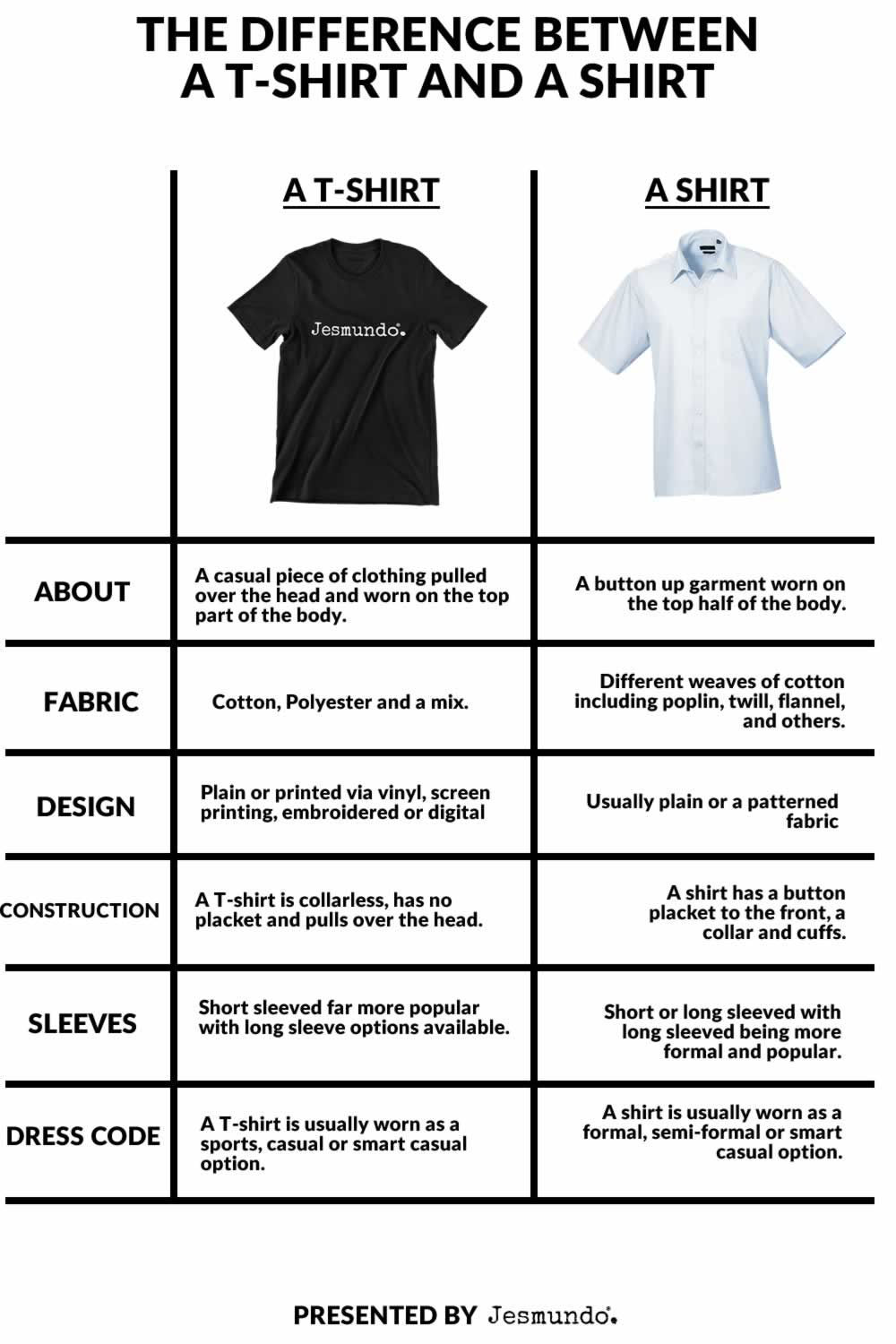
Credit: www.jesmundo.co.uk
Shirts Vs T-shirts: Quick Reference
Here’s a simple summary to help you remember:
| Situation | Best Choice | Why |
|---|---|---|
| Job Interview | Shirt | Shows professionalism |
| Day at the Beach | T-Shirt | Comfort and breathability |
| First Date (Dinner) | Shirt | Makes a good impression |
| Hiking | T-Shirt | Easy to move and sweat-wicking |
| Family Photo | Shirt | Polished look for pictures |
| Travel | T-Shirt | Packs small, easy to wash |
Frequently Asked Questions
What Is The Main Difference Between A Shirt And A T-shirt?
The biggest difference is structure. Shirts have a collar, buttons, and are often more formal. T-shirts are collarless, have no buttons, and are more casual. Shirts are better for formal occasions, while t-shirts are best for relaxed settings.
Can I Wear A T-shirt To Work?
It depends on your workplace. In creative or tech companies, clean, plain t-shirts are often fine. In traditional offices, shirts are usually required. When in doubt, choose a shirt or layer a t-shirt under a blazer.
Which Lasts Longer, A Shirt Or A T-shirt?
Shirts usually last longer if cared for, especially if made from strong fabrics. T-shirts are easier to wear out, especially if washed and dried often. High-quality t-shirts can last, but shirts are a better investment for durability.
Are Shirts Always More Expensive Than T-shirts?
Not always. Basic shirts and t-shirts can cost the same. However, designer shirts or those made with special fabrics are often more expensive. Some branded or collectible t-shirts can also be pricey.
How Do I Know Which Style Suits My Body Type?
If you have a lean build, slim-fit shirts and t-shirts will highlight your shape. If you want to hide your stomach, regular or relaxed fits are better. Shirts add structure and can make you look taller, while t-shirts are softer on curves and easy to layer.
Shirts and t-shirts are both wardrobe essentials. The best choice depends on your needs, style, and comfort. By understanding their differences, you can always look and feel your best—no matter what’s hanging in your closet.
