

Men’s T-Shirts: The Ultimate Guide to Style, Fit, and Comfort in 2026
If you open any man’s wardrobe in 2026, you’re likely to find at least one thing: a t-shirt—or, let’s be honest, probably twenty. The humble men’s t-shirt is everywhere. It’s easy to wear, simple to style, and sometimes, it even makes you look like you have your life together (even if you forgot it was laundry day). But while t-shirts may seem like the simplest piece of clothing, there’s a world of difference between a shirt that makes you look sharp and one that looks like you borrowed it from your little brother—or your granddad.
This guide will take you deep into the world of men’s t-shirts. We’ll explore everything from the different types and best materials, to fit, style, and even how to keep your favorite tee from turning into a kitchen rag. Whether you’re a t-shirt newbie or you’ve been living in them since your first concert, you’ll find something useful (and maybe even a reason to finally toss that high school reunion tee).
The Many Faces Of Men’s T-shirts
Let’s start with the basics: not all t-shirts are created equal. If you think a t-shirt is just a t-shirt, you might be in for a surprise. Here are the main types you’ll find hanging in stores—or maybe already on your floor.
The Classic Crew Neck
This is the most common t-shirt. The crew neck features a round neckline that sits right at the base of your neck. It’s simple, timeless, and works with almost anything. It’s the “I don’t know what to wear, but at least I’ll look decent” option.
Pro tip: Crew necks flatter most body shapes, but especially if you have a longer neck or a narrow face.
The V-neck
The v-neck has a neckline shaped like the letter V. This style can make your neck look longer and your shoulders look broader. It’s the t-shirt for when you’re feeling a little fancy, or you want to show off a new chain.
Beware: Deep v-necks can look a bit too “trying hard.” If your V shows more chest than your shirt covers, maybe dial it back.
The Henley
Somewhere between a t-shirt and a polo, the henley has a round neckline with a short button placket. It’s like your t-shirt went to business school but still wants to party on the weekends.
Why choose it? Henleys add texture and interest, great for layering or when you want a bit more style without going full button-up.
The Polo Shirt
While some argue it’s not a true t-shirt, the polo is a close cousin. It’s got a collar and usually a few buttons at the top. Polos are the secret weapon for looking sharp at casual events—think “I’m here to relax, but I might also know how to play golf.”
The Longline T-shirt
This style is longer than your average tee. Great for taller guys, or for anyone who wants to look a little more modern. Just make sure you don’t trip over it.
The Pocket Tee
Sometimes, all you need is a little pocket for style (or for hiding that last stick of gum). The pocket tee adds some visual interest and a touch of utility.
The Graphic Tee
Want to express your love for pizza, pandas, or retro rock bands? Graphic tees are your voice. Just remember, what’s funny at 18 might be embarrassing at 38. Choose wisely.
The Performance Tee
Made with technical fabrics, these tees are designed for working out or sweating through a summer commute. They wick moisture, dry fast, and sometimes even promise to make you run faster (no guarantees).
The Raglan (baseball) Tee
You’ll recognize these by their contrasting sleeves, which start at the collar and run diagonally to the underarm. It’s sporty, playful, and perfect for a casual day.
The Oversized Tee
Bigger is better? The oversized trend is strong in 2026. These tees are loose, comfy, and scream “I might be hiding snacks under here. ” Just don’t wear them to a formal dinner—unless it’s at a hot dog stand.
Materials Matter: Cotton, Blends, And Beyond
Ever wonder why some t-shirts feel soft as clouds, while others feel like sandpaper? It’s all about fabric. Here’s what you need to know before you buy your next tee.
100% Cotton
The classic. Cotton is soft, breathable, and natural. Good quality cotton (like Pima or Supima) stays soft after many washes. But beware: cheap cotton tees might shrink or lose shape, especially after a tumble in the dryer.
Cotton-polyester Blends
Blends mix cotton with polyester to get the best of both worlds. These tees are often softer, less likely to wrinkle, and dry faster. Just don’t expect the same natural feel as pure cotton.
Tri-blend
A magical mix of cotton, polyester, and rayon. Tri-blend t-shirts are super soft, lightweight, and have a cool vintage look. If you want to feel like you’re wearing a hug, this is your fabric.
Linen
Linen t-shirts are rare but great for hot weather. They’re ultra-breathable and have a unique texture, but can wrinkle easily. If you want to look like a chill artist on vacation, this is your tee.
Bamboo
Yes, bamboo. Bamboo fabric is eco-friendly, naturally antibacterial, and feels silky smooth. It’s gaining popularity in 2026, especially among people who care about the planet (or just love a soft shirt).
Performance Fabrics
Look for polyester, nylon, or spandex in gym or athletic tees. These fabrics wick sweat, stretch, and usually resist odors. Warning: sometimes they hold on to smells even after washing, so don’t skip laundry day.
Merino Wool
Surprise! Merino wool t-shirts are light, soft, and great at controlling temperature. They’re perfect for travel or hiking, as you can wear them for days without smelling like a gym bag.

Credit: www.amazon.com
Fit: How To Avoid Looking Like A Tent (or A Sausage)
A t-shirt’s fit can change your whole look. You want to strike the balance between “can’t breathe” and “can’t find my body. ”
The Perfect Fit Checklist
- Shoulder seams: Should sit right at the edge of your shoulders. If they drop down your arm, the shirt’s too big.
- Sleeves: Should hug your arms slightly without squeezing. They should cover about a third of your upper arm.
- Body: Should be fitted but not tight. You should be able to pinch an inch or two of fabric at your sides.
- Length: The bottom should end around your hips—long enough to tuck in, but not so long it looks like a dress.
Pro insight: Most men wear t-shirts that are too big. A closer fit usually looks sharper (unless you’re going for the streetwear “baggy” look).
Different Fits Explained
- Slim fit: Tapered through the body and sleeves. Best for lean or athletic builds.
- Regular fit: More room in the body, classic shape. Good for most body types.
- Relaxed fit: Looser all over. Great for comfort and larger builds.
How To Choose The Right Fit For You
Try on different styles and sizes. If you can do a jumping jack without flashing your stomach or losing circulation in your arms, you’re on the right track. Ask a friend for a second opinion—preferably not the one who thinks socks with sandals is stylish.
Style And Color: From Basic To Bold
A t-shirt isn’t just a t-shirt. It’s a blank canvas for style. Here’s how to choose wisely.
Basic Colors Every Man Should Own
- White: Crisp, clean, and goes with everything. Just watch out for spaghetti night.
- Black: Slimming, classic, and hides coffee stains. Perfect for mysterious types.
- Grey: Neutral and versatile. Can show sweat, so maybe not for first dates in July.
- Navy: A smarter alternative to black. Looks great with jeans or chinos.
Branching Out: Colors And Prints
Want to stand out? Try earth tones (olive, burgundy, mustard), pastels, or bold colors. In 2026, muted greens and terracotta are trending. Don’t be afraid of prints—stripes, florals, and abstract patterns add personality.
Warning: Too many loud prints can make you look like a walking art experiment gone wrong. Balance bold tees with simple pants.
Graphic Tees: Handle With Care
Graphic t-shirts are fun, but they can also be risky. A funny slogan might age faster than milk. Band tees are always cool, but only if you actually like the band. If you’re still wearing a tee from a movie you never watched, it’s time to let go.
Layering With T-shirts
T-shirts are perfect for layering. Try these combos:
- Under a jacket or blazer for smart-casual style
- With an open shirt for a relaxed vibe
- Under a sweater for cold weather
Layering can hide a less-than-perfect fit, but don’t use it as an excuse to ignore fit completely.
Price Vs. Quality: Why That $5 Tee Might Cost You More
It’s tempting to grab cheap t-shirts, but quality matters. A high-quality t-shirt lasts longer, keeps its shape, and often looks better. Here’s how different price ranges compare:
| Price Range | What You Get | How Long It Lasts |
|---|---|---|
| Under $10 | Basic cotton, may shrink or fade fast | 3-12 months |
| $10-$30 | Better fabric, good fit, more color choices | 1-2 years |
| $30-$80 | Premium cotton or blends, advanced construction | 2-5 years |
| $80+ | Designer brands, luxury materials, unique designs | Depends (sometimes you pay for the label!) |
Non-obvious insight: Sometimes, mid-range tees ($15–$40) offer the best value. Super cheap tees often twist or fade after a few washes, while expensive designer tees may not last much longer.
Sizing: Making Sense Of Small, Medium, Large (and The Confusing Ones)
Sizing seems simple, but every brand is different. A “Medium” in one store might be a “Small” in another. And then there are sizes like “Slim Medium” or “Relaxed Large”—because, apparently, shopping wasn’t confusing enough.
How To Find Your Size
- Measure your chest: Wrap a tape measure under your armpits and around the fullest part of your chest.
- Check the brand’s size guide: Look for measurements, not just S/M/L.
- Try before you buy: If shopping online, order two sizes and return the one that doesn’t fit.
Here’s a typical size chart for reference:
| Size | Chest (inches) | Chest (cm) |
|---|---|---|
| Small | 34-36 | 86-91 |
| Medium | 38-40 | 96-101 |
| Large | 42-44 | 106-112 |
| X-Large | 46-48 | 117-122 |
Pro tip: If you’re between sizes, size up for a relaxed look or down for a slimmer fit.
Caring For Your T-shirts: Keep Them Looking Fresh
You finally found the perfect tee. Don’t let it become a faded, shapeless mess after three washes. Here’s how to keep your t-shirts looking their best.
Washing Tips
- Wash cold: Hot water can shrink and fade cotton.
- Turn inside out: Protects prints and colors.
- Use gentle detergent: Harsh chemicals can damage fabric.
- Avoid fabric softener: It can break down stretchy fibers in performance tees.
Drying Tips
- Air dry: Best for keeping the shape and color.
- Tumble dry low: If you must use the dryer, use the lowest heat.
- Don’t over-dry: It makes fabric stiff and can shrink the shirt.
Stain Removal
- Act fast: The sooner you treat a stain, the better.
- Use a stain remover: Or, in a pinch, rub with dish soap and rinse with cold water.
Folding And Storage
- Fold neatly: Prevents wrinkles and saves space.
- Hang for shape: If you prefer to hang, use wide hangers so the shoulders don’t stretch.
Less obvious tip: If you love a graphic tee, wash it inside out and avoid the dryer to keep the print sharp.
Sustainability And Ethical Choices In 2026
Many brands are now focusing on sustainable materials and fair labor. In 2026, you’ll see more tees made from organic cotton, recycled polyester, and bamboo. Look for certifications like GOTS (Global Organic Textile Standard) or Fair Trade.
Why does it matter? The fashion industry is a major polluter, and t-shirts are produced in huge numbers. Choosing eco-friendly or ethically made shirts helps support better practices—and sometimes, the shirts are even softer.
Pro insight: Some “eco” t-shirts are just clever marketing. Check for real certifications or transparency about sourcing. For more on sustainable fashion, visit Fashion Revolution.
T-shirt Trends In 2026: What’s Hot (and What’s Not)
Fashion moves fast. Here’s what’s trending this year—and what you might want to leave in the closet.
Trending In 2026
- Muted earth tones: Olive, sand, rust, and forest green.
- Oversized fits: Comfort is in. Loose tees are everywhere.
- Sustainable fabrics: Organic cotton, recycled blends, and bamboo.
- Minimalist graphics: Small logos, subtle prints.
- Retro details: Ringer tees, contrast stitching, vintage washes.
Out Of Style
- Deep v-necks: Unless you’re auditioning for a boy band reunion.
- Super loud graphics: Giant logos and “funny” memes are less popular.
- Spray-on tight fits: Comfort is beating out skin-tight styles.
Unexpected trend: Customized t-shirts with embroidered names or unique patches are gaining ground. It’s a fun way to stand out without shouting.
How To Style A T-shirt For Any Occasion
The same t-shirt can go from couch to coffee date with a few tweaks. Here’s how to make it work, wherever you’re headed.
Casual Everyday
- Pair a basic tee with jeans or shorts.
- Add sneakers and a baseball cap for an easy look.
- For a little more style, add a denim or bomber jacket.
Smart Casual
- Try a fitted crew neck under a blazer.
- Match with chinos or dark jeans.
- Swap sneakers for loafers or desert boots.
Sporty
- Go for a performance tee and joggers.
- Add sporty trainers and a cap.
- Perfect for the gym, running errands, or pretending you just went to the gym.
Summer Ready
- Choose a linen or bamboo tee for breathability.
- Combine with light-colored shorts and sandals (but please, no socks).
- Sunglasses make everything cooler—even if you’re just buying ice cream.
Date Night
- Pick a dark, fitted tee (black or navy).
- Layer under a lightweight jacket.
- Pair with slim-fit trousers and clean shoes.
Travel
- Opt for a merino wool or tri-blend tee (wrinkle-resistant and odor-fighting).
- Combine with comfortable pants and a backpack.
- Bonus: If you spill coffee on your shirt at the airport, it dries fast.
Common T-shirt Mistakes (and How To Avoid Them)
Everyone makes fashion mistakes. Here are the big ones—and how to dodge them.
- Ignoring fit: The biggest error. Baggy or tight tees rarely flatter.
- Overdoing graphics: A good graphic tee is fun; too many is overwhelming.
- Wrong color choice: Not every color suits every skin tone. If a shirt makes you look tired, try another shade.
- Wearing stained or faded shirts in public: Keep those for painting or sleeping, not date night.
- Not updating your collection: If your oldest tee is older than your phone, it might be time to say goodbye.
How To Shop For The Perfect T-shirt
With so many choices, shopping can feel overwhelming. Here’s a quick process:
- Decide the purpose: Everyday wear, sports, special events?
- Pick your fabric: Cotton for comfort, blends for durability, performance for workouts.
- Choose your style: Crew, V-neck, graphic, etc.
- Check the fit: Try on or check size guides.
- Inspect the construction: Look at stitching and seams—loose threads are a red flag.
- Test comfort: If it’s itchy in the store, it’ll be worse after a wash.
- Think about color: Start with basics, then branch out.
Insider tip: Try new brands or styles, but always have a few “go-to” tees that never let you down.
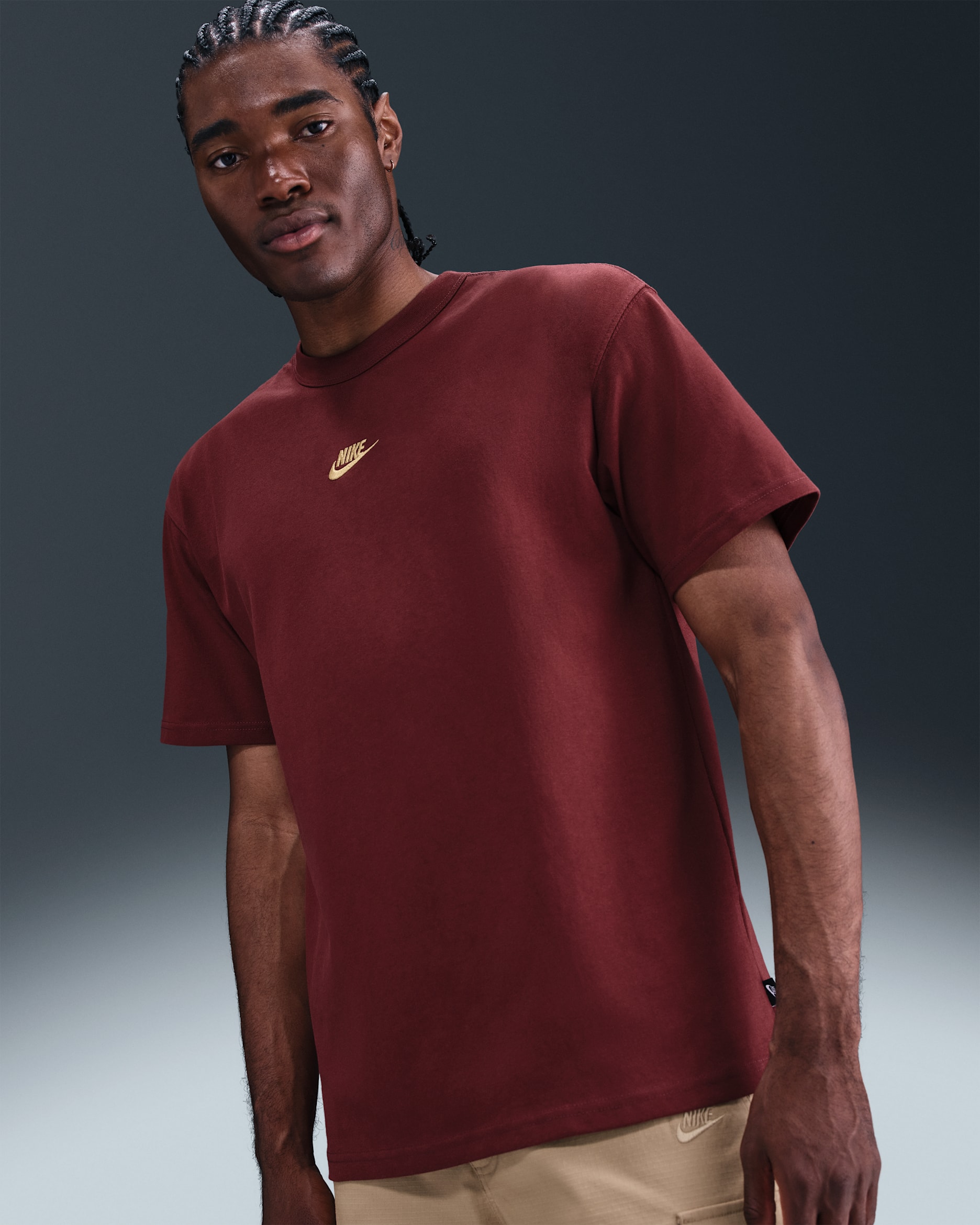
Credit: www.nike.com
Men’s T-shirt Fun Facts
- The first mass-produced t-shirts appeared in the early 1900s, originally as underwear for the U.S. Navy.
- The word “t-shirt” comes from the T shape of the body and sleeves.
- The world’s most expensive t-shirt, made with 24-carat gold, sold for over $250,000 (not recommended for pizza night).
- In 2026, the average man owns 14 t-shirts—but wears only 7 regularly.
- The oldest surviving printed t-shirt was made in 1948 and is still in a museum, probably because nobody dared to wear it.
Frequently Asked Questions
What Is The Best Material For Men’s T-shirts?
The best material depends on your needs. For everyday comfort, 100% cotton is classic. If you want extra softness and stretch, try a tri-blend. For workouts, performance fabrics like polyester are best. Merino wool is great for travel or odor control. In hot climates, bamboo or linen are light and breathable.
How Do I Stop My T-shirt From Shrinking?
Wash your t-shirt in cold water and air dry whenever possible. Avoid high heat in the dryer, as this is the main reason shirts shrink. Some pre-shrunk cotton tees are less likely to change size, but always check the care label.
Are Graphic T-shirts Still In Style In 2026?
Yes, but with a twist. In 2026, minimalist graphics and subtle designs are more popular than big, loud prints. Vintage band tees and unique, personalized graphics are also on trend. Just avoid anything that feels outdated or overly flashy.
How Can I Tell If A T-shirt Is High Quality?
Check the fabric first—high-quality cotton or blends feel soft and substantial. Look at the stitching; tight, even stitches are a sign of good construction. A quality tee will keep its shape after washing and won’t twist at the seams. If the shirt feels flimsy or you can see through it, it might not last long.
What Color T-shirts Should Every Man Own?
Every man should have at least four basic colors: white, black, grey, and navy. These shades go with almost anything and suit most occasions. After you have the basics, add colors that work with your skin tone and style—like muted greens, burgundy, or earth tones.
---
The world of men’s t-shirts is bigger and bolder than ever in 2026. From soft, sustainable fabrics to styles that suit any occasion, there’s truly a perfect tee for everyone—even if you only wear it for video calls and pizza runs.
Remember, a great t-shirt isn’t just about comfort—it’s about confidence, personality, and sometimes, a little bit of fun. So go ahead, update your collection, try a new style, or finally retire that tee from your college days. After all, life’s too short for boring shirts—or for shirts with mysterious stains.

Credit: skims.com
