

How to Style Business Casual Women: Chic Outfit Ideas for 2024
How To Style Business Casual Women
Finding the right balance between professional and comfortable can be tricky, especially when it comes to business casual for women. Many offices now prefer business casual because it is less formal but still professional. Still, the definition can change depending on the company, location, or industry. If you want to look smart, stylish, and confident, you need to understand how to mix pieces and create outfits that work for meetings, daily office life, and networking events. In this guide, you’ll learn how to style business casual for women, with practical tips, examples, and advice you can use right away.
What Does Business Casual Mean For Women?
Business casual is a dress code that sits between formal business wear and casual clothes. It means you don’t need a full suit, but you should avoid jeans, sneakers, or anything too relaxed. For women, business casual includes a mix of blouses, dress pants, skirts, and sometimes dresses. The goal is to look neat, polished, and ready for work.
Many beginners think business casual is just “wearing whatever you want. ” This is not true. You need to choose clothes that are clean, fit well, and show respect for your workplace. Also, business casual is not the same everywhere.
A tech company may allow more relaxed styles, while a law firm may expect more traditional looks. If you’re not sure, look at what your coworkers wear or ask your HR team.
Another point to remember: business casual does not mean you stop caring about your appearance. Companies notice when employees put effort into their outfits. Choosing business casual is not only about following rules; it’s about showing you are serious about your job, even if you are not wearing a suit.
Key Pieces For Business Casual Outfits
Building a business casual wardrobe starts with the right pieces. Here are the essentials:
1. Dress Pants
Choose pants in neutral colors like black, navy, gray, or beige. Look for styles like straight-leg, ankle-length, or wide-leg. Avoid anything too tight or too loose.
Tip: Pants with a little stretch are more comfortable for sitting all day.
A hidden tip: look for pants with pockets that are big enough for essentials, but not so big that they change the shape of the pants. Well-designed pockets help you carry small items without ruining the silhouette.
2. Skirts
Pencil skirts and A-line skirts are popular choices. The ideal length is just above the knee or below. Avoid mini skirts or anything too flashy.
Tip: Tuck in your blouse for a polished look.
For extra comfort, choose skirts with a lining. A lining stops the skirt from clinging and makes it easier to move around.
3. Blouses And Tops
Go for simple, elegant tops. Solid colors or subtle patterns work best. Button-down shirts, silk blouses, and knit tops are all good options.
Tip: Check that your top is not see-through and covers your shoulders.
If you want to add personality, try a blouse with a small ruffle or bow. But keep details minimal so your outfit stays professional.
4. Dresses
Sheath dresses, wrap dresses, and shirt dresses are great for business casual. Choose styles that are not too tight or revealing.
Tip: Add a blazer or cardigan for extra polish.
A useful insight: dresses with pockets are rare but very practical. They allow you to carry your phone or badge hands-free, which is handy in busy offices.
5. Blazers And Cardigans
A blazer can turn any outfit into business casual. Cardigans are softer but still professional.
Tip: Keep a neutral blazer at work for unexpected meetings.
Look for blazers with a slight stretch so you can move easily. Cardigans with buttons can double as a top layer or stand alone if buttoned up.
6. Shoes
Closed-toe shoes are safest. Loafers, flats, low heels, and ankle boots are all good.
Tip: Avoid flip-flops, sneakers, or sandals with too many straps.
If you spend much time walking, choose shoes with padded insoles. Your feet will thank you, especially on busy days.
7. Accessories
Simple jewelry, belts, and scarves can add style. Don’t overdo it—one or two pieces is enough.
Tip: Bags should be structured, not slouchy.
Try a slim watch or a delicate ring for extra polish without drawing too much attention.
How To Mix And Match Business Casual Outfits
You don’t need many clothes to look stylish. Mixing and matching lets you create new looks every day. Here’s how:
- Stick to a color palette: Choose 3-4 main colors, like navy, black, white, and blush. This makes it easy to combine pieces.
- Pair blouses with pants or skirts: A white blouse goes with almost anything.
- Use layers: A cardigan or blazer adds interest and warmth.
- Switch shoes and accessories: Changing these can make an outfit feel new.
Another practical tip: use a small notebook or phone app to track which combinations you’ve worn. This helps you avoid repeating the same outfit too often, and you’ll spot new mix-and-match ideas more easily.
Example Outfit Combinations
- Navy dress pants + blush blouse + gray cardigan + black flats
- Black pencil skirt + white button-down + navy blazer + nude heels
- Beige ankle pants + printed top + structured bag + gold earrings
- Wrap dress + black blazer + loafers
By combining your basics, you can create dozens of outfits without buying more clothes. This saves money and time.
If you want to add variety, rotate accessories weekly. For example, wear a silk scarf one week and switch to a statement necklace the next. Small changes help you feel fresh and confident.
Business Casual Vs. Formal Business Wear: What’s The Difference?
To help you understand, here is a comparison:
| Business Casual | Formal Business Wear |
|---|---|
| Dress pants, skirts, blouses, cardigans, simple dresses | Suits, tailored jackets, formal shirts, dress shoes |
| Neutral or soft colors, subtle patterns | Dark colors, minimal patterns |
| Closed-toe flats, loafers, low heels | Classic pumps, formal heels |
| Minimal jewelry and accessories | Very limited accessories |
| No ties or formal jackets required | Often includes ties and jackets |
Business casual is more flexible, but you should still look professional. Always check your company’s policy.
One detail: some offices blur the lines between business casual and formal, especially during important meetings. It’s wise to keep one formal piece (like a dark blazer) in your wardrobe for such occasions.
Choosing The Right Fit And Fabric
Fit is more important than many people realize. Clothes that are too loose look sloppy. Clothes that are too tight are uncomfortable and unprofessional. Aim for well-fitted pieces that move with you.
Tips For Finding The Best Fit
- Try different brands—sizes can vary.
- Use a tailor if needed. Small changes (like hemming pants) make a big difference.
- Sit, stand, and walk in your outfit before buying.
Another tip: check the fit around your shoulders. Tops and jackets that pinch or sag can ruin your look. If you feel restricted, the fit is wrong.
Fabric matters too. Choose breathable materials like cotton, wool, or blends. Avoid fabrics that wrinkle easily, especially if you commute.
Common Fit Mistakes
- Pants dragging on the floor
- Blouses gaping at the buttons
- Skirts riding up or slipping down
If you notice these, fix them quickly. Well-fitted clothes make you look and feel confident.
A non-obvious insight: fabrics with a slight stretch (like elastane blends) hold their shape better over time. They help you maintain a neat look even after hours of wear.
Popular Business Casual Colors And Patterns
Color can set the tone for your outfit. Neutral colors are safest, but you can add a little personality.
Best Colors
- Navy: Trusted and professional
- Black: Classic and slimming
- Gray: Modern and subtle
- Beige: Soft and easy to match
- White: Clean and fresh
Adding one accent color, such as blush or pale blue, makes your outfit stand out without breaking the dress code.
Patterns To Try
- Pinstripes (on pants or skirts)
- Small checks or dots (on blouses)
- Florals (in muted colors)
Avoid large prints or bright neon colors. These can distract in a professional setting.
How Color Impacts Perception
Research shows that people wearing navy or gray are seen as more trustworthy and capable. Wearing black can signal authority, but too much black may feel harsh.
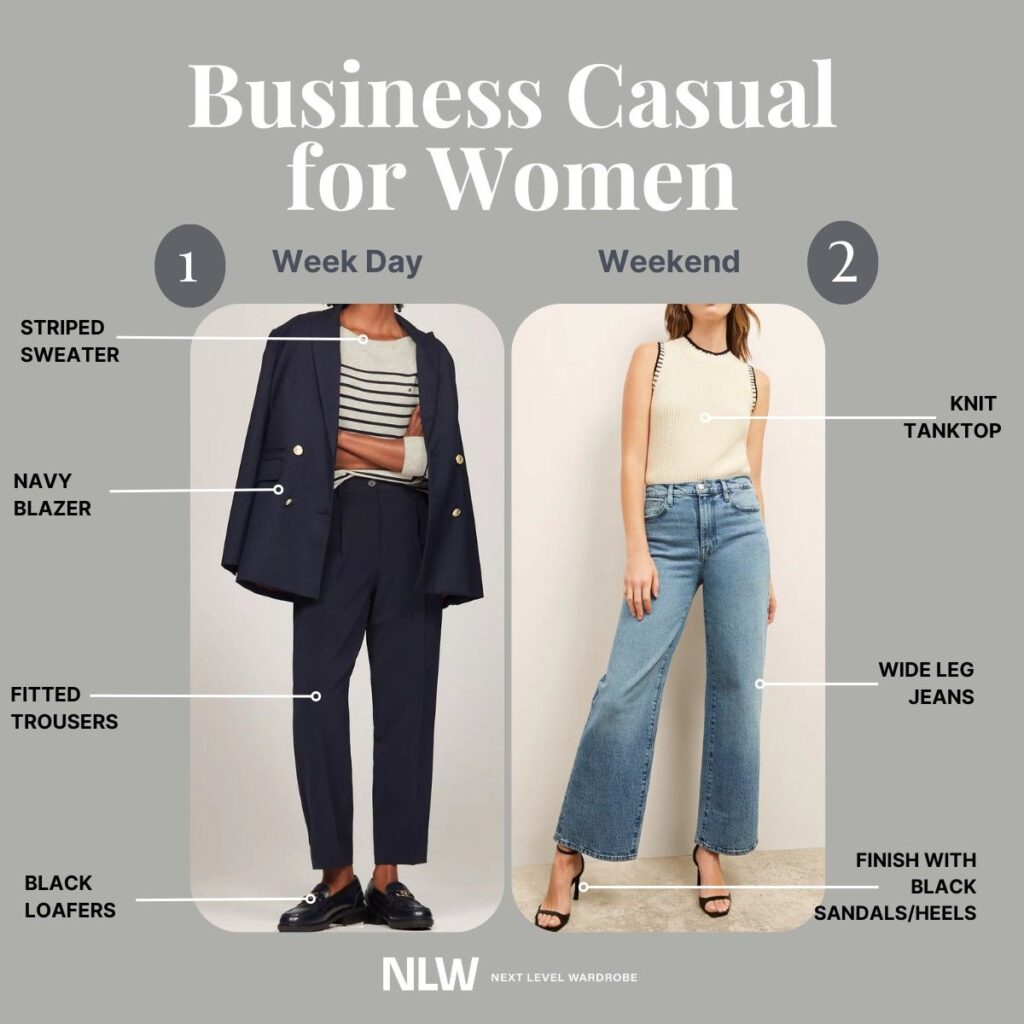
If you want to appear creative, use subtle patterns or accessories in softer shades. Color psychology is real: small changes can influence how coworkers and clients see you.
Credit: nextlevelwardrobe.com
Business Casual Outfits For Different Seasons
Adapting your business casual style for each season keeps you comfortable and stylish.
Spring
- Light blouses
- Cropped pants
- Pastel colors
Choose breathable fabrics, like cotton blends. Layer with a light cardigan for chilly mornings.
Summer
- Sleeveless tops (if allowed)
- Linen pants
- Lightweight dresses
Look for moisture-wicking materials. If your office is strict, cover bare arms with a cardigan.
Fall
- Sweaters
- Wool skirts
- Ankle boots
Opt for earthy tones—burgundy, forest green, or camel. Layering is useful for changing weather.
Winter
- Long-sleeve tops
- Thick cardigans
- Dark colors
Choose wool or heavy knits for warmth. Scarves add style and keep you cozy.
Layering is key. Keep a scarf or jacket handy for cold mornings.
A smart tip: keep a spare pair of shoes at work during wet seasons. This way, you avoid dirtying your main business casual shoes.
How To Style Business Casual For Different Body Types
Everyone’s body is unique. Here are practical tips for styling business casual based on your shape:
Pear Shape
- Choose A-line skirts and wide-leg pants.
- Add structure on top with blazers or bold necklaces.
- Avoid clingy bottoms.
Balance your look by drawing attention upward. Try tops with interesting collars or slight puff sleeves.
Apple Shape
- Look for empire-waist dresses and tops.
- Wear straight-leg pants.
- Try long cardigans for coverage.
Highlight your shoulders with structured jackets. Avoid heavy belts at the waist.
Hourglass Shape
- Highlight your waist with belts or fitted dresses.
- Wear pencil skirts and wrap tops.
- Avoid boxy shapes.
Choose fabrics that drape well and accentuate your curves without being tight.
Rectangle Shape
- Use layers and textures to create curves.
- Try peplum tops or gathered skirts.
- Avoid shapeless clothing.
Add volume with ruffled blouses or pleated skirts.
Remember, confidence is the best accessory. Wear what feels good for you.
Business Casual For Remote Work And Hybrid Offices
Remote work changed office style. Even at home, business casual is important for video calls and presentations.
Tips For Remote Business Casual
- Choose tops with color or detail—these look better on camera.
- Avoid distracting prints or logos.
- Keep a blazer nearby for quick outfit upgrades.
Lighting is important. Wear colors that contrast with your background so you stand out on screen.
Many remote workers wear comfortable pants, but remember to dress fully for important meetings.
A non-obvious tip: check your camera angle and lighting before meetings. Sometimes, certain fabrics can look wrinkled or washed out on video.
Business Casual Mistakes Women Make
It’s easy to make mistakes if you’re new to business casual. Here are some to avoid:
- Wearing jeans or leggings (unless your office allows)
- Choosing tops that are too casual (like T-shirts)
- Over-accessorizing
- Ignoring fit or ironing
- Wearing open-toe shoes or sandals with too many straps
Another mistake: thinking business casual means boring. You can add style with accessories, color, and layers.
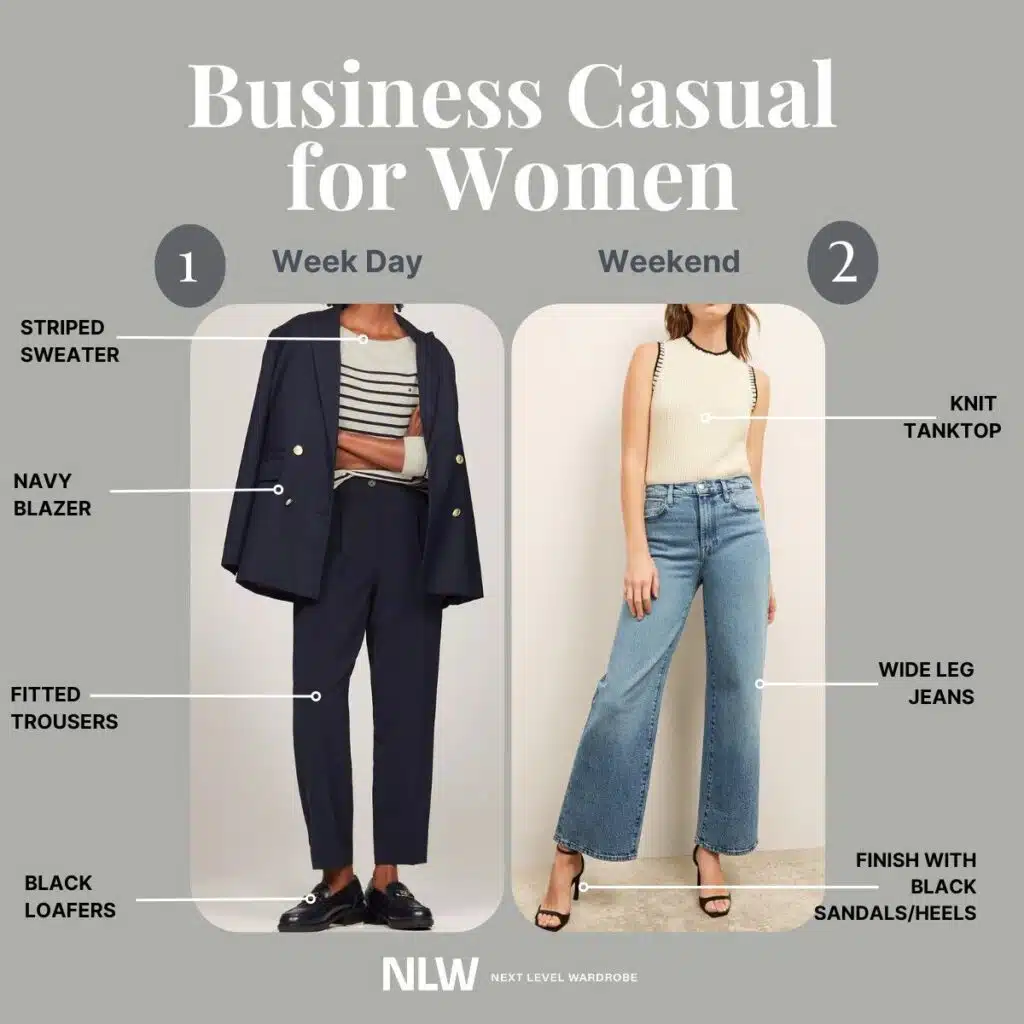
A subtle mistake: forgetting about grooming. Even if your outfit is perfect, messy hair or chipped nails can spoil your look. Pay attention to small details.
Credit: nextlevelwardrobe.com
Business Casual Outfit Ideas For Every Occasion
Business casual should work for more than just office days. Here are outfit ideas for different situations.
For Meetings
- Navy pants + white blouse + gray blazer + black heels
Choose a structured bag for documents.
For Casual Fridays
- Beige ankle pants + striped top + loafers
Add a small scarf for extra flair.
For Job Interviews
- Black pencil skirt + silk blouse + structured bag
Keep accessories minimal.
For Networking Events
- Wrap dress + gold earrings + low heels
Choose a colorful clutch for style.
For Presentations
- Gray dress pants + pastel blouse + navy blazer
Wear a watch to keep track of time.
Mix these pieces to fit your style and the event.
Accessorizing Business Casual Outfits
The right accessories make your outfit pop without going overboard.
Jewelry
- Small stud earrings
- Simple bracelets
- Delicate necklaces
Choose metals that match your skin tone for a cohesive look.
Bags
- Structured tote
- Medium-sized satchel
Pick a bag with compartments to stay organized.
Belts
- Thin leather belts for dresses or pants
Belts in neutral colors work with most outfits.
Scarves
- Light scarves in solid colors or small patterns
Scarves can also be tied to your bag for style.
Don’t wear too many accessories at once. One or two per outfit is enough.
Business Casual Dress Codes Around The World
Business casual is not the same everywhere. In the US, it’s usually relaxed but neat. In some Asian or European countries, it’s more formal.
| Country | Business Casual Style | Common Colors |
|---|---|---|
| United States | Pants, blouses, cardigans | Navy, gray, white |
| United Kingdom | Tailored pants, button-downs, blazers | Black, navy, beige |
| Japan | Formal skirts, neat blouses | White, pale blue, gray |
| France | Chic dresses, slim pants | Black, cream, navy |
If you travel or work internationally, check local dress codes.
In some countries, even business casual means wearing closed-toe shoes and sleeves year-round. When in doubt, dress up slightly more than you think is needed.
How To Shop For Business Casual Clothes
Shopping can be overwhelming. Here’s how to make it easier:
- Start with basics—pants, skirts, blouses, blazers.
- Choose quality over quantity. Well-made clothes last longer.
- Shop during sales or at outlet stores.
- Try clothes before buying. Fit matters more than price.
- Look for wrinkle-resistant fabrics.
Online shopping is common, but always check return policies. If you need inspiration, use websites like Nordstrom for ideas.
A smart tip: buy a few items each season to refresh your wardrobe. This helps you stay current without spending a lot.
Budget-friendly Business Casual Tips
You don’t need to spend a lot to look good. Here are ways to save:
- Buy neutral colors—you can mix them more.
- Choose multi-purpose pieces (a dress that works for day and night).
- Shop secondhand or thrift stores for unique finds.
- Use accessories to change your look.
Avoid buying trendy items that don’t last. Invest in basics first.
Another tip: swap clothes with friends or coworkers. This is a fun way to refresh your wardrobe and find new favorites.
Caring For Business Casual Clothes
Proper care keeps your clothes looking new longer.
- Wash clothes according to the label.
- Hang blouses and dresses to avoid wrinkles.
- Iron or steam pants and skirts regularly.
- Store shoes in a cool, dry place.
If your office is air-conditioned, keep a cardigan handy.
For delicate fabrics, use mesh laundry bags to protect them. This small step keeps blouses and dresses looking sharp for longer.

Credit: www.youtube.com
How To Transition Outfits From Work To After Hours
Sometimes you need to go from office to dinner or an event. Here’s how:
- Swap flats for heels.
- Add a statement necklace or bold earrings.
- Change your bag to a clutch.
- Layer with a stylish jacket or scarf.
With a few changes, you can turn your business casual look into evening style.
Another idea: keep a bold lipstick in your bag. Changing makeup can quickly transform your look for after-work plans.
Real-life Examples: What Women Wear For Business Casual
Looking at real examples helps. Here are three women and how they style business casual:
1. Sara, Marketing Manager
Sara wears slim black pants, a blush silk blouse, and a gray cardigan. She adds gold earrings and black flats. For meetings, she puts on a navy blazer.
2. Emily, Software Engineer
Emily prefers ankle-length beige pants, a printed cotton top, and loafers. She keeps a structured tote for her laptop and uses simple jewelry.
3. Linda, Hr Specialist
Linda chooses a wrap dress in navy, with a thin leather belt and nude heels. She adds a light scarf for extra color.
Each woman uses basics and personal style to create smart, comfortable outfits.
Notice how each one adapts her look with accessories and layers. They mix neutral basics with small touches of color or detail.
Business Casual Trends And Timeless Styles
Fashion changes, but some styles stay classic. Here’s how to balance trends and timeless pieces:
- Invest in classic pants, blazers, and blouses.
- Try new colors or patterns each season.
- Avoid trend pieces that don’t fit your office.
Timeless style means looking professional, not boring. Small updates keep your look fresh.
Another insight: classic shoes (like loafers or low heels) never go out of style. If you invest in quality, you’ll have them for years.
Frequently Asked Questions
What Is Not Allowed In Business Casual For Women?
Business casual usually means no jeans, leggings, shorts, or sneakers. Avoid tops with large logos, ripped clothes, and anything too tight or revealing. Always check your company’s rules.
Can I Wear Dresses For Business Casual?
Yes. Dresses are fine if they are not too short or low-cut. Sheath, wrap, and shirt dresses work well. Add a blazer or cardigan for extra polish.
Are Open-toe Shoes Okay For Business Casual?
Most offices prefer closed-toe shoes. Some allow open-toe heels, but avoid sandals or flip-flops. If you’re not sure, choose loafers, flats, or low heels.
How Do I Accessorize Business Casual?
Keep accessories simple and professional. Small earrings, thin bracelets, and structured bags are best. Don’t wear too many pieces at once.
How Can I Look Stylish But Still Professional?
Mix neutral basics with one or two stylish items—like a colorful blouse or statement necklace. Make sure everything fits well and is clean. Layers and accessories add personality without breaking the dress code.
Business casual lets you show your style while staying professional. By choosing the right pieces, focusing on fit, and mixing smartly, you can create outfits for any office situation. Remember, confidence is key. When you look good, you feel good—and your work shows it.
