

How to Make Oversized T Shirt More Fitted: Easy Style Hacks
How To Make Oversized T Shirt More Fitted
Oversized t-shirts are everywhere. People wear them for comfort, but sometimes you want something that looks more polished and fits better. A fitted t-shirt can show your shape, make your outfit look put together, and boost your confidence. If you have a big t-shirt that you love but it’s just too loose, don’t worry—you don’t have to throw it away or hide it at the back of your closet.
With a few simple steps, you can transform an oversized t-shirt into something that looks like it was made for you.
Some methods use only basic sewing skills, while others require no sewing at all. This guide will walk you through all the best techniques to make your t-shirt fitted, using things you probably already have at home. You’ll find ideas for every style—cropped, tucked, tied, or tailored.
You’ll also learn practical tips for common problems, like sleeves that are too long or necklines that feel loose. By the end, you’ll know exactly how to make an oversized t-shirt more fitted, and you’ll even pick up a few style tricks that most people miss.
Why Fit Matters For T-shirts
A good fit changes everything. When a t-shirt fits well, it flatters your body, feels comfortable, and works with more outfits. Oversized shirts can hide your shape and make you look bigger than you are. Sometimes, they can even make you feel sloppy.
On the other hand, a shirt that fits right can make you look taller, slimmer, and more stylish.
But fit is not just about looks. A fitted t-shirt moves with you. It won’t get caught on things or ride up when you sit down. It can help you feel more confident and ready for anything. That’s why so many people look for ways to adjust their clothes at home.
You don’t need to be a sewing expert or buy new clothes—you just need a few smart techniques.
Prepping Your T-shirt For Fitting
Before you start changing your t-shirt, check a few things first.
- Wash and dry the shirt. Cotton can shrink, and you want to see the real size before you start cutting or sewing.
- Try it on. Stand in front of a mirror. Notice what you don’t like: Is it too long? Are the sleeves too big? Is the neckline too wide?
- Mark the problem areas. Use safety pins or chalk to mark where you want the new fit. This helps you avoid mistakes.
Taking a few minutes to prepare saves you time and helps you get the best results.
No-sew Methods To Make A T-shirt Fitted
Not everyone has a sewing machine or wants to sew. Luckily, there are several ways to make your t-shirt more fitted—no needles required.
The Classic Tuck
One of the fastest ways to change the shape of a big shirt is to tuck it in.
- Full tuck: Tuck the whole shirt into your pants or skirt. This works best with high-waisted bottoms.
- French tuck: Tuck just the front of the shirt and leave the back loose. It creates a relaxed look but still shows your shape.
The Side Knot
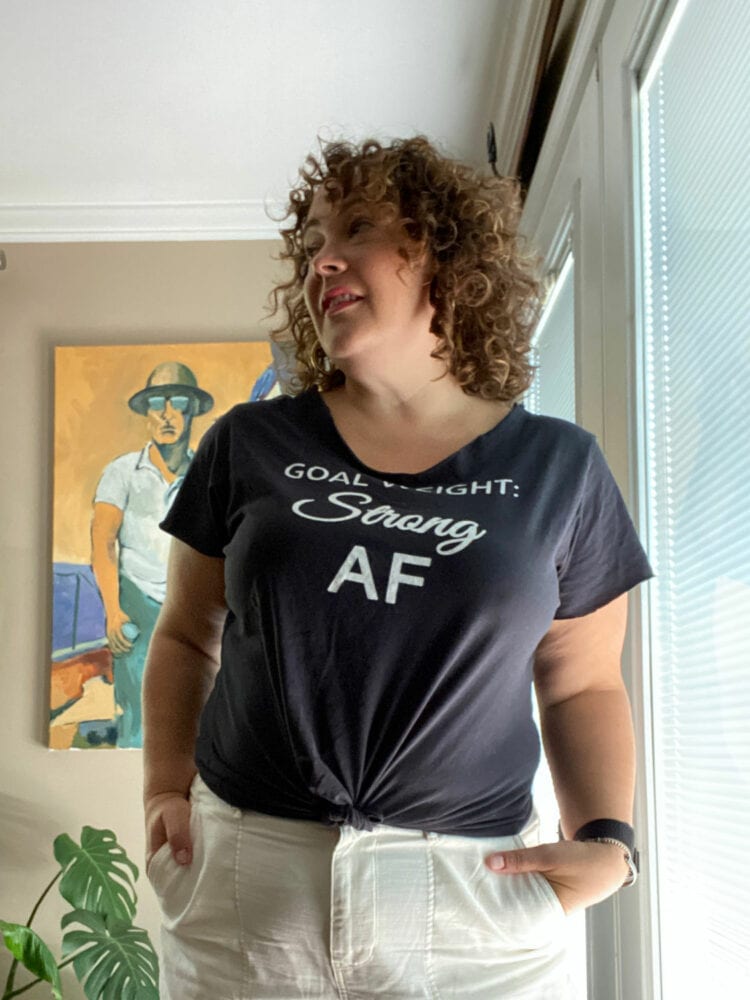
A side knot is great for making a shirt tighter around your waist.
- Grab the extra fabric on one side of your shirt.
- Twist it tightly, then tie it into a small knot.
- Tuck the knot under the shirt if you want a cleaner look.
This style works best with soft, stretchy cotton. It instantly creates curves and makes your shirt look more interesting.
The Hair Tie Trick
If you don’t want a bulky knot, use a small hair tie.
- Gather extra fabric at the back or side of your shirt.
- Secure it with a hair tie, making a little “tail.”
- Tuck the tail inside your shirt.
This method is smooth, comfortable, and keeps the focus on your outfit.
The Crop Without Cutting
You don’t have to cut your shirt to make it cropped.
- Put on a fitted tank top under your oversized t-shirt.
- Fold the bottom of the t-shirt under, between the shirt and the tank.
- Adjust the fold to the length you want.
This trick works well for short-term changes and doesn’t damage your shirt.
Layering For Shape
Sometimes, layering can help make an oversized shirt look fitted.
- Wear a tight tank top or long-sleeve shirt underneath.
- Add a belt over the shirt at your waist to create shape.
Belts are especially useful for long, loose t-shirts. Choose a thin belt for a subtle look or a wide belt for more drama.
Basic Sewing Methods (beginner-friendly)
If you want a permanent change, basic sewing is the best way to make a big t-shirt fitted. Even if you’ve never sewn before, you can follow these simple steps.
Taking In The Sides
The most common way to resize a t-shirt is to take in the sides. Here’s how:
- Turn the shirt inside out and lay it flat.
- Put on a fitted shirt you like, and lay it on top of the oversized shirt.
- Use chalk to trace the shape of the fitted shirt onto the oversized one.
- Pin along the lines to hold the fabric together.
- Sew along the chalk lines. Use a basic straight stitch.
- Cut off the extra fabric, leaving about 1 cm (half an inch) for the seam.
- Turn the shirt right side out and try it on.
Tip: If you don’t have a sewing machine, you can sew by hand using a backstitch. It will take longer, but it works.
Shortening The Sleeves
Oversized sleeves can look sloppy. To fix them:
- Try on the shirt and decide where you want the sleeves to end.
- Mark the spot with chalk or pins.
- Take off the shirt and lay it flat.
- Cut off the extra sleeve fabric.
- Fold the edge under twice (about 1 cm each time) to hide raw edges.
- Sew along the fold.
Practical tip: If you like rolled sleeves, just fold them up and sew a few stitches to hold them.
Creating A Fitted Crop Top
Cropped t-shirts are trendy and easy to make.
- Put the shirt on and mark the length you want.
- Take off the shirt and cut straight across.
- Fold the bottom edge under twice to keep it from fraying.
- Sew a simple hem.
Extra insight: If you want a “raw hem” look, cut the shirt but don’t sew the edge. Cotton will curl a little after washing, which looks relaxed and stylish.
Advanced Sewing Techniques For A Custom Fit
If you feel confident with basic sewing, you can try more advanced adjustments for a professional look.
Adding Darts For Shape
Darts are small folds sewn into the fabric to give a shirt more shape, especially at the waist.
- Put the shirt on inside out.
- Pinch the fabric at your waist and pin it in place.
- Mark the lines with chalk.
- Take off the shirt and sew along the lines.
Darts are common in women’s shirts, but anyone can use them for a tailored fit.
Reshaping The Neckline
Oversized shirts often have wide necklines. You can reshape them for a better look:
- Mark the new neckline shape with chalk.
- Cut along the line.
- Fold the edge under and sew a simple hem.
Non-obvious tip: If you want a V-neck, cut a small “V” in the center and hem the edges. This draws the eye up and makes your face look longer.
Reattaching The Sleeves
For a more fitted look, you can remove the sleeves, make them smaller, and sew them back on.
- Cut off the sleeves at the seam.
- Make the armholes smaller by sewing new side seams.
- Cut the sleeves to fit the new armholes.
- Sew the sleeves back on.
This method takes more time but gives a store-bought look.
Comparing The Main Methods
Here’s a quick comparison of the most common ways to make a t-shirt more fitted.
| Method | Tools Needed | Skill Level | Is it Permanent? |
|---|---|---|---|
| Tuck/Knot | None | Beginner | No |
| Hair Tie Trick | Hair Tie | Beginner | No |
| Taking in Sides | Needle, Thread | Beginner | Yes |
| Adding Darts | Needle, Thread | Intermediate | Yes |
| Reattaching Sleeves | Needle, Thread | Advanced | Yes |
Common Mistakes And How To Avoid Them
Even small changes can go wrong if you’re not careful. Here are some mistakes beginners make—and how to avoid them.
Cutting Too Much
Once you cut, you can’t go back. Always cut less than you think you need. Try the shirt on after every step. It’s easier to cut more fabric later than to fix a shirt that’s too short or tight.
Forgetting About Stretch
T-shirts stretch when you wear them. If you sew the sides too tight, the seams might break. Leave a little extra space, especially if your shirt is made of cotton or jersey.
Not Washing First
New t-shirts often shrink after the first wash. Always wash and dry your shirt before making any changes. This way, you’ll see the real size and avoid surprises later.
Ignoring The Grain
Fabric has a “grain”—the direction of the threads. If you cut across the grain, your shirt may twist or hang oddly. Try to make all cuts parallel to the original seams.
Skipping Pins
Pins help hold fabric together when you sew. If you skip this step, your lines may end up crooked. Take the extra minute to pin before sewing.
Style Tricks Most People Miss
Many people stop after making their shirt smaller. But a few extra tricks can make your fitted shirt look amazing.
Adding Side Slits
If you’ve made your shirt tighter, you might find it harder to move. Add small slits at the sides near the bottom. This makes the shirt more comfortable and adds a stylish detail.
Playing With Length
Try making the front shorter than the back, or creating a curved hem instead of a straight one. This gives your shirt a designer look.
Customizing The Hem
You can add a decorative stitch or use a contrasting thread for the hem. Small touches like this make your shirt unique.
Using Iron-on Tape
If you don’t want to sew, you can use iron-on hem tape. It’s easy to use and holds the fabric in place. Just follow the instructions on the package.
When To Get Professional Help
Sometimes, it’s better to let a tailor do the work—especially if the shirt is expensive or has a special design. Tailors can make perfect adjustments, add darts, or reshape the neckline for you. It’s not as cheap as DIY, but it can save your shirt from a mistake.
Tip: If you’re not sure, try your changes on an old shirt first. Practice makes perfect.
Real Examples: Transforming A Big T-shirt
Let’s look at some real-life examples to make these ideas even clearer.
Example 1: Office Look
Maria had a large t-shirt from a company event. She wanted to wear it to work but it was too big and long. She:
- Took in the sides with a simple straight stitch
- Shortened the sleeves
- Added a small side slit
The result: a fitted, stylish shirt that looked good with trousers and a blazer.
Example 2: Sporty Style
James liked baggy t-shirts for the gym, but wanted one fitted for running. He:
- Used the hair tie trick at the back
- Folded the sleeves for a muscle-tee look
This kept the shirt comfortable but stopped it from flapping while he moved.
Example 3: Trendy Crop Top
Ava had a vintage band t-shirt that was too big. She:
- Cropped the bottom for a raw hem
- Added a French tuck
Now she wears it with high-waisted jeans for a cool, modern outfit.
Credit: www.wardrobeoxygen.com
Table: Diy Vs Professional Alteration
To help you decide whether to do it yourself or go to a tailor, compare these factors:
| Factor | DIY | Professional Tailor |
|---|---|---|
| Cost | Low (just tools) | Medium to High |
| Time Needed | 1–2 hours | 3–7 days (depends on tailor) |
| Skill Required | Beginner to Advanced | Expert |
| Result Quality | Varies | Consistent, polished |
Choosing The Right Method For Your Shirt
Not every method works for every shirt. Here’s how to choose:
- If you want a quick change: Try tucks, knots, or hair ties.
- If you want a permanent fix: Try sewing the sides or sleeves.
- If the shirt is valuable: Consider a professional tailor.
- If you want to experiment: Practice on old shirts before trying on your favorite.

Credit: www.youtube.com
Essential Tools And Materials
You don’t need a lot to make a t-shirt fitted, but these tools help:
- Fabric scissors (sharp scissors cut better)
- Chalk or washable marker (for marking lines)
- Pins or clips (to hold fabric in place)
- Needle and thread (or a sewing machine)
- Measuring tape (for accurate lines)
- Iron (to press seams and hems)
- Hair ties or belts (for no-sew options)
Keep these tools in a small box or bag so you’re always ready to update your clothes.
How To Care For Your Fitted T-shirt
After you’ve changed your t-shirt, take care of it so it lasts.
- Wash in cold water to prevent shrinking.
- Air dry if possible; high heat can damage seams.
- If you used iron-on tape, don’t use high heat when ironing.
- Store folded, not hung, to protect the shape.
Proper care helps your new fitted t-shirt stay looking good for a long time.
Credit: www.wardrobeoxygen.com
Frequently Asked Questions
How Do I Make My T-shirt Fitted Without Sewing?
You can use tucks, knots, or hair ties to adjust the fit. Tuck the shirt into your pants, tie a knot at the side, or use a hair tie at the back to gather extra fabric. These methods work fast and don’t damage the shirt.
What Is The Easiest Way To Take In A T-shirt?
The simplest way is to sew the side seams. Turn the shirt inside out, mark where you want the new seams, and sew in a straight line. Cut off the extra fabric and turn the shirt right side out. Even beginners can do this with a needle and thread.
Can I Make A T-shirt Smaller Without Cutting It?
Yes. Try layering with a tank top and folding the shirt under, or use a belt to pull in the fabric at your waist. These tricks give a fitted look without making any permanent changes.
Will My T-shirt Shrink If I Wash It After Altering?
If your shirt is made of cotton, it might shrink a little, especially if you use hot water or a dryer. Always wash and dry your shirt before you start altering it. After making changes, wash gently to protect your work.
Is It Better To Alter My T-shirt Myself Or Go To A Tailor?
If you want to save money and learn a new skill, DIY is a good choice. For valuable shirts or a perfect finish, a tailor is better. Compare your time, budget, and skill level before deciding. For more on DIY vs professional tailoring, check out this WikiHow guide.
With these techniques, you can turn any oversized t-shirt into a fitted favorite. Try different methods and see what works best for your style. Don’t be afraid to experiment—sometimes, a small change makes a big difference. Enjoy your new look!
