

How to Make Flare Leggings Shorter Without Sewing: Easy Hacks
Flare leggings are stylish, comfortable, and make a strong fashion statement. But if you’re on the shorter side or bought a pair that’s a bit too long, the extra fabric dragging on the ground can quickly ruin the look—and even the leggings themselves. Many people hesitate to shorten flare leggings because they don’t have a sewing machine or much experience with sewing. The good news: you don’t need to sew at all to get the perfect length. Whether you want a temporary fix or a more permanent solution, there are several effective ways to make flare leggings shorter without ever picking up a needle and thread.
This guide covers practical, creative, and beginner-friendly methods for shortening flare leggings with no sewing required. You’ll discover step-by-step instructions, product recommendations, tips to avoid common mistakes, and real-world insights most people miss. By the end, you’ll know exactly how to get your flare leggings to the perfect length, keep them looking great, and avoid expensive tailoring bills—all on your own.
Why Shortening Flare Leggings Matters
Flare leggings are designed to fit snug through the thigh and then widen below the knee. When they’re too long, several problems can happen:
- Fabric drags on the ground, collecting dirt and wearing out quickly.
- The flare loses its shape and looks sloppy.
- The extra length can be a tripping hazard.
- Shoes may get caught, which can be dangerous.
- The overall style looks less polished and put-together.
Shortening your flare leggings to the right length is about more than just looks—it’s about comfort, safety, and making your investment last longer.
Key Things To Know Before You Start
Before you try any no-sew hemming technique, keep these points in mind:
- Fabric type matters: Most flare leggings are made from stretchy materials like spandex, polyester, nylon, or cotton blends. Some methods work better on certain fabrics. Always check the care label.
- How much to shorten: Wear your leggings with the shoes you’ll use most often. Mark the length so you don’t make them too short.
- Temporary vs. permanent: Some fixes are reversible, others are not. Decide if you want to keep your options open.
- Test first: Try any product or method on a small, hidden area if possible to check for fabric damage or unwanted effects.
The Best No-sew Methods To Shorten Flare Leggings
There are several clever ways to make flare leggings shorter without sewing. Here’s a detailed look at the most effective techniques, including step-by-step instructions and tips for each.
1. Fabric Tape (double-sided Hemming Tape)
Fabric tape is a fast, easy, and popular way to adjust the length of leggings. You can find it at most craft, fabric, or big box stores. It’s also called “hem tape” or “fusible tape.”
How It Works
Fabric tape is a special adhesive strip that sticks to fabric on both sides. Some types are heat-activated (require ironing), while others are pressure-sensitive (just press and stick).
Step-by-step Instructions
- Wash and Dry: Start with clean leggings so the tape sticks well.
- Mark the New Length: Put on the leggings with your usual shoes. Use tailor’s chalk or a washable marker to mark the spot.
- Turn Leggings Inside Out: Lay them flat on a table.
- Fold Up the Excess: Fold the extra length up to your mark, creating a clean edge.
- Cut the Tape: Measure and cut enough tape to go around the leg opening.
- Place the Tape: Stick the tape between the folded fabric and the main body of the leggings.
- Activate the Tape: If using fusible tape, press with a warm iron (check the fabric’s heat tolerance first). If using stick-on tape, just press down firmly.
- Let Set: Wait a few minutes before wearing.
Pros And Cons
- Pros: Quick, inexpensive, works on most fabrics, creates a nearly invisible hem.
- Cons: May not last forever (especially after many washes), some tapes don’t stretch as much as leggings, so choose a flexible type.
Pro Tip
Look for “stretch hem tape” for best results with leggings. It moves with the fabric, reducing the chance of popped hems.
2. Fabric Glue
Fabric glue is another simple solution for a no-sew hem. It’s designed to bond fabrics permanently or temporarily, and many brands are flexible enough for stretch materials.
How It Works
Fabric glue is applied like regular glue, but it dries clear and flexible. It can hold up through washing if you use the right kind.
Step-by-step Instructions
- Clean the Fabric: Wash and dry your leggings first.
- Mark the Length: Wear your leggings, mark the new hem, and take them off.
- Fold and Secure: Fold up the extra fabric to your mark and pin or clip in place.
- Apply Glue: Run a thin line of fabric glue between the folded edge and main fabric. Don’t use too much—just enough to bond.
- Press and Hold: Press the fabric together for a minute or two.
- Let Dry: Leave flat for several hours (or as directed on the glue’s packaging).
Pros And Cons
- Pros: Permanent and flexible, easy to apply, washable.
- Cons: Difficult to reverse, may not work on very slippery or thick fabrics.
Pro Tip
Use washable, stretchable fabric glue for best results. Brands often say “stretch” or “flexible” on the label.
3. Iron-on Fusible Webbing
Iron-on fusible webbing is a thin, mesh-like adhesive that melts and bonds fabric layers when heated with an iron. It’s a favorite for quick, durable hemming.
How It Works
Fusible webbing is placed between two layers of fabric. Heat from the iron melts the webbing and bonds the layers together.
Step-by-step Instructions
- Prepare Leggings: Wash, dry, and mark the new length.
- Fold and Pin: Fold up extra fabric, pin in place.
- Cut Webbing: Cut strips of webbing to fit around the leg opening.
- Place Webbing: Slip webbing between the folded hem and main fabric.
- Iron Carefully: Cover with a thin cloth (to protect fabric), then press with a warm iron for 10-15 seconds.
- Cool Down: Let everything cool before moving.
Pros And Cons
- Pros: Strong, flexible bond, nearly invisible, works on many stretch fabrics.
- Cons: Must check that your fabric is iron-safe; not easy to undo.
Pro Tip
Test a scrap piece of your leggings (if possible) with the iron first. Some polyester blends can melt or scorch.
4. Using Safety Pins For A Temporary Hem
If you need a quick, reversible fix—like for travel or a special event—safety pins are a solid option. While not as invisible, they’re very fast and don’t damage most fabrics.
How It Works
You fold up the excess fabric and secure it inside with small safety pins.
Step-by-step Instructions
- Put On Leggings: Mark the new hem length.
- Turn Inside Out: Fold up extra fabric inside the leg.
- Pin in Place: Use several small, flat safety pins to secure the fold. Space them evenly for a smooth look.
- Check from Outside: Make sure pins aren’t visible or poking through.
Pros And Cons
- Pros: Instant, adjustable, perfect for last-minute fixes.
- Cons: Can feel bumpy against the skin, not as sleek or permanent.
Pro Tip
Use mini safety pins and place them near the seams for less irritation.
5. Fabric Clips Or No-sew Hemming Clips
Some companies make fabric clips or special no-sew hemming clips designed to temporarily shorten pants and leggings. These are small, reusable devices you snap onto the folded fabric.
How It Works
The clips hold the folded hem in place, creating an instant, removable hem.
Step-by-step Instructions
- Fold Up Fabric: Turn leggings inside out, fold up to the desired length.
- Place Clips: Attach the clips around the opening (usually 2–4 per leg).
- Smooth Out: Adjust the fold for an even finish.
Pros And Cons
- Pros: Easy, reusable, gentle on fabric, ideal for people who want to switch lengths.
- Cons: May be visible, not a permanent fix, can add bulk.
Pro Tip
Great for growing teens or for switching between flats and heels.
6. Fabric Bonding Strips Or Hemming Strips
These are pre-cut strips similar to fusible webbing but often easier to use. Some brands offer stretchy hemming strips made for leggings, yoga pants, and athletic wear.
How It Works
Bonding strips melt and fuse fabric layers when ironed, just like webbing.
Step-by-step Instructions
- Mark and Fold: Prepare your leggings as before.
- Insert Strip: Sandwich the strip between the folded hem and the pant leg.
- Iron to Set: Apply heat as directed.
- Let Cool: Wait before wearing.
Pros And Cons
- Pros: Designed for stretch fabrics, durable, flexible finish.
- Cons: Requires ironing, can be hard to reverse.
Pro Tip
Check packaging for “stretch” or “athletic” labels.
7. Heat-activated Hemming Adhesives
There are special heat-activated adhesives made for hemming. They come in stick, powder, or roll-on forms and are activated by ironing.
How It Works
You apply the adhesive, fold the fabric, and use heat to bond.
Step-by-step Instructions
- Apply Adhesive: Spread or sprinkle as directed on the hem area.
- Fold Fabric: Fold up to your mark.
- Iron to Bond: Use a protective cloth and press with heat.
- Let Set: Allow to cool before handling.
Pros And Cons
- Pros: Strong, flexible, invisible, works on many materials.
- Cons: Permanent, fabric must be iron-safe.
Pro Tip
Ideal for very lightweight or slippery leggings where tape won’t stick.
8. Fold-under And Tuck Method (no Products Needed)
If you don’t want to buy anything or need a solution right now, the fold-under and tuck method is simple and requires nothing but your hands.
How It Works
You fold the extra length under and smooth it against your leg. The natural stretch of the leggings holds the fold in place.
Step-by-step Instructions
- Wear Leggings: Stand in front of a mirror.
- Fold Under: Carefully fold the extra fabric inside the leg, making sure the hem is straight.
- Smooth and Adjust: Pull the fabric snug so it stays put.
- Re-adjust as Needed: This method can slip after walking or moving.
Pros And Cons
- Pros: Fast, free, good for short-term use or photos.
- Cons: Not secure for long periods, may need frequent adjustment.
Pro Tip
Works best with thicker, tighter leggings that grip your legs.
9. Using Fashion Tape
Fashion tape is a double-sided, skin-friendly tape used to keep clothes in place. It can also help with temporary hemming, especially for special events.
How It Works
Stick fashion tape between the folded fabric and the inside of the leggings. Press to hold.
Step-by-step Instructions
- Fold Leggings Up: Make a clean, even fold inside the leg.
- Apply Tape: Stick the tape to the inside of the fold.
- Press Firmly: Smooth in place.
- Check for Comfort: Make sure tape isn’t irritating.
Pros And Cons
- Pros: Easy to find, gentle on skin, quick to remove.
- Cons: Not as strong as other tapes; not for repeated wear.
Pro Tip
Bring extra tape with you if you’ll be out for a long time.
10. Shrinking Leggings In The Wash (risky)
Sometimes, you can shrink stretchy leggings a bit by washing and drying on high heat. This is not a precise method, but if the leggings are just barely too long, it may help.
How It Works
High heat can make some fabrics contract, shortening both length and width.
Step-by-step Instructions
- Wash in Hot Water: Use a hot cycle.
- Dry on High Heat: Use the highest dryer setting.
- Check Often: Remove and check length every 10–15 minutes.
Pros And Cons
- Pros: No tools or products needed, may improve fit.
- Cons: Can shrink waist and thighs too; not predictable; can damage fabric.
Pro Tip
Try on old or inexpensive leggings first to see how they react.
Comparison Of No-sew Methods
To help you decide which method is right for you, here’s a side-by-side comparison of the most popular options:
| Method | Best For | Durability | Reversibility | Skill Level |
|---|---|---|---|---|
| Fabric Tape | Everyday wear | Medium | Temporary | Beginner |
| Fabric Glue | Permanent solution | High | No | Beginner |
| Iron-On Webbing | Stretchy fabrics | High | No | Beginner/Intermediate |
| Safety Pins | Quick fixes | Low | Yes | Beginner |
| Fold & Tuck | Photo shoots, short use | Low | Yes | Beginner |

Credit: www.uniqlo.com
Tools And Products You Might Need
Most no-sew hemming methods require some basic tools or products. Here’s a quick look at what you might want to have ready:
| Product/Tool | Purpose | Where to Find |
|---|---|---|
| Fabric Tape | Temporary/permanent hem | Craft/fabric stores, online |
| Fabric Glue | Permanent hem | Craft/fabric stores, online |
| Iron-On Webbing | Permanent hem | Fabric stores, online |
| Safety Pins | Quick, reversible hem | Supermarkets, craft stores |
| Fashion Tape | Temporary hem | Drugstores, online |
| Measuring Tape | Accurate length marking | Any store with sewing supplies |
| Iron | Heat-activated methods | Most homes, appliance stores |
| Tailor’s Chalk/Marker | Marking hem location | Craft stores, online |
Common Mistakes To Avoid
Many people make the same mistakes when trying to shorten flare leggings without sewing. Here’s how to avoid them:
- Cutting before you’re sure: Never cut the fabric until you’ve tested the new length with your shoes on. Once cut, you can’t add it back.
- Using non-stretch tape or glue: Regular fabric adhesives often aren’t flexible. This can lead to stiff hems that pop off or restrict movement.
- Ironing too hot: High heat can melt synthetic leggings, leaving shiny marks or holes. Always test your iron on a hidden spot first.
- Not washing first: If your leggings shrink after hemming, you may end up with a hem that’s too high. Wash and dry first.
- Making the legs uneven: Always measure both legs carefully. Small differences are very noticeable.
- Over-folding thick fabric: If your leggings are thick, folding them up too much can create a bulky, uncomfortable hem.
- Skipping a test run: Wear your leggings around the house for an hour after hemming to make sure the method holds before going out.
How To Mark The Right Length
Choosing the right length for your flare leggings is crucial—too long and they drag, too short and you lose the flare effect. Here’s how to get it just right:
- Wear Your Shoes: Always try on the leggings with the shoes you’ll wear most often.
- Stand Naturally: Don’t slouch or stretch. Stand as you normally would.
- Use a Mirror: Check the length from all sides.
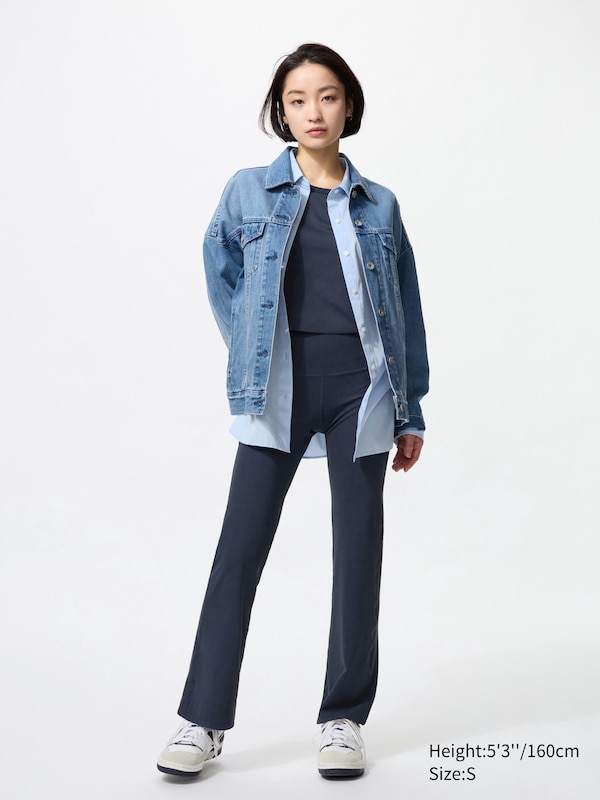
- Ideal Flare Legging Length: The hem should just brush the top of your foot or shoe without pooling on the ground.
- Mark Both Legs: It’s common for one leg to be longer than the other, so mark both separately.
How To Care For No-sew Hems
No-sew hems can last a long time if cared for properly. Here’s how to help them last:
- Wash gently: Use cold water and gentle cycles.
- Air dry: Heat can weaken adhesives. Hang dry whenever possible.
- Check regularly: Look for peeling or loose areas and reapply tape or glue if needed.
- Avoid pulling: Be careful when putting on or taking off your leggings.
Credit: www.uniqlo.com
When To Choose A Temporary Vs. Permanent Solution
Some no-sew methods are better for short-term wear, others are built to last. Here’s how to decide:
- Temporary fixes are ideal if:
- You’re still growing or may want to resell the leggings.
- You switch between different shoe heights often.
- You want to try the look before committing.
- Permanent fixes are best if:
- The leggings are definitely too long, and you never plan to change the length back.
- You want a polished, professional finish.
- You’re tired of fixing the hem repeatedly.
Real-world Examples And Insights Most People Miss
Many beginners don’t realize that different fabrics react very differently to no-sew products. For example, nylon-spandex blends often resist adhesive tapes but work well with heat-activated webbing. On the other hand, cotton leggings may hold both tape and glue but can become stiff at the hem if too much product is used. Another often-overlooked detail is that hemming methods that work for skinny jeans or straight-leg pants do not always work for flares—because the wider bottom can make adhesives pull away faster when you walk.
If you plan to use no-sew tape or glue, always check how much stretch your new hemline has. Try putting the leggings on and doing a few squats or stretches. If you feel resistance or hear a popping sound, the adhesive isn’t strong or flexible enough, and you may need to try a different product.
Cost And Time Comparison
Here’s a quick look at what you can expect in terms of cost and time for each method:
| Method | Estimated Cost | Time Needed |
|---|---|---|
| Fabric Tape | $3–$8 | 10–15 minutes |
| Fabric Glue | $4–$10 | 20–30 minutes (plus drying time) |
| Iron-On Webbing | $5–$12 | 20–25 minutes |
| Safety Pins | $1–$3 | 5–10 minutes |
| Fashion Tape | $3–$7 | 5–10 minutes |
| Fold & Tuck | $0 | 2–3 minutes |
Eco-friendly Alternatives
If you want to avoid buying new products or creating waste, consider these eco-friendly tips:
- Reuse fabric tape or clips when possible.
- Donate or swap leggings that are too long instead of altering them if you’re unsure.
- Save leftover fabric for repairs or crafts if you do decide to cut (with a tailor).
- Use old-fashioned safety pins instead of buying new products.
Where To Buy No-sew Hemming Products
Most of the items you need for hemming without sewing can be found at local fabric stores, big box retailers, or online. For international readers, many products are available through major e-commerce sites. For more details on product types and reviews, see this page from Good Housekeeping.
Frequently Asked Questions
How Do I Make Sure My Flare Leggings Don’t Look Uneven After Hemming?
The most important step is measuring both legs with your shoes on, marking the same point on each. Use a soft measuring tape and double-check before applying any adhesive. If you’re using a fold-and-tape method, smooth the fabric and check in a mirror from all angles before making it final.
Can I Use Regular Double-sided Tape To Hem Leggings?
Regular double-sided tape (like office tape) is not designed for fabric and usually won’t hold well, especially on stretchy materials. It can also damage the fabric or leave sticky residue. Always use fabric-specific tape or hemming products for the best results.
Is It Safe To Use An Iron On All Types Of Leggings?
Not all leggings can handle the heat. Synthetic materials like nylon and spandex can melt or become shiny with too much heat. Always check the care label and test the iron on a small, hidden spot before applying heat to the hem.
Will No-sew Hemming Products Wash Out In The Laundry?
Some products are designed to last through many washes, especially if labeled “washable” or “permanent. ” Others, like fashion tape or some fabric tapes, are more temporary. For best results, wash leggings on a gentle cycle and air dry to protect the hem.
What Should I Do If My No-sew Hem Starts To Come Undone?
If the hem loosens or peels, reapply your chosen adhesive, tape, or glue as soon as possible. For methods like safety pins or fabric clips, simply adjust or replace the fasteners. If it keeps happening, try a different product, preferably one labeled for stretch fabrics.
Shortening flare leggings without sewing is not only possible but simple with the right tools, techniques, and a bit of patience. Whether you want a temporary or permanent fix, you have many options to get the perfect fit—no sewing skills required.
With a little care, your flare leggings will look great, feel comfortable, and last longer.

Credit: www.youtube.com
