

How to Make Business Casual Look Good: Style Tips for Success
How To Make Business Casual Look Good
Business casual is one of the most common dress codes in offices around the world. But many people struggle with it. Is it too formal? Too relaxed? The answer is somewhere in the middle. If you want to look sharp and feel confident, you need to find the right balance.
This guide will help you understand business casual, choose the best clothes, and make your style look great every day.
Business casual is not only about looking neat—it’s about showing you respect your workplace and yourself. When you dress well, you feel better and perform better. Studies show that people who wear smart business casual are seen as more trustworthy and competent. But many beginners make mistakes: they mix very casual items with formal ones, or wear clothes that don’t fit well. With the right approach, you can avoid these traps and stand out in a positive way.
Let’s walk through the details, practical tips, and smart tricks that make business casual look good.
What Is Business Casual?
Business casual is a dress code used in many offices and professional settings. It allows you to skip the formal suit, but still look polished and ready for work. The main goal is to look professional without being stiff.
Business casual includes:
- Dress shirts or blouses
- Slacks or chinos
- Skirts (for women)
- Closed-toe shoes
- Sweaters or cardigans
- Blazers (optional)
It avoids:
- T-shirts
- Jeans
- Sneakers
- Shorts
- Flip-flops
But rules can change depending on your company, country, or industry. For example, tech companies may allow jeans, while law firms expect slacks.
Common Misunderstandings
Many people think business casual means “anything but a suit. ” But this can lead to mistakes. Wearing jeans or running shoes is usually too casual. Instead, focus on clean lines, modest colors, and well-fitting clothes.
A non-obvious insight: Business casual is about looking professional, not just comfortable. Comfort is important, but never at the cost of looking sloppy.
Why Does Business Casual Matter?
First impressions in business are powerful. A study from Princeton found people judge trustworthiness in less than a second, and clothes play a big role.
Business casual helps you:
- Show respect for your work and coworkers
- Feel confident and productive
- Adapt to different work environments
- Stand out for positive reasons
Wearing business casual is also practical. You are ready for meetings, presentations, or even unexpected video calls. It sets a standard that helps you grow your career.
Impact On Performance
Research shows that dressing well can improve productivity. People who wear smart business casual report higher focus and motivation. They also have better relationships with clients and colleagues.
A non-obvious insight: Even small changes—like wearing a crisp shirt instead of a wrinkled one—can change how others see you and how you see yourself.
Credit: nextlevelwardrobe.com
Essential Business Casual Pieces
The best business casual outfits come from mixing a few key items. Here are the must-haves for both men and women.
For Men
- Dress shirts (solid, light patterns)
- Slacks or chinos
- Blazers (optional, but adds polish)
- Sweaters or cardigans
- Leather shoes (loafers, oxfords)
- Belts (match with shoes)
For Women
- Blouses or dress shirts
- Slacks, chinos, or skirts
- Blazers or cardigans
- Closed-toe flats or heels
- Simple jewelry
- Structured handbags
Choosing Colors And Patterns
Stick to neutral colors like navy, gray, black, beige, and white. You can add a pop of color (like a light blue shirt) or small patterns (like pinstripes), but avoid loud prints.
Fit Matters More Than Brand
A well-fitting $30 shirt looks better than a loose $150 shirt. Focus on fit first. Clothes should not be too tight or too loose.
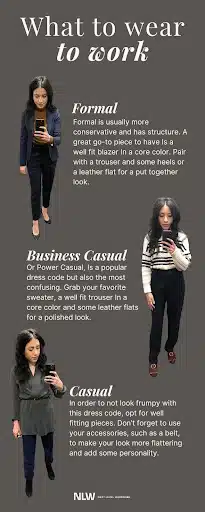
Comparing Business Casual Vs. Formal And Casual
Here’s a quick comparison to help you understand the differences:
| Dress Code | Typical Items | Allowed Shoes | Occasion |
|---|---|---|---|
| Formal | Suit, tie, dress shirt | Oxfords, dress shoes | Interviews, important meetings |
| Business Casual | Blazer, dress shirt, slacks | Loafers, flats | Office, daily work |
| Casual | T-shirt, jeans, sneakers | Sneakers, sandals | Weekends, informal events |
How To Make Business Casual Look Good
The real secret is not just wearing business casual, but making it look sharp and stylish. Here are the steps that help you achieve that.
1. Focus On Fit
Fit is the top priority. Clothes should follow your body shape, but not squeeze it. Check the shoulders, sleeves, and waist. If needed, use a tailor for small adjustments.
- Shirts: Should not balloon or pull at buttons.
- Pants: Should sit comfortably at your waist, not sag or pinch.
- Blazers: Should fit at the shoulders, not hang loose.
Many beginners miss the importance of tailoring. Even basic clothes look expensive if they fit well.
2. Choose Quality Fabrics
Good fabrics last longer and look better. For shirts, choose cotton or linen. For pants, look for wool blends or stretch cotton. Avoid synthetic materials that wrinkle easily or feel cheap.
- Cotton: Breathable, easy to iron
- Wool: Warm, classic
- Linen: Good for warm climates
A non-obvious insight: The fabric affects not just appearance, but comfort throughout the day.
3. Keep Colors Simple
Neutral colors are always safe. Navy, gray, black, white, beige—they mix well and look professional. Use one or two accent colors (like a light blue shirt or a burgundy belt) for interest.
- Avoid neon or very bright colors
- Small patterns are fine (stripes, dots), but avoid big prints
4. Add A Blazer Or Cardigan
A blazer instantly makes any outfit look more professional. Choose one in navy or gray. For women, a cardigan or fitted blazer adds structure.
- Skip oversized jackets—they look sloppy
- Try layering: Shirt + sweater + blazer
5. Use Accessories Wisely
Accessories can help, but too many will distract. Choose a simple watch, leather belt, and classic handbag. For women, small earrings or a thin necklace are perfect.
- Avoid large jewelry or flashy items
- Match metals (silver or gold, not mixed)
6. Keep Shoes Clean And Simple
Shoes are important. They should be clean and match your outfit.
- Men: Leather loafers, oxfords, or brogues
- Women: Closed-toe flats, low heels
Avoid sneakers, sandals, or shoes with logos.
7. Iron And Maintain Clothes
Wrinkled clothes ruin your look. Iron shirts and pants. Hang blazers and cardigans to keep their shape.
- Use a lint roller for dark clothes
- Polish shoes regularly
8. Personal Grooming
Clean hair, trimmed nails, and fresh breath are part of business casual. Keep hair tidy, avoid strong fragrances, and use minimal makeup.
- Men: Shave or trim facial hair
- Women: Use light makeup
9. Dress For Your Body Type
Choose clothes that suit your shape. For example, tall people may wear longer shirts, while petite people choose cropped jackets.
- Avoid baggy clothes—they make you look untidy
- Use belts to define the waist
10. Adapt To Your Office Culture
Every workplace is different. Watch what managers wear. If you’re unsure, dress slightly more formal.
- Tech offices may allow more casual items
- Banks and law firms usually expect classic business casual
A non-obvious insight: Notice small signals—like whether people wear ties or skip them.
Mistakes To Avoid
Even experienced professionals make business casual mistakes. Here are the biggest ones—and how to avoid them.
Mixing Too Casual With Business Items
Don’t wear jeans with a dress shirt, or sneakers with slacks. This creates confusion and looks unprofessional.
Wearing Clothes That Don’t Fit
Loose or tight clothes are distracting. Always check the fit in the mirror.
Loud Colors Or Patterns
Business casual is not the place for neon or big prints. Stick to simple colors and small patterns.
Ignoring Shoes
Dirty or casual shoes ruin your look. Always wear clean, classic footwear.
Over-accessorizing
Too much jewelry or big bags distract from your outfit. Keep it simple.
Not Checking Dress Code
Some offices have special rules. Always check before you wear something new.
How To Build A Business Casual Wardrobe
Building a good wardrobe takes time, but you don’t need to spend a lot. Start with basics, then add extras.
Essential Starter Pieces
- 2-3 dress shirts (white, light blue, gray)
- 2 pairs of slacks or chinos (navy, beige)
- 1 blazer (navy or gray)
- 1 pair of leather shoes (brown or black)
- 1 belt (matches shoes)
- 1 sweater or cardigan
How To Mix And Match
You can create many outfits with just a few items. Here’s an example:
| Shirt | Pants | Blazer | Shoes | Look |
|---|---|---|---|---|
| White | Navy | Gray | Brown | Classic |
| Light Blue | Beige | Navy | Black | Modern |
| Gray | Navy | None | Black | Simple |
Smart Shopping Tips
- Buy quality over quantity
- Try clothes on before buying
- Use sales for basics
- Invest in tailoring for key pieces
Cost Comparison: Budget Vs. Premium
Here’s a look at the difference between budget and premium business casual items:
| Item | Budget Price | Premium Price | Longevity |
|---|---|---|---|
| Dress Shirt | $25-$40 | $80-$150 | 1-2 years vs. 3-5 years |
| Slacks | $30-$50 | $100-$200 | 1-2 years vs. 4-6 years |
| Blazer | $60-$100 | $200-$400 | 2-3 years vs. 6-8 years |
Buying premium is not always necessary. But spending a little more on key items can make a big difference.
Business Casual For Different Seasons
Business casual changes with the weather. Here’s how to stay comfortable and stylish all year.
Spring
- Lightweight shirts and blazers
- Cotton slacks
- Loafers or flats
Summer
- Linen shirts
- Short-sleeve blouses
- Light colors
- Avoid heavy fabrics
Fall
- Sweaters and cardigans
- Wool slacks
- Closed-toe shoes
- Layering for warmth
Winter
- Heavy blazers
- Turtlenecks (for women)
- Wool pants
- Leather boots
A non-obvious insight: Always check the office temperature. Some offices use strong air conditioning, so keep a sweater handy.
Business Casual For Remote Work
Even if you work from home, business casual is useful. Video calls and online meetings need a neat look.
- Wear a dress shirt or blouse for video calls
- Avoid pajamas or T-shirts
- Keep hair tidy
A study found that people who dress well for remote work feel more productive and confident.
Credit: nextlevelwardrobe.com
Business Casual For Interviews And Important Days
When you have an interview or big meeting, business casual helps you look your best. Dress one step above the daily office style.
- Wear a blazer, even if it’s not required
- Keep accessories minimal
- Avoid perfume or cologne (some offices have scent-free policies)
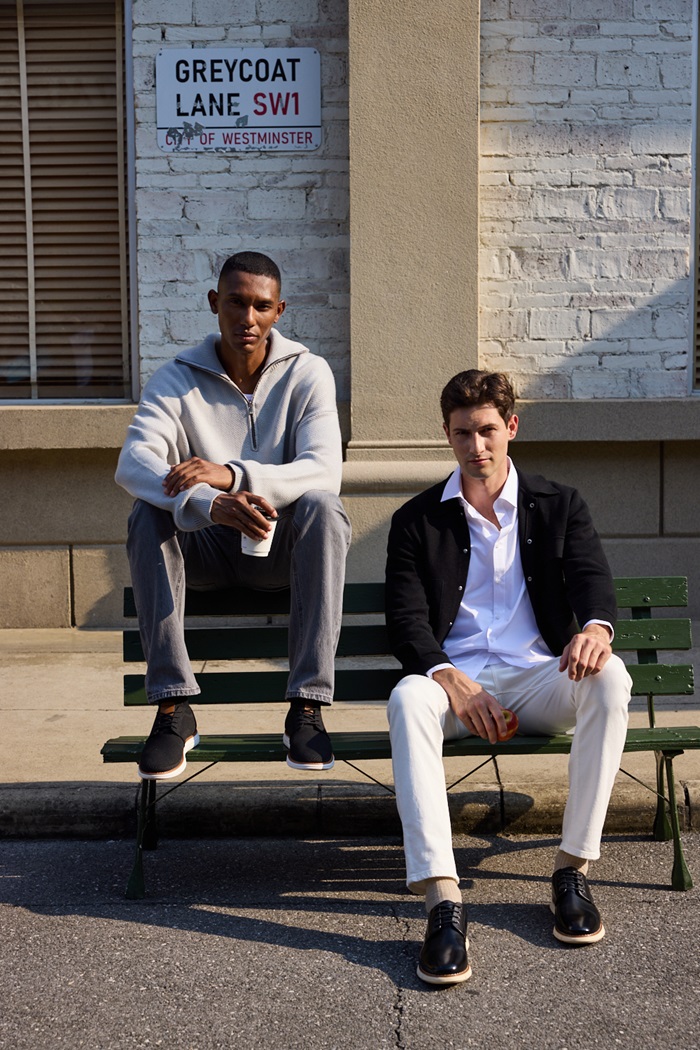
Gender Differences In Business Casual
Business casual is flexible for both men and women, but there are some differences.
Men
- Dress shirts, polos, sweaters
- Slacks, chinos
- Loafers, oxfords
Women
- Blouses, sweaters, dresses
- Slacks, skirts
- Flats, low heels
Women can add a scarf or small jewelry. Men should avoid loud ties.
A non-obvious insight: Women have more options, but must be careful not to look too casual (for example, sundresses or sandals).
Credit: www.brunomarc.com
How To Make Business Casual Unique
You can add personality to your business casual style without breaking the rules.
- Use a patterned pocket square (men)
- Wear a colorful scarf (women)
- Choose unique cufflinks (men)
- Try a bold handbag (women)
- Add a fun lapel pin (both)
But always keep it simple and professional.
Business Casual In Different Countries
Business casual rules are not the same everywhere. In Japan, people dress more formally. In Silicon Valley, jeans may be allowed.
If you travel or work with international teams:
- Ask HR about local dress codes
- Watch what managers wear
- Adapt to local culture
Business Casual And Sustainability
Many people now look for eco-friendly business casual. Buy clothes made from organic cotton or recycled materials.
- Choose brands with sustainable practices
- Avoid fast fashion
- Take care of clothes to make them last
For more information, see Sustainability.gov.
Practical Tips For Beginners
If you are new to business casual, start slow. Buy basic items first, learn what fits, and add extras later.
- Try clothes in store—don’t rely on photos
- Use mirrors to check fit from all angles
- Ask coworkers for advice
- Keep receipts in case you need to return something
A non-obvious insight: Take pictures of your outfits. Review them to see what looks best.
Frequently Asked Questions
What Should I Avoid In Business Casual?
Avoid jeans, T-shirts, sneakers, flip-flops, and loud prints. Stay away from clothes that are too tight or too loose.
Can I Wear Jeans For Business Casual?
Usually not. Some tech companies allow dark, clean jeans, but most offices do not. Always check your company’s dress code.
What Shoes Are Best For Business Casual?
Men should wear leather loafers or oxfords. Women should wear closed-toe flats or low heels. Avoid sneakers and sandals.
How Can I Make Business Casual Look More Stylish?
Focus on fit, choose quality fabrics, and add a blazer or cardigan. Use simple accessories, keep shoes clean, and stick to neutral colors.
Is Business Casual Different In Other Countries?
Yes. Some countries are more formal, others are more relaxed. Always check local dress codes and adapt to your workplace.
Business casual is not complicated, but it does require attention. With the right choices, you can look good, feel confident, and make the best impression every day. Small details—like clean shoes, a well-fitted blazer, and simple accessories—help you stand out. Remember, business casual is about balance: professional, comfortable, and stylish. If you follow these tips, you will always look your best.
