

How to Fix Flare Pants That are Too Long: Easy Hemming Tips
When you find the perfect pair of flare pants, only to realize they’re too long, it can feel frustrating. Maybe you tripped over the hem. Perhaps your new shoes hide completely under the fabric. Don’t worry—you’re not alone, and there are several ways to fix flare pants that are too long. Whether you want a quick, no-sew solution or a more permanent alteration, you can achieve a polished look with the right approach.
Flare pants have made a big comeback in fashion. Their wide, swinging leg creates movement and style. But the extra fabric at the bottom means the length must be just right. If they’re too long, your pants drag on the ground, get dirty, or even rip. Shortening flare pants isn’t the same as hemming a straight leg, either. You need to keep the shape balanced and the finish smooth. This guide covers everything you need to know: from measuring and marking to sewing, gluing, and clever hacks. You’ll learn how to pick the method that fits your skills, tools, and style. Whether you’re working with denim, polyester, or delicate fabrics, you’ll find a solution that works—and a few tricks beginners often overlook.
Why Proper Length Matters For Flare Pants
Getting the length right on flare pants is essential for both style and practicality. When flare pants are too long, they don’t just look sloppy—they can be dangerous. You might step on the hem, trip, or ruin the fabric. The wide leg opening also means the hem will drag more than with skinny or straight pants. For a balanced look, the hem should almost touch the top of your shoe but not cover it completely.
Many people make the mistake of cutting flare pants too short, which ruins their dramatic effect. Others leave them too long and end up with dirty, frayed edges. A well-fitted hem lets you show off your shoes and keeps the pants swinging with every step.
If you plan to wear heels or sneakers, remember to check the fit with those shoes on—this small step makes a big difference.
Tools And Materials Needed
Before you start, gather the right tools. Some methods require sewing, while others do not. Having everything ready saves time and reduces mistakes.
Basic tools:
- Fabric scissors (sharp, for clean cuts)
- Measuring tape or ruler
- Chalk or washable fabric marker
- Pins or clips
- Iron and ironing board
For sewing methods:
- Sewing machine (for a durable finish)
- Matching thread
- Hand-sewing needle
For no-sew methods:
- Fabric glue or hem tape
- Heavy books or weights (to press hem)
Extra helpers:
- Seam ripper (for removing old stitches)
- A friend (for accurate measuring)
- Your favorite shoes
How To Measure The Right Length
Measuring is the most important step, yet it’s where many people go wrong. Small errors here can ruin your result.
- Put on the shoes you’ll wear most with the pants.
- Stand straight on a flat surface (ask a friend for help if possible).
- Let the pants fall naturally. Flare pants should almost touch the floor but not drag.
- Mark the desired length with chalk. Make several marks around each leg for accuracy.
- Use a measuring tape to check the distance from the new mark to the original hem. Write it down.
Insider tip: Always measure both legs. Sometimes one leg is slightly longer due to posture or manufacturing differences.
Methods To Fix Flare Pants That Are Too Long
There are several ways to shorten flare pants. Each has pros and cons. Let’s explore the most effective options.
1. Traditional Hemming (cutting And Sewing)
This method gives the most professional look and lasts the longest. It’s best for people comfortable with a sewing machine.
Steps:
- Mark the new hemline, as explained above.
- Add an extra 1 to 1.5 inches below the mark for the hem allowance.
- Cut off the excess fabric carefully.
- Fold the edge up once (for a single hem) or twice (for a double hem) to the inside.
- Pin in place, making sure the flare remains even all around.
- Press with an iron for a crisp edge.
- Sew around the leg opening with a straight stitch, matching the original hem style.
- Press again to finish.
Key tip: To keep the flare shape, don’t fold too much fabric or the leg opening will look bulky.
2. Blind Hem Stitch (invisible Hem)
If you want an almost invisible finish, the blind hem stitch is a strong choice. It works well on dressier flare pants.
Steps:
- Mark and cut as described earlier.
- Fold the raw edge up 1/2 inch, press, then fold up again to the desired hem.
- Pin in place.
- Use a blind hem stitch by hand or on a sewing machine.
- Press to finish.
Insider insight: Blind hems work best on medium to heavy fabrics. On light fabrics, they can show through.
3. Keeping The Original Hem (euro Hem Method)
If you love the look of the original hem—especially on jeans—this method lets you keep it.
Steps:
- Mark the new length, but do NOT cut at the line yet.
- Instead, measure up from the bottom hem the amount you want to remove.
- Cut off the excess fabric above the original hem (usually 1–2 inches).
- Pin the original hem back to the pant leg, matching the seams.
- Sew close to the original hem, then press.
- Trim any extra fabric inside, if bulky.
Pro tip: This method keeps the worn or distressed look that gives jeans character.
4. Hemming With Fusible Tape (no-sew)
If you don’t have a sewing machine, fusible hem tape is a quick, no-sew option. It bonds fabric with heat.
Steps:
- Mark, cut, and fold as with traditional hemming.
- Place fusible tape between the folded hem and the pant leg.
- Iron according to the tape instructions (usually a few seconds).
- Let cool before wearing.
Common mistake: Don’t move the iron back and forth—press and hold, or the tape won’t stick well.
5. Fabric Glue Method (no-sew)
Fabric glue is another fast, no-sew way to fix hems. It works best for casual pants or temporary fixes.
Steps:
- Mark, cut, and fold the hem as usual.
- Apply a thin line of fabric glue inside the fold.
- Press and hold with fingers, then use heavy books to keep in place for 30–60 minutes.
- Let dry completely before wearing.
Note: Fabric glue is not as durable as sewing. It can loosen after washing, so this is best for quick fixes.
6. Hand Sewing
If you don’t own a sewing machine but want a sturdy finish, you can hem by hand sewing.
Steps:
- Prepare the hem as in previous methods.
- Use a strong thread and a needle.
- Make small, even stitches inside the hem so they don’t show outside.
- Knot securely at the end, then press.
Extra insight: Hand sewing takes time but gives you control, especially on delicate or thick fabrics.
7. Temporary Fixes: Double-sided Tape Or Safety Pins
Sometimes you need a quick fix for a night out or an event.
- Use double-sided fashion tape inside the hem and press.
- Use safety pins on the inside of the leg to hold the hem.
These are not long-term solutions but can save you in an emergency.
8. Creating A Raw Edge Look
For a trendy, casual style, you can cut the pants and leave the edge raw.
Steps:
- Mark and cut to the desired length.
- Use sharp scissors for a clean cut.
- Wash the pants—this will cause the edge to fray slightly.
- Trim loose threads as needed.
Warning: This look is best for denim or thick fabrics. Thin fabrics may unravel too much.
9. Cuffing (rolling The Hem)
If you want a versatile option that lets you change the length, try cuffing.
Steps:
- Fold the hem up on the outside of the pant.
- Create a wide cuff, about 1–2 inches.
- Adjust to your preferred height.
Insider tip: Cuffing works best on soft denim or casual fabrics. It’s not suitable for dress pants.
10. Professional Tailoring
If you’re unsure or working with expensive fabric, a professional tailor can guarantee a flawless result. Prices vary depending on location and pant style, but a good tailor can keep the flare shape and match the stitching perfectly.
Fact: Many tailors use industrial machines that give a stronger, neater hem than most home machines.
Comparing Hemming Methods
To help you decide which method suits your needs, here’s a comparison of the most popular options:
| Method | Skill Needed | Durability | Cost | Visible Finish |
|---|---|---|---|---|
| Traditional Hem (Sewing Machine) | Intermediate | High | Low | Professional |
| Fusible Tape | Beginner | Medium | Low | Neat |
| Original Hem (Euro Hem) | Intermediate | High | Low | Authentic |
| Fabric Glue | Beginner | Low | Low | Depends |
| Professional Tailor | None | Highest | Medium/High | Expert |
Choosing The Right Method For Your Pants
Not every hem method works for every pair of pants. Here’s how to choose based on fabric and situation:
Denim Flare Pants
Denim is thick and holds shape. Original hem or traditional sewing works best. Raw edges are also trendy for casual styles.
Lightweight Fabrics
Light polyester or rayon can be slippery. Use a blind hem or hand sewing for control. Avoid glue, which may show through.
Dress Pants
For formal pants, a blind hem or professional tailoring gives the cleanest look. Never use glue or raw edges.
Stretchy Or Knit Fabrics
Stretchy pants need a hem that moves. Use a zigzag stitch or a stretch hem tape.
When You’re In A Hurry
No-sew methods like tape or glue are fastest. Double-sided tape works for a night out, but not for everyday use.
Mistakes To Avoid When Hemming Flare Pants
Many people make the same errors when shortening flare pants. Here’s what to watch out for:
- Cutting too much: Once you cut, you can’t go back. Always measure twice and cut less than you think.
- Uneven legs: Check both legs before and after cutting. Mark carefully and use a flat surface.
- Losing the flare shape: If you fold up too much fabric, the bottom can become too narrow. Keep the hem shallow (1 inch or less) to keep the flare.
- Visible stitches: Use matching thread and sew close to the edge for a clean look.
- Choosing the wrong method for the fabric: Some glues don’t work on synthetics, and heavy fabrics need strong stitches.
- Forgetting to try on with shoes: Your pants should fit perfectly with the shoes you’ll actually wear.
Expert tip: Hem one pant leg first, then compare before finishing the second. It’s easier to adjust than to fix both.
Detailed Step-by-step Example: Hemming With A Sewing Machine
Let’s go through a full example of hemming flare pants using a sewing machine, as this is the most popular method.
- Try on the pants with your shoes. Stand straight and mark the new hem with chalk, making several marks all around.
- Remove the pants and lay flat. Use a ruler to connect the marks in a straight line.
- Add a hem allowance of 1 inch below your mark. Cut off the excess fabric.
- Fold the edge up 1/2 inch, press, then fold up another 1/2 inch. This double fold hides the raw edge.
- Pin all around. Be sure the flare stays even—no bunching.
- Sew close to the inside fold. Use a straight stitch with matching thread.
- Press the new hem well. This sets the stitches and gives a professional finish.
- Try on again. Check for length and comfort.
Non-obvious insight: Always test your stitch on a scrap piece of the cut-off fabric first. This prevents skipped stitches or tension problems.
Caring For Hemmed Flare Pants
After altering your pants, take care to keep the hem looking good.
- Wash inside out to protect the stitches.
- Avoid high heat in the dryer, especially with glue or tape.
- Check the hem after each wash, especially with no-sew methods.
- For raw hems, trim loose threads as needed.
Pro tip: If you use hem tape or glue, re-iron the hem after a few washes to keep it secure.
When To Seek Professional Help
Sometimes, it’s best to leave hemming to the experts:
- If you’re working with expensive, formal, or delicate fabrics.
- If you want to keep the original stitching perfectly.
- If you don’t have the right tools or feel unsure.
A tailor can also adjust the flare width if needed—a service most home methods can’t match.
Sustainable Ways To Use Excess Fabric
Don’t just throw away the fabric you cut off. Here are creative, eco-friendly uses:
- Make matching hair accessories like scrunchies.
- Patch other clothes or use for crafts.
- Reinforce pocket edges or inside seams.
- Donate fabric scraps to local schools or sewing groups.
Extra insight: Saving small pieces of denim or thick cotton is helpful for future repairs.
Example: Flare Pants Lengths For Different Heights
Choosing the right length depends on your height and shoes. Here’s a general guide:
| Your Height | Best Inseam (with heels) | Best Inseam (with flats) |
|---|---|---|
| Petite (under 5'4") | 29–30 inches | 27–28 inches |
| Average (5'4"–5'7") | 31–32 inches | 29–30 inches |
| Tall (over 5'7") | 33–34 inches | 31–32 inches |
Note: Always adjust these numbers based on your unique proportions and shoe choice.

Credit: www.youtube.com
Styling Tips After Hemming Flare Pants
Once your pants fit perfectly, style them to show off your new look:
- Pair with platform shoes or boots to highlight the flare.
- Try a tucked-in blouse to balance the wide leg.
- Avoid long tops that cover the flare—show off that shape!
- For a retro look, add a belt and vintage accessories.
Fashion insight: The right hem makes your legs look longer and your outfit more polished.
Troubleshooting Common Problems
Even with careful work, you might run into issues. Here’s how to fix them:
- Hem is uneven: Re-measure and trim the longer side. Press well before sewing.
- Hem puckers or waves: Use a lighter tension on your sewing machine and press the hem flat.
- Stitches show on the outside: Use a blind hem or hand-sew with tiny stitches.
- Glue/tape comes loose: Clean and press the hem again. Consider switching to sewing for a permanent fix.
If you’re stuck, check online tutorials or visit a tailor for advice.
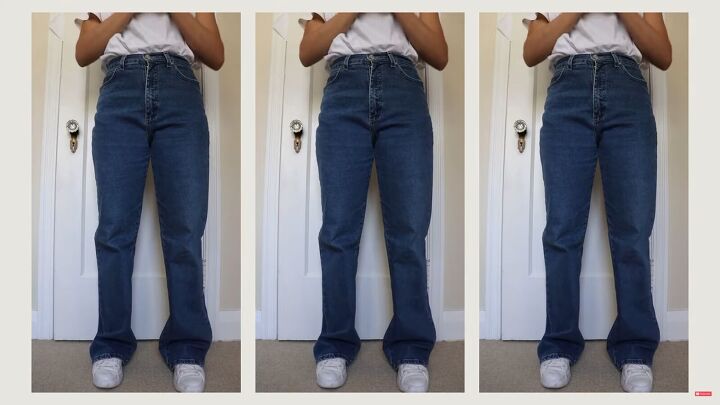
Credit: www.upstyledaily.com
Real-world Example: Saving Designer Flare Jeans
Imagine you bought designer flare jeans online. They’re beautiful but 3 inches too long. You want to keep the original hem. Using the Euro hem method, you carefully measure, cut above the hem, and reattach. The result? The jeans look untouched, but now fit perfectly with your favorite boots.
This method is so effective, many high-end denim stores use it for their in-house alterations.
Going Beyond: Customizing Your Flare Pants
Once you’re confident with hemming, you can experiment with other customizations:
- Add decorative stitching to the hem for a unique touch.
- Sew beads, lace, or ribbon to the bottom edge.
- Use fabric paint to create a custom design.
Customizing gives your pants personality and makes them truly yours.
The Environmental Impact Of Proper Hemming
By fixing and wearing your flare pants longer, you help reduce clothing waste. Fast fashion leads to millions of tons of textile waste each year. Simple alterations extend the life of your clothes and save money. According to the Wikipedia page on textile recycling, reusing and repairing clothes is one of the most effective ways to cut textile waste.
Non-obvious insight: Tailoring your own clothes also means you buy fewer new items, helping both your wallet and the planet.
Frequently Asked Questions
How Much Does It Cost To Hem Flare Pants At A Tailor?
Prices vary by location and pant style, but hemming usually costs between $15 and $40. Some tailors charge extra for keeping the original hem or working with thick fabrics.
Can I Use Iron-on Hem Tape For All Fabrics?
Iron-on hem tape works well for cotton, denim, and some synthetic blends. It may not stick well to very slippery or stretchy fabrics, and is not recommended for silk or delicate materials.
How Do I Make Sure The Flare Shape Stays Even?
When folding and pinning the hem, smooth the fabric flat and check that the width is the same all around. Hem in small sections, using lots of pins, and don’t fold up more than 1 inch.
Is It Possible To Lengthen Flare Pants If I Cut Them Too Short?
Unfortunately, once fabric is cut, it’s hard to add length again. You can sometimes add a fabric extension or a decorative trim, but it may not look original. Always cut less than you think you need to remove.
What Is The Best Way To Hem Flare Pants Without Sewing?
Fusible hem tape or strong fabric glue are the best no-sew options. They are quick, easy, and don’t require special tools. Just remember to follow the instructions and check after washing.
Flare pants have a special place in fashion, but only when the length is just right. With the methods and tips above, you can fix pants that are too long and enjoy both style and comfort. Whether you sew, glue, tape, or visit a tailor, your flare pants will be ready for any occasion.

Credit: sewwhatgilly.wordpress.com
