

How to Dress Business Casual: Expert Tips for Effortless Style
How To Dress Business Casual
Business casual is one of the most popular dress codes in workplaces today. But many people feel unsure about what it really means. Is it just wearing a shirt without a tie? Can you wear jeans? What shoes are allowed?
Dressing business casual is not always simple, and mistakes are common—even for experienced professionals. This guide will help you understand business casual, avoid common errors, and build a wardrobe that feels confident and comfortable.
What Is Business Casual?
Business casual is a style that sits between formal business attire and casual wear. It’s less strict than suits and ties, but more polished than jeans and T-shirts. The goal is to look professional, approachable, and neat without being too formal.
Most offices use business casual to help employees feel comfortable, but still project a professional image. The details can vary by company, region, and industry. For example, a tech company may allow more relaxed clothing than a law firm. That’s why it’s important to know your workplace’s culture and rules.
Key Features Of Business Casual
- Collared shirts (button-downs or polos)
- Dress pants or chinos
- Closed-toe shoes (loafers, dress boots, or flats)
- Blazers or cardigans (optional)
- No ties required, but sometimes allowed
Business casual avoids clothing that looks too casual or too formal. You should not wear ripped jeans, sneakers, graphic T-shirts, or shorts. At the same time, you don’t need a full suit and tie.
The Essentials Of Business Casual For Men
Men often struggle to find the right balance between formal and casual. Here are the main items every man should consider for a business casual wardrobe:
Shirts
Choose collared shirts. Button-down shirts are the most common. You can also wear polo shirts if your office allows. Colors should be simple—white, blue, gray, or soft patterns. Avoid bold prints or bright colors.
Tips:
- Iron shirts for a neat look
- Tuck shirts in for most offices
- Avoid shirts with logos or flashy designs
Pants
Wear dress pants or chinos. Dark colors like navy, gray, and black are safe. Chinos in beige or khaki are also popular. Jeans can be tricky—they are only allowed in some offices, and must be dark, clean, and free from rips.
Tips:
- Make sure pants fit well (not too tight or loose)
- Avoid cargo pants or shorts
- Always wear a belt if pants have loops
Shoes
Choose leather shoes or dress boots. Loafers and oxfords are classic. Avoid sneakers, sandals, or athletic shoes.
Tips:
- Keep shoes clean and polished
- Match shoe color to your belt for a coordinated look
Jackets And Sweaters
Blazers, cardigans, or sweaters add polish. Choose neutral colors and simple designs. Avoid hoodies or sports jackets.
Tips:
- Wear a blazer for important meetings
- Sweaters should be fine-knit, not bulky
Accessories
Keep accessories simple. Watches, leather belts, and small cufflinks are fine. Avoid flashy jewelry or large bags.
Tips:
- Use a briefcase or laptop bag instead of a backpack
- No hats indoors
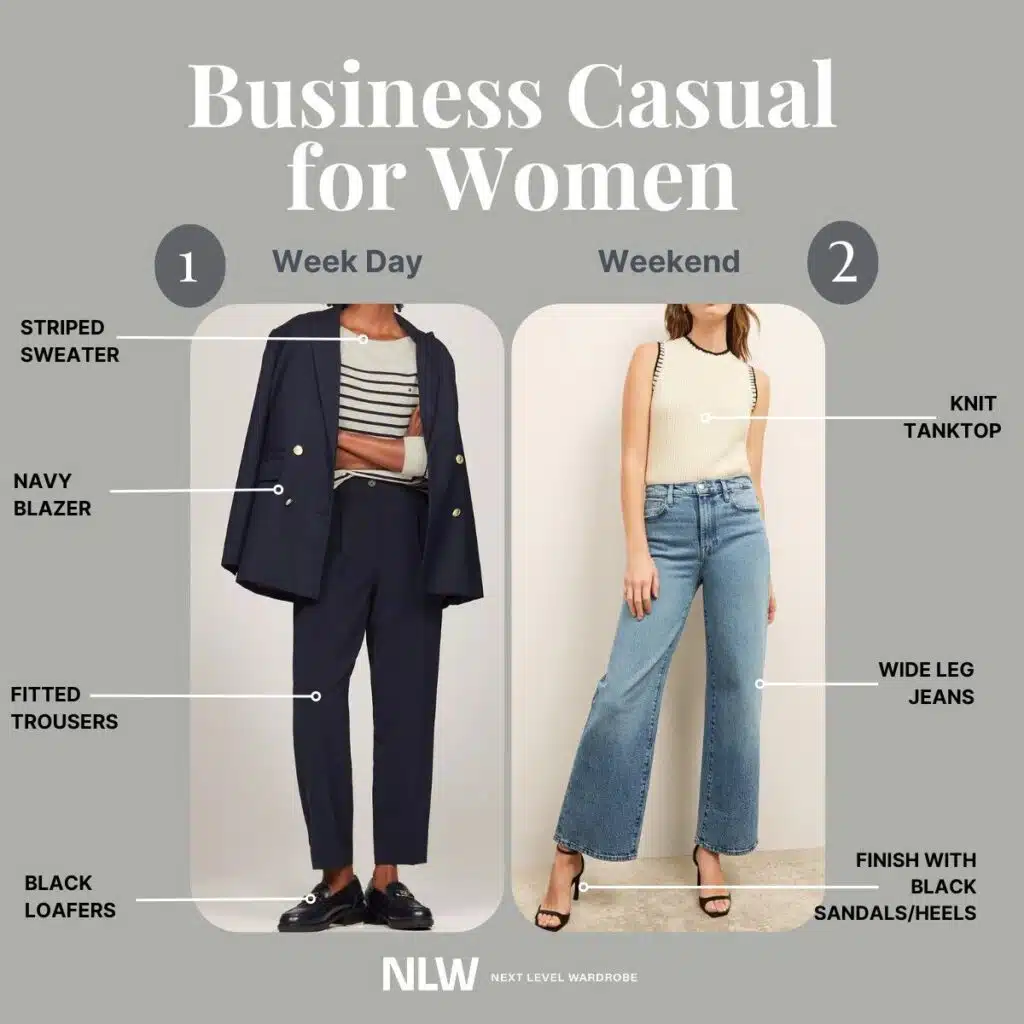
The Essentials Of Business Casual For Women
Women have more choices, but also more chances for confusion. Here’s how to build a business casual wardrobe:
Tops
Wear blouses, button-down shirts, or fine-knit sweaters. Avoid tops with deep cuts, flashy prints, or too much sparkle. Simple colors and small patterns are best.
Tips:
- Avoid sleeveless tops unless allowed by your office
- Layer with a cardigan or blazer for a polished look
Pants And Skirts
Women can wear dress pants, chinos, or knee-length skirts. Skirts should not be too short. Pants should fit well and be free from holes or stains.
Tips:
- Avoid leggings as pants unless paired with a long top
- Skirts should let you move comfortably
Dresses
Business casual dresses should be knee-length or longer. Avoid tight, flashy, or party-style dresses. Simple designs work best.
Tips:
- Add a cardigan or blazer for extra polish
- Make sure neckline and length are office-appropriate
Shoes
Choose flats, loafers, or low heels. Avoid sandals, flip-flops, or very high heels.
Tips:
- Keep shoes clean and in good condition
- Closed-toe shoes are safest
Accessories
Keep accessories simple and subtle. Small earrings, a watch, and a neat handbag are fine. Avoid large jewelry or bright colors.
Tips:
- Scarves can add style but should be simple
- Avoid wearing too many accessories at once
Business Casual Vs. Other Dress Codes
It’s easy to confuse business casual with other dress codes. Here’s a comparison to clear things up:
| Dress Code | Allowed Items | Not Allowed |
|---|---|---|
| Business Formal | Suits, ties, dress shirts, leather shoes | Jeans, sneakers, polos |
| Business Casual | Collared shirts, dress pants, skirts, blazers, loafers | Shorts, T-shirts, sandals, ripped jeans |
| Casual | T-shirts, jeans, sneakers | Suits, ties, formal dresses |
Business casual is more relaxed than business formal, but stricter than casual. If you are unsure, dress slightly more formal until you see what others wear.
How To Build A Business Casual Wardrobe
You don’t need to buy everything at once. Building a business casual wardrobe is about choosing the right basics and adding items as you learn what works for your office.
Start With Basics
For men:
- 3–5 collared shirts
- 2–3 pairs of dress pants or chinos
- 2 pairs of business shoes
- 1–2 blazers or sweaters
For women:
- 3–5 blouses or shirts
- 2–3 pairs of pants or skirts
- 2 pairs of flats or loafers
- 1–2 cardigans or blazers
Add Versatile Pieces
Choose clothes that can be mixed and matched. Neutral colors help you create many outfits with fewer items. For example, a navy blazer works with gray, beige, or black pants.
Tips:
- Buy quality items that last longer
- Try clothes before buying to check fit
Avoid Common Mistakes
Many people make mistakes when dressing business casual. Here are some to avoid:
- Wearing clothes that are too casual (like jeans with holes or graphic T-shirts)
- Choosing colors or patterns that are too bold
- Ignoring fit—clothes should not be too tight or too loose
- Forgetting to iron or clean clothes
- Wearing athletic shoes or sandals
Business Casual For Different Seasons
Business casual changes with the weather. You need to adjust your wardrobe for hot summers and cold winters.
Spring And Summer
Choose light fabrics like cotton or linen. Short sleeves are allowed in many offices, but avoid sleeveless unless it’s part of your company’s culture. For women, skirts and dresses are popular. For men, lighter colors and fabrics help you stay cool.
Tips:
- Use antiperspirant to avoid sweat marks
- Avoid shorts, even in hot weather
Fall And Winter
Wear layers to stay warm. Wool pants, sweaters, and blazers are good choices. Scarves and gloves are fine for outside, but remove them indoors.
Tips:
- Choose dark colors for a classic look
- Make sure outerwear is neat and simple
Business Casual For Remote Work
Many people now work from home. Should you dress business casual for video calls? Most companies expect you to look professional, especially if clients are present.
Tips:
- Wear a collared shirt or blouse for calls
- Avoid pajamas or sportswear
- Keep your background tidy
Business Casual For Special Occasions
Some days require extra effort, like job interviews, client meetings, or office events. Dress a bit more formal than usual. For men, add a blazer. For women, choose a dress or skirt with a blazer.
Tips:
- Plan your outfit the night before
- Make sure everything is clean and ironed

Credit: www.hockerty.com
Business Casual For Different Industries
Business casual is not the same everywhere. A creative agency may allow jeans and sneakers, while a bank expects dress pants and leather shoes. Here’s a quick look at how business casual can change:
| Industry | Common Business Casual | Extra Tips |
|---|---|---|
| Finance | Button-down shirts, dress pants, blazers, loafers | Choose classic colors and styles |
| Tech | Polo shirts, chinos, clean sneakers | Check company policy for jeans |
| Education | Blouses, skirts, sweaters, flats | Comfort matters—avoid tight clothes |
| Creative | Casual shirts, dark jeans, stylish shoes | Express personality, but stay neat |
Always check your company’s dress code. If unsure, ask HR or look at what your managers wear.
How To Make Business Casual Look Professional
Dressing business casual is not only about the clothes, but also how you wear them. Here are expert tips to look your best:
- Fit matters: Tailored clothes look more professional. Adjust pants and shirts if needed.
- Clean and ironed: Wrinkled clothes can ruin your look. Keep everything fresh.
- Polished shoes: Dirty shoes stand out. Clean and polish them regularly.
- Grooming: Hair should be neat. Shaving or trimming facial hair helps.
- Confidence: Stand tall and smile. Clothes help, but attitude matters.
Many beginners forget about fit and grooming. Even expensive clothes can look bad if not worn well.
The Role Of Colors And Patterns
Colors and patterns play a big part in business casual. Simple colors like navy, gray, black, and white are easy to match. Soft patterns (like small stripes or checks) add interest without being loud.
How To Use Colors
- Dark colors look more formal
- Light colors are good for spring/summer
- Avoid too many colors in one outfit
How To Use Patterns
- Small patterns are safe
- Avoid big, bold prints
- Mix patterns with solid colors
A common mistake is wearing too many colors or patterns at once. Keep it simple for a polished look.
How To Choose Business Casual Shoes
Shoes are often ignored, but they are important for business casual. Here’s a comparison of popular choices:
| Shoe Type | Men | Women | Allowed? |
|---|---|---|---|
| Loafers | Yes | Yes | Always |
| Oxfords | Yes | No | Always |
| Flats | No | Yes | Always |
| Sneakers | Sometimes | Sometimes | Only in relaxed offices |
| Sandals | No | Rarely | Usually not allowed |
Choose shoes that are comfortable and match your outfit. If you’re not sure, go for loafers or flats.
Shopping Tips For Business Casual
Buying business casual clothes can be costly. Here’s how to shop smart:
- Check sales and outlets for deals
- Buy classic pieces first (they last longer)
- Try clothes in-store for fit
- Read reviews before buying online
- Set a budget and stick to it
One insight: Many beginners waste money on trendy pieces that don’t match other clothes. Stick to basics first, then add personality later.
How To Adjust Business Casual For Your Body Type
Everyone has a unique body shape. Business casual should help you feel confident, not uncomfortable.
For Slim Body Types
- Choose fitted clothes, but avoid too tight
- Layer with blazers or sweaters for shape
For Larger Body Types
- Look for clothes with structure (like blazers)
- Avoid clingy fabrics
- Choose pants with a comfortable waistband
For Tall People
- Try longer shirts and pants
- Avoid short sleeves and cropped pants
For Short People
- Choose pants and skirts that fit well
- Avoid oversized clothes
Many people make the mistake of copying others without thinking about their own body type. Try different styles to see what works for you.
Credit: nextlevelwardrobe.com
Business Casual For Travel
Traveling for work can make dressing tricky. You need clothes that look good and stay comfortable.
Tips:
- Choose wrinkle-free fabrics
- Pack versatile items (mix and match)
- Bring extra shirts for emergencies
- Wear comfortable shoes for walking
Business casual travel is about planning ahead. Don’t wait until the last minute.
How To Keep Business Casual Clothes In Good Condition
Your clothes last longer if you care for them well. Here’s how:
- Wash according to labels
- Use gentle detergent for delicate fabrics
- Iron or steam shirts and pants
- Store shoes in a dry place
- Rotate clothes to avoid wear
Another insight: Many people damage clothes by washing too often or using harsh chemicals. Follow care instructions closely.
Business Casual For Different Age Groups
Business casual works for any age, but style can change. Young professionals often choose modern fits and colors. Older workers may prefer classic styles.
Tips:
- Choose age-appropriate styles
- Avoid trendy items if not comfortable
- Classic pieces suit all ages
No matter your age, confidence and neatness are key.
How To Handle Dress Code Changes
Sometimes companies change their dress code. You may need to switch from business casual to formal, or vice versa.
Tips:
- Keep a few formal items (like a suit or tie) ready
- Ask HR for details about the new code
- Update your wardrobe slowly
Transitions are easier if you plan ahead.

Credit: www.youtube.com
Business Casual For International Workplaces
If you work with global teams, business casual can change by country. For example, some countries expect more formal clothing, while others are relaxed.
Tips:
- Research local culture before traveling
- Ask coworkers for advice
- When in doubt, dress more formal
The safest option is to start formal and adjust as you learn.
Sustainability In Business Casual
More people care about sustainable fashion. You can build a business casual wardrobe that is good for the environment.
Tips:
- Buy fewer, higher-quality clothes
- Choose brands with eco-friendly practices
- Donate old clothes, don’t throw them away
- Avoid fast fashion
Sustainable business casual is about making smart choices.
Frequently Asked Questions
What Is Business Casual For Men?
Business casual for men means wearing collared shirts, dress pants or chinos, leather shoes, and optional blazers or sweaters. Ties are not required. Avoid jeans with holes, sneakers, and T-shirts.
Can Women Wear Dresses In Business Casual?
Yes, women can wear dresses in business casual if they are knee-length or longer and have a modest neckline. Avoid party-style or very tight dresses. Pair with a cardigan or blazer for a polished look.
Are Jeans Allowed In Business Casual?
Jeans are sometimes allowed, but only if they are dark, clean, and free from rips. Not all offices accept jeans, so check your company’s dress code first.
What Shoes Are Best For Business Casual?
The best shoes are loafers, flats, dress boots, or oxfords. Avoid sneakers, sandals, and flip-flops unless your office is very relaxed.
How Can I Find Out My Company’s Dress Code?
You can ask HR, check your company handbook, or observe what managers and coworkers wear. If you’re unsure, dress slightly more formal until you learn the rules.
Dressing business casual is about finding the right balance between comfort and professionalism. With these tips, you can build a wardrobe that helps you feel confident at work, avoid common mistakes, and make a great impression every day. For more in-depth advice on dress codes, visit Business News Daily.
