

How to Crop Flare Leggings: Easy Steps for a Perfect Fit
How To Crop Flare Leggings
Flare leggings have become a must-have for anyone who loves comfort and style. With their unique shape, they flatter many body types and work well in both casual and workout settings. But sometimes, flare leggings are too long, or the flare sits at an awkward spot.
If you’ve bought a pair that doesn’t fit quite right, you don’t need to leave them in your closet. Cropping flare leggings is a smart way to get a perfect fit without spending extra money on a tailor or buying a new pair.
Learning how to crop flare leggings yourself can save you money, give you more control over your style, and help you keep your favorite pairs looking fresh. Many people worry about ruining their leggings, but with the right guidance, it’s easier than you might think.
This guide will walk you through each step, from measuring and marking to cutting and finishing the hem. You’ll also find practical tips, common mistakes to avoid, and answers to the most frequent questions about cropping flare leggings. Whether you’re new to DIY clothing or have some sewing experience, you’ll find everything you need to confidently crop your flare leggings at home.
Why Crop Flare Leggings?
Many people wonder if it’s worth it to crop their flare leggings instead of just folding them or buying a new pair. Here’s why cropping makes sense:
- Improved fit: Flare leggings are designed to look best when the flare starts just below the knee and ends around the ankle or top of your shoe. If they’re too long, you’ll lose that flattering shape.
- Safety: Long leggings can cause you to trip, especially if you wear them during workouts or on stairs.
- Style: Cropping lets you adjust the flare to your body shape and height. Some people prefer a subtle flare, while others want a bold look.
- Cost-effective: Instead of replacing leggings that are too long, cropping gives them new life.
- Customization: You can create unique looks, like a cropped flare for warmer weather or a more dramatic style.
For people of different heights, standard flare leggings are often too long. Cropping is a simple solution that avoids the need for custom orders or expensive tailoring.
Tools And Materials You’ll Need
Before you start cropping your flare leggings, gather the following tools and materials. Using the right items makes the process smoother and helps you get a professional-looking result.
- Sharp fabric scissors: Regular scissors can leave jagged edges or snag the fabric. Fabric scissors are designed to cut cleanly through stretch materials.
- Measuring tape: For accurate and even cropping, you need to measure the length carefully.
- Fabric chalk or washable marker: This helps you mark the cutting line without staining the fabric.
- Pins or fabric clips: These hold the fabric in place, so it doesn’t shift while you cut.
- Sewing machine or needle and thread (optional): If you want to finish the hem, you’ll need this. Some people prefer a raw edge, but a hem stops fraying and looks neater.
- Iron and ironing board (optional): Pressing the hem before sewing gives a crisp finish.
- Seam gauge (optional): Useful if you want to be very precise with your hem depth.
Choosing quality tools can make a big difference in the final look of your cropped leggings. For example, dull scissors can cause uneven edges, and a proper measuring tape helps prevent mistakes.
Measuring And Marking: Getting The Length Right
This step is key for making sure your cropped flare leggings look balanced and feel comfortable. Here’s how to measure and mark the right length:
1. Decide Where You Want The Flare To End
Stand in front of a mirror wearing the leggings and the shoes you plan to wear most with them. This gives the most accurate length. Think about these options:
- Full length: Ends at the top of your shoe
- Ankle length: Shows the ankle bone
- Cropped flare: Sits above the ankle, good for warmer months or a trendy look
2. Mark The Desired Length
- Use fabric chalk or a washable marker to make a small mark at the side seam at your chosen length.
- Take off the leggings and lay them flat. Use a measuring tape to measure from the waistband to your mark. Note this length.
3. Draw A Cutting Line
- Use the measuring tape to measure from the waistband to your mark along several points around the leg.
- Connect the marks to create a straight, even line all around each leg.
- Double-check that both legs are marked at the same length.
4. Add Seam Allowance
If you plan to hem the leggings, add about 1 inch (2.5 cm) below your cutting line for the hem. If you want a raw edge, you can skip this step.
Pro tip: Always measure twice before cutting. It’s better to cut a little longer—you can always trim more, but you can’t add fabric back once it’s cut.
Cutting Flare Leggings: Step-by-step
Now you’re ready to cut. This part can feel nerve-wracking, but if you’ve measured and marked carefully, you’ll get a great result.
- Lay the leggings flat on a clean surface. Smooth out any wrinkles.
- Pin or clip the fabric together at the sides and along the cutting line. This keeps the front and back layers even.
- Cut slowly and carefully along the marked line on one leg. Use sharp fabric scissors and try to cut in one smooth motion. Avoid “chomping” or making lots of small cuts.
- Repeat for the other leg. Make sure to line up the cut edge with the first leg to keep the lengths even.
- Check symmetry. Hold the leggings up or fold them in half at the crotch seam to compare the leg lengths. Trim if needed.
Non-obvious insight: Many beginners forget to cut both legs at once or forget to fold the leggings, leading to uneven lengths. Always double-check symmetry before moving on.

Credit: nimbleactivewear.com
Hemming Or Leaving A Raw Edge
After cutting, you have two main options for finishing the edge: hemming or leaving it raw. Each has pros and cons.
Hemming For A Finished Look
Hemming gives your leggings a clean, professional look and helps prevent fraying. Here’s how to hem stretch fabrics like leggings:
- Fold the edge up by your seam allowance (usually 1 inch).
- Pin or clip the hem in place all around the leg opening.
- Press with an iron if you want a crisp fold (optional).
- Sew the hem using a zigzag stitch or a stretch stitch on your sewing machine. If you sew by hand, use a stretch-friendly needle and a basic stretch stitch.
- Remove pins/clips and give the hem a gentle press.
Comparison of Hemming Methods
| Method | Pros | Cons | Best For |
|---|---|---|---|
| Sewing Machine | Strong, professional finish; fast | Requires equipment and some skill | Frequent wear, thicker fabrics |
| Hand Sewing | Good for small jobs, no machine needed | Slower, less uniform | Quick fixes, delicate fabrics |
| Fabric Glue/Tape | No sewing needed, fast | Less durable, may not stretch well | Temporary fixes, light wear |
Raw Edge: A Modern, Easy Option
Many modern leggings are made from fabrics that don’t fray, like nylon or polyester blends. You can leave the cut edge raw for a simple, sporty look.
- Quick and easy: No sewing required.
- Works best with high-quality, thick fabrics that won’t curl or roll up.
- May roll slightly: Some fabrics will curl at the edge after washing, which some people like.
Non-obvious insight: If you’re unsure if your fabric will fray, test a small scrap first. Wash and dry it to see how the edge holds up before cutting your actual leggings.
Tips For Different Types Of Flare Leggings
Not all flare leggings are the same. Here’s how to handle popular variations:
Thick Athletic Leggings
- These often have more structure and are less likely to curl at the edges.
- Hemming is usually best, as the thicker fabric can hold a stitch well.
- Use a ballpoint needle and a stretch stitch for best results.
Lightweight Or Yoga Leggings
- Lighter fabrics may curl more and are sometimes see-through at the hem. Test the edge before deciding to leave it raw.
- Use a very narrow hem if you choose to sew, so the line doesn’t show through.
Split Hem Or Slit Flare Leggings
- If your leggings have a side slit, cropping can be trickier.
- After cropping, you’ll need to resew the slit to the new length. Make sure the slit looks even on both legs.
High-waisted Flare Leggings
- The high waist does not affect the cropping process, but always measure from the waistband to ensure both legs are even.
Practical tip: Always check the fiber content on your leggings’ label. Some blends, like cotton-spandex, may fray more than polyester-nylon blends.
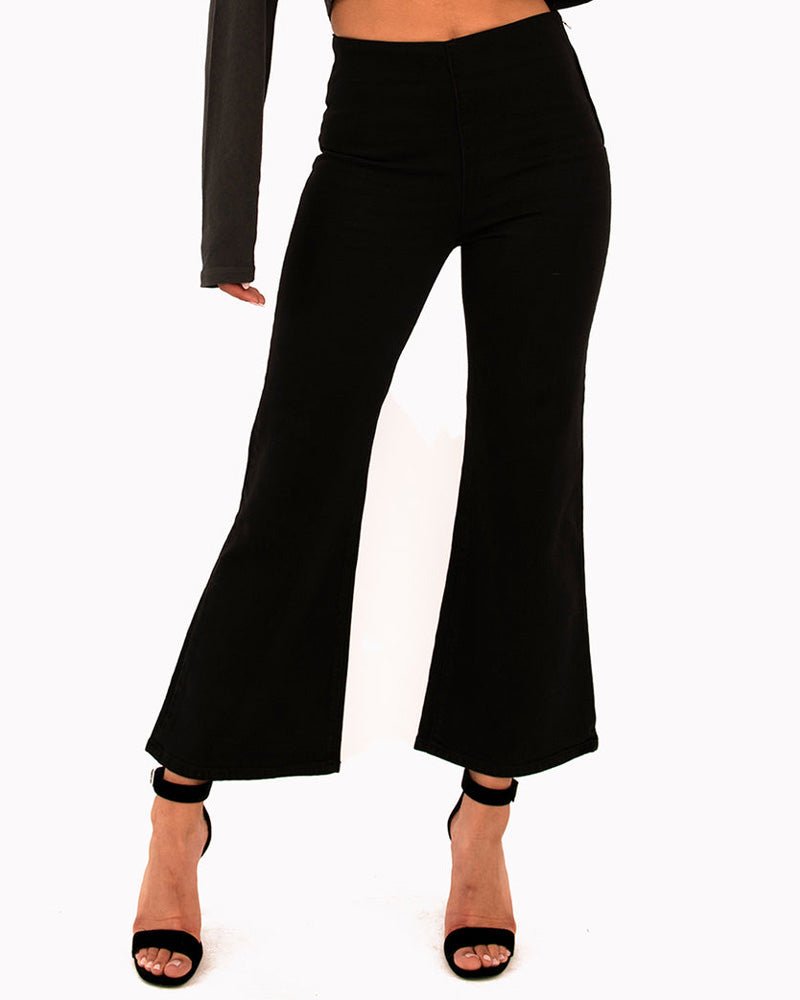
Credit: www.capsuleshoponline.com
Avoiding Common Cropping Mistakes
Even with careful planning, it’s easy to make mistakes when cropping flare leggings. Here are some of the most common errors and how to avoid them:
- Cutting too much off: Always cut less than you think. You can always trim more, but you can’t add fabric back.
- Uneven legs: Measure and mark both legs carefully. Fold the leggings in half to compare before cutting.
- Skipping seam allowance: If you plan to hem, don’t forget to add extra length for the fold.
- Using dull scissors: This can lead to jagged, messy edges. Always use sharp fabric scissors.
- Not testing the fabric: Some leggings will fray or curl more than others. Test a small section before cropping the whole leg.
- Washing after cutting without finishing the edge: If you leave a raw edge, wash the leggings gently to avoid too much rolling or fraying.
- Not wearing shoes during measuring: The length may look different with or without shoes, especially if the flare is meant to cover part of your foot.
Example: Sarah wanted cropped flare leggings for summer but forgot to add seam allowance. After hemming, her leggings were too short. Now she always marks the line, then adds 1 inch before cutting.
How To Style Cropped Flare Leggings
Once you’ve cropped your leggings, you can enjoy new styling options. Cropped flare leggings are versatile and can be dressed up or down. Here are some ideas:
- With sneakers: For a sporty, casual look.
- With sandals: Perfect for warmer weather.
- With ankle boots: Makes the cropped flare stand out.
- With oversized tops: Balance the fitted leg with a loose sweater or t-shirt.
- For workouts: Pair with a matching sports bra or tank top.
Non-obvious insight: Cropped flare leggings can also be layered over tights in colder weather for a unique, stylish look.
Caring For Cropped Flare Leggings
Your newly cropped leggings will last longer if you care for them well. Here are some tips:
- Wash in cold water: Hot water can damage stretch fabrics and cause hems to come undone.
- Air dry or tumble dry low: High heat can make the fabric shrink or lose its stretch.
- Avoid harsh detergents: Gentle laundry soap keeps colors bright and fabric soft.
- Check the hem: After several washes, check that hems are intact and repair any loose threads right away.
Quick comparison: Hemmed vs. Raw Edge Durability
| Edge Finish | Durability (Washes) | Risk of Fraying | Care Needed |
|---|---|---|---|
| Hemmed | High (50+) | Very low | Minimal |
| Raw Edge | Moderate (20-40) | Depends on fabric | Gentle wash, check edges |
Pro tip: If you notice the raw edge starting to fray or roll too much, you can always add a hem later.
Advanced Techniques: Professional Finishes
If you want to take your cropped flare leggings to the next level, consider these finishing touches:
Using A Serger Or Overlock Machine
A serger trims and finishes the edge at the same time, creating a stretchy, durable hem. This is the method most clothing factories use.
- Benefits: Very strong, prevents fraying, looks professional.
- Drawback: Sergers can be expensive and require practice.
Decorative Hems
Some people like to add a decorative touch with a contrast thread or a lettuce hem (a wavy edge created with a narrow zigzag stitch). This is popular for a playful or feminine look.
Adding A Side Slit
If your flare leggings are plain, consider adding a small slit on the outer seam after cropping. This adds movement and can make the flare stand out.
Practical example: Emma used her serger to finish her cropped flare leggings and added a contrast pink thread for a fun detail. She gets compliments every time she wears them.
Environmental Benefits Of Cropping Instead Of Replacing
Many people don’t realize that cropping and reusing leggings is also environmentally friendly. Fast fashion creates a lot of waste, especially when people throw out clothes that don’t fit perfectly. Cropping helps:
- Reduce textile waste
- Lower your carbon footprint
- Save money and resources
- Encourage creative reuse
By learning to crop your own flare leggings, you’re taking a small step toward a more sustainable wardrobe. If you’re interested in the environmental impact of clothing, check out resources like the Fashion Revolution movement.
Troubleshooting: Fixing Cropping Mistakes
Even with careful planning, things can go wrong. Here’s how to handle common problems:
Cropped Too Short
- Solution: Try adding a wide decorative hem or lace trim to lengthen the leg.
- For small mistakes: Let the edge roll naturally for a trendy raw look.
Uneven Legs
- Solution: Trim the longer leg to match the shorter one. If you’ve lost too much length, add a cuff or band at the hem.
Wavy Or Stretched Edge
- Solution: Stretch fabrics can become wavy if pulled during cutting or sewing. Wash and dry the leggings, then press with an iron (on low heat) to flatten the edge.
Raw Edge Fraying
- Solution: Apply a thin line of fabric glue to the edge, or sew a narrow zigzag stitch just inside the edge to stop fraying.
Non-obvious insight: If you cut too much off both legs and they’re too short, cropped flare leggings can be turned into stylish bike shorts instead of being thrown away.
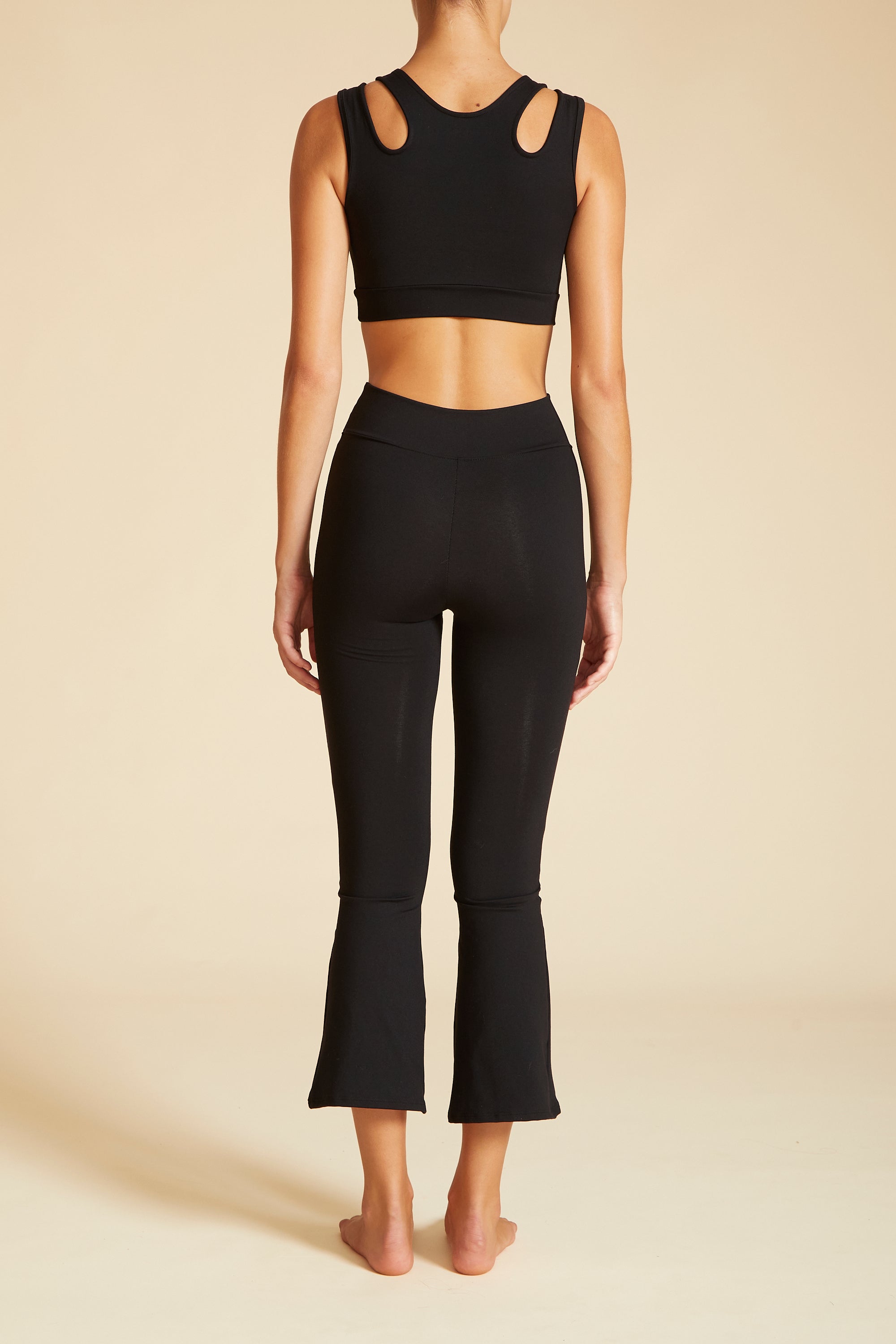
Credit: www.livetheprocess.com
Real-life Examples: Success Stories
Many people have shared their success with cropping flare leggings at home. Here are two stories:
- Maria’s Experience: Maria is 5’2” and most flare leggings were too long for her. She followed the steps above, marked her desired length while wearing her workout shoes, and added a 1-inch seam allowance. She hemmed by hand with a stretch stitch. Her new cropped flares fit perfectly, and she now crops all her leggings herself.
- Alex’s Story: Alex bought expensive designer flare leggings, but they were way too long. Instead of returning them, he measured carefully, cut with sharp scissors, and left a raw edge. The fabric held up well, and the trendy raw hem became his favorite look.
These examples show that anyone can crop flare leggings successfully with a little patience and attention to detail.
Frequently Asked Questions
How Do I Know Where To Crop My Flare Leggings?
The best place to crop is where you want the flare to end—usually just above the ankle or at the top of your shoe. Wear the leggings and mark the spot while standing straight. Add extra length if you plan to hem.
Will The Fabric Fray If I Leave The Edge Raw?
Most modern leggings are made from stretch fabrics like nylon or polyester blends that don’t fray much. However, cotton blends may fray. Test a small section first or wash after cutting to check.
Can I Crop Flare Leggings Without A Sewing Machine?
Yes, you can. You can leave a raw edge if the fabric allows, or hem by hand using a needle and stretch thread. Fabric glue or tape can also work for a temporary fix, but it may not last as long.
How Do I Fix It If I Cut My Leggings Too Short?
Try adding a decorative hem, lace, or a fabric band to increase the length. If the leggings are much too short, consider turning them into shorts.
What Stitch Should I Use To Hem Stretch Leggings?
Use a zigzag stitch or a stretch stitch if you have a sewing machine. For hand sewing, use a stretch needle and a basic stretch stitch to allow the fabric to move without breaking the thread.
Cropping flare leggings at home is a practical and rewarding way to get a custom fit and personalize your style. With the right tools, careful measuring, and a bit of patience, anyone can master this easy DIY project. Next time you find a pair that’s too long or you want a new look, try cropping your own flare leggings and enjoy a wardrobe that truly fits you.
