

How to Business Casual Women: Style Tips for Effortless Elegance
How To Business Casual Women
Finding the right business casual style for women can be confusing. Many workplaces have different rules. Fashion trends change often. And, if you are not from an English-speaking country, some terms may seem strange. But business casual is not hard to understand. It is about looking professional, feeling comfortable, and showing your own style—all at the same time.
Women in business casual settings need to balance several things: professionalism, comfort, and personal expression. You want to look neat, but not too formal. You want to be comfortable, but not too casual. And you want your clothes to help you feel confident. This guide will show you how to build the perfect business casual wardrobe, choose the best outfits, and avoid common mistakes. It will also help you understand the hidden rules most beginners miss, and give you clear examples for every step.
What Is Business Casual For Women?
Business casual is a dress code used in many offices. It is less formal than traditional business wear (like suits), but more polished than everyday clothes. For women, business casual usually means:
- Not wearing jeans, shorts, or T-shirts
- Choosing neat, pressed clothes
- Mixing professional pieces with comfortable items
- Wearing simple shoes (not sneakers or flip-flops)
But every office has its own rules. Some are stricter. Some are more relaxed. It is important to check your company guidelines before buying new clothes.
Business casual often changes depending on the industry or company culture. For example, creative workplaces may allow brighter colors or more modern styles, while finance or law firms expect more conservative clothes. Even within the same company, dress codes can shift depending on location or department.
This flexibility is why business casual can be confusing, but it also allows you to express your style within safe limits.
Key Elements Of Business Casual
Here are the main pieces in a business casual wardrobe for women:
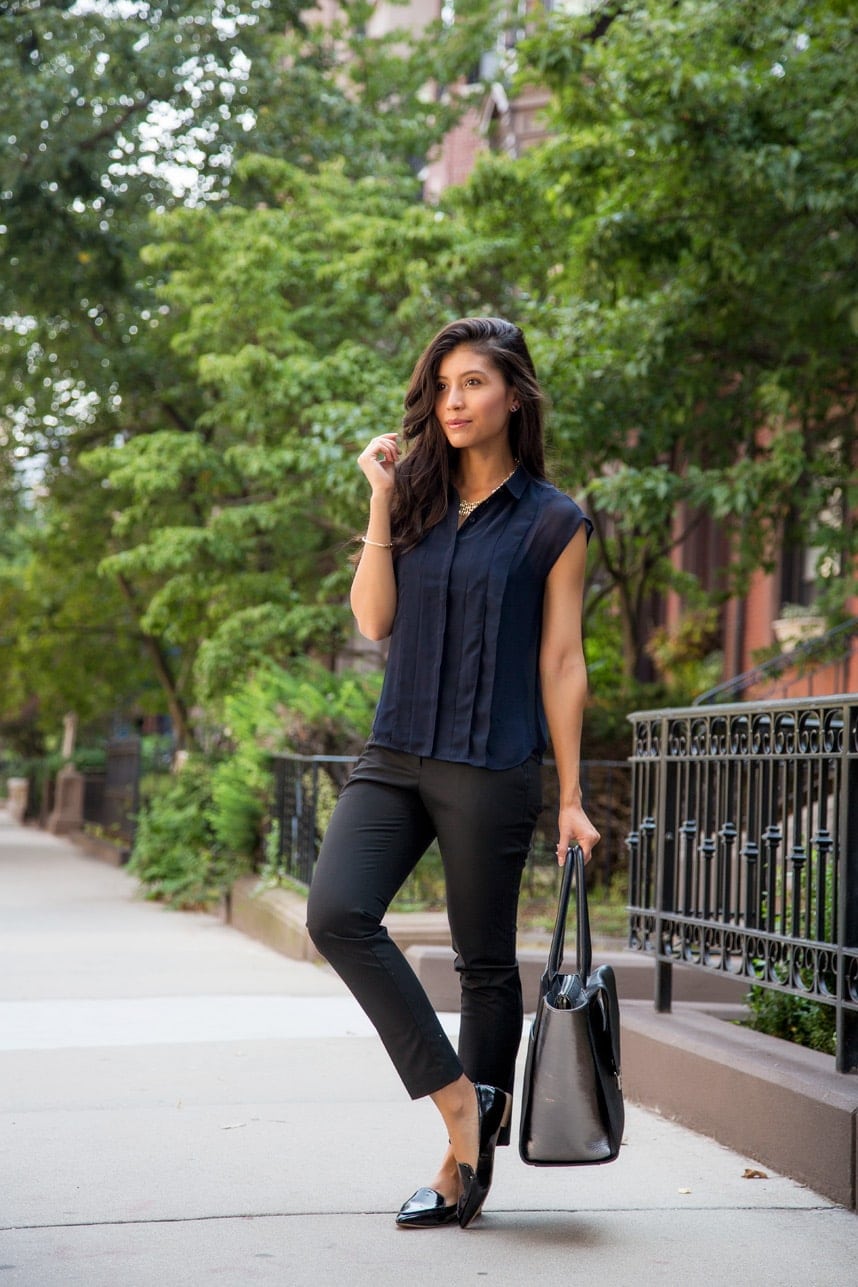
- Blouses and shirts: Simple, solid colors or light patterns
- Dress pants or trousers: Neutral colors like black, navy, or beige
- Knee-length skirts: Straight or A-line styles
- Sweaters and cardigans: Fitted, not oversized
- Blazers: Optional but useful for meetings
- Closed-toe shoes: Flats, loafers, or low heels
These items help you look polished without being too formal.
Some women also add tailored dresses, midi skirts, or structured handbags to their business casual wardrobe. These extras can make your outfit more flexible for different occasions. Remember, the goal is to look tidy and comfortable, not stiff or overdressed.
Choosing Business Casual Pieces
Building a business casual wardrobe does not mean you need to buy expensive clothes. You just need the right mix. Here’s how to choose the best pieces.
Tops
Choose tops that are neat and simple. Avoid anything too revealing, tight, or casual.
- Blouses: Soft fabrics like cotton, silk, or polyester
- Button-up shirts: Collared, not too tight
- Sweaters: Thin, fitted, no bold graphics
- Cardigans: Neutral colors, not bulky
Patterns are fine, but keep them light. For example, a small polka dot or thin stripe is safe.
Some offices allow short sleeves or sleeveless tops, but only if the style is professional and your shoulders are covered when needed. If you’re unsure, layer a cardigan or blazer over your top. This not only follows dress code but also helps with temperature changes in the office.
A non-obvious tip: Look for tops that can be tucked in or left out. Tucking in your blouse creates a sharper look, but leaving it out gives a more relaxed style. Having both options lets you adapt to different days or events.
Bottoms
Women can wear pants or skirts. Both are good for business casual.
- Dress pants: Straight or slim fit, ankle or full length
- Chinos: Less formal than dress pants, but still polished
- Skirts: Knee-length or longer; avoid mini skirts or very tight styles
Never wear shorts, ripped jeans, or leggings as pants.
Some women prefer culottes or wide-leg trousers. These are fine if the fit is tailored and the fabric is professional. Wide-leg pants can be more comfortable in warm weather and still look polished.
When choosing skirts, pay attention to the length and movement. Sitting, standing, and walking can make a skirt look shorter than it is. Always test your skirt’s length in different positions before wearing it to work.
Dresses
Dresses are a good choice for business casual. The main rules:
- Knee-length or longer
- No deep cuts or sleeveless styles unless you add a cardigan
- Simple patterns or solid colors
Wrap dresses and shirt dresses are popular because they flatter many body types and look professional. Avoid dresses with loud prints, glitter, or casual materials like jersey. If you want to use a sleeveless dress, layering is key—add a blazer or cardigan so it fits the office setting.
A practical tip: Choose dresses that allow easy movement and do not ride up when you sit. Test your dress at home before wearing it to work.
Shoes
Shoes should be neat and closed-toe. Heels are not required.
- Flats: Ballet flats, loafers
- Low heels: Block or kitten heels
- Boots: Ankle boots, not over-the-knee
Avoid sneakers, sandals, flip-flops, or very high heels.
Comfort is important. If you walk or commute, pick shoes with good support. Some women use insoles or choose shoes with padded soles. Wearing uncomfortable shoes can distract you during work or cause foot pain.
A less obvious insight: Having one pair of neutral shoes (black, navy, or beige) makes it easier to match with different outfits. This saves time and keeps your look consistent.
Accessories
Accessories can show your personality, but keep them simple.
- Small earrings or studs
- Simple necklaces
- A classic watch
- Neutral handbags
Avoid large statement jewelry or bright bags.
Another tip: Scarves in soft colors or simple patterns can add style without being flashy. If your office allows, a small silk scarf can make a basic outfit feel more personal.
Smart Color Choices
Color is important in business casual. Neutral colors are safest—black, navy, gray, beige. You can add light colors like soft pink, blue, or green. Bright colors are okay in small amounts, but avoid neon or very bold shades.
Mixing colors can help you look more interesting. For example, pair a navy skirt with a white blouse and a soft pink cardigan.
Using color wisely can also help highlight your features. For example, wearing a lighter top can draw attention upward, which is useful for video calls or meetings. A darker bottom creates a slimming effect and keeps the look grounded.
Color Comparison Table
Here’s a quick guide to safe and risky color choices for business casual:
| Safe Colors | Sometimes Safe | Risky Colors |
|---|---|---|
| Black | Burgundy | Neon Pink |
| Navy | Soft Yellow | Bright Orange |
| Gray | Forest Green | Purple (very bright) |
| Beige | Light Blue | Lime Green |
Choose safe colors for most pieces. Add “sometimes safe” colors as accents or accessories.
If you want to try a new color, start with small items—like a scarf, belt, or jewelry. Once you feel comfortable, add it as a larger piece. This method helps you avoid mistakes and builds confidence in your style choices.
Business Casual Outfit Examples
Let’s look at some real examples. These show how you can build outfits for different occasions.
- Meeting Day:
- Navy dress pants
- White blouse
- Gray blazer
- Black flats
Add a classic watch and small earrings for a polished finish. This outfit is safe for important meetings or interviews.
- Casual Friday:
- Beige chinos
- Soft blue cardigan
- Simple patterned blouse
- Loafers
You can swap the cardigan for a light sweater if the office is warm. This look is relaxed, but still professional.
- Office Presentation:
- Knee-length black skirt
- Light pink button-up shirt
- Classic watch
- Low heels
If you need more confidence, add a blazer. Choose subtle jewelry so the focus stays on your presentation.
- Everyday Work:
- Straight-fit trousers
- Thin sweater
- Small earrings
- Neutral handbag
This simple style works well for busy days. If you want to change the look, add a scarf or switch to a different color sweater.
A helpful tip: Keep one backup outfit at work. This is useful if you spill coffee or need to change for a surprise meeting.
Mixing And Matching For Versatility
A smart wardrobe has pieces that mix well. You can create many outfits from a few clothes. Here are some tips:
- Buy basic pants and skirts in neutral colors.
- Choose tops that work with both pants and skirts.
- Add a cardigan or blazer for cooler days.
- Change accessories to update your look.
This saves money and gives you more choices.
Try pairing the same blouse with different bottoms. For example, a white blouse can be worn with navy pants for meetings and with a black skirt for presentations. You can also switch shoes or bags to create a new style.
A less obvious insight: When shopping, look for clothes that can be layered. Layering lets you adjust to temperature changes and makes your wardrobe more flexible.
Mix-and-match Table
Here’s a sample table showing how a few items can create many outfits.
| Item 1 | Item 2 | Item 3 | Possible Outfits |
|---|---|---|---|
| Navy pants | White blouse | Gray cardigan | Navy pants + white blouse Navy pants + white blouse + gray cardigan |
| Black skirt | Light pink shirt | Black flats | Black skirt + pink shirt Black skirt + pink shirt + black flats |
| Beige chinos | Patterned blouse | Loafers | Chinos + blouse Chinos + blouse + loafers |
With just 3-4 pieces, you can make at least 6-8 different outfits.
If you add just one extra top or bottom, the number of possible combinations increases quickly. This is why choosing versatile pieces is so important for a business casual wardrobe.
Business Casual For Different Body Types
Women have many body shapes. Business casual can work for every type if you choose the right pieces.
Pear Shape
- A-line skirts and pants with a slight flare
- Tops with light colors or patterns to draw attention upward
A-line skirts help balance wider hips and create a smooth line. Choose structured tops to add shape to your shoulders.
Apple Shape
- Straight-leg pants and skirts
- Blouses with V-necks to add shape
V-neck tops elongate your torso and make you look slimmer. Avoid bulky sweaters or tops that add volume.
Rectangle Shape
- Belts to define the waist
- Fitted blazers and cardigans
Belts and tailored jackets create curves and make your outfit more interesting. Try layering to give more depth to your style.
Hourglass Shape
- Fitted dresses and skirts
- Tops that show your natural shape
Choose clothes that follow your curves but do not squeeze. Wrap dresses and pencil skirts are good options.
Tips For Fit
Always try clothes before buying. If shopping online, check size charts carefully. Loose clothes can look sloppy. Tight clothes can look unprofessional. The best fit is comfortable, neat, and helps you move easily.
Many women forget that tailoring can change the look of basic pieces. Hemming pants or adjusting a skirt’s waist can make cheap clothes look expensive. Consider small changes to improve fit.
What Beginners Often Miss
Most beginners focus only on clothes. But business casual is also about grooming and presentation.
Grooming
- Hair should be neat, not messy
- Nails clean, short or natural colors
- Light makeup, if any
A polished look includes these details. Even the best clothes can look wrong if grooming is ignored.
Ironing your clothes is another hidden rule. Wrinkled shirts or pants can ruin your professional look, even if the outfit is perfect. Keep a small iron or steamer at home for quick fixes.
Fabric Choices
Some fabrics wrinkle quickly. Cotton blends and polyester hold their shape better. Avoid linen or silk for everyday wear—they can look messy after a few hours.
Choosing the right fabric also helps with comfort. Breathable fabrics are best for hot climates. Wool blends are good for colder offices. Make sure your clothes suit the weather and your daily activities.
Weather And Season
Business casual adapts to the weather. In cold months, add tights under skirts, or wear thin sweaters. In hot months, choose breathable fabrics and lighter colors.
Layering is useful for changing seasons. A cardigan or blazer can be removed during warm afternoons and added during cool mornings. Shoes also matter—use boots in winter and flats in summer.
Common Mistakes To Avoid
Many women make small mistakes with business casual. Here are the most common:
- Wearing clothes that are too casual (jeans, sneakers)
- Choosing outfits that are too tight or too loose
- Using bold patterns or bright colors all over
- Forgetting grooming and neatness
- Ignoring company dress rules
Always check your office rules. If you are unsure, ask HR or look at what others wear.
Another mistake: Ignoring the need to update your wardrobe. Clothes wear out or styles change. Check your wardrobe every season and replace items as needed.
Business Casual Vs. Other Dress Codes
Business casual is different from other office dress codes. Let’s compare them.
Dress Code Comparison Table
| Dress Code | Typical Items | Level of Formality |
|---|---|---|
| Business Casual | Blouses, trousers, skirts, flats | Medium |
| Business Formal | Suits, dress shirts, pumps | High |
| Smart Casual | Nice jeans, blazers, stylish tops | Medium-low |
| Casual | T-shirts, jeans, sneakers | Low |
Business casual is less strict than business formal, but more polished than smart casual or casual.
Some companies have “business casual” days and “casual Fridays. ” Know which days are which, and adjust your outfit. Smart casual may allow dark jeans, but business casual rarely does.
Shopping Tips For Business Casual
You do not need to spend a lot on business casual. Here are smart ways to shop:
- Start with basics: Pants, skirts, blouses in neutral colors
- Buy one or two blazers or cardigans to mix with different outfits
- Choose shoes that match most clothes
- Use online shops with easy return policies
- Look for sales and outlet stores
Never buy many trendy items at once. Trends change fast, but basics last longer.
Shop during end-of-season sales or use loyalty programs to save money. Try second-hand shops for quality items at lower prices. Many thrift stores offer gently used business clothes.
Quality Over Quantity
Buy fewer, better pieces. Cheap fabrics can look messy after a few washes. Good-quality items keep their shape and color longer.
Check stitching, zippers, and buttons before buying. Well-made clothes last longer and keep you looking professional.
Example: Cost Breakdown
A simple starter wardrobe might include:
- 2 pairs of pants ($40 each)
- 2 skirts ($35 each)
- 4 blouses ($25 each)
- 1 blazer ($60)
- 2 pairs of shoes ($45 each)
Total: $410
This set can create many outfits and last several months.
If you have a limited budget, buy one item each month instead of all at once. This helps you spread costs and build a wardrobe slowly.

Credit: www.youtube.com
Business Casual For Remote Work
If you work from home, you might wonder if business casual still matters. The answer is yes—especially for video calls.
- Wear a neat blouse or shirt
- Choose simple pants or skirts, even if not visible
- Keep hair and face neat
Many people make the mistake of dressing only from the waist up. But full business casual helps you feel more professional.
A little-known tip: If you have trouble focusing at home, dressing in business casual can signal to your brain that it is work time. This improves productivity and helps separate work from personal life.
How To Adjust Business Casual For Special Events
Some workdays are different. You may have interviews, presentations, or business dinners. Business casual can be adjusted for these events.
- For interviews: Add a blazer, choose darker colors, wear low heels
- For presentations: Use simple, strong colors, avoid distracting patterns
- For dinners: Choose a neat dress, add small jewelry
Always plan ahead and check if the event needs more formal clothing.
A less obvious tip: If you are not sure how formal the event is, bring a blazer or cardigan. You can add or remove it as needed.
Sustainable Business Casual Choices
Sustainability is important. Choose clothes that last longer, use eco-friendly fabrics, or are made by ethical brands. This helps the environment and saves money.
- Buy clothes made from organic cotton or recycled materials
- Avoid fast fashion brands
- Repair clothes instead of throwing them away
Many brands now offer sustainable options. You can learn more from this Good On You guide.
Another helpful idea: Donate old business clothes to charity or local shelters. This supports others and reduces waste.
Real-world Examples And Case Studies
Many women share their business casual stories online. Here are two examples:
Example 1: New Office, New Dress Code
Maria started her first office job. She wore jeans and T-shirts before. On her first day, she noticed her coworkers wore blouses and pants. She changed her wardrobe: bought two pairs of trousers, three blouses, and a pair of flats. She felt more confident and was noticed by her boss for her professional look.
Maria also learned that paying attention to grooming and neatness made her feel ready for work. After a few weeks, she added a blazer and small accessories, which helped her feel more comfortable in meetings.
Example 2: Remote Work Challenge
Priya began working from home. She dressed casually at first but felt unmotivated. After switching to business casual clothes (even at home), she became more productive and happier during video calls.
Priya also noticed her coworkers responded better to her ideas when she looked professional on screen. She started layering cardigans and adding small jewelry, which made her stand out.
These stories show that business casual is not just about rules—it affects how you feel and how others see you.
Credit: stylishlyme.com
Adapting Business Casual For Different Cultures
In some countries, business casual is stricter or more relaxed. If you travel or work in a global company:
- Check local office dress codes
- Avoid sleeveless tops or short skirts in conservative cultures
- Choose softer colors and classic styles
Learning these rules helps you avoid mistakes and build trust with colleagues.
Some cultures expect women to cover their arms or legs, even in business casual. Others allow more flexibility. Always ask local colleagues or HR for advice if you are unsure. Adapting your style shows respect and helps you fit in.
Frequently Asked Questions
What Is Not Allowed In Business Casual For Women?
Business casual does not allow items like ripped jeans, shorts, T-shirts, sneakers, flip-flops, or very short skirts. Clothes should be neat, pressed, and not too revealing.
How Can I Look Stylish But Still Follow Business Casual?
Add small accessories like a classic watch or simple necklace. Choose clothes with light patterns or interesting textures. Mix neutral colors with one soft accent color.
Is It Okay To Wear Jeans In Business Casual?
Usually, jeans are not allowed. Some offices allow dark, neat jeans on Casual Fridays. Always check your company rules first.
Can I Wear Business Casual Clothes For An Interview?
Yes, business casual is safe for most interviews. Add a blazer and closed-toe shoes to look more polished. Avoid bright colors or bold patterns.
What Should I Do If I Am Unsure About The Dress Code?
Ask your HR department or observe what other women wear in your office. When in doubt, choose safer options like trousers, blouses, and closed-toe shoes.
Business casual for women is a balance. It is not about following fashion blindly, but about showing respect for your workplace and expressing your own style. With the right choices, you can feel comfortable, confident, and professional every day.

Credit: www.wikihow.com
