

How to Build Business Casual Wardrobe Men: Essential Style Guide
Building a business casual wardrobe for men is more than just picking shirts and pants. It’s about combining comfort, style, and professionalism. You want to look sharp at work, but not too formal. This balance can be tricky, especially for those starting from scratch or switching from a different dress code.
Many men feel confused about what counts as business casual, and which clothes are worth the money. If you get it right, you’ll always feel confident and ready for any meeting or event.
This guide shows you how to build a business casual wardrobe step-by-step. You’ll learn what pieces you need, how to choose them, and how to mix and match. There are practical tips, common mistakes, and some surprising details that most beginners miss.
You’ll also see data, comparisons, and examples to help you make smart choices. By the end, you’ll know how to create a wardrobe that’s stylish, comfortable, and fits your workplace.
What Is Business Casual For Men?
Business casual is a dress code that sits between formal business attire and casual wear. It’s meant to be comfortable, but still polished and professional. The core idea is to look neat without wearing a full suit and tie.
Common business casual pieces include button-up shirts, chinos, dress shoes, and blazers. You usually avoid jeans, sneakers, and T-shirts. However, the exact rules can change depending on your company and industry.
Key Features Of Business Casual
- Neat but relaxed: Clothes should be clean, pressed, and fit well.
- No full suit required: You can skip the matching suit, but blazers are often welcome.
- Smart shoes: Leather shoes or loafers are preferred over sneakers.
- Flexible layering: Sweaters and vests can be added for warmth and style.
Typical Business Casual Items
- Collared shirts (button-up, polo)
- Chinos, dress pants, or tailored trousers
- Blazers or sport coats
- Leather shoes (oxfords, loafers)
- Sweaters or cardigans
What’s Not Business Casual
- T-shirts or graphic tops
- Baggy jeans or ripped denim
- Athletic sneakers
- Shorts or cargo pants
- Hoodies
Some offices are more relaxed, while others are stricter. Always check your company’s guidelines, but these basics will help you build a strong foundation.
Essential Items For A Business Casual Wardrobe
A well-rounded business casual wardrobe has a mix of shirts, pants, shoes, and layers. You don’t need a huge collection; just a few smart pieces that you can mix and match.
Shirts
Button-up shirts are the backbone of business casual. Choose solid colors, subtle patterns, or light stripes. Avoid bold prints.
- White and light blue: Easy to pair and always look clean.
- Light gray or pastel: Adds variety without being loud.
- Checks or small patterns: For a bit of personality, but keep it subtle.
Polo shirts can work in less formal settings. Pick high-quality fabric and a good fit.
Tip: Start with 4-6 shirts in different colors and patterns.
Pants
Chinos are ideal for business casual. They’re comfortable and look sharp.
- Navy and beige: Classic and versatile.
- Gray or olive: Good for variety.
Dress pants or tailored trousers are also suitable. Make sure they fit well and aren’t too tight or loose.
Avoid jeans unless your office allows them (even then, choose dark, well-fitted jeans).
Tip: Begin with 3-4 pairs in neutral colors.
Blazers And Jackets
A blazer instantly upgrades your look. Choose one in navy or gray for maximum versatility.
- Sport coats: Less formal, more textured fabrics.
- Unstructured blazers: Comfortable and modern.
Tip: One or two blazers are enough for most wardrobes.
Shoes
Leather shoes are best. Oxfords, derbies, and loafers all work well.
- Brown and black: Cover most situations.
- Suede loafers: Good for warmer months.
Skip athletic sneakers and sandals.
Tip: Two pairs of shoes (one black, one brown) will cover most needs.
Sweaters And Layering
Sweaters, cardigans, and vests add warmth and style. Choose lightweight fabrics for layering.
- Crew neck or V-neck sweaters in neutral colors
- Cardigans for a softer, relaxed look
Tip: Two sweaters (one light, one dark) give you options.
Accessories
Small touches make a big difference.
- Leather belt (match with shoe color)
- Wristwatch: Simple, classic style
- Pocket square: For a bit of flair with blazers
Avoid flashy jewelry or loud accessories.
Choosing The Right Fit And Fabric
Fit and fabric matter as much as style. Clothes should look clean and feel comfortable all day.
Finding Your Fit
- Shirts: Should sit close to your body, but not tight. Sleeves end at your wrist.
- Pants: Waist fits comfortably, legs straight or slightly tapered. No bunching at ankles.
- Blazers: Should fit across your shoulders, with sleeves ending at your wrist bone.
Try clothes on before buying, or check sizing guides if shopping online. If in doubt, tailor them. A $20 alteration can make a cheap shirt look expensive.
Choosing Fabrics
Cotton is most common for shirts and pants. It’s breathable and easy to care for.
Wool blends are great for blazers and trousers. They resist wrinkles and look sharp.
Synthetic blends can be cheaper but may feel less comfortable.
Tip: Always check the fabric label. Natural fibers last longer and feel better.
Example: Comparing Shirt Fabrics
Here’s a quick look at how different fabrics compare for shirts:
| Fabric | Comfort | Wrinkle Resistance | Care Difficulty | Price Range |
|---|---|---|---|---|
| Cotton | High | Medium | Easy | Medium |
| Linen | Very High | Low | Medium | Medium-High |
| Polyester | Medium | High | Easy | Low |
| Wool Blend | High | High | Medium | High |
Building Your Wardrobe: Step-by-step
Starting from zero can feel overwhelming. Here’s a practical plan to build your business casual wardrobe without wasting money.
Step 1: Assess Your Needs
Before shopping, think about your workplace, climate, and personal style.
- Is your office more formal or relaxed?
- Do you travel or walk outside often?
- What colors do you like to wear?
Write down your answers. This helps you avoid buying clothes you won’t use.
Step 2: Buy Core Pieces First
Focus on essentials, not extras.
- 3-4 button-up shirts in classic colors
- 2 pairs of chinos (navy, beige)
- 1 pair of dress pants (gray)
- 1 blazer (navy or gray)
- 2 pairs of leather shoes (brown, black)
- 1 belt (leather, matches shoes)
- 1 sweater (neutral color)
This small list covers most business casual needs.
Step 3: Add Layers And Accessories
Once you have the basics, add pieces for variety.
- 1-2 more shirts (patterns or colors)
- 1 more pair of pants (olive or charcoal)
- 1 cardigan or vest
- 1 pocket square for blazers
Don’t buy everything at once. Add items over time as you see what you wear most.
Step 4: Mix And Match
Smart mixing lets you create many outfits from a few pieces.
For example:
- Navy blazer + white shirt + gray trousers + brown shoes
- Beige chinos + light blue shirt + navy sweater + black shoes
- Gray pants + patterned shirt + cardigan + brown belt
Try different combinations to find what works best for you.
Step 5: Edit And Upgrade
Over time, notice which clothes you love and which you skip. Sell or donate unused pieces. Upgrade worn-out favorites. Slowly build a wardrobe that feels personal and high-quality.
Non-obvious tip: Photograph your outfits. It helps you see what looks best and avoid repeating the same combinations.

Credit: hespokestyle.com
How To Shop Smart For Business Casual
Shopping can be confusing, especially with so many brands and prices. Here’s how to get the best value.
Set A Budget
A full business casual wardrobe can cost anywhere from $300 to $1200, depending on quality and brand. Start small and upgrade as needed.
Quality Vs. Quantity
Buy fewer, better pieces. One high-quality blazer lasts years, while cheap shirts wear out quickly.
Data point: A survey by Business Insider found that men who spend a bit more on work clothes feel more confident and get more compliments at work.
Where To Shop
- Department stores (Macy’s, Nordstrom): Wide selection, good sales.
- Specialty shops (Banana Republic, Brooks Brothers): Higher quality, more business-focused.
- Online retailers (Amazon, Bonobos): Convenient, but check return policies.
Tip: Try on clothes in-store, even if you plan to buy online.
Watch For Sales
Big sales happen around holidays. Wait for these if you can. Sign up for store newsletters to get alerts.
How To Spot Quality
- Check stitching: Should be neat and strong.
- Look at buttons: Quality shirts have thick, sewn buttons.
- Feel the fabric: Natural fibers feel smoother and breathe better.
Non-obvious insight: Don’t ignore outlet stores and thrift shops. You can find brand-name blazers for a fraction of the price, sometimes barely worn.
Common Mistakes To Avoid
Many men make the same errors when building their business casual wardrobe. Avoid these to save money and look your best.
1. Buying Too Many Trendy Items
Trends come and go. Stick to classic styles for your main pieces. Reserve trendy items for accessories or occasional shirts.
2. Skipping Tailoring
Even expensive clothes can look sloppy if they don’t fit. Tailoring is cheap compared to buying new clothes.
3. Ignoring Shoe Quality
Shoes set the tone. Cheap shoes fall apart quickly and can ruin your outfit. Invest in good leather shoes and keep them clean.
4. Not Checking Dress Code
Every office is different. Some allow jeans, some don’t. Ask HR or observe what others wear before buying.
5. Overlooking Care Instructions
Some fabrics need dry cleaning, others can be washed at home. If you dislike dry cleaning, choose machine-washable items.
6. Wearing Wrinkled Clothes
Even the best pieces look bad if wrinkled. Iron shirts and pants, or use a steamer.
7. Forgetting About Color Coordination
Mixing too many bold colors can look messy. Stick to 2-3 colors per outfit for a clean look.
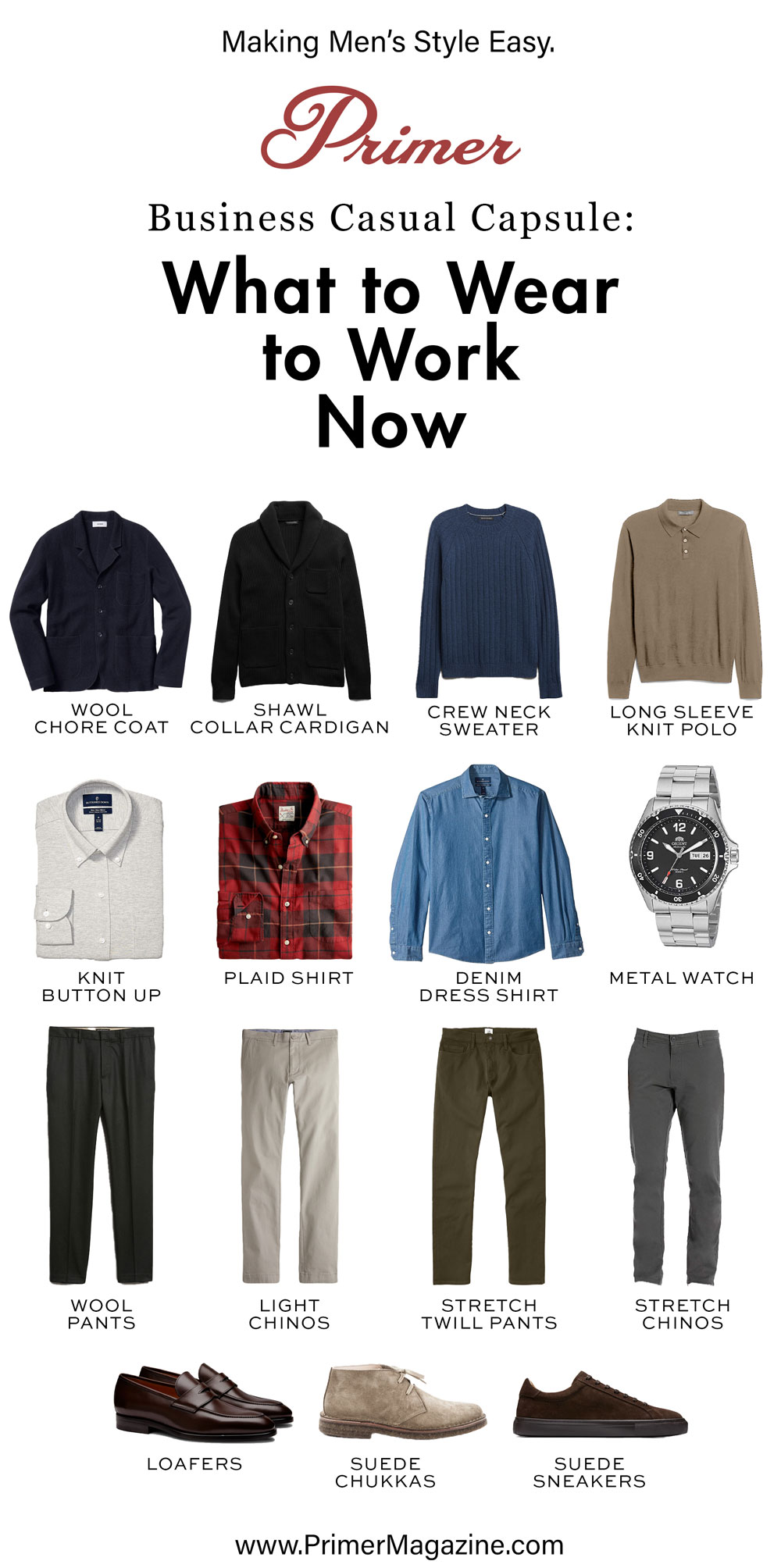
Credit: www.primermagazine.com
How To Mix And Match For Maximum Versatility
With a few pieces, you can make many different outfits. This saves money and space.
Color Coordination
Stick to neutral colors for pants and blazers: navy, gray, beige. Add color with shirts or accessories.
Example: Navy blazer + white shirt + beige chinos = classic look.
Layering
Layering makes outfits look richer and keeps you comfortable.
- Blazer over a sweater for colder days
- Cardigan instead of a blazer for softer style
Patterns And Textures
Mixing different patterns and textures adds interest. For example, a checked shirt with a solid blazer.
Tip: Don’t mix two bold patterns. If your shirt is patterned, keep the pants and blazer simple.
Outfit Ideas
Here are a few combinations to try:
- Light blue shirt + gray trousers + navy blazer + brown shoes
- White shirt + beige chinos + olive sweater + black shoes
- Patterned shirt + navy pants + charcoal blazer + brown belt
Business Casual Vs. Other Dress Codes
Understanding the difference between business casual and other dress codes helps you avoid mistakes.
| Dress Code | Shirts | Pants | Shoes | Blazers | Ties |
|---|---|---|---|---|---|
| Business Formal | Dress shirt | Suit trousers | Leather oxfords | Required | Required |
| Business Casual | Button-up, polo | Chinos, dress pants | Leather loafers, oxfords | Optional | Optional |
| Casual | T-shirt, polo | Jeans, chinos | Sneakers, loafers | Not needed | Not needed |
Insight: Some companies have “business smart” or “smart casual” codes. These are usually similar to business casual, but may allow more color or less formal shoes.
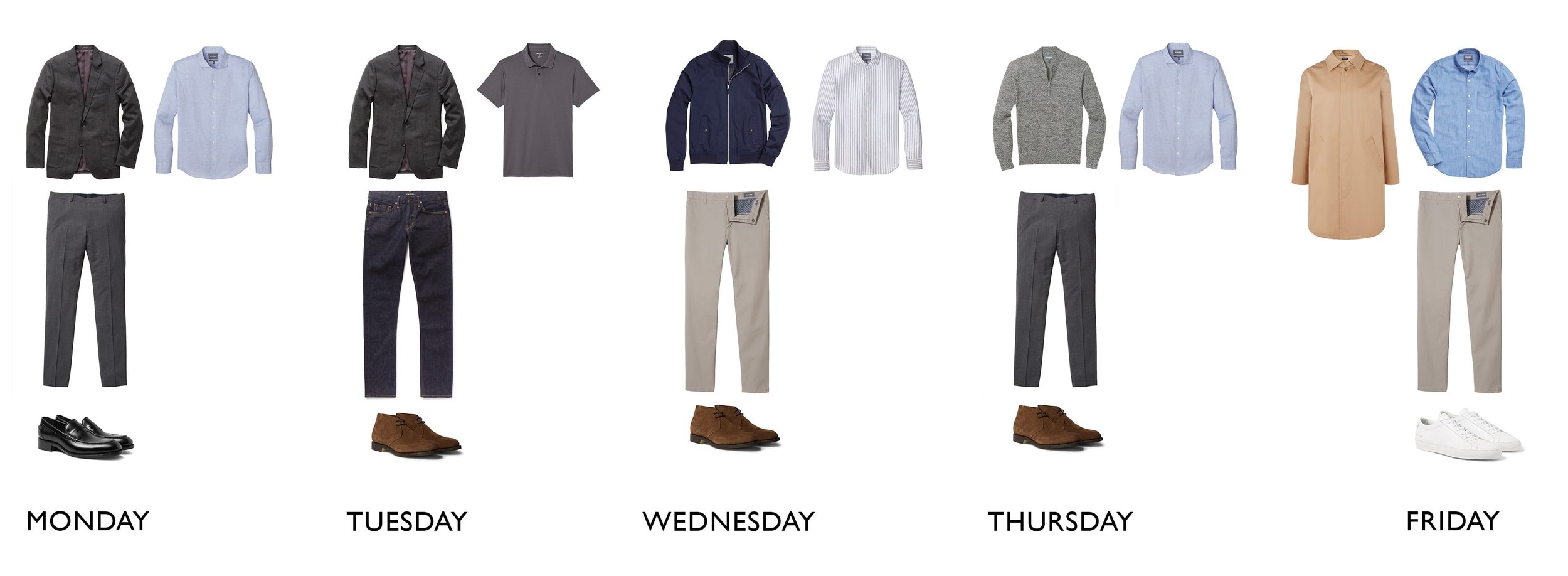
Credit: www.theessentialman.com
Caring For Your Business Casual Wardrobe
Proper care keeps your clothes looking new and saves money over time.
Washing And Ironing
- Wash shirts and pants in cold water to prevent fading.
- Use gentle detergents for wool or delicate fabrics.
- Iron shirts and pants after washing.
Storing
- Hang blazers and shirts to keep their shape.
- Fold sweaters and pants to avoid stretching.
- Use shoe trees to keep leather shoes in shape.
Repairing
Small repairs like replacing buttons or fixing hems are easy and cheap. Learn basic sewing, or take clothes to a tailor.
Cleaning Tips
- Clean leather shoes with a soft brush and polish every month.
- Air out wool blazers after wearing.
- Remove stains quickly to avoid permanent marks.
Tip: Rotate clothes so you don’t wear out favorites too quickly.
Upgrading Your Wardrobe Over Time
As you gain confidence, start adding higher-quality items.
Investing In Quality
- Upgrade shirts to higher-end brands with better fabrics.
- Buy a wool blazer for a sharper look.
- Try handmade leather shoes.
Adding Personal Style
- Experiment with different colors or patterns in shirts.
- Add unique accessories like tie clips or lapel pins.
Non-obvious insight: As you upgrade, your old pieces can become “casual Friday” wear or emergency backups.
Staying Timeless
Classic styles never go out of fashion. Avoid anything too trendy or flashy for your main pieces.
Practical Examples: Business Casual Outfits
Seeing real combinations helps you visualize your wardrobe.
Example 1: Classic Look
- Navy blazer
- White button-up shirt
- Gray dress pants
- Brown leather shoes
- Leather belt
Example 2: Relaxed Day
- Light blue shirt
- Beige chinos
- Navy sweater
- Black loafers
Example 3: Warm Weather
- Patterned short-sleeve shirt
- Olive chinos
- Brown suede loafers
Example 4: Cooler Days
- White shirt
- Charcoal cardigan
- Navy trousers
- Brown boots
Example 5: Friday Casual
- Polo shirt
- Dark gray chinos
- Simple watch
- Brown belt
Try these combinations and adjust for your own style. Photograph your outfits to remember what works.
How Business Casual Affects Confidence And Performance
Wearing good business casual clothes can improve how you feel at work. According to a study by the Harvard Business Review, employees who dress well tend to feel more productive and confident.
Fact: Dressing business casual increases perceived trustworthiness and approachability in the workplace.
Example: Many managers report that their teams perform better when everyone feels comfortable and confident in their clothing.
Frequently Asked Questions
What Is The Difference Between Business Casual And Smart Casual?
Business casual is more formal than smart casual. Business casual usually includes button-up shirts, chinos, and blazers. Smart casual can include jeans, fashionable sneakers, and more relaxed shirts. Always check your company’s dress code to be safe.
Can I Wear Jeans In A Business Casual Office?
It depends on your company. Some offices allow dark, well-fitted jeans as part of business casual. Avoid ripped or baggy jeans. If unsure, stick to chinos or dress pants.
How Many Shirts And Pants Do I Need For A Basic Business Casual Wardrobe?
Start with 4-6 shirts and 3-4 pairs of pants. This lets you mix and match without repeating outfits too often. Add more as needed.
Should I Always Wear A Blazer In Business Casual?
Blazers are optional in most business casual settings. Wear one for meetings, presentations, or when you want to look more polished. On regular days, a sweater or cardigan is fine.
How Can I Save Money When Building My Business Casual Wardrobe?
Shop during sales, use outlet stores, and consider second-hand shops for quality pieces. Buy core items first, then add extras over time. Focus on quality over quantity for the best value.
Building a business casual wardrobe is a smart investment in your career and confidence. By starting with core pieces, focusing on fit and quality, and avoiding common mistakes, you’ll create a stylish, practical wardrobe that works for any office. Remember: less is often more. Mix and match, upgrade over time, and care for your clothes well. With these tips, you’ll always look your best at work.
For more style and wardrobe guidance, visit GQ Style.
