

How Does Business Casual Look Like: Essential Style Guide
How Does Business Casual Look Like
What should you wear to work to look professional, but not too formal? This question confuses many people, especially if you are new to office life or starting a new job. The phrase business casual shows up in job offers, company dress codes, and event invitations. But what does business casual really mean? And how do you make sure your look is just right, not too dressy or too relaxed?
Let’s break down business casual and see what it looks like in real life. This guide will help you pick the right clothes, avoid common mistakes, and feel confident at work—no matter your job or industry.
Understanding Business Casual
Business casual is a dress code found in many offices and professional settings. It is less strict than traditional business wear (like a suit and tie), but it is not as relaxed as wearing jeans and sneakers. The goal is to look neat, polished, and ready for work, while feeling comfortable.
Key Elements Of Business Casual
- Professional, but not formal: You don’t need a suit or tie, but you should look put together.
- Comfortable fabrics: Cotton, wool blends, and soft materials are common.
- Neutral colors: Black, navy, gray, beige, and white are safe choices, but you can add a pop of color.
- Clean and well-fitted: Clothes should not be too tight or too loose, and everything should be clean and wrinkle-free.
Business casual is about striking a balance. You want your outfit to reflect respect for your workplace, but not feel stiff or uncomfortable. For example, a simple button-down shirt and tailored pants can look sharp without being too formal.
Why Business Casual Matters
The way you dress at work affects how others see you. It can help you look more confident, trustworthy, and ready for new responsibilities. Many companies use business casual to create a friendly, relaxed atmosphere, but still keep things professional.
When you dress business casual, you show that you care about your appearance and your job. This can influence how your colleagues, supervisors, and clients interact with you. It often leads to positive first impressions and can make you feel more comfortable in meetings, presentations, or even casual conversations.
If you are unsure, remember that dressing slightly more professional than your peers is usually safer than being too casual.
Typical Business Casual Outfits For Men
Men often find business casual tricky because there are so many choices. Here are some safe and stylish options for most workplaces.
Tops
- Button-down shirts: Long-sleeved or short-sleeved, in solid colors or subtle patterns.
- Polo shirts: A good option for hot weather or casual Fridays.
- Sweaters: V-neck or crew neck sweaters can go over a shirt for extra warmth.
You can also try layering a sweater over a shirt for a smarter look. Avoid shirts with bold prints or bright colors unless your office is creative and encourages personal style.
Bottoms
- Chinos or dress pants: Khaki, navy, or gray are classic choices.
- No jeans: Unless your company says it’s okay, avoid denim.
Chinos are a popular choice because they are comfortable and look neat. Dress pants give a more formal touch, especially in conservative workplaces.
Shoes
- Loafers, brogues, or dress shoes: Leather or suede in brown or black.
- Avoid sneakers or sandals: These are usually too casual.
If you want variety, try monk straps or oxfords. Keep shoes clean and polished. Socks should be neutral and match your pants for a seamless look.
Extras
- Belts: Should match your shoes.
- Blazers (optional): A sport coat or blazer adds polish, but is not required everywhere.
You can add a blazer for meetings or presentations, or remove it for day-to-day tasks. Watches or simple bracelets can also be suitable if they are not flashy.
Example Outfit
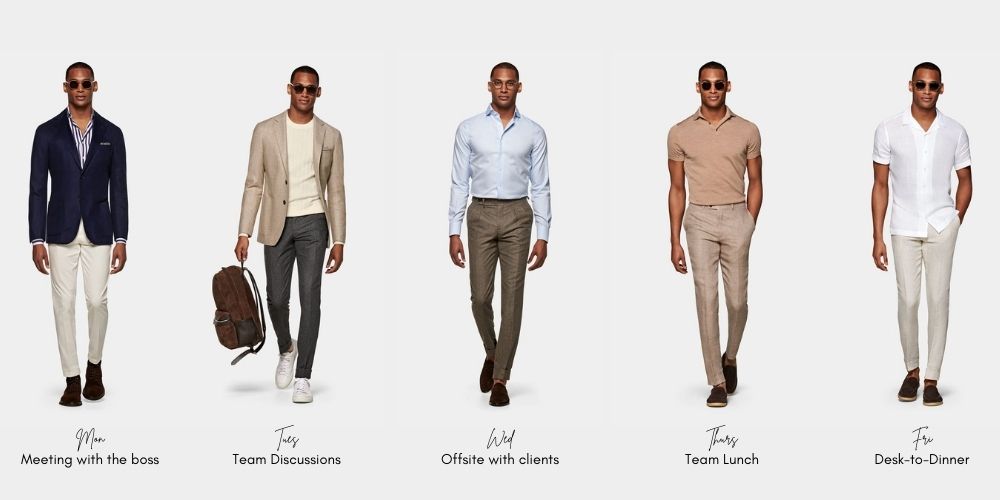
A simple business casual look for men could be a light blue button-down shirt, navy chinos, brown leather shoes, and a matching belt. Add a gray sweater or blazer if needed.
For a different example, try a white button-down shirt tucked into charcoal dress pants, paired with black loafers and a navy blazer. This outfit fits most offices and looks sharp without being too formal.

Credit: www.hockerty.com
Typical Business Casual Outfits For Women
Business casual for women gives more room for personal style. It’s important to balance comfort with professionalism.
Tops
- Blouses: Solid colors, prints, or subtle patterns.
- Knit tops or sweaters: Fitted and not too casual.
- Button-down shirts: A classic choice.
Layering is useful for changing weather or different office temperatures. A cardigan or blazer can turn a simple blouse into a more polished look.
Bottoms
- Dress pants or slacks: Black, navy, gray, or tan.
- Knee-length skirts: Pencil or A-line, with tights if needed.
Choose skirts that are comfortable to sit in and move around. Avoid skirts that are too short or too tight.
Dresses
- Sheath or shift dresses: Knee-length or just above, with sleeves or worn under a blazer.
Dresses should be comfortable and not too revealing. If your office is more formal, add a blazer or a scarf.
Shoes
- Flats, loafers, or low heels: Closed-toe is safest.
- Avoid flip-flops or athletic shoes: These are too casual.
Heels should be low enough for walking around the office. If you prefer comfort, stick with flats or loafers.
Accessories
- Simple jewelry: Small earrings, a watch, or a necklace.
- Tote bags or structured purses: Look more polished than backpacks.
Scarves can add style and warmth, but keep patterns subtle. Avoid large, noisy jewelry that distracts from your overall look.
Example Outfit
A typical look could be a navy blouse, gray dress pants, black flats, and a simple necklace. If it’s chilly, add a cardigan or a blazer.
Another example: Try a knee-length black sheath dress with a cream cardigan, beige flats, and a small silver bracelet. This outfit is comfortable and professional for most offices.
What Not To Wear For Business Casual
It’s just as important to know what to avoid. Here are items that usually don’t fit business casual:
- T-shirts and tank tops
- Ripped or faded jeans
- Shorts
- Mini-skirts
- Flip-flops or sandals
- Clothes with logos or slogans
- Athletic wear
Even if your office is relaxed, these items often look unprofessional.
Clothes with visible branding or slogans can distract or send the wrong message. Athletic wear, like sweatpants or running shoes, is for the gym, not the office. Avoid garments that are revealing or too tight—these can make colleagues uncomfortable.

Credit: www.merricksart.com
Business Casual In Different Industries
Not all business casual looks the same. The right outfit can change depending on where you work.
Tech And Creative Fields
These workplaces are often more relaxed. You might see jeans, untucked shirts, or sneakers. Still, looking tidy is important.
Some tech companies allow hoodies and graphic tees, but keep them clean and simple. In creative fields, you can show personality with colors or patterns, but avoid extremes.
Finance, Law, And Consulting
These fields tend to be more conservative. Business casual here is close to traditional business wear. Stick to dress pants, button-down shirts, blouses, and closed-toe shoes.
Even on casual days, dark colors and classic styles are the norm. Avoid anything too trendy or bright.
Education And Nonprofits
There is often more freedom, but you should still avoid anything too casual or revealing.
Comfort matters, but respect for students or clients is important. Choose outfits that are practical and modest.
Table: Business Casual Across Industries
| Industry | Typical Business Casual | Notes |
|---|---|---|
| Tech | Polo shirts, chinos, casual shoes | Jeans sometimes allowed |
| Finance | Button-down shirts, dress pants, blazers | More formal, muted colors |
| Creative | Patterned shirts, smart sneakers | Personal style encouraged |
| Education | Blouses, slacks, flats | Comfort is valued |
Business Casual For Different Climates
What you wear depends on the weather, too. Here’s how to adjust for the season.
Warm Weather
- Short-sleeved shirts or polos
- Light fabrics: Cotton, linen, and blends keep you cool.
- Avoid shorts: Even if it’s hot, stick with pants or skirts.
Try lighter colors to stay cool. If your office allows, roll up sleeves for extra comfort.
Cold Weather
- Layering: Sweaters over shirts, blazers, and scarves.
- Heavier fabrics: Wool blends, thicker cotton.
- Closed-toe shoes: Boots can be business casual if they are neat and simple.
Choose boots that are clean and classic, not rugged or bulky. Scarves and gloves can be added for travel but removed indoors.
Table: Seasonal Business Casual Choices
| Season | Men's Options | Women's Options |
|---|---|---|
| Summer | Polo shirts, lightweight chinos | Short-sleeved blouses, cotton skirts |
| Winter | Sweaters, wool slacks, blazers | Knit dresses, tights, cardigans |
| Spring/Fall | Layered shirts, vests | Light sweaters, ankle pants |
How To Build A Business Casual Wardrobe
You don’t need to buy dozens of new items. With a few smart choices, you can mix and match for weeks.
Essential Pieces For Men
- Button-down shirts: At least three in different colors.
- Chinos or dress pants: Two or three pairs.
- Sweater: Neutral color works best.
- Blazer or sport coat: For meetings or events.
- Leather shoes and belt: Brown or black.
Look for shirts that are easy to wash and resist wrinkles. Neutral pants can be reused with different tops.
Essential Pieces For Women
- Blouses and tops: Four or five, in different styles.
- Dress pants and skirts: Two pairs of pants, one or two skirts.
- Cardigan or blazer: To layer over tops.
- Simple dress: Knee-length or midi.
- Closed-toe shoes: Flats or low heels.
Choose tops that can be layered easily. Midi dresses can work for different seasons with tights or a blazer.
Mixing And Matching
Choose pieces that work well together. For example, a navy blazer can go with gray pants, black pants, or a skirt. This approach saves money and closet space.
If you buy neutral colors, you can change your look with accessories like scarves, ties, or jewelry. This keeps your wardrobe fresh without needing many items.
Table: Example Business Casual Capsule Wardrobe
| Item | Why It Works |
|---|---|
| White button-down shirt | Goes with any pants or skirt, always looks crisp |
| Navy chinos | Neutral, easy to pair with many tops |
| Gray sweater | Good for layering, suits all seasons |
| Black flats | Comfortable, professional for women |
| Brown leather shoes | Classic for men, matches most outfits |
| Simple dress | Easy one-piece option for women |
Business Casual Do’s And Don’ts
To avoid mistakes, keep these important tips in mind.
Do’s
- Keep clothes clean and pressed.
- Choose well-fitted pieces: Not too tight or too baggy.
- Wear neutral colors: Add color with one piece, not the whole outfit.
- Check your company dress code: Every office is a little different.
- Use accessories wisely: A watch or simple jewelry adds polish.
When in doubt, pick classic items and avoid trends. It is safer to look slightly more formal than too relaxed.
Don’ts
- Don’t wear sportswear or gym clothes.
- Don’t use strong perfume or cologne: Some offices are scent-free.
- Don’t show too much skin: Avoid low-cut tops, short skirts, or sleeveless shirts unless clearly allowed.
- Don’t wear loud prints or logos: Keep it simple and professional.
Avoid distracting colors or patterns. Make sure your outfit does not draw attention for the wrong reasons.
Common Mistakes And How To Avoid Them
Many people make small errors with business casual, especially when starting out.
Mistake 1: Confusing Business Casual With Casual
Just because “casual” is in the name, it doesn’t mean you can wear whatever you want. Jeans, T-shirts, and sneakers are rarely business casual.
Some companies allow jeans, but only if they are dark, neat, and paired with a smart top. Always check before wearing them.
Mistake 2: Overdressing
Wearing a full suit or very formal clothes can make you look out of place. If you’re unsure, ask HR or look at what your coworkers wear.
Try to blend in while looking polished. Being too formal can make others uncomfortable or think you are not aware of the culture.
Mistake 3: Neglecting Shoes
Worn-out shoes can ruin an otherwise great look. Always pick clean, polished shoes that match your belt or bag.
Shoes matter more than many people realize. Invest in one good pair if you can.
Mistake 4: Ignoring Grooming
Neat hair, trimmed nails, and light makeup (if any) help complete your professional look.
Good grooming is part of business casual. It shows attention to detail and respect.
Mistake 5: Forgetting Fit
Clothes that are too big or too small never look professional. Tailoring can make a big difference, even for simple items.
If you buy off-the-rack, consider minor adjustments. A well-fitted shirt or pants transforms your appearance.
Business Casual For Remote Work And Hybrid Offices
With more people working from home, you might wonder if business casual still matters. For video calls, it’s important to look professional from the waist up.
Tips For Remote Business Casual
- Wear a smart top: Button-down shirts, blouses, or sweaters look good on camera.
- Skip the jacket: Unless you have an important meeting.
- Keep accessories simple: Avoid noisy jewelry or flashy items that distract on video.
- Comfortable bottoms: You can wear comfortable pants if they won’t be seen.
Even at home, dressing for work can help you feel focused and productive.
Another tip is to check your background and lighting. A tidy background and good lighting can make your business casual look even better on video calls.
How To Read Your Office Culture
Every company is different. Here’s how to find out what’s right for your workplace.
Look Around
Notice what your boss and coworkers wear. If most people wear dark pants and shirts, follow their lead.
Observe not just what people wear, but how they accessorize or layer their clothing. This can tell you if your office is more formal or relaxed.
Ask Hr Or Your Manager
If you’re not sure, a simple question can save you from feeling out of place.
Don’t be afraid to ask for examples or clarifications. HR often has guidelines or can point to what most employees wear.
Start Slightly More Formal
On your first day, dress a little more formal than you think you need. You can always adjust later.
It is easier to remove a blazer or tie than to feel underdressed. First impressions matter, especially in new roles.
Non-obvious Insights For Business Casual Success
Some points about business casual are rarely mentioned, but can make a real difference.
The Power Of Good Fit
Even basic, affordable clothes look expensive when they fit well. A simple trip to a tailor or knowing your correct size can upgrade your whole look.
If you are unsure about fit, take photos and ask a friend for honest feedback.
The Importance Of Subtle Details
Polished shoes, a clean watch, or a pressed collar can be the difference between looking “okay” and truly professional.
Small details, like the right socks or a neat belt, signal care and confidence.
The Role Of Posture And Confidence
How you carry yourself matters as much as your clothes. Standing tall and smiling can boost your appearance and make your outfit look even better.
Confidence can help you feel comfortable in any outfit. Practice good posture and positive body language.
Adapting To Change
If your company changes the dress code, be ready to adjust. Business casual is flexible, but always pay attention to new rules.
Pay attention to memos or emails about dress code updates. Adapt quickly to show you are attentive.
Dress For Your Next Role
If you want a promotion, start dressing like people in the next level up. This shows you are serious and ready for more responsibility.
Look at managers or team leaders for inspiration. Dressing well can open doors to new opportunities.
Credit: ardenteal.com
Business Casual For Different Body Types
Not every style suits every body. Here’s how to pick what flatters you.
For Men
- Tall and slim: Layer with sweaters or jackets to add shape.
- Shorter men: Avoid long shirts or jackets. Choose fitted pants.
- Larger men: Dark colors and simple patterns are slimming. Pick structured clothing.
If you are athletic, try slim-fit shirts. If you are broad, look for styles that highlight your shoulders.
For Women
- Petite: High-waisted pants or skirts make legs look longer.
- Tall: Midi skirts and dresses look balanced.
- Curvy: Wrap dresses and V-neck tops are flattering.
If you have a straight figure, add shape with belts or peplum tops. If you want to highlight features, use color or accessories.
Fit and confidence are more important than following every trend.
Sustainable And Ethical Business Casual Choices
Modern shoppers care about where their clothes come from. Here’s how to make better choices.
- Choose quality over quantity: Well-made basics last longer.
- Shop secondhand: Thrift stores can offer great business casual pieces.
- Look for ethical brands: Many companies now use eco-friendly materials and fair labor.
- Wash clothes carefully: Gentle washing and air-drying make clothes last.
If you buy secondhand, look for classic styles that never go out of fashion. Quality fabrics like wool or cotton tend to last longer.
For more guidance on sustainable clothing, check the Good On You directory.
Frequently Asked Questions
What Is The Difference Between Business Casual And Smart Casual?
Business casual is more polished and professional. It’s common in offices and meetings. Smart casual is a step down—dressy jeans, clean sneakers, or untucked shirts may be allowed, but not always. When in doubt, business casual is the safer choice for work.
Smart casual may be allowed at after-work events or informal gatherings, but stick to business casual for regular office days.
Can I Wear Jeans For Business Casual?
Usually, jeans are not business casual. Some creative or tech workplaces allow dark, neat jeans with a blazer or smart top. Always check your company’s rules before wearing jeans to work.
If jeans are allowed, avoid ripped, faded, or overly tight styles.
Are Sneakers Ever Okay For Business Casual?
In most traditional offices, sneakers are too casual. However, some modern companies do allow clean, stylish sneakers, especially for creative or tech roles. Choose leather or simple designs, and avoid athletic shoes.
Sneakers should be neutral, free of logos, and look new. Never wear running shoes or brightly colored styles.
How Do I Dress Business Casual For An Interview?
Aim for the more formal side of business casual. For men, wear a button-down shirt, dress pants, and closed-toe shoes. For women, a blouse with slacks or a dress is safe. It’s better to look slightly overdressed than too casual for an interview.
Keep accessories simple and avoid strong scents. First impressions matter most during interviews.
What Colors Are Best For Business Casual Clothes?
Neutral colors like black, navy, gray, beige, and white are always safe. You can add color with a shirt or accessory, but avoid loud patterns or neon shades. Soft blues, greens, and pastels work well for shirts or blouses.
If you want to show personality, use color in small touches—like a scarf, tie, or jewelry.
Business casual is not a fixed set of rules—it’s about looking professional, feeling comfortable, and fitting in with your company’s culture. With these tips, you can create a wardrobe that works for any office and helps you feel confident every day.
