

Good Business Casual for Women: Chic Outfits for Every Office
Good Business Casual For Women
Finding the right business casual outfit can sometimes feel confusing, especially for women who want to look both professional and comfortable. Workplace dress codes are often unclear, and what’s considered appropriate can change depending on the company, the industry, or even the region.
This guide will help you understand what good business casual means for women, how to build a wardrobe that works for you, and how to dress with confidence every day.
Business casual is not just about following rules—it’s about expressing your personality while still respecting your work environment. Dressing well can boost your confidence, help you make a great impression, and even improve your productivity. In this article, you’ll learn the essentials of business casual, see examples of what works, discover practical tips, and avoid common mistakes.
Whether you’re just starting your career or updating your wardrobe, you’ll find advice here that’s easy to understand and simple to use.
What Is Business Casual For Women?
Business casual is a dress code that blends formal business wear with more relaxed, comfortable clothing. It’s less strict than traditional business attire, but more polished than everyday casual clothes. The goal is to look neat, professional, and approachable.
Key Features Of Business Casual
- Neat and clean appearance: Clothing should be wrinkle-free and well-maintained.
- Professional but relaxed: You don’t need a suit, but avoid clothes that are too casual.
- Comfortable fabrics: Choose materials that let you move and work easily.
- Simple accessories: Jewelry and extras should be subtle, not distracting.
Business casual can vary by company, so it’s always a good idea to observe what others wear or ask HR for guidelines. In general, the safest choices are tailored pants, blouses, skirts, dresses, cardigans, and closed-toe shoes.
Essential Pieces For A Women’s Business Casual Wardrobe
Building a business casual wardrobe does not mean you need a closet full of clothes. Focus on a few high-quality basics that you can mix and match. Here are the core pieces every woman should consider:
1. Tailored Pants
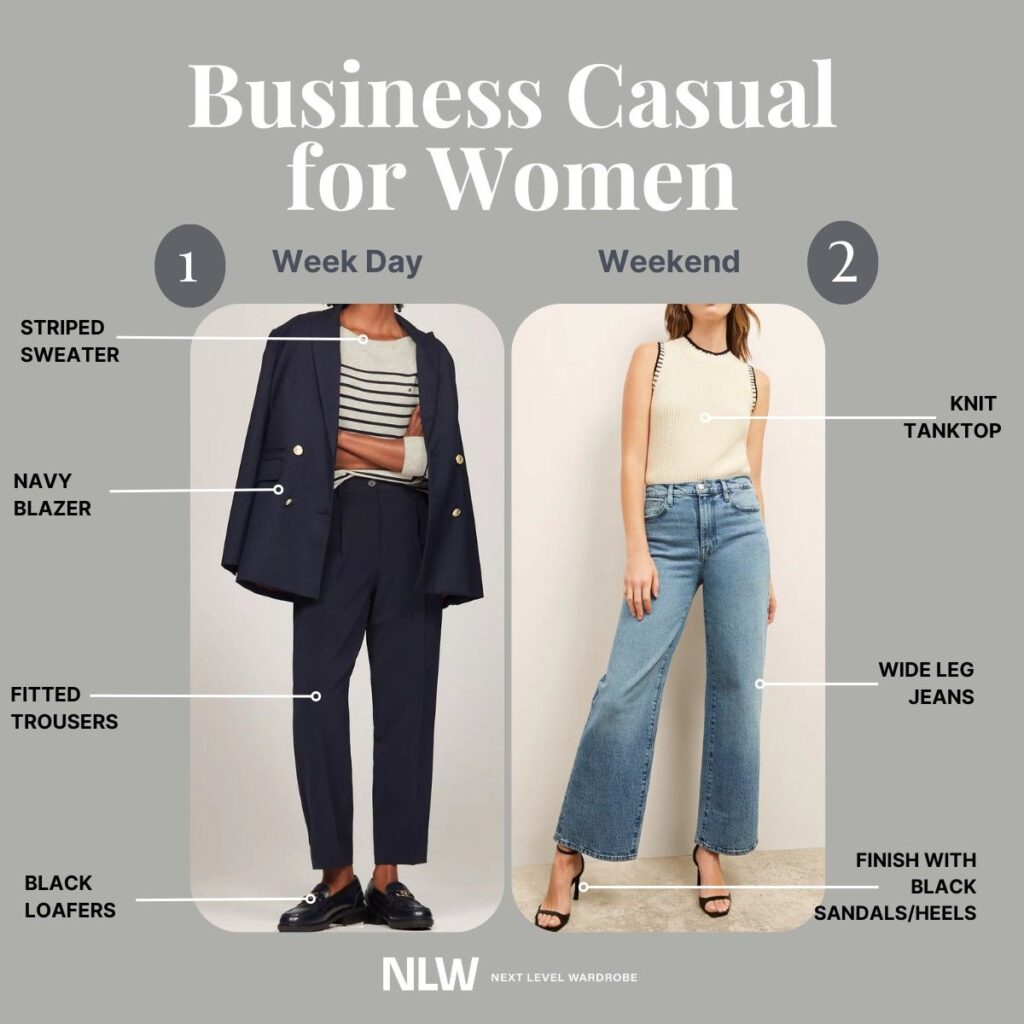
Straight-leg, ankle-length, and cigarette pants are all good options. Look for neutral colors like black, navy, gray, or beige, which are easy to pair with different tops. Avoid jeans unless your company specifically allows them.
2. Blouses And Tops
Blouses made of cotton, silk, or polyester blends work well. Choose tops with simple patterns or solid colors. Avoid tops with graphics, slogans, or too much sparkle. Button-down shirts, knit tops, and lightweight sweaters are also great choices.
3. Skirts
Pencil skirts and A-line skirts that hit at or just above the knee are ideal. Make sure the fit is comfortable when you sit and walk. Patterned skirts can add personality, but stick to classic prints like stripes, checks, or small florals.
4. Dresses
A sheath dress, wrap dress, or tailored shift dress makes getting dressed easy. Dresses should have a modest neckline and appropriate length. Add a cardigan or blazer for extra polish.
5. Blazers And Cardigans
A fitted blazer instantly makes any outfit look professional. Cardigans are a softer alternative and work well layered over blouses or dresses. Neutral colors are versatile, but a pop of color can show personality.
6. Shoes
Closed-toe flats, low-heeled pumps, loafers, and ankle boots are all business casual. Shoes should be clean and in good condition. Avoid sneakers, flip-flops, or shoes with very high heels.
7. Accessories
Keep jewelry simple: think stud earrings, a classic watch, or a delicate necklace. Belts, scarves, and bags should also look polished but not flashy.
8. Outerwear
For cooler weather, a trench coat or tailored wool coat is best. Avoid sporty jackets or anything too casual.
Example Business Casual Outfits
Here are some combinations that work well for most offices:
- Navy ankle pants + white button-down shirt + gray cardigan + black loafers
- Black pencil skirt + blush pink blouse + navy blazer + nude flats
- Patterned sheath dress + cream cardigan + tan ankle boots
These outfits are comfortable, professional, and easy to adjust for different seasons.

Credit: www.somethinggoodblog.com
Common Business Casual Mistakes (and How To Avoid Them)
Many women make small errors when learning how to dress business casual. Here are some common mistakes and how you can avoid them:
- Wearing jeans or leggings: Unless your office allows them, skip jeans and leggings. They can look too casual for many workplaces.
- Choosing very tight or revealing clothes: Business casual is about comfort and professionalism. Make sure your clothes fit well but aren’t too tight or low-cut.
- Over-accessorizing: Too much jewelry or bold accessories can distract from your overall look.
- Wearing wrinkled or stained clothes: Always check your outfit for wrinkles, stains, or missing buttons before leaving the house.
- Ignoring shoe condition: Scuffed or worn-out shoes can ruin an otherwise good outfit. Keep your shoes clean and polished.
- Not considering company culture: What works in a tech startup may not work in a law office. Observe others and adjust your style as needed.
A non-obvious tip: Pay attention to how your clothes move when you sit, stand, or reach. Test your outfit at home to make sure you stay comfortable and covered in all situations.
Business Casual By Industry
Business casual looks a bit different in each field. Here’s a comparison of what’s common in various industries:
| Industry | Typical Business Casual | What to Avoid |
|---|---|---|
| Corporate (Finance, Law) | Blazers, tailored pants, pencil skirts, closed-toe shoes | Jeans, sneakers, loud prints |
| Creative (Marketing, Design) | Patterned dresses, colored blouses, statement accessories | Ripped clothing, flip-flops |
| Tech | Smart jeans (if allowed), casual blazers, knit tops | Shorts, tank tops |
| Education | Comfortable skirts, sweaters, flat shoes | Graphic T-shirts, athletic wear |
| Healthcare Admin | Conservative dresses, cardigans, modest jewelry | Sandals, sheer fabrics |
When starting a new job, it’s wise to dress slightly more formal for the first few weeks until you understand the company’s culture.
Building A Business Casual Wardrobe On A Budget
You don’t have to spend a lot to look professional. Here are some smart ways to build your wardrobe without breaking the bank:
1. Start With Neutrals
Buy key pieces in colors like black, navy, gray, or beige. These colors mix well together, so you can create many outfits with fewer items.
2. Invest In Versatile Basics
Focus on buying a few well-fitting pants, skirts, and blouses before adding trendy or unique pieces. Quality basics last longer and look better.
3. Shop Sales And Outlets
Look for discounts at department stores, outlets, or online. Many quality brands offer big savings during sales.
4. Mix High And Low
Pair a more expensive blazer with a budget-friendly blouse. No one will know the difference, and you’ll save money.
5. Use Accessories
Scarves, belts, and jewelry can change the look of an outfit without costing much.
Example: Cost Comparison
Here’s how much you might spend on a basic business casual outfit from different sources:
| Item | Department Store | Outlet Store | Online Retailer |
|---|---|---|---|
| Pants | $50 | $30 | $35 |
| Blouse | $40 | $25 | $28 |
| Cardigan | $45 | $27 | $30 |
| Shoes | $60 | $40 | $45 |
Buying a few pieces from different sources helps you stay within your budget while still looking good.
Adapting Business Casual For Different Seasons
Your business casual wardrobe should work year-round. Here’s how to adjust your outfits as the weather changes:
Spring And Summer
- Choose lightweight fabrics like cotton, linen, or blends.
- Wear short-sleeve blouses, knee-length skirts, and light cardigans.
- Opt for lighter colors, which feel cooler and look fresh.
- Closed-toe flats or low-heeled sandals (if allowed) keep your feet comfortable.
Fall And Winter
- Add layers: Sweaters, blazers, and tights.
- Choose warmer fabrics like wool, tweed, or thick jersey.
- Wear darker colors such as burgundy, navy, or forest green.
- Ankle boots or closed-toe pumps keep your feet warm and professional.
Quick Seasonal Switches
A non-obvious trick: Keep a neutral cardigan or blazer at work. You can throw it over a lighter top if the office is cold or if you need to look more formal for a meeting.
Business Casual For Different Body Types
Every woman’s body is unique. The key is to find clothes that flatter your shape and make you feel comfortable. Here are some suggestions for different body types:
Pear Shape
- Choose A-line skirts and pants with a straight cut.
- Highlight your waist with belts or fitted tops.
- Wear lighter colors on top and darker colors on the bottom.
Apple Shape
- Look for tops that flow over your midsection.
- Choose pants with a flat front and avoid tight waistbands.
- Add structure with blazers or jackets.
Hourglass Shape
- Pick fitted dresses and tops that show your waist.
- Try high-waisted skirts and pants.
- Wrap dresses are especially flattering.
Athletic Shape
- Add curves with peplum tops or flared skirts.
- Layer with cardigans or jackets for more shape.
- Use accessories to draw attention to your neckline or waist.
The most important thing is to wear clothes that fit well. Tailoring can turn an ordinary piece into a favorite.
Business Casual For Remote And Hybrid Work
With more people working from home or in flexible office settings, business casual has evolved. Here’s how to keep your look professional on video calls or when commuting part-time:
- Choose tops with color or pattern to look good on camera.
- Avoid pajamas or workout clothes, even if you’re at home.
- Wear comfortable pants or skirts that fit well, since you may be seen standing up.
- Keep a blazer or cardigan nearby to quickly dress up your look for video meetings.
- Pay attention to grooming—hair and makeup can help you look polished even in a virtual setting.
A non-obvious insight: Soft, wrinkle-resistant fabrics are perfect for hybrid work. They travel well from home to office and always look neat.
Credit: www.streetphotographersfoundation.com
Sustainable And Ethical Business Casual Choices
More women are thinking about the environment and the people who make their clothes. Here’s how you can make better choices for your business casual wardrobe:
1. Buy Less, Choose Well
Invest in quality basics that last longer, instead of many cheap items.
2. Choose Sustainable Fabrics
Look for clothing made from organic cotton, bamboo, or recycled materials. These are better for the planet.
3. Support Ethical Brands
Some brands focus on fair wages, safe working conditions, and eco-friendly practices. Research brands before you buy.
4. Take Care Of Your Clothes
Wash in cold water, air dry when possible, and store items properly. This helps clothes last longer.
For more tips on sustainable fashion, you can visit Good On You, an authority in ethical shopping.
Business Casual Vs. Other Dress Codes
Sometimes it’s hard to know the difference between business casual and other dress codes. Here’s a quick comparison:
| Dress Code | Description | Examples |
|---|---|---|
| Business Formal | Most professional, required for important meetings or special events | Suit, dress shirt, closed-toe pumps |
| Business Casual | Professional, but more relaxed and comfortable | Pants, blouse, cardigan, flats |
| Smart Casual | Mix of business and informal, often for social events at work | Stylish jeans, blazer, dressy top |
| Casual | Everyday wear, not for most offices | T-shirts, jeans, sneakers |
If you’re ever unsure, it’s better to be slightly overdressed than underdressed.

Credit: www.somethinggoodblog.com
Practical Tips For Perfecting Your Business Casual Style
To help you look and feel your best, try these practical tips:
- Plan your outfit the night before to save time in the morning.
- Check the weather and adjust your outfit accordingly.
- Rotate your clothes so you get more wear from each piece and avoid outfit fatigue.
- Keep an emergency kit at work with safety pins, stain remover, and a spare pair of tights.
- Ask for feedback from trusted coworkers if you’re unsure about your outfit.
A non-obvious insight: Photograph your outfits over a few weeks. This helps you see what looks best and makes it easier to plan future outfits.
Frequently Asked Questions
What Colors Are Best For Business Casual Outfits?
Neutral colors like black, navy, gray, and beige are always safe choices. These colors mix well and look professional. You can add color with tops, accessories, or shoes if your workplace allows it. Soft pastels and classic prints are also good options for adding personality without being too bold.
Are Jeans Ever Acceptable For Business Casual?
This depends on your company’s policy. Some offices allow dark-wash, non-distressed jeans as part of business casual, while others do not. If allowed, pair them with a blazer or structured top to keep the look polished. Always avoid ripped, faded, or overly casual jeans.
How Can I Look Professional In Business Casual If I’m On A Tight Budget?
Focus on buying a few versatile basics like pants, blouses, and cardigans in neutral colors. Shop during sales, check outlet stores, or buy gently used items from resale shops. Accessories can help you change your look without spending much.
Is It Okay To Wear Sneakers Or Sandals In A Business Casual Office?
Closed-toe flats, loafers, and low heels are usually best. Some offices allow clean, simple sneakers or dressy sandals, but avoid athletic styles or flip-flops. Always check your company’s rules before wearing casual shoes.
What Should I Avoid In A Business Casual Outfit?
Avoid clothing that is too tight, too short, or too revealing. Skip items with large logos, slogans, or graphics. Make sure everything is clean, wrinkle-free, and fits well. Don’t wear athletic wear, beachwear, or anything that looks too casual for an office.
---
Good business casual style for women is about striking a balance: looking professional, feeling comfortable, and expressing your personality. With a few key pieces, some smart shopping, and the tips in this guide, you can build a wardrobe that works for any job and every season. Take time to understand your company’s culture and choose clothes that make you feel confident. When you dress well, you’re ready to take on any workday challenge.
