

Does Business Casual Include Jeans? The Essential Style Guide
Does Business Casual Include Jeans?
Business casual has become the standard dress code in many offices, but confusion remains about what it really means. One question comes up again and again: Does business casual include jeans? The answer is not as simple as yes or no. In some workplaces, jeans are fine. In others, they’re off-limits. And it often depends on the style of jeans, the industry, and even the day of the week. If you want to look professional and fit in, you need to know the details. This article breaks down everything you need to know about jeans in business casual, how to wear them, and when to avoid them. You’ll get practical advice, real examples, and clear tips to make the right choice every time.
What Is Business Casual?
Business casual is a mix of professional and relaxed clothing. It’s less formal than a suit and tie, but more polished than everyday wear. The goal is to look neat and ready for work, without being too stiff.
Typical business casual clothing includes:
- Dress pants
- Collared shirts (button-down or polo)
- Blouses
- Knee-length skirts
- Dress shoes (loafers, flats, or low heels)
Some offices allow more flexibility, while others stick to traditional styles. The meaning of business casual changes from one company to another, and even from city to city.
Why Is Business Casual Popular?
Business casual became common because it makes people feel comfortable and relaxed at work. Studies show that employees are more productive and happier when they don’t have to wear formal suits every day. It also helps companies attract young talent, who often prefer a less rigid dress code.
Key Differences From Formal Business Wear
Formal business wear usually means a suit, tie, and polished shoes. Business casual drops the tie, and often the jacket. You can wear lighter colors and softer fabrics. Accessories are simple, and you can show a bit of your personality.
But you still need to look tidy, well-groomed, and appropriate for a professional setting.
Are Jeans Business Casual?
The big question: Can you wear jeans as part of business casual? The answer depends on three main things:
- Company culture
- Type of jeans
- Industry standards
Let’s look at each one.
Company Culture
Some companies welcome jeans as part of business casual. Tech firms, creative agencies, and startups often allow them. Traditional companies like law firms and banks usually do not.
It’s important to check your company’s dress code policy. Some businesses have written rules. Others expect you to watch and follow what your coworkers wear.
Type Of Jeans
Not all jeans are equal. Only certain styles fit business casual. Here’s what works and what doesn’t:
Acceptable jeans:
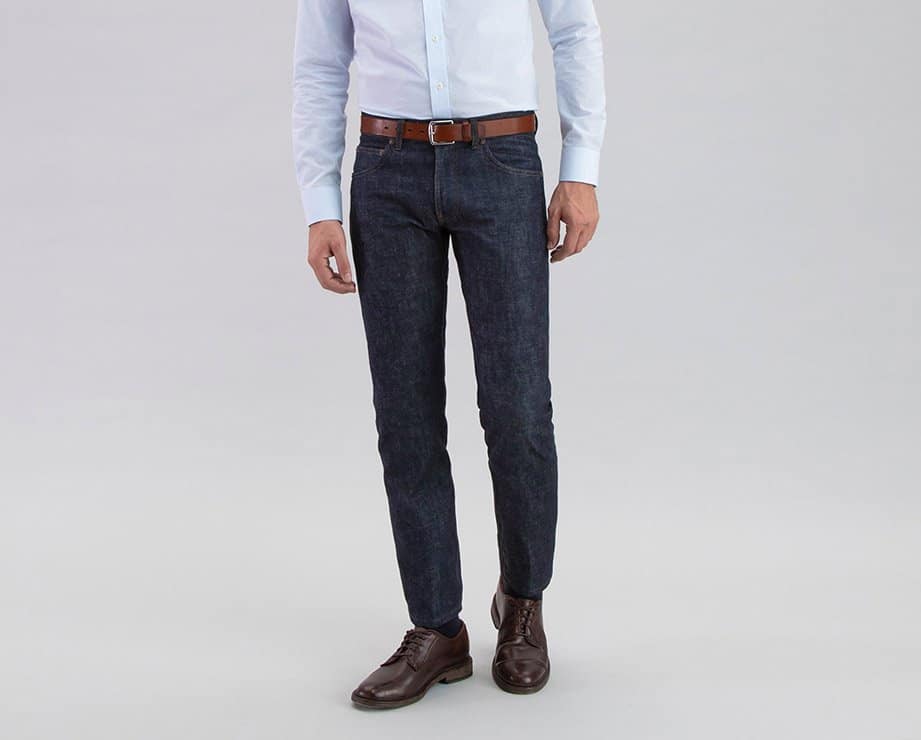
- Dark wash (deep blue or black)
- Straight or slim fit
- No rips, holes, or fading
- No flashy designs or logos
Unacceptable jeans:
- Light wash or distressed
- Baggy or skinny jeans
- Torn, ripped, or frayed edges
- Bold patterns or embroidery
Dark, simple jeans can look polished. Light or flashy jeans do not.
Industry Standards
The industry matters a lot. Creative fields, marketing, and IT usually allow jeans. Finance, law, and government offices rarely do. Even within the same company, jeans may be okay on Fridays but not during client meetings.
A quick way to check: If your boss wears jeans, you probably can too.
Jeans In Business Casual: Real Examples
Let’s see how jeans fit into business casual in different settings.
Tech Companies
Tech firms like Google and Microsoft are famous for relaxed dress codes. Employees often wear jeans, sneakers, and t-shirts. Still, managers and team leaders usually choose dark jeans and a nice shirt.
Case Example: At a large tech company, jeans are allowed every day. But for big presentations or meetings with clients, employees switch to dress pants.
Creative Agencies
Designers, writers, and ad professionals often work in creative offices. Here, personal style is encouraged. Jeans are common, but they must be neat and clean.
Case Example: An advertising agency allows jeans, but asks staff to avoid ripped or faded styles. For client pitches, jeans must be paired with a blazer.
Corporate Offices
In banks, law firms, and insurance companies, dress codes are stricter. Jeans are usually not allowed, except for casual Fridays.
Case Example: At a major bank, employees wear dress pants all week. On Friday, dark jeans are allowed, but only with a collared shirt.
Retail And Hospitality
Retail stores and hotels often use business casual. Jeans may be fine for back-office staff, but not for those who meet customers.
Case Example: Hotel staff in the office wear jeans, but front desk workers stick to dress pants.
How To Wear Jeans For Business Casual
If your workplace allows jeans, you still need to style them correctly. Here are practical tips to make jeans look professional.
Choose The Right Jeans
- Dark colors: Deep blue, charcoal, or black are best.
- Simple style: No rips, holes, or extra details.
- Proper fit: Not too tight or too loose.
- Clean and pressed: No stains, wrinkles, or fading.
Pair With Business Casual Items
- Button-down shirts: Tuck in for a polished look.
- Blazers or cardigans: Adds structure and style.
- Dress shoes: Avoid sneakers or sandals.
- Belts: Simple leather belts work best.
Avoid Common Mistakes
- Don’t wear jeans with loud t-shirts or hoodies.
- Don’t choose jeans with graphic designs, patches, or embroidery.
- Don’t wear jeans that are too tight, saggy, or worn out.
Example Outfits
- Men: Dark jeans, white shirt, navy blazer, brown loafers.
- Women: Black jeans, silk blouse, gray cardigan, black flats.
- Gender-neutral: Dark jeans, pastel button-down, smart sneakers.
These combinations look professional and fit most business casual environments.
Comparing Jeans To Other Business Casual Pants
Jeans are not the only option. Let’s compare jeans to other pants you might wear for business casual.
| Pant Type | Business Casual Rating | Comfort | Formality |
|---|---|---|---|
| Dark Jeans | Medium to High | High | Medium |
| Chinos | High | High | High |
| Dress Pants | Very High | Medium | Very High |
| Khakis | High | High | Medium to High |
| Corduroys | Medium | High | Medium |
Chinos and dress pants are always safe for business casual. Dark jeans are good in flexible workplaces. Khakis and corduroys work well but may look less sharp.
Jeans And Gender Differences
The rules for jeans in business casual can change based on gender. Let’s look at what’s common and what’s not.
Men
Men often wear dark, straight-fit jeans. A tucked-in shirt and belt make the outfit neat. For more formal offices, a blazer or dress shoes are expected.
Women
Women have more options. They can wear dark jeans with blouses, sweaters, or jackets. Skinny jeans are popular, but only if they’re not too tight. Avoid flashy designs.
Gender-neutral
Gender-neutral styles focus on fit and color. Dark, straight jeans paired with simple tops work for anyone. Always aim for a clean, polished look.
When Not To Wear Jeans
Even in relaxed offices, there are times when jeans are not appropriate. Here’s when to skip them:
- Job interviews: Always choose dress pants.
- Client meetings: Unless you know jeans are accepted, wear formal trousers.
- Important presentations: Dress up to show respect.
- Company events: For formal parties or awards, avoid jeans.
- First day at work: Start with traditional business casual, then adjust.
People often make the mistake of thinking jeans are always okay. But at big events, jeans can look careless.
Office Dress Code Policies
Most companies have written or unwritten dress codes. Here’s how to understand and follow them.
Written Policies
These are found in employee handbooks or HR documents. They usually list what is allowed and what is not. Look for details about jeans—some mention “dark jeans only” or “no jeans except Fridays. ”
Unwritten Rules
Some offices don’t have formal guidelines. Instead, employees follow what managers and coworkers wear. Watch how others dress and ask your supervisor if you’re unsure.
Adjusting For Company Culture
If you’re new, start with safe choices (dress pants or chinos). Once you understand the culture, you can add jeans if others do.

Credit: besoyou.com
Jeans In Business Casual Around The World
Business casual means different things in different countries. Here’s how jeans fit in worldwide.
| Country/Region | Jeans Accepted? | Notes |
|---|---|---|
| United States | Often | Common in tech and creative fields |
| United Kingdom | Sometimes | Allowed in startups, rare in finance |
| Germany | Sometimes | Dark jeans accepted, avoid light wash |
| Japan | Rarely | Formal business culture, jeans uncommon |
| Australia | Often | Flexible dress codes in many industries |
| India | Sometimes | Jeans allowed in IT, not in banks |
| Brazil | Often | Casual style common, but dark jeans preferred |
As you can see, jeans are common in some countries, but rare in others. Always check local customs before wearing jeans for business casual abroad.
Data: How Many Offices Allow Jeans?
A survey by the Society for Human Resource Management found that about 44% of US offices allow jeans at least once a week. In creative and tech industries, the number is higher—up to 70%. In law and finance, it drops below 10%.
- Most companies require jeans to be dark and free of rips.
- Casual Fridays are the most popular day for jeans.
This data shows jeans are becoming more common, but still not universal.

Credit: www.cottoncashmerecathair.com
Pros And Cons Of Jeans For Business Casual
Let’s weigh the benefits and drawbacks of jeans for business casual.
Pros
- Comfort: Jeans are easy to wear all day.
- Versatility: You can style jeans many ways.
- Affordable: Good jeans cost less than dress pants.
- Easy care: Jeans are simple to clean and maintain.
Cons
- Less formal: Jeans may look too relaxed for some offices.
- Harder to style: You must choose the right top and shoes.
- Risk of mistakes: Wearing the wrong jeans can hurt your image.
- Not accepted everywhere: Some companies never allow jeans.
A non-obvious insight: Even in offices where jeans are allowed, some managers judge employees by how they wear them. A sloppy pair can make you look careless.
Jeans And Business Casual: Practical Tips
Here are practical tips to help you make smart choices about jeans for business casual.
- Check the dress code: Always review your company policy or ask HR.
- Observe others: Watch how coworkers and managers dress.
- Pick the right jeans: Dark, simple, and well-fitted styles only.
- Pair with smart clothing: Use blazers, shirts, and dress shoes.
- Avoid risky styles: No rips, bright colors, or baggy fits.
- Keep jeans clean: Wash and press them regularly.
- Dress for the occasion: Choose dress pants for interviews and big meetings.
- Update your wardrobe: Replace jeans when they start to fade or fray.
Another insight: Some people buy a “work-only” pair of jeans. They use them just for the office, not for weekends or outdoor activities. This keeps them looking sharp and professional.
Alternatives To Jeans For Business Casual
If jeans aren’t allowed, or you want to try something different, there are other good options.
- Chinos: Soft, comfortable, and look professional.
- Khakis: Classic style, pairs well with shirts and sweaters.
- Dress pants: Always safe, but less relaxed.
- Corduroys: Warm and stylish, but can be less formal.
These options fit business casual everywhere, and you can mix them with shirts, blouses, and blazers.
Jeans For Business Casual: What Managers Think
Managers often decide what is allowed in business casual. Here’s what they look for:
- Professional appearance: Jeans must be neat and tidy.
- Consistency: Everyone should follow the same rules.
- Appropriate for clients: Jeans are okay if they don’t look too casual.
- Easy enforcement: Clear rules about jeans help avoid confusion.
Managers sometimes worry that jeans will lower standards. But if employees wear good jeans with smart tops and shoes, most managers are happy.
How To Transition To Jeans In Business Casual
If your company is changing its dress code, or you want to introduce jeans, here’s how to do it smoothly.
- Start with dark jeans: Avoid flashy or risky styles.
- Pair with formal tops: Use button-down shirts or blouses.
- Add a blazer: This raises the outfit’s formality.
- Wear dress shoes: Skip sneakers or sandals.
- Ask for feedback: Check with your manager or HR.
This process helps you avoid mistakes and shows respect for company culture.
Jeans And Business Casual For Remote Work
Remote work has changed dress codes. Many employees wear jeans at home, but video calls require a more polished look.
Tips For Remote Workers
- Wear dark jeans with a smart top for video meetings.
- Avoid casual t-shirts or hoodies on calls.
- Keep jeans clean and tidy, even if you’re at home.
Some remote workers say jeans help them feel “ready for work. ” It’s a simple way to separate work and leisure.
Jeans In Business Casual: How To Buy The Right Pair
Not all jeans are good for business casual. Here’s how to choose the best ones.
| Feature | Recommended | Avoid |
|---|---|---|
| Color | Dark blue, black, charcoal | Light wash, bright colors |
| Fit | Straight or slim | Skinny or baggy |
| Style | Classic, minimal | Ripped, distressed |
| Details | Plain, no logos | Patterns, embroidery |
| Material | Sturdy, soft denim | Thin, stretch denim |
Visit stores that offer business casual collections. Try jeans with a shirt and blazer to see how they look together.
External Guidance
For official advice on business casual dress codes, you can review the guidance from the Society for Human Resource Management. This resource explains how to set and follow dress codes, including rules about jeans.
Credit: toddshelton.com
Frequently Asked Questions
Can I Wear Jeans For Business Casual Every Day?
It depends on your company’s dress code. Some allow jeans daily, others only on Fridays. Always check with HR or your manager.
What Color Jeans Are Best For Business Casual?
Dark blue, black, or charcoal jeans are best. Avoid light wash or bright colors, which look less professional.
Are Ripped Jeans Ever Okay For Business Casual?
No. Ripped, torn, or distressed jeans are not business casual. Only clean, neat, and plain jeans are acceptable.
Should I Wear A Blazer With Jeans For Business Casual?
A blazer with jeans looks polished and professional. It’s a good choice for important meetings or when you want to look more formal.
How Can I Tell If Jeans Are Allowed At My Office?
Check the dress code policy, observe what others wear, and ask your supervisor if you’re unsure. If managers wear jeans, it’s usually safe for you too.
Business casual is always changing, but jeans are becoming more accepted. The key is to wear them smartly, follow your company’s culture, and make sure you look professional. With careful choices, jeans can be a comfortable and stylish part of your business casual wardrobe.
