

Can You Wear Business Casual With Jeans? Style Tips & Ideas
Business casual is a dress code that many offices and workplaces use today. It is less formal than traditional business wear, but it still looks professional. Many people wonder if jeans fit into this style. Can you wear jeans and still look business casual? The answer is not simple. Jeans can work in business casual outfits, but there are rules and details you must know. This article will help you understand how to wear business casual with jeans, which jeans to pick, what mistakes to avoid, and how to match them with other clothes for a polished look.
What Is Business Casual?
Business casual is a mix of professional and relaxed clothing. It is not as formal as a suit and tie, but it is more polished than casual wear. Common business casual items are dress shirts, blouses, slacks, skirts, and sweaters.
Shoes are usually loafers, flats, or low heels. Many workplaces choose business casual because it feels comfortable but still looks neat.
The main goal of business casual is to show respect for the workplace without being too stiff or uncomfortable. You should look tidy, clean, and ready for business, but not overdressed. For example, a dress shirt with khaki pants and simple shoes is business casual, while a t-shirt and shorts are not.
There is no single rule for business casual because each company can set its own standards. In some places, business casual may include jeans, but in others, jeans may be too informal. Before wearing jeans, always check your company's dress code.
Some companies may even change their dress code depending on the department. For example, a creative team might be allowed more relaxed clothing, while the finance team needs to dress more formally. Always observe the norms in your workplace.
Jeans In Business Casual: Yes Or No?
The question is simple, but the answer depends on many factors. Some workplaces accept jeans as part of business casual. Others do not. Even if jeans are allowed, not all jeans are suitable. Dark wash jeans, for example, look more professional than light or distressed jeans.
Why Jeans Are Popular
Jeans are comfortable, durable, and easy to wear. Many people prefer jeans because they fit well and are easy to move in. As more offices become relaxed, jeans are showing up in business casual outfits. But, jeans must be worn the right way to look professional.
Jeans also blend well with different tops and shoes, making them versatile. They can be dressed up or down depending on the occasion. For people who commute or move around often, jeans can be more practical than dress pants.
Why Jeans Can Be Problematic
Some people see jeans as too casual. If jeans are worn poorly, they can make you look sloppy or unprofessional. Ripped, faded, or baggy jeans do not fit business casual. Even if your office allows jeans, wearing the wrong pair can send the wrong message.
For example, if you wear jeans with holes to a meeting, you may seem careless. Some managers believe jeans show a relaxed attitude, which can be risky in formal environments. Always balance comfort with professionalism.
Types Of Jeans Suitable For Business Casual
Not all jeans are equal. To look business casual, you must pick the right type.
| Type of Jeans | Business Casual Suitability | Best Colors |
|---|---|---|
| Dark Wash | Highly Suitable | Dark blue, black |
| Black Jeans | Very Suitable | Black |
| Mid Wash | Sometimes Suitable | Medium blue |
| Light Wash | Rarely Suitable | Light blue |
| Distressed/Ripped | Not Suitable | Any |
| Colored Jeans | Depends on workplace | Gray, navy |
Dark wash and black jeans are the best choices. They look neat and hide wear and tear. Avoid jeans with rips, holes, or heavy fading. Also, avoid jeans with fancy decorations or loud colors.
Fit Matters
The fit of your jeans is important. For business casual, choose jeans that are:
- Straight leg or slim fit
- Not too tight or too loose
- Full length (not cropped or frayed)
- No excess fabric or sagging
Skinny jeans can work, but only if they are not too tight. Wide-leg jeans are less common but can look good if styled properly.
The right fit helps you look polished and professional. Jeans that are too baggy may look sloppy, while jeans that are too tight can be uncomfortable and distracting. For men, a slim or straight fit is safe. For women, straight, skinny, or bootcut styles can be business casual when paired with the right top.
If you have doubts, go for jeans that match the style of dress pants. Avoid trendy cuts like extreme flares, super skinny, or oversized legs.
How To Style Jeans For Business Casual
Wearing jeans is only part of the story. You must style them with the right clothes and accessories.
Choosing The Right Top
Pairing jeans with a smart shirt or blouse makes your outfit look professional. Here are some good options:
- Button-down shirts (white, light blue, or soft patterns)
- Blouses (silk or cotton)
- Sweaters (solid colors, fitted)
- Polo shirts (for men, plain colors)
- Blazers (adds instant polish)
Avoid t-shirts, hoodies, or tops with loud prints. They make your outfit look too casual.
You can also try layering a simple sweater over a button-down shirt for extra polish. For women, a blouse with a subtle pattern can add interest without being too bold. For men, a crisp white shirt always looks professional.
Layering For A Polished Look
Adding layers can make jeans look more business-like. A blazer or a fitted cardigan brings structure. For women, a tailored jacket or a smart vest is a good choice. For men, a sports coat or a simple blazer works well.
Layering also helps you adapt to changing temperatures in the office. For example, a blazer can be taken off for comfort but added for meetings. It also covers the jeans, making your outfit look more professional.
Shoes For Business Casual With Jeans
Shoes can make or break your outfit. Good choices include:
- Loafers
- Oxfords
- Ballet flats
- Low heels
- Dress boots
Avoid sneakers, flip-flops, or sandals unless your workplace is very casual.
Leather shoes are always a safe bet. For women, closed-toe flats or low block heels work well. For men, brown or black dress shoes pair nicely with dark jeans. Clean shoes show attention to detail.
Accessories
Keep accessories simple. A leather belt, a watch, and a neat bag are enough. Avoid flashy jewelry or oversized bags.
For women, small stud earrings or a thin necklace are good choices. For men, a simple watch or cufflinks can add style without being loud. Remember, accessories should not distract from your outfit.
Examples Of Business Casual Outfits With Jeans
Sometimes, seeing examples helps. Here are some ideas for men and women.
Men
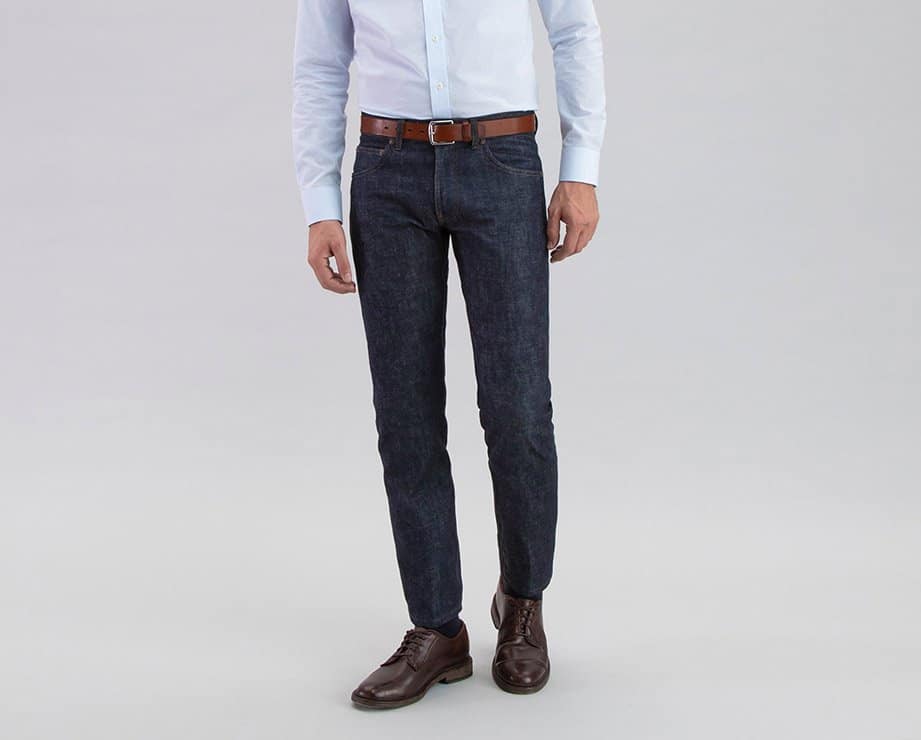
- Dark wash jeans + white button-down shirt + navy blazer + brown loafers
- Black jeans + pale blue dress shirt + gray sweater + black oxfords
- Slim fit jeans + patterned shirt (subtle) + leather belt + dress boots
Each of these examples shows how the right combination can turn jeans into a business casual outfit. The key is to balance the relaxed nature of jeans with polished tops and shoes.
Women
- Black jeans + silk blouse + tailored jacket + low heels
- Dark wash jeans + fitted sweater + simple necklace + ballet flats
- Straight leg jeans + cotton shirt + cardigan + ankle boots
For women, adding a blazer or jacket always makes jeans look more business-like. Accessories like a neat handbag or understated jewelry complete the look.
Each outfit combines neat jeans with clean, professional tops and shoes. The jeans are not the focus; the whole look is balanced.
Comparing Jeans To Other Business Casual Pants
Jeans are just one option. Let’s compare jeans to other popular business casual pants.
| Pant Type | Comfort | Formality | Maintenance | Business Casual Suitability |
|---|---|---|---|---|
| Jeans | High | Medium | Easy | Depends on style |
| Khakis | Medium | Medium-High | Easy | Yes |
| Dress Pants | Medium | High | Dry clean | Yes |
| Chinos | High | Medium | Easy | Yes |
| Leggings | High | Low | Easy | No |
Jeans are comfortable and easy to care for. Dress pants are more formal but need more care. Khakis and chinos are a good middle ground. Leggings are not business casual unless paired with a long top and only in very relaxed offices.
If you want a more formal look, dress pants or chinos are better. If comfort is your priority and your office allows, jeans are a great option.
Workplace Rules: What To Check Before Wearing Jeans
Before wearing jeans to work, check the following:
- Dress code policy: Read your company’s guidelines.
- Day of the week: Some offices allow jeans only on Fridays.
- Role and meetings: If you have a client meeting, avoid jeans.
- Office culture: See what managers and others wear.
If unsure, ask your HR department. It is better to be cautious than risk looking unprofessional.
Some offices have “casual Fridays” where jeans are allowed, but not on other days. Others may allow jeans for all employees, but expect managers to dress more formally. Pay attention to these details.
Common Mistakes When Wearing Jeans For Business Casual
Wearing jeans for business casual can go wrong. Avoid these mistakes:
- Wearing distressed jeans: Rips and holes are never business casual.
- Choosing baggy jeans: Loose jeans look sloppy.
- Wearing faded or stained jeans: Always pick clean, dark jeans.
- Pairing jeans with t-shirts: Looks too casual.
- Ignoring fit: Jeans should fit well, not too tight or loose.
- Not ironing jeans: Wrinkles make you look messy.
- Choosing loud accessories: Keep accessories simple.
Many beginners think any jeans will do. This is not true. Always pick jeans that look neat and polished.
Another common mistake is wearing jeans with sports shoes. Unless your office is very relaxed, stick to dress shoes or boots.
Non-obvious Insights: What Beginners Often Miss
Some points are not obvious to people new to business casual:
- Jeans can shrink or fade after washing: Always check the color and fit after cleaning. Replace jeans if they look tired.
- Pockets can change the look: Large or decorated pockets make jeans look less professional. Pick simple pockets.
- Seams and stitching matter: Jeans with visible, contrasting stitching look more casual. Go for jeans with subtle stitching.
These details may seem small, but they can affect your overall look.
Another insight: the length of your jeans matters. Jeans that are too long and drag on the floor look sloppy. Get your jeans hemmed to the right length for your shoes.
How Culture And Location Affect Jeans In Business Casual
Business casual is not the same everywhere. In big cities, jeans are often accepted in offices. In traditional areas, jeans may not fit business casual. Tech companies and creative firms are more relaxed. Law offices and banks are stricter.
For example, in Silicon Valley, jeans are common. In finance, jeans may be banned. Always match your style to your workplace and location.
Even within the same city, different companies have different rules. Start by observing what managers and leaders wear. If you travel for work, adjust your style based on the local culture.
Credit: toddshelton.com
How To Buy Business Casual Jeans
Buying the right jeans is important. Here is what you should consider:
Fit And Size
Try jeans before buying. Sit, stand, and walk to check comfort. The waist should fit without a belt. The legs should not be too tight. If buying online, check reviews and sizing guides.
Consider buying two pairs of jeans if you find a good fit—one to wear and one as backup. Well-fitting jeans can be hard to find.
Fabric
Pick thick denim with a bit of stretch. Thin jeans wear out fast and lose shape. Stretch denim is more comfortable for long days.
Check the label for fabric details. A mix of cotton and elastane (spandex) is common for comfort.
Color
Choose dark colors. Avoid light blue, heavy fading, or bright colors.
If you want variety, gray jeans can also work in some offices. Always test the color in natural light before buying.
Brand And Price
You do not need expensive jeans. Many good brands offer affordable options. Quality matters more than price.
Read online reviews to see how jeans hold up after several washes. Some brands offer “work jeans” designed for office wear.
Care And Maintenance Of Business Casual Jeans
Keeping your jeans neat is important. Here are some tips:
- Wash jeans inside out to keep color.
- Hang dry instead of using a dryer.
- Iron jeans if they look wrinkled.
- Store jeans folded or hung neatly.
Replace jeans if they look worn, faded, or stretched.
To avoid wrinkles, shake out jeans after washing and hang them right away. If your jeans lose color, try using mild detergent or color-safe wash.
Business Casual Jeans For Different Body Types
Jeans are not “one size fits all.” Here is a quick guide for different body shapes:
| Body Type | Best Jeans Style | Tips |
|---|---|---|
| Petite | Straight leg, slim fit | Avoid wide-leg, cropped styles |
| Curvy | High-waisted, bootcut | Stretch denim for comfort |
| Tall | Full length, mid-rise | Check inseam for proper length |
| Muscular | Straight or relaxed fit | Avoid skinny jeans |
| Average | Any classic fit | Focus on dark color and neat look |
Picking the right style helps you look polished and feel comfortable.
If you are between sizes, choose the larger size and adjust with a belt. Jeans should not pinch or pull when sitting.
Gender Differences In Business Casual Jeans
Men and women may have different options for jeans in business casual. Here are some points to note:
- Women can wear skinny, straight, or bootcut jeans. They can pair jeans with blouses, cardigans, or blazers.
- Men usually wear straight or slim fit jeans. They pair jeans with button-down shirts, sweaters, or jackets.
- Both should avoid distressed, loose, or flashy jeans.
Women may also find jeans with added stretch more comfortable. Men can look for jeans with a classic fit for a professional style.
Business Casual Jeans For Different Seasons
Seasons can change how you wear jeans in business casual.
- Spring/Summer: Lightweight jeans, short-sleeve shirts, flats or loafers.
- Fall/Winter: Thicker denim, sweaters, boots, blazers.
Avoid shorts, capris, or cropped jeans for business casual, even in summer.
During winter, layering with a wool sweater or scarf can add warmth and style. In summer, choose breathable fabrics for shirts.
Real-world Examples And Statistics
According to a survey by Gallup, over 60% of US offices allow business casual dress codes. Of these, about 45% permit jeans on some days. This shows jeans are becoming more accepted, but not everywhere.
A report from SHRM (Society for Human Resource Management) found that jeans are most common in creative and tech industries. In finance and law, jeans are rarely allowed. Dress codes are changing, but always check your company’s rules.
The trend shows that younger companies and startups are more flexible. Traditional firms are slower to change. Always observe and adjust your style to fit your environment.
Credit: ca.indeed.com
When Jeans Are Not Business Casual
Some situations are too formal for jeans:
- Job interviews (unless told otherwise)
- Meetings with clients or executives
- Company events with strict dress codes
- Formal presentations
In these cases, wear dress pants or a suit. Jeans are best for regular office days when the dress code allows.
If you are unsure, always choose more formal pants. It is better to be overdressed than underdressed.
Dressing Up Jeans: Advanced Tips
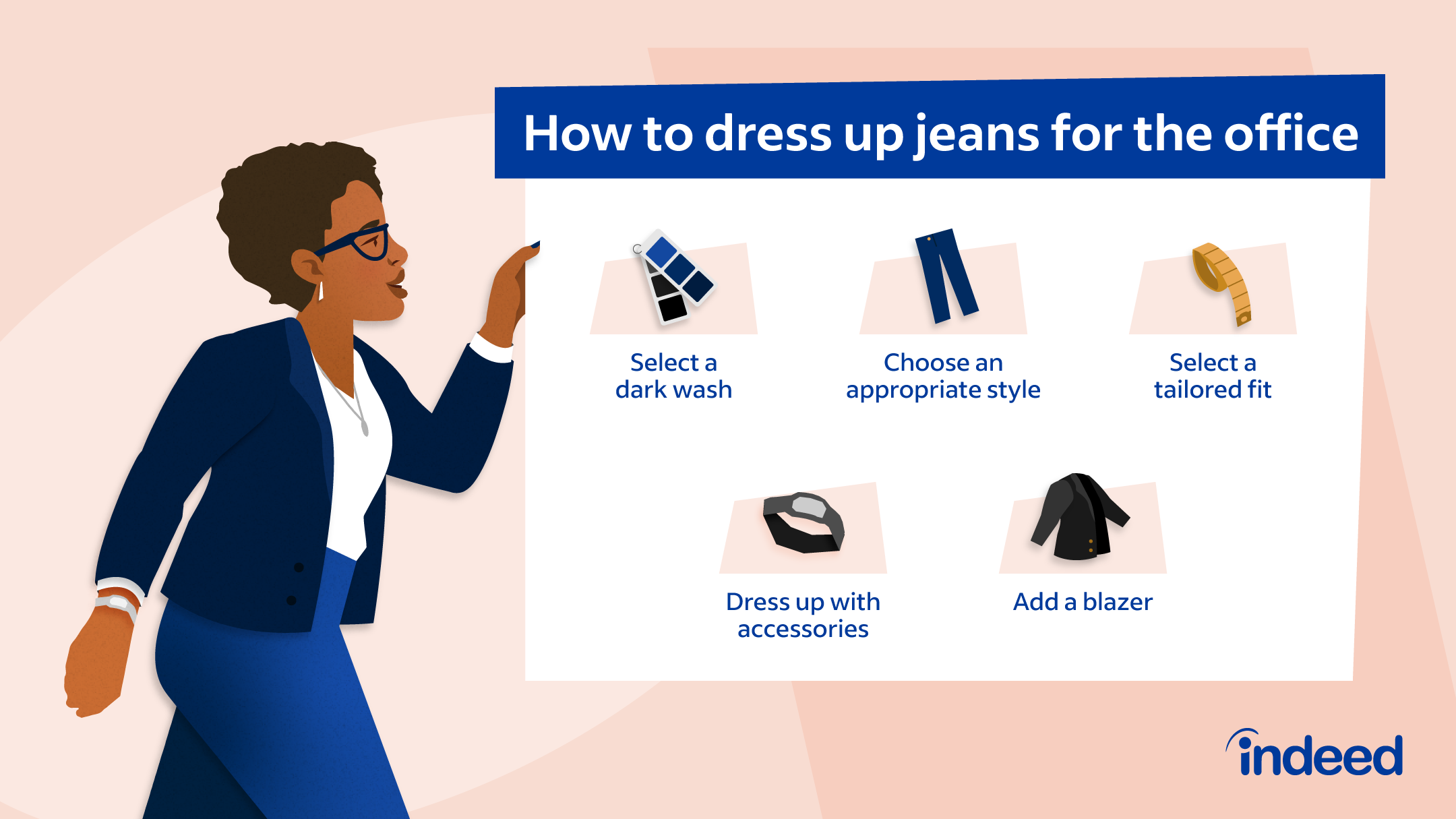
If you want to make jeans look extra polished, try these tips:
- Tuck in your shirt or blouse for a clean look.
- Wear a belt that matches your shoes.
- Add a blazer or structured jacket.
- Choose shoes with a slight heel or polished look.
- Keep your jeans clean and pressed.
These steps help jeans look professional, not casual.
For men, adding a tie (if allowed) can make jeans look business-like. For women, a statement necklace or scarf adds polish without being too bold.

Credit: www.womanandhome.com
Should You Wear Jeans For Business Casual? Practical Advice
If you are unsure, start with dress pants or khakis. Watch what others wear. If you see managers or colleagues in jeans, try dark, fitted jeans with a smart shirt. Always aim for a neat, polished look.
Remember, jeans are not the main focus. Your overall outfit should look professional. If you feel confident, you will look confident.
Confidence comes from knowing you look appropriate for your role and the office culture. If you get positive feedback, jeans are likely accepted.
Frequently Asked Questions
Can Women Wear Skinny Jeans For Business Casual?
Yes, women can wear skinny jeans for business casual if the jeans are dark, fitted, and not too tight. Pair them with a smart blouse or blazer and neat shoes. Avoid ripped or faded skinny jeans.
Are Light Wash Jeans Acceptable In Business Casual?
Usually, light wash jeans are too casual for business casual. They look relaxed and may show wear. Choose dark wash or black jeans for a polished look.
What Tops Work Best With Jeans For Business Casual?
The best tops are button-down shirts, blouses, sweaters, and blazers. Avoid t-shirts, hoodies, or tops with loud prints. A blazer adds structure and makes jeans look more formal.
Can Men Wear Jeans With Polo Shirts For Business Casual?
Men can wear polo shirts with jeans in some business casual workplaces. The polo should be solid color and fit well. Pair with dark jeans and dress shoes for a neat look.
How Can I Know If Jeans Are Allowed In My Office?
Check your company’s dress code policy or ask HR. Look at what managers and coworkers wear. If unsure, choose dress pants first. It is better to be safe than risk looking unprofessional.
Business casual with jeans is possible, but only if you follow the right steps. Pick neat, dark jeans. Pair them with smart tops and shoes. Always check your company’s rules. With the right approach, jeans can be comfortable and professional. For more guidance, visit SHRM’s dress code policy resources. Confident style starts with smart choices.
